

"SEESAW" POLICY
The new agreement on the Russian military base in Armenia does not change the balance of forces in the region
Author: Rasim MUSABAYOV, a political scientist Baku
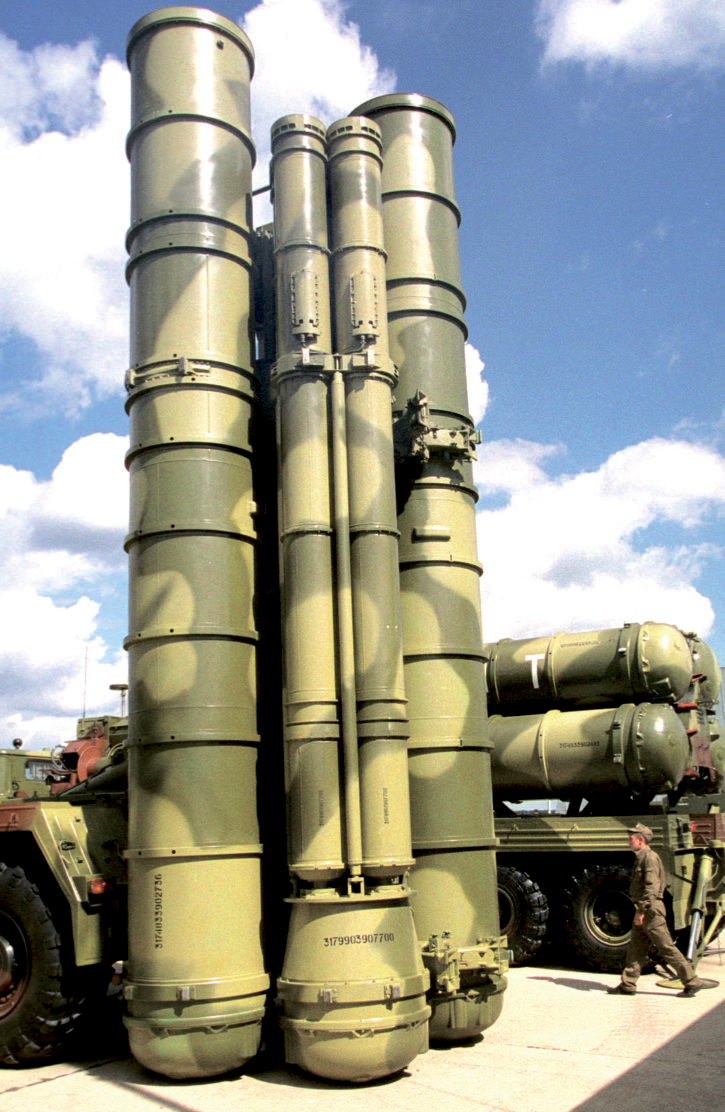
Two reports of a military-technical and military-political nature regarding Russia's relations with Azerbaijan and Armenia stirred up a barrage of media comments. The first of these was a report on an impending large-scale military deal, namely the supply to Azerbaijan of two divisions of S-300 PMU-2 Favorit anti-missile systems. The contract is potentially worth $300 million. According to a source from Nezavisimaya Gazeta at the Russian Defence Ministry, the Military Academy of Aerospace Defence in Tver has been training Azerbaijani students, including some studying the S-300, for several years. Although an official representative of Rosoboronexport denied reports about a sale to Baku, some experts argue that this is usual for arms suppliers until a deal is completed. Moreover, the reaction of the Russian Foreign Ministry, delivered by the Information and Press Department, boiled down to the fact that "from a military point of view, the S-300 is purely a defensive weapon and, therefore, cannot affect the regional balance of forces". For the prudent and careful Foreign Ministry, such a comment implicitly confirms that there are no political problems with the delivery of S-300s to Azerbaijan.
The Armenian media raised a ballyhoo over this report, accusing Russia of betrayal and pointing to the unreliability of the alliance with Moscow. Known for his pathological hatred of Azerbaijanis, and one of the main "instigators" of the Nagornyy Karabakh conflict, Igor Muradyan attacked Russia without mincing his words,. In an interview with the Lragir.am online newspaper, Muradyan argued that "Russia would like to force Armenia to reconcile with Azerbaijan, resulting in the partial or complete and final loss of Karabakh, as a condition for Azerbaijani entry into the orbit of Russian policy."
"... We are witnessing Russian attempts to excel themselves and gain new allies and partners among solvent states. ...However, they want to make Armenia a silent satellite of Russia, which will suit both Turkey and Azerbaijan," says Muradyan.
Then he babbled on, becoming unintelligible as he stepped up his ferocity: "The Russians will soon soil their noses in shit and choke on their own stupidity and trader behaviour. Of course, if the Armenian leadership and diaspora organizations had not pursued such vapid and defeatist policies, had not dragged the country into commitments in the Karabakh settlement process and had pursued a more aggressive policy in relations with Russia, we could have avoided such deplorable results."
Then he made a statement that should attract the attention of the Russian prosecutor's office and the FSB: "A few people have to sacrifice their lives to make their homeland safe. The S-300 systems must be destroyed either at the manufacturing facility, during transportation, or inside Azerbaijan. This should have been done a long time ago - at least four years ago. Was it impossible to draw conclusions from the experience of the Chechen resistance? Whatever happens in the future, if Russia does not get it in the neck for its vile actions, Armenia need not be designated as a state." No comment is necessary.
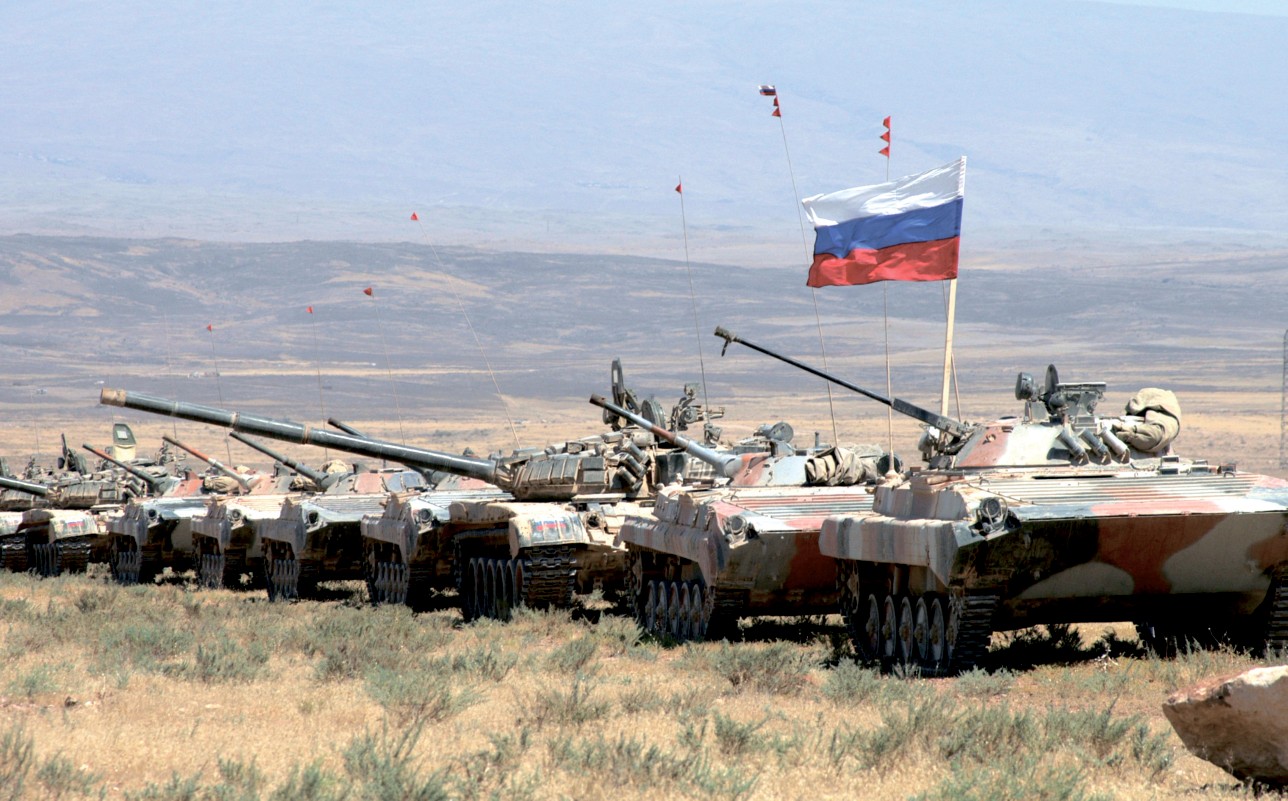
Yerevan's easily predictable backlash meanwhile prompted Russia to synchronize its expanding military-technical cooperation with Azerbaijan with actions to strengthen the alliance with Armenia in the sphere of security. According to officials from the Armenian Ministry of Defence, a draft agreement is being discussed under which the treaty on the Russian military base in Gyumri will be amended. According to the document, in addition to protecting Russian interests, Armenia's security will also be protected, in cooperation with its own armed forces. To this end, Russia plans to assist in providing Armenia with modern and compatible armament and military (special) equipment. The contract is for 49 years, with the option of automatic renewal for subsequent periods of five years, if neither party notifies the other in writing at least six months prior to the expiry of the contract of its intention to terminate it.
In reality, this agreement does not alter the existing balance of forces in the region and does not increase Russia's military presence in Armenia. As regards the obligation to supply Armenia with weapons, even without this agreement, Moscow has done this before either free or at nominal cost. Almost half of the personnel at the 102nd base are ethnic Armenians, and Yerevan has always regarded it as a force that, if necessary, will act immediately to ensure its security. It is therefore not surprising that the report on addenda to the treaty on the Russian base in Gyumri not only failed to satisfy Armenia, but was also accompanied by critical grumbling. For example, Ruben Mehrabyan, an expert at the Centre for Political and International Studies, expressly noted that with this contract, the Armenians had "actually parted with the last glimpses of Armenian sovereignty". Even the pro-Russian Dashnaks commented negatively on the agreement. Yerevan reasonably believes that Moscow is not so much trying to appease the Armenians as seeking to consolidate its position in the country on a lasting basis and to eliminate even the hint of a change in its geopolitical orientation.
Sensing that the previously unconditional support from Russia is coming to an end, the Armenian leadership has begun to make absurd gestures, intimating their willingness to rush into NATO's arms. Obviously, no-one is taking this seriously. Moreover, the US, EU, NATO and Russia are demanding more and more insistently an end to the occupation of Azerbaijani territories. This is proved by the spring resolution of the European Parliament, which plans to discuss the Karabakh conflict at the NATO Parliamentary Assembly, by the statement from the Italian Senate etc.
Like a drowning man clutching at straws, the Armenians, in an effort to enlist at least some support, have increasingly set their sights on Iran in recent years. High-ranking Armenian officials are now frequent visitors there. Since the beginning of the year, Tehran has been visited by the Secretary of the Armenian Security Council, Artur Bagdasaryan, and Defence Minister Seyran Ohanyan, and Foreign Minister Edward Nalbandyan is going to visit Tehran, too. It is not clear what the Armenian visitors are looking for in Iran. The volume of economic ties between the parties is negligible. Essentially, they have nothing to offer each other except for questionable deals of a military and financial nature, which are carefully hidden from the world. Perhaps, isolated internationally and sanctioned by the UN, Iran needs such services from Armenia and its diaspora. In turn, Yerevan clearly wants to enlist Iranian support if the peaceful settlement of the Nagornyy Karabakh conflict on the basis of the Madrid principles fails and Azerbaijan decides to restore its territorial integrity militarily. However, the Armenians will hardly dare to go further than testing the water, because Moscow still keeps them on a tight rein.
At first glance, it may seem that Russia's behaviour in the region is inconsistent and that Moscow seems to be torn between Armenia and Azerbaijan. In fact, it wants to keep both countries in its military and political orbit and is pursuing a so-called "seesaw" policy. But it is becoming more and more difficult for Moscow to pursue this policy indefinitely and to keep the painful Karabakh conflict at its current deadlock.
It is expected that the Russian president must make a decisive effort to move the conflict settlement forward during his visit to Armenia and Azerbaijan in August-September. Some evidence suggests that the Armenians will not appreciate Russia's position and proposals. Even in pursuing a balanced policy towards our countries, Moscow is aware of the potential of the parties and of who is a source of benefit and who is the eternal beggar. Accordingly, there are different attitudes towards allied, but obedient, Armenia and to independent Azerbaijan, capable of a mutually beneficial partnership.
This is evidenced again by a visit to Baku by the head of the Russian presidential administration, Sergey Naryshkin, in early August. Although the purpose of the visit has not been revealed, it is obvious that it was aimed at developing questions to be discussed during Dmitriy Medvedev's visit to Azerbaijan in the first half of September. The volume of economic relations and the importance of joint projects are so enormous, and the foreign policy agenda is so vast, that they require the Russian president's visit to be prepared at a high level. Despite some cooling between the parties since the St. Petersburg meeting, Russian-Azerbaijani relations have maintained significant positive potential. "The positions of our two countries in the international arena are very similar, and on most key international issues they coincide," Naryshkin told reporters. He also described the prospects for cooperation between Baku and Moscow in various fields as very good, especially highlighting energy and gas.
That is, the agenda for Russian-Azerbaijani talks is not confined to the Nagornyy Karabakh issue, although, at least for Baku, this is fundamental. In Yerevan, there is a completely different picture. There, apart from the Karabakh settlement, President Medvedev and the Armenians have nothing to discuss at the bilateral level. It should be noted that his visit to Yerevan has no independent status and is linked to his participation in the summit of the presidents of CSTO member countries, which is scheduled for 20-22 August. Diplomatic circles in Armenia note that if the visit does not take place, this will imply that not all questions on the Karabakh settlement have been settled.
Thus, the question of promoting the Karabakh settlement is not just ripe, but overripe. Delaying, and keeping the situation at the current volatile status quo is dangerous for Russia's own interests and for other great and regional powers. The international community needs to decide on the principles of the Karabakh conflict and to express its will by the high-level OSCE summit to be held at the end of the year in Kazakhstan. Otherwise, belief in Minsk Group mediation will be completely undermined and there would be a high probability that the situation could begin to develop scenarios both negative and dangerous to peace and security.
RECOMMEND:
 721
721

