

HAVE HOPES BEEN JUSTIFIED?
The centrist Komorowski's rise to power in Poland may see significant changes in Europe’s geopolitical configuration
Author: Sahil ISGANDAROV, political scientist Baku
The extraordinary elections in Poland have once again raised the question of the country's role in in Europe. Almost all Western experts believe that Europe gained most from Bronislaw Komorowski's victory. According to Frankfurter Allgemeine Zeitung, the stabilisation of Poland, a country as large as all other post-communist EU countries together, contributed to the success of the risky project to expand Europe to the East. But analyst Gabriele Lesser emphasizes in Der Standard that courage overcame fear in Poland. She believes that it was crucial for Europe, because Poland will no longer act as a brake and will intensify its activity in the EU, making it more constructive. With Komorowski's arrival, the fear of Europe, Germany and Russia, which characterised Lech Kaczynski's presidency, will disappear.
Komorowski may bring a new quality to internal European dialogue, with fear and distrust being replaced by cooperation and partnership. The key to a stronger EU is in Warsaw's hands. The "Weimar Triangle", which includes Germany, France and Russia, could become the locomotive of the EU. The point is that in the aftermath of economic crisis, Germany and France alone cannot give decisive impetus. Poland, for its part, could have a decisive say in the EU's eastern policy. The prerequisite for this is open dialogue with Russia, says Lesser.
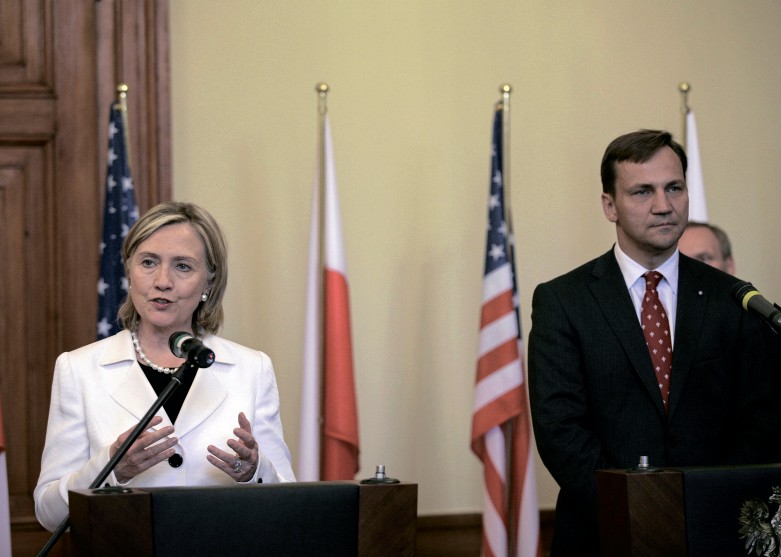
According to many analysts, Lech Kaczynski's Poland, which adopted a tough stance on Russia in its dialogue with the EU, may soften its rhetoric under Boris Komorowski; something of interest not only to Moscow, but also to Berlin and Paris. Thus, the centrist Komorowski's rise to power in Poland may see significant changes in Europe's geopolitical configuration. Germany and France, the leading EU countries, at times openly voice dissatisfaction with the policies of the United States, which mainly looks to the post-communist EU members in European affairs. Moscow, which aims to regain political influence in Europe, is also unhappy with Washington's policies. Russia is displeased with US attempts to deploy a missile defence system in states which joined the EU and NATO after the collapse of the Warsaw Pact. The Kremlin, masterfully exploiting differences between EU old-timers and the US, is trying to regain at least some of its former clout in Europe with the help of Germany and France. In a successful scenario, the world may witness the emergence of a Berlin-Paris-Moscow political axis, which would not be welcome for Washington or its new allies among the former socialist countries. This is proved by US Secretary of State Hillary Clinton's visit to Poland just before the second round of presidential elections. In Warsaw, she signed an updated missile defence agreement and made a speech about the importance of civil society, which could be viewed as a statement of intent not to deviate from the plan to deploy a missile defence system in Poland, despite the "resetting" of relations with Moscow. But whatever it meant, Moscow itself also hopes to stabilize relations with Warsaw, which exerted pressure on the Kremlin under Kaczynski. According to Mikhail Margelov, head of the Foreign Affairs Committee of the Federation Council, relations between Moscow and Warsaw will change for the better under Komorowski and strengthen, which will benefit Poland itself. A constructive dialogue between the two countries will contribute to the deepening of Poland's integration into European structures. Warsaw is probably being foxed into thinking that it should focus on the "Weimar Triangle" rather than follow US policy. Russia, for its part, is ready to promote the normalization of wary Germany-Poland relations - which have historical roots (more on this later). But will the expectations that Berlin, Paris and Moscow have of the new Polish authorities be justified? It was not only under Kaczynski that relations between Russia and Poland experienced a difficult period. Suffice to mention Russian-Polish relations under Aleksander Kwasniewski to understand the deep roots of the conflict between Moscow and Warsaw on many issues. Although today he calls for constructive dialogue and close cooperation with Russia.
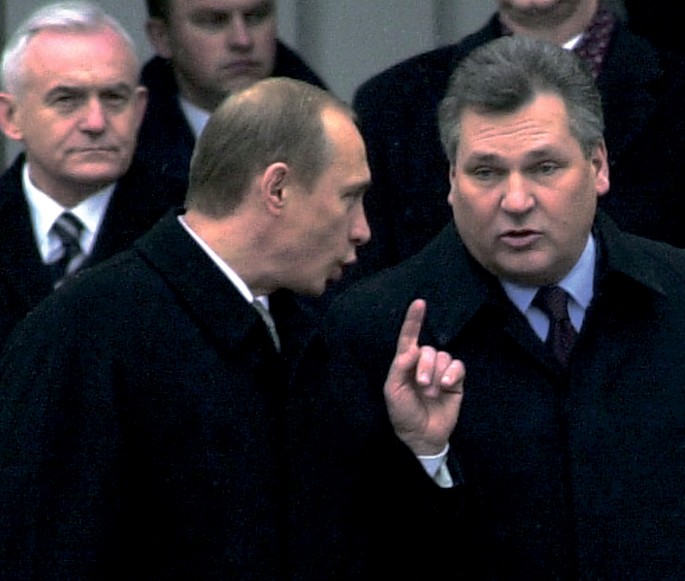
In 1995, Kwasniewski defeated the pro-Western politician and president of Poland, Lech Walesa, in presidential elections. Although his policy had the market economy at its heart, along with integration into NATO and the EU, he was viewed positively by Russia, albeit for a short period. During his presidency, Poland joined NATO (1997) and the EU (2004). On the issue of EU enlargement, Kwasniewski was a supporter of an "open door" policy. He also actively supported the NATO operation in Yugoslavia and the US invasion of Afghanistan and Iraq. An alarm signal in relations was sounded with the expulsion of Russian diplomats involved in espionage from Poland in January 2000. A few weeks later, activists of the "Free Caucasus" organization broke into the Russian consulate in Poznan and desecrated the Russian flag. In response, anti-Polish demonstrations were organized in Moscow, and Poland was called "a prostitute which has sold itself to the West". Despite this, after Vladimir Putin came to power in Russia, relations between Moscow and Warsaw became somewhat warmer, helped by personal contacts between the two leaders. In the summer of 2003, Kwasniewski even suggested lifting the visa regime between the two countries. But political differences did not allow this to happen. In late 2004, Kwasniewski played a key role in providing international support for the then Ukrainian opposition leader Viktor Yushchenko. It was after this that the official results of the presidential elections in Ukraine, which gave victory to pro-Russian Viktor Yanukovych, were annulled. Moreover, in an interview with the Politika weekly, Kwasniewski said that Russia without Ukraine was a better situation than with Ukraine. This position, based on Zbigniew Brzezinski's postulate "With Ukraine, Russia is an empire, and without Ukraine, Russia will not become an empire", irritated the Kremlin. It turned out that Poland itself not only became a champion of Western policy, but did its best to subordinate Ukraine to the geopolitical interests of the West. According to Polish media, Putin made no secret of the fact that Poland's intervention in the course of the Orange Revolution hurt Moscow deeply and, at a press conference in December 2004, the Russian president "scolded" the Poles and President Aleksander Kwasniewski for their role in the Kiev events.
A similar situation was observed on the Georgian question. Poland actively supported Mikheil Saakashvili, whose rise to power was an unpleasant surprise for Moscow. Then Warsaw was one of the most active supporters of the accession of Ukraine and Georgia to the action plan for integration into NATO. Kwasniewski described Putin's criticism of him in connection with the Kiev events thus: "President Putin's words are unfair. This is the price that Poland and I pay personally for our engagement in resolving the political crisis in Ukraine, as well as for the actions that Poland and I took to develop democracy in this great country, our common neighbour. Poland has not made any moves against Russia, with whom it is vital to have good relations, and acted in the context of the situation in Ukraine."
Moscow's dissatisfaction was also due to Warsaw's endeavours to secure admission of the Baltic countries into NATO and the EU. After these countries joined NATO, Poland became the most active and ardent champion of their interests in the North Atlantic Alliance. On the issue of NATO enlargement to the East, Warsaw also favoured an "open door" policy, which contradicted Russia's geopolitical interests. Kwasniewski's Poland was more ardent than all other post-socialist countries in Europe in seeking to host NATO bases on its territory. There is a kind of logic in Warsaw's desire, regardless of who is president,. Poland thus tries to create a mini-alliance of new NATO members in Eastern Europe, to counter Moscow's influence. The primary role in this alliance must belong to Warsaw. In addition, Kwasniewski, in calling for close cooperation between Ukraine, Moldova and the EU, did not mention Russia, which annoyed Moscow. There were specific reasons for this, which had left Poland dissatisfied. According to Kwasniewski, Russia is trying to split the EU: "Russia maintains better relations with "old" EU member states such as Germany, France or Britain than with new members. We demand that the Russian Federation treat all EU member states equally, rather than preferring some and ignoring others. That is, Moscow is trying to split the EU. Old antipathies reappear and we do not need this. At present, it seems that good personal relationships between four or five EU heads of state and government and President Putin are driving EU policy towards Russia." Poland, the sixth largest economy in the EU, is not happy with Moscow's contemptuous attitude.
In summer 2004, Warsaw foiled a deal on the privatization of Polish oil industry enterprises by the Russian company Lukoil, on the grounds that it was lobbied by Vladimir Alganov, who had previously worked, not only at the Soviet embassy in Warsaw, but also for the Russian security services. And when Russia and Estonia had a border dispute, Polish President Aleksander Kwasniewski expressed support for Tallinn and urged the EU to negotiate with Moscow from a united standpoint: "Estonia can count on our support in all matters concerning the border, because it is not only an Estonian border, but also the eastern border of the European Union." Another Russian-Polish bone of contention was the project to build the Nord Stream gas pipeline under the Baltic Sea. An agreement on the pipeline was signed by Russia and Germany in September 2005. Polish Foreign Minister Radek Sikorski then described this project, which deprived Poland of a chance to influence Russian gas supplies to Europe, as a "Putin-Schroeder pact" or "a new edition of the Molotov-Ribbentrop Pact". Polish leader Kwasniewski agreed with this assessment, although he recently and unexpectedly announced his support for the project. It was then that Warsaw came up with a plan to create "Energy NATO" - an organization to take control of gas supplies to member states, coordinate and finance the construction of gas pipelines and diversify energy supplies. It was also proposed to include Ukraine and Georgia, with the main suppliers being Azerbaijan and Central Asia. Since then, Poland has begun to show a keen interest in Azerbaijan's energy reserves.
Moscow made its own "contribution" to this war of nerves. Speaking during a parade in Red Square to mark the 60th anniversary of Victory Day in May 2005, Putin "forgot" to mention Poland as an ally that contributed to the defeat of fascism. This provoked outrage in Warsaw, which stated that the Polish army was "the fourth largest army in the anti-Hitler coalition". Another indication of tension in Russian-Polish relations was the beating up of three Russian teenagers - children of Russian diplomats - by a group of 19 skinheads in Poland in August 2005. Soon, unidentified people assaulted three Polish citizens - two diplomats and a journalist - in Moscow. This brought a protest from Warsaw, which demanded enhanced security measures to protect its citizens in Russia. Russian-Polish relations were also marred by the November 2005 decision to proclaim 4 November the Day of Moscow's Liberation from Polish troops in 1612 - a national holiday in Russia. Experts in Moscow suggested that the Duma's decision should not be considered as being deliberately anti-Polish: simply, they say, they had to replace 7 November with something close in time, as the Communist Party used the previous date as an excuse to remind everyone of its existence. In November 2005, Rosselkhoznadzor banned imports of certain types of agricultural products from Poland, due to their failure to comply with "domestic quality standards". Since November 2006, Poland has blocked the opening of negotiations on a new basic agreement between Russia and the EU. This was the beginning of Kaczynski's rule in Poland, when the crisis in Polish-Russian relations deepened even further. The Polish president's principled position on the Katyn tragedy played a significant role here. All these facts prove that the tough Russian-Polish relations are not personal, but political, economic and geopolitical. Excessive rapprochement between Russia and Germany is of serious concern to Warsaw. Poland is unlikely ever to forget the three territorial partitions (in 1772, 1793 and 1795) by states neighbouring Rzeczpospolita: Russia, Austria and Prussia. On the other hand, a decision of the Potsdam Conference gave Poland about 120,000 square kilometres of western territory, where more than 7 million Germans had lived before the war. These areas include
Danzig and "Corridor" (the road from Germany to Danzig). A few months later, in accordance with a decree of the Polish government, "the lands abandoned by Germans" were actively populated by Poles. They did not own the plots and real estate they received, but enjoyed "eternal use" - for 99 years. But the "Union of the Expelled", which was soon established in Germany and now unites more than 15 million Germans expelled from Central and Eastern Europe and their heirs, immediately began to demand "the return of the territories removed and compensation for material and moral damage". In the 19th and 20th centuries, some German politicians (F. Ratzel, F. Naumann, Haushofer) proposed concepts of allied relationships between Germany and Russia and between Germany and France. According to these concepts, the leading role in Europe should belong to Germany, and in the East - to Russia. That is, there would be two centres of power, with which other, smaller countries could not compete. But representatives of Anglo-American political thought (H. Mackinder, N. Spykman etc.) have always feared the very idea of a political alliance between Germany and Russia. In this respect, Warsaw's position coincides more with the precepts of the Anglo-American political school. It is therefore possible that German and Russian hopes of the new centrist president of Poland may well be in vain, because leaders come and go, but political interests remain.
RECOMMEND:
 702
702

