

A BARRAGE OF SANCTIONS
The Iranian nuclear programme crisis - increasingly unpredictable
Author: Natiq NAZIMOGLU Baku
The crisis over Iran's nuclear programme is now, if I may say so, a matter of sanctions. Thus the international community is trying to force Iran to obey UN Security Council resolutions calling for the Islamic Republic to halt uranium enrichment.
Sanctions - both universal and unilateral
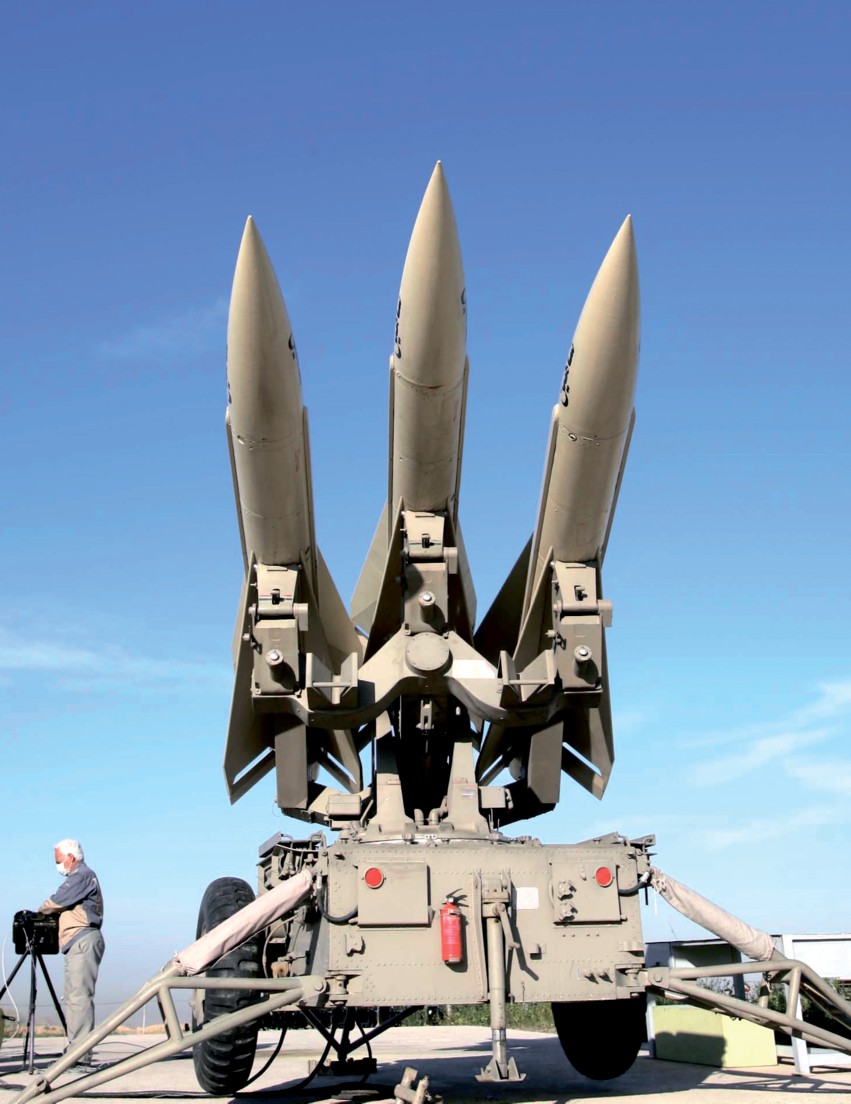
A new phase in the Iran crisis began after the UN Security Council imposed new, more stringent sanctions in early June. They were aimed at Iran's economy and military-industrial complex. In particular, the expanded list prohibits weapons supplies to Iran, including tanks, armoured personnel carriers, combat aircraft, helicopter gunships and warships, as well as missiles and missile systems. However, in response, the Iranian leadership stated that it is not going to abandon uranium enrichment.
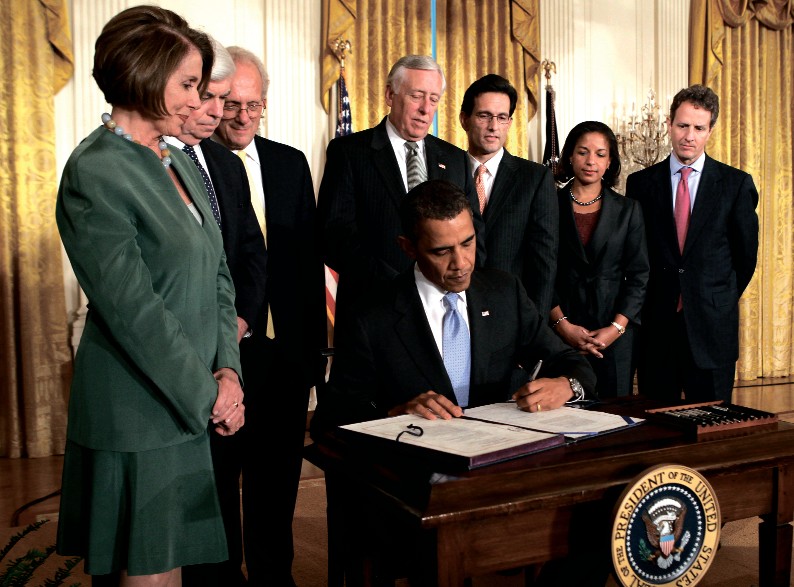
Shortly thereafter, US President Barack Obama signed a law imposing new, unilateral sanctions against Iran. Under this law, US banking facilities are banned from cooperating with foreign financial organizations which maintain contacts with the Islamic Revolutionary Guard. In addition, the US sanctions include a ban on the export of oil products to Iran and sanctions against companies which violate the ban. Obama called these sanctions "the toughest ever taken by Congress against Tehran". He said that he had initially opposed this move, but Iran's refusal to compromise left Washington no choice.
Meanwhile, the EU approved a package of unilateral sanctions against Iran. They affect Iran's energy sector, foreign trade, transport and finances. Foreign investment is prohibited in the country's oil and gas sector, as is the supply of items needed for the production of nuclear materials, weapons and ammunition. Furthermore, the EU decided to reduce the export of petrol to Iran, which could be quite telling for Tehran. After all, the country is experiencing a critical shortage of refining capacity and imported petrol constitutes almost 40 per cent of its domestic market. The financial part of the EU package of sanctions provides for the freezing of assets of some Iranian banks and other businesses which "could be used to finance military programmes". In the transport sector, there are measures affecting the country's largest "Shipping Company of the Islamic Republic of Iran" and Iranian airlines.
While there is total clarity in Iran's relations with Washington and Brussels, relations between the Islamic Republic and Russia have taken on a highly ambiguous character. Russia's position is also very important in shaping the particular disposition of forces in the situation surrounding Iran. Moscow's support for the new UN Security Council resolution appears to indicate that Russia is toughening its policy towards Iran. It is impossible not to notice that Russia's more rigorous approach to Iran's nuclear programme coincided with a thaw in relations between Moscow and Washington, which, incidentally, has been quite enthusiastic about Russia's recent support on the Iran issue.
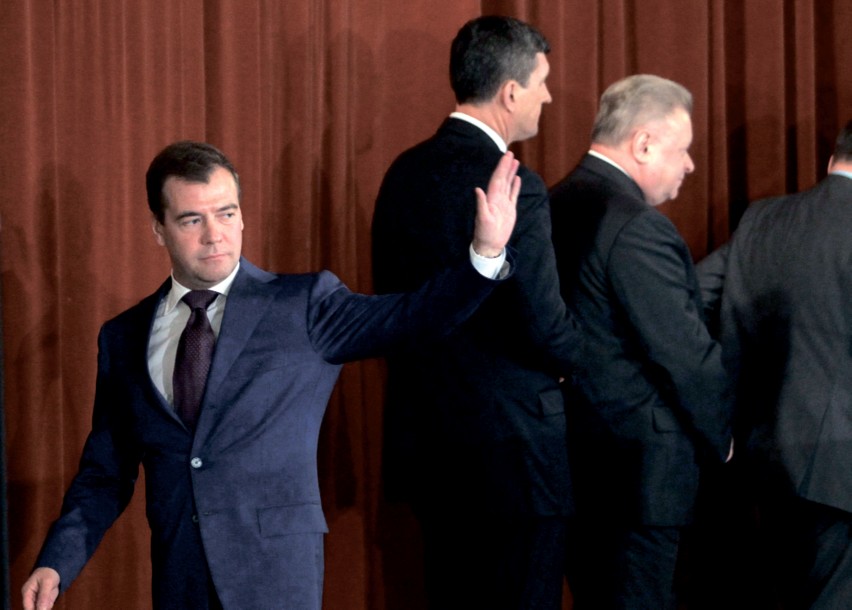
This is backed up by Russian President Dmitriy Medvedev's statement that Iran is close to acquiring capabilities that can be used to create nuclear weapons. The Russian leader called on Tehran to provide full information about its nuclear programme and to cooperate with the international community.
In response, Iranian President Mahmud Ahmadinezhad called Dmitriy Medvedev "a mouthpiece of Iran's enemies" because his remarks "gave a start to a US propaganda show aimed at Iran". This is not the first time that Ahmadinezhad has made a sharp statement about Russia. In late May, when Moscow consented to the imposition of new sanctions against Iran, Ahmadinezhad described Russia's behaviour as "unacceptable". The Kremlin had to respond harshly to the Iranian president's attack, hinting that it would not tolerate such an attitude, even from a state that has traditionally been a partner in the Middle East.
By the way, this partnership, focused largely on cooperation in energy and military fields, obliges Moscow not to abandon Iran completely, leaving it with some scope for manoeuvre in its confrontation with the West. The French newspaper Le Figaro described Russian-Iranian relations as "schizophrenic" because, while admitting for the first time that "Iran is a threat to security", Russia is still "not ready to abandon a potential ally who acts as a counterweight in its relations both with the West, and with China and India".
This duality in Russia's policy towards Iran was noted by US Defence Secretary Robert Gates. According to him, on the one hand Russia sees Iran as a threat to security but, on the other, it seeks to develop a trading partnership with Tehran in arms and nuclear technology.
Meanwhile, a practical indication of this duality was that Moscow condemned the unilateral US and EU sanctions against Iran. The Russian Foreign Ministry stated that actions which "run counter to the principles of joint work by the '5+1' and within the format of the UN Security Council" are unacceptable. According to Russia, unilateral actions are destroying the system of uniform sanctions against Tehran, which is why Moscow sees these sanctions as disrespect from the US and EU for their partnership with Russia.
Warning signals, or dialogue on the horizon
In any case, these nuances in relations between international negotiators on Iran, the so-called "5+1" (five permanent members of the UN Security Council and Germany), in no way affect the position of the Islamic Republic itself, which periodically informs the world about new advances in its nuclear programme. For example, the head of the Atomic Energy Organization of Iran, Ali Akbar Salehi, announced the country's intention to start independent nuclear fuel production in late August - early September next year. The Iranian parliament passed a resolution committing the government to make the state self-sufficient in peaceful nuclear technology. In particular, this requires the continuation of its uranium enrichment programme to produce uranium fuel on an industrial scale (3.5 per cent enrichment) and for nuclear laboratories (20 per cent enrichment).
Another gesture showing Iran's determination was the denial of entry to two inspectors from the International Atomic Energy Agency (IAEA) into Iran. According to the Iranian Foreign Ministry, the inspectors who were declared persona non grata had provided false information about Iran's nuclear programme and "had prematurely divulged official information".
In response, the IAEA pointed to the professionalism and impartiality of its inspectors. "The ban on the two IAEA inspectors demonstrates Iran's attempts to restrict the agency's access to its nuclear facilities and strengthens the international community's concern about the peaceful nature of its nuclear programme," noted the French permanent ambassador to the IAEA, Florence Mangin. "On the one hand, all of Iran's nuclear facilities are under the supervision of the agency, while not all nuclear material at those sites is designed for non-peaceful purposes. On the other hand, the agency cannot confirm the absence of undeclared nuclear facilities and materials in Iran," she said. This distrust stems from the fact that Iran kept its nuclear activities secret for a long period of time - 20 years - she believes.
Against the backdrop of Tehran's latest political moves, the United States is increasingly expressing its determination to suspend Iran's nuclear programme one way or another. Although the Obama administration does not like to speculate on a possible strike on Iran, it periodically sends warning signals to Tehran, trying to persuade it to make concessions in the negotiations. But even in adopting this tactic, the United States is making it clear that it will not tolerate Iran as a nuclear state and is willing to take extreme action at crisis point. "A nuclear-armed Iran is unacceptable to the United States," - this statement by Defence Secretary Robert Gates speaks for itself.
In a situation where none of the major parties in the confrontation over Iran is denying itself the pleasure of using the language of threats and warnings, the initiative by Brazil and Turkey, who signed an agreement with Iran in May this year providing for the delivery to the Islamic Republic of 120 kilograms of enriched nuclear fuel in exchange for 1.2 tonnes of low enriched uranium, can finally be regarded as having failed. Realizing the failure of this venture aimed at settling the Iranian issue urgently and avoiding tougher international sanctions against Iran, Brazil and Turkey called for a resumption of negotiations between Tehran and the "5+1". The call was voiced after the Istanbul meeting of the foreign ministers of Turkey, Brazil and Iran. Brazilian Minister Celso Amorim said: "We acknowledge Iran's right to pursue a peaceful nuclear programme but, at the same time, the world community must have guarantees that this programme has no military component."
Following the Istanbul meeting, it also became known that Iran is ready to begin negotiations with the EU on its nuclear programme. This appears to be a response to the actions of the European Union which, together with the introduction of unilateral sanctions against Iran, confirmed its intention to resume dialogue with Tehran. We hope that these talks will actually take place and open the way to an exclusively peaceful solution to the Iran issue.
RECOMMEND:
 653
653

