

YEREVAN AT SIXES AND SEVENS
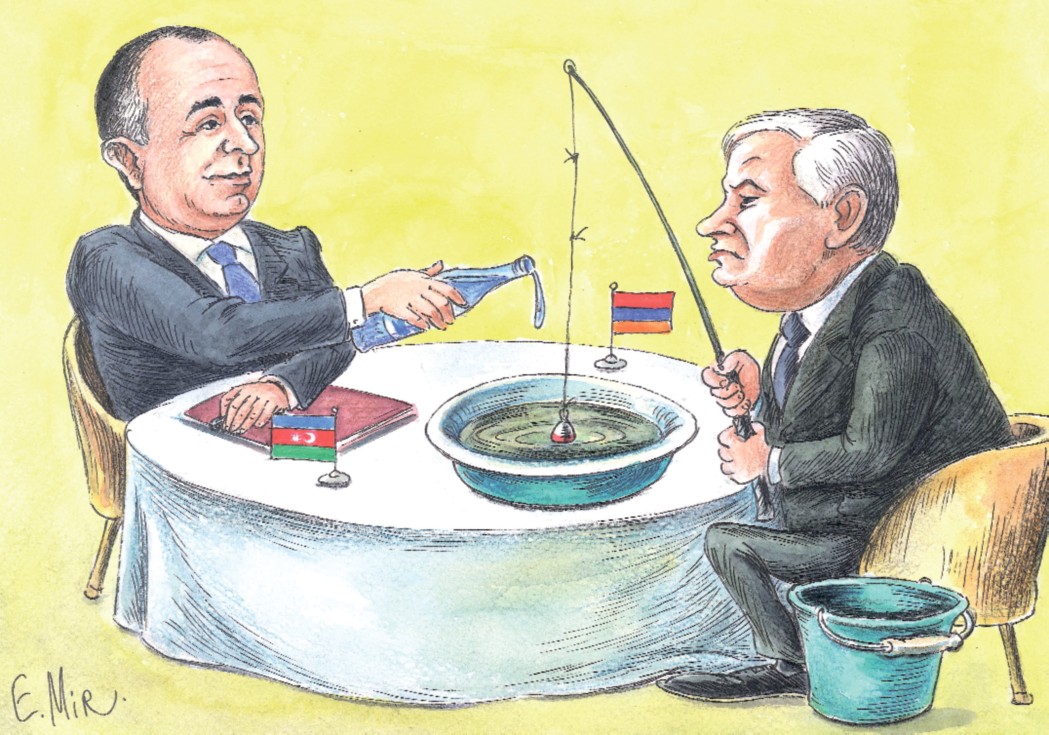
Armenia is making every effort to drive the Karabakh negotiations into a dead end
Author: Rasim MUSABAYOV, a political scientist Baku
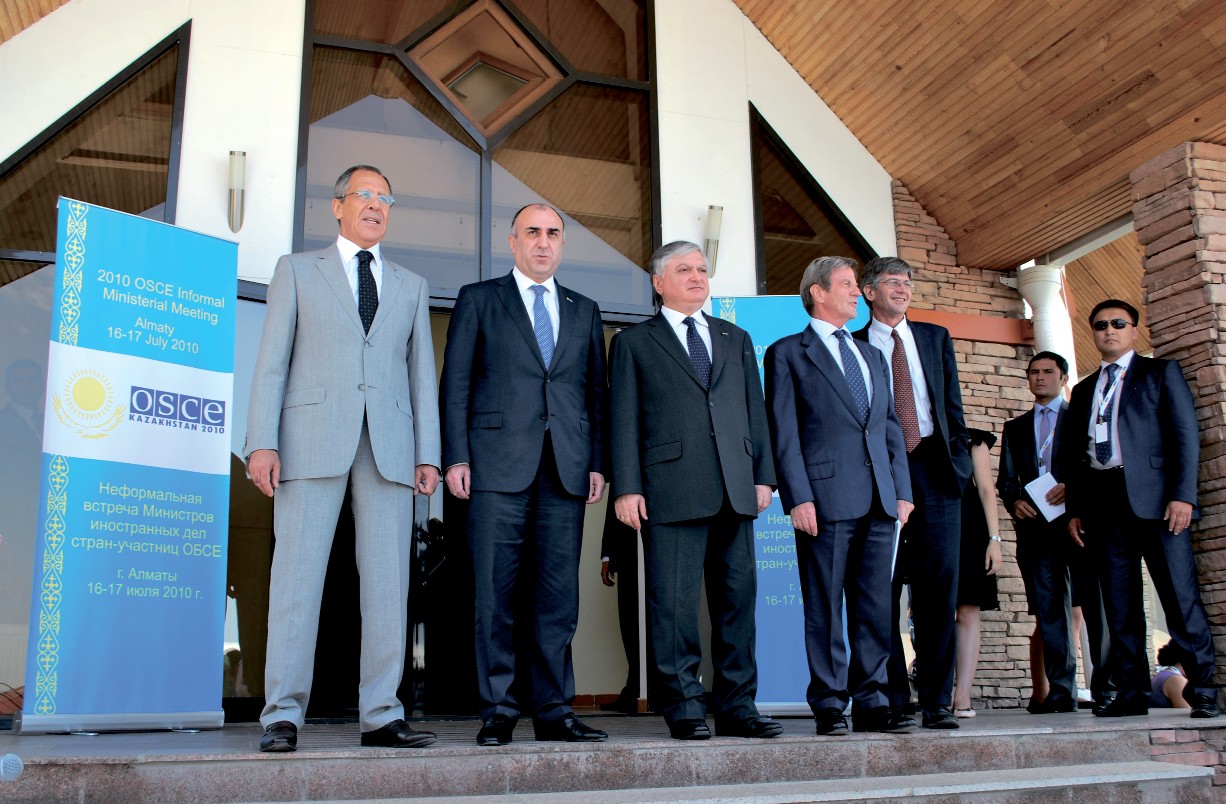
On 17 July, the former Kazakh capital Almaty hosted an informal meeting of the foreign ministers of Armenia and Azerbaijan, Elmar Mammadyarov and Edward Nalbandyan, on the sidelines of the OSCE Ministerial Council. The meeting was attended by the foreign ministers of the countries co-chairing the OSCE Minsk group, Sergey Lavrov (Russia) and Bernard Kouchner (France), US Deputy Secretary of State James Steinberg, as well as the co-chairs of the Minsk Group.
As anticipated, this meeting did not make a breakthrough. Commenting on its results, Mammadyarov told reporters that "...the foreign minister of Armenia expressed his disagreement with some provisions and did not allow us to adopt a joint statement, which is why a statement was issued on behalf of the ministers of the three co-chairing countries".
In general, Elmar Mammadyarov questioned Armenia's desire to resolve the Armenian-Azerbaijani Nagornyy Karabakh conflict: "Personally, I had the impression that Armenia did not want to reach any agreement to secure peace and stability. During the negotiations, you reach agreement on some issue and believe that the matter is closed and that you can proceed to other issues. While considering other issues, for example, two meetings onwards, you see that the Armenian side once again returns to the issues already agreed upon. Therefore, the negotiations are difficult."
Meanwhile, the heads of delegations from the countries co-chairing the OSCE Minsk Group made a joint statement, reminding the parties of their obligation to secure a peaceful settlement of the Nagornyy Karabakh conflict based on the principles of the Helsinki Final Act, which focuses, inter alia, on the need to refrain from the threat of or use of force, the territorial integrity of states and equal rights and self-determination of peoples. The co-chairs confirmed that the principles which were enunciated in the statement by the presidents of Russia, France and the United States on 10 July 2009 in L'Aquila, Italy, and which were voiced again in Muskoka on 26 June 2010, should be the basis for any just and lasting settlement of the conflict. They represent a unitary whole, and any attempt to separate out several elements makes it impossible to achieve a balanced solution.
It would seem that in this case, there can be no room for speculation, but the Armenians began to do just that immediately after the meeting in Almaty. Armenian Foreign Minister Edward Nalbandyan engaged directly in verbal gymnastics. He wilfully "doctored" the statement by the countries co-chairing the Minsk Group, which speaks in a balanced manner about peace and security, territorial integrity and equal rights and self-determination of peoples. But for Nalbandyan, everything but "self-determination" is unimportant. He casually shrugs off an important aspect in the concept of "equal rights", which was included in the Madrid principles at the insistence of Baku and implies that a referendum on the status of Nagornyy Karabakh should equally involve the Armenian community and the Azerbaijanis expelled from there.
Nalbandyan assumes the role of interpreter of statements by the co-chairs of the Minsk Group, who reportedly claim that Baku's demand for withdrawal from the seven occupied districts before determination of the final status of Nagornyy Karabakh is not constructive, since all these principles were developed as a single whole. But at the same time, he insists illogically that the status of Nagornyy Karabakh should be determined before Azerbaijan's territorial integrity is restored.
It should be noted that the countries co-chairing the Minsk Group stress each time that a peaceful settlement of the conflict lies in the implementation of the principles of the Helsinki Final Act. That hardly gives Yerevan reason for optimism, as it constantly appeals to precedents (Kosovo, Abkhazia and South Ossetia) which occurred bypassing or, to be direct, in violation of those principles. The Armenians dare not object to the great powers and the international community and attempt to delay the negotiations, hoping that if not now then in the future, they will be able to legalize the secession of Nagornyy Karabakh and incorporate it into Armenia. In the meantime, politicians and ideologues in Yerevan are encouraging themselves and their own population, which rightly fears renewed hostilities due to the impasse in the talks, with assertions that the great powers will not allow this to happen.
For example, the secretary of the Republican Party faction, Edward Sharmazanov, who has become the "talking head" of the Armenian authorities in the recent period, interpreted the regret expressed in the statement by the foreign ministers of countries co-chairing the Minsk Group in connection with the armed incident that took place on 18-19 June 2010 and the warning about the use of force as a showing of a "yellow card" to Azerbaijan. In fact, this statement is a warning to Yerevan, which is sabotaging the talks and might lose the support of its patrons, being left face to face with Baku. After all, Armenia cannot independently resist Azerbaijan and expect to succeed in the long term because of its limited population and economic potential.
This is well understood by far-sighted politicians in Armenia itself. For example, speaking at the 16th congress of the Armenian Pan-National Movement, the former Armenian President Levon Ter-Petrosyan said immediately after the Almaty meeting: "If a policy is not based on facts, then we can expect anything but politics from it." According to him, the Armenian authorities are currently using the last diplomatic opportunities, but it is possible that in the event of delays in resolving the conflict, the situation could spiral out of control. "If not Armenia, Azerbaijan cannot but consider a military solution to the problem," Levon Ter-Petrosyan said, noting that Armenia would be thinking the same way if it were the party that had lost its territory. "I'm not against maintaining the status quo, but they must answer one question - how do the authorities intend to stop the continuing emigration, which is leading to the depopulation of Armenia," he added.
The facts really do show that the demographic, geopolitical, financial, economic and, more recently, military superiority of Azerbaijan over Armenia increases from year to year. But the Karabakh clan, which has seized power in Armenia, persists, hoping to legalize the secession of Nagornyy Karabakh from Azerbaijan and to extend the status quo for as long as possible. On this issue, they apparently got some support from Russia at the last meeting in St. Petersburg.
It is no accident that Serzh Sargsyan said at a recent meeting with young representatives of the Armenian diaspora that there were new proposals on the table in St. Petersburg and then issued an ultimatum: "When Azerbaijan says 'yes, we accept the principles of the Minsk Group', the negotiations will continue, and if not, then other means will be chosen." It is hard to say what these "other means" are, but it is likely to be the long-debated proposal in Armenian society to "recognize" the so-called "Nagornyy Karabakh republic". But no matter how much the Armenians speculate on the Kosovo precedent, they do not have the guts to do so without their patrons' permission, especially from Russia, which condemned the ruling of the International Court of Justice on Kosovo. The provocative decision on "recognition" will undermine the negotiations on a peaceful settlement of the Nagornyy Karabakh conflict and lead to a military conflict and intervention by the UN Security Council, which is highly likely to reject the unilateral actions of the Armenians as it once did in respect of Northern Cyprus and Southern Rhodesia.
It is hard to understand the logic of the Armenians who appeal to the Madrid principles and, at the same time, refuse to recognize them. Azerbaijan, in fact, adopted these principles in the form in which they were formulated and presented by the Minsk Group to the OSCE Ministerial Council in Athens a year ago. So it is the Armenians who are dragging their feet. Baku's reservation "we accept them with certain exceptions" only reserves an opportunity to tighten its position should the mediators start to redraw the updated Madrid principles to please the Armenians. Moreover, the principles do not imply direct implementation. Baku proposes completing work on the principles and moving on to the next stage, i.e. the text of the peace agreement, while the Armenians tend to engage in fruitless negotiations and do not wish to be bound by any agreements.
"All the recent events surrounding the Karabakh settlement show that Armenia wants to wreck the peace process to delay resolution of this conflict until 2015. The fact is that in 2015, the Armenians will mark the 100th anniversary of the so-called 'genocide' and, by that time, they want to emerge as winners from the Turkish-Armenian and Karabakh processes. Their whole strategy is aimed at this," said Sinan Ogan, director of the Turkish Centre for International Relations and Strategic Analysis (TURKSAM), to 1news.az.
The Turkish analyst's evaluation is not too far from the truth. But what will happen to the Armenian economy, which is burdened with debts and has not returned to the pre-crisis level of 2008, especially in circumstances in which they need to find the means to achieve parity with Azerbaijan, which is rapidly boosting its military potential? The calculations that in an atmosphere of sympathy with the 100th anniversary of the so-called "genocide of 1915", the Armenians will be able to realize their ambitions against Turkey and Azerbaijan are still pie in the sky. Sympathy aside, specific plans and proposals based on the national interests of the global and regional powers are focused on Turkey and Azerbaijan. As history shows, few people in the past or present have been willing to sacrifice them for the mythical claims of the Armenians.
In this regard, the Armenians and their patrons should take seriously the warning issued publicly by Azerbaijani President Ilham Aliyev that the Prague round of negotiations, which became the longest in the whole 15-year history of the Minsk Group's mediation and led to the renewed Madrid principles, is the last chance for a peaceful settlement of the conflict. If it is missed, then the process can continue within a negative scenario, and much faster than some expect. But until the worst has happened and the door to progress in the conflict settlement remains open, we can expect that Russian President Dmitriy Medvedev, who is due to visit Armenia in August and Azerbaijan in September, will make one more effort to bring the positions of the conflicting parties closer. Support for the territorial ambitions of the Armenians does not give anything to Russia, but restricts the opportunities to implement proposals Moscow has been making insistently to Baku.
In turn, the administration of US President Barack Obama is beginning to realize Azerbaijan's importance, as evidenced by recent visits by Defence Secretary Robert Gates and Secretary of State Hillary Clinton, as well as by the acceleration of Matthew Bryza's appointment as US ambassador in Baku.
Discrepancies between the English and Russian texts of the statement on the Karabakh settlement made by Obama, Sarkozy and Medvedev in Canada, in which the English version (main text) is more acceptable to us and the Russian version to the Armenians, seem highly symptomatic.
If discrepancies between the co-chairs of the Minsk Group deepen, then it will be hard to expect a result from their mediation efforts. But a resumption of hostilities between Armenia and Azerbaijan at this stage runs counter to the interests of all world and regional powers (excluding Iran), and this may induce the mediators and international organizations to make a last decisive effort to lead the settlement process based on the Madrid principles out of the impasse into which the provincial diplomatic ploys of the Armenians have driven it. There is still a chance.
RECOMMEND:
 726
726

