

INNOVATIONS IN THE MIDDLE EASTERN CONFIGURATION
Israel will have to prove that its political innovations are meaningful
Author: Natiq NAZIMOGLU Baku
The Middle East continues to boil. Despite occasional hopes for a settlement of the planet's most painful conflict, the stand-off in the region assumes new proportions. This is confirmed by the ongoing deterioration in Turkish-Israeli relations.
Secret talks and open confrontation
The attack by an Israeli task force on a Turkish ship, which was part of the freedom flotilla to blockaded Gaza, has led to a severance of relations between the two former allies. Turkish President Abdulla Gul has said that his country would never forgive the killing of its citizens by Israel which had committed "one of the most serious mistakes in its history and which it will continue to regret".
Shortly after the tragic incident in the Mediterranean, Turkey recalled its ambassador from Israel and announced a scaling down of political and economic cooperation. Ankara has also frozen all projects for military cooperation with Israel and closed its airspace to Israeli military aircraft. This decision puts the Israeli air force in an awkward situation because Israel's military pilots, unable to carry out full-blown exercises over their own small territory, had been training in Turkish airspace for years. There is no other state around Israel which will open its airspace to Israeli pilots to practise their war skills.
Meanwhile, Ankara is threatening a complete severance of relations with Israel if the latter does not apologize officially for the killing of nine Turkish citizens and agree to an international investigation into the tragedy in the Mediterranean Sea. Moreover, Turkey has made it clear that it would not accept the results of Israel's own investigation into the special operation against the 'freedom flotilla".
Israel, however, has no intention of meeting Turkey's demands. The Israeli prime minister's secretariat has stated categorically that "Israel does not intend to apologize for defending its citizens". Nevertheless, although tensions in the Turkish-Israeli stand-off are running high, the ruling circles of the two countries are taking steps towards reconciliation. "Secret talks" have been held by Turkish Foreign Minister Ahmet Davutoglu and Israeli trade minister Benjamin Ben-Eliezer. Speaking about the outcome of the meeting, Israeli Prime Minister Benjamin Netanyahu said: "Although we have not achieved success, I think the meeting was important. We mustn't waste the opportunity to restore relations." However, it has transpired that the meeting has led to friction in the Israeli government coalition, because foreign minister Avigdor Lieberman was not informed about it. He subsequently described the meeting as a "mistake from all standpoints". At the same time, it is beyond doubt that the US administration, worried about the rupture of relations between its closest Middle Eastern allies, has played a role in organizing the "secret talks".
While continuing to demonstrate its readiness to defend Israel's interests and contain Ankara's demanding tone towards Tel-Aviv, Washington is sending the message that it is not impressed with the Israeli operation against Turkish rights champions. The main priority for the USA is to prevent any aggravation of the Turkish-Israeli confrontation, because it will be difficult for America to side with either of the two without damaging its own strategic positions in this highly sensitive region. It is worth mentioning that during a recent visit to the USA, Israeli Prime Minister Netanyahu said he was "looking for any pretext to normalize relations with Turkey". Shortly after the visit, the Israeli general staff announced the possibility of regaining the previous level of military cooperation with Turkey. At a closed-door meeting of the Israeli parliament, the Israeli chief-of-staff, Gabi Ashkenazi, also informed legislators that he had been "in touch with his Turkish opposite number Ilker Basbug in the aftermath of the incident involving the Turkish ship".
"Unbreakable bonds"
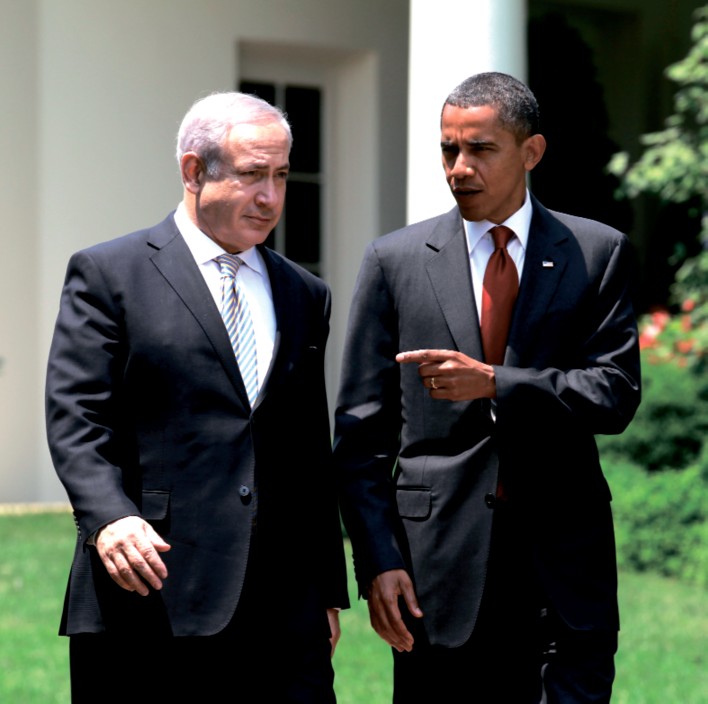
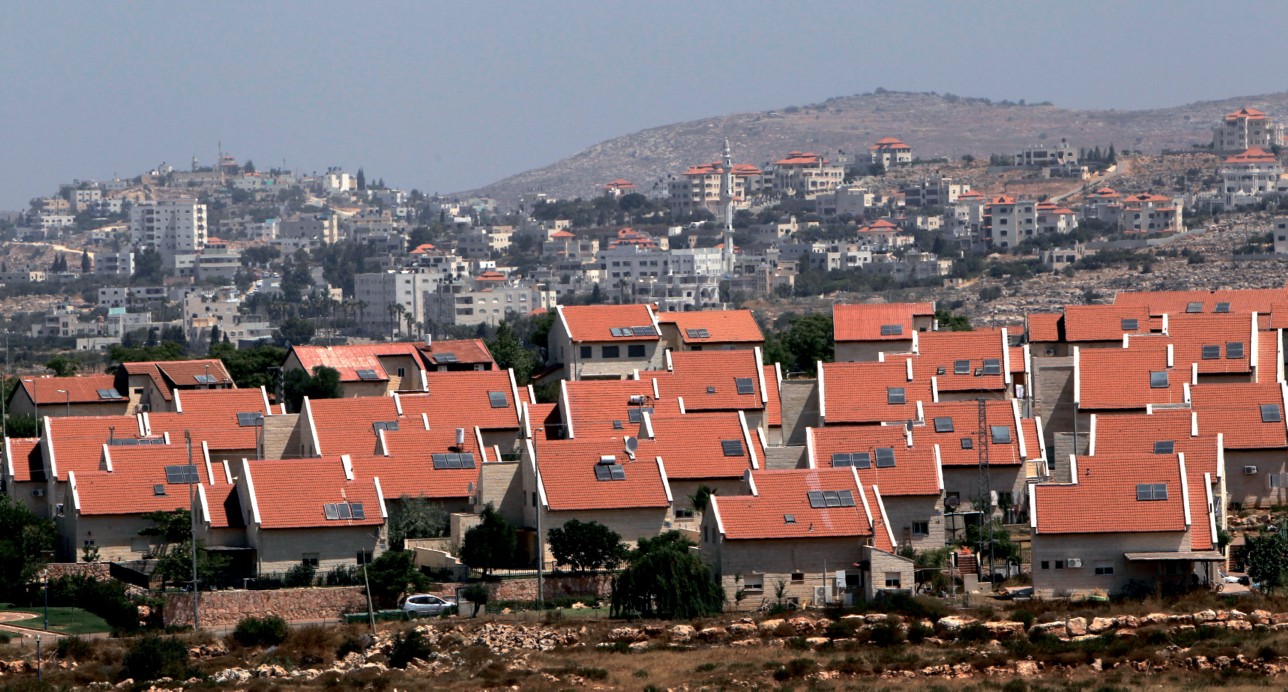
The visit by the Israeli prime minister to the USA also proved to be a remarkable one in the current context of US-Israeli relations, which are not enjoying their best period under US President Barack Obama. They even became lukewarm after the Israeli government, despite a promise given to US Vice-President Joseph Biden in March, approved plans for the construction of new settlements in Eastern Jerusalem. And this happened at a point when the US administration had already prepared everything for the start of Israeli-Palestine talks under its patronage. The White House leader was clearly unimpressed with this escapade by the Israeli administration and when Netanyahu arrived in Washington soon after to calm the troubled waters, Obama did not even invite TV reporters to cover the meeting.
However, Netanyahu's reception at the White House was held in a completely different atmosphere. Obama stated that America and Israel are tied together by "unbreakable bonds" meeting the strategic interests of both states. The reason for Obama's hospitality is quite clear: Netanyahu has agreed to begin direct talks with the Palestinians as early as this summer.
As a reward for this peaceful gesture by Netanyahu, who has the reputation of a "hawk" in the Israeli political establishment, Obama even expressed his readiness to support Israel on the nuclear issue. According to the US president, any accusations that Israel is concealing its nuclear programme may disrupt the Middle Eastern nuclear summit scheduled for 2012. Obama promised to support Israel on this issue even if the IAEA makes claims on the Jewish state. "Considering the geopolitical situation, Israel has the right to take care of its own security. As ever, we are concerned about the security of the Jewish state and want to be sure of its defensive capacity," Obama stressed.
Such demonstrative US support for Israel has given rise to speculation that there is more to it than Israel's latest peace initiative towards Palestine. As the November elections to the US Congress draw nearer, US Democrats apparently believe it would be wrong to maintain the ambiguity in relations with Netanyahu's government.
By securing at least some softening of Netanyahu's position, the Obama administration, with its head held high, confirmed adherence to "eternal union" with Israel, especially since the Palestine-Israeli conflict is the main obstacle to any confidence between America and the Muslim world and the restoration of stability in Iraq and Afghanistan.
Direct and indirect dialogue
Tel-Aviv has indeed softened its so far uncompromising position towards Palestine and is now trying to convince the world that it is ready to open a new page in the Middle Eastern peace process. This softening has occurred not only under pressure from Washington, but also due to a significant worsening of Israel's foreign political standing, following the attack on the humanitarian convoy near Gaza. In any case, Israel has announced an easing of the Gaza blockade by expanding the list of items that may be imported into this Palestine sector.
Israel has also suggested that EU countries build a power station and water desalination facility in Gaza. Commenting on this step, Israeli Foreign Minister Avigdor Lieberman said: "I have suggested that the Europeans stop saying 'hey guys, let's live in peace', but start implementing projects, assuming responsibility, building a power station and a water desalination facility in Gaza. We don't want to give Palestinians water and electricity forever." It is worth noting that Israel had never previously initiated such projects and even usually barred foreign politicians, including Europeans, from the Palestinian enclave.
But the biggest innovation in Israel's policies has been the consent of Prime Minister Netanyahu to hold direct talks with the leader of the Palestinian Autonomy, Mahmud Abbas. Netanyahu did not rule out, either, the possibility of signing a peace agreement with Palestine in the matter of a year.
Nevertheless, the opening of a direct dialogue between the Israelis and Palestinians still appears quite problematic. "Palestine and Israel need to make progress in conducting indirect talks on the Middle East before embarking on direct negotiations under pressure from the USA," said Mahmud Abbas. His view is explained by the fact that indirect talks have yet to produce any results. Israel's representatives are refusing to discuss the borders of the future Palestinian state, or the future of Eastern Jerusalem which, according to international legal documents, must become part of Palestine. This refusal to resolve problems which represent the gist of the Middle Eastern conflict is reducing the likelihood of success in the peace process.
Israel must, therefore, now prove that the innovations in its policies are meaningful and are not just an attempt to improve its foreign political standing by means of a few cosmetic measures. A breakthrough in the Israeli-Palestine settlement process will undoubtedly help untie other knots in the Middle East. In any case, it will be possible to normalize the Turkish-Israeli dialogue.
RECOMMEND:
 611
611

