

FRIENDSHIP AND GAS DO NOT MIX
The gas conflict between Russia and Belarus once again underlines the need to diversify energy supplies
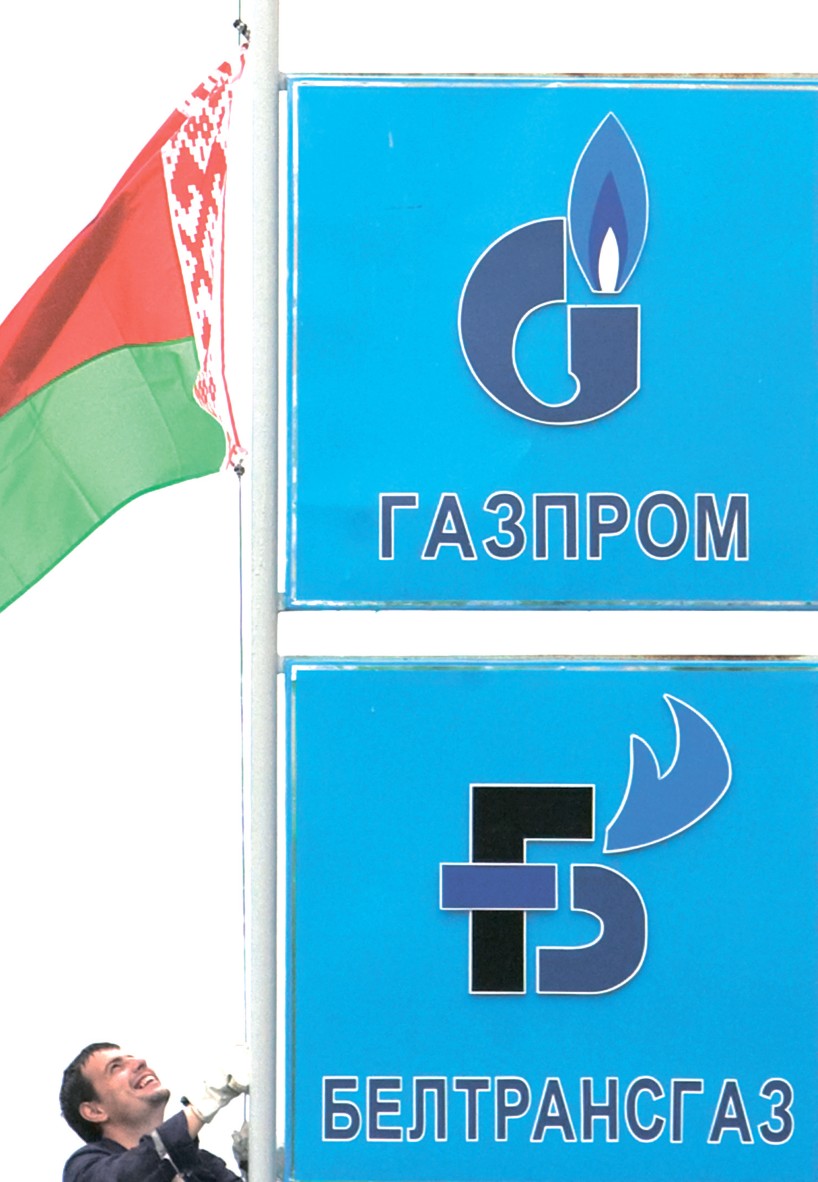
Author: Fuad HUSEYNALIYEV Baku
"We have no eternal allies or eternal enemies. We have permanent eternal interests, and we must follow them." This statement by the well-known 19th century British statesman, Lord Palmerston, was clearly applicable to the brief gas war between Russia and Belarus in the second half of June.
And in this case, it was not the two states with mutual political and economic claims that were in conflict, but countries which had formed a Union State and agreed to establish a customs union.
The chronology
In early June, Russia's gas monopoly Gazprom stated that Belarus owed $192 million for gas deliveries from January-April 2010.
According to Gazprom, the debt arose from the fact that Belarus had paid $150 per 1,000 cubic metres of gas in 2010, i.e. the average price of 2009, whereas it was due to pay the contract price of $174.
But Belarus has its own arguments. Minsk refers to an agreement on one-time transition to European prices for Russian and Belarusian consumers, which was reached during the sale of 50 per cent of Beltransgaz shares to Gazprom. Beltransgaz holds a monopoly on the supply and transit of gas to Belarus. For Russian consumers, the deadline for transition to European prices was postponed from 2011 to 2015.
Gazprom does not deny the existence of such an agreement, but argues that it is only a verbal agreement on one-time transition to European prices. The Belarusian side should, therefore, pay under the contract which involves a gradual and preferential transition to European prices. The Russian giant also announced a possible gas price increase for Belarus to $250 for 1,000 cubic metres from 2011.
The active phase of the gas war began with the blessing of President Dmitriy Medvedev to use strict measures against Belarus if it failed to pay the debt by 21 June. Belarus asked to be given until 5 July.
At a meeting with Gazprom head Aleksey Miller, the Russian president noted that he had discussed the debt issue with Aleksandr Lukashenko. Judging by subsequent events, the presidents failed to reach agreement.
"I talked with Aleksandr Grigoryevich (Lukashenko). He said that the situation was determined by a difficult financial situation. "But, frankly, it is difficult for everyone, and Gazprom has many problems as well," said Dmitriy Medvedev.
The Gazprom chief remarked at the same time that Belarus had the means to pay the debt, since the money from Beltransgaz shares bought for $2.5 billion had been channelled into compensating for the increase in gas prices.
As a result, from 21 June, Gazprom began reducing gas supplies to Belarus, introducing first a 15-per-cent limit and threatening to increase it to 85 per cent. In the active phase of the conflict, the limit reached 60 per cent.
In response, Belarus demanded that Gazprom pay $260 million for gas transit to Europe, threatening to block transit.
"Gazprom owes $260 million for the transit, including for May. I have ordered the government to block the transit of gas through Belarus until Gazprom pays. They have not paid us even a penny in six months," Lukashenko said at a meeting with Russian Foreign Minister Sergey Lavrov in Minsk.
"We do not owe Gazprom. Gazprom owes us $70 million, if we count the $260 million for transit, and the Belarusian debt is $190 million for 4 months, which accumulated while we were negotiating," said the president.
He stressed that Belarus was "trying to negotiate with Russian partners, including at the highest level", to maintain the conditions of payment. "By 1 May, we had failed to agree," said Lukashenko.
The Belarusian president also proposed the introduction of a mutual settlement of debts to close the issue. This proposal did not suit the Russian side, and they insisted that Belarus immediately settle its debt for the gas supplied, he said.
Thus Aleksandr Lukashenko concluded that "overt pressure" was being exerted from the Russian side.
In addition, Belarus demanded an increase in the rate of gas transit from $1.45 per 1,000 cubic metres of gas per 100 kilometres to $1.88. According to Minsk, the schedule of tariff increases was defined in the contract for the purchase of gas, and was to be $1.74 in 2009, although Gazprom was paying $1.45. Gazprom stated that it was ready to pay, but Belarus had not signed acts on gas transit since the beginning of the year. As for the issue of increasing the tariffs for gas transit, Gazprom linked it to the need to increase price mark-ups on gas Belarus consumers to ensure the effectiveness of Beltransgaz; this was rejected by Minsk.
As a result, although Belarus did not totally halt the transit of gas, it did begin to reduce its volume, following the volume of limitations imposed by Gazprom.
It must be noted that in contrast with the gas crisis involving Ukraine, the restriction or termination of transit could affect only three countries - Lithuania, Poland and parts of Germany. Each year, about 50 billion cubic metres of gas are pumped through Belarus to Europe, which accounts for 6.25 per cent of the gas consumed in the EU.
The termination of transit would affect Lithuania most of all; it is 100 per cent dependent on supplies from Belarus. In the climactic phase of the gas war on 23-24 June, Lithuania was being supplied with only 50 per cent of the planned quantity of gas. Lithuania, in turn, shut off gas to the Kaliningrad region of Russia and, as a result, Russia suffered a boomerang effect. Lithuania was going to appeal to Latvia, which could have covered the gas shortage for a week, but the situation, as predicted, was resolved quickly.
Gazprom aims to address the question of deliveries to Poland and Germany through Ukraine, where conditions make it possible to pump an additional 30 billion cubic metres in addition to the 100 billion cubic metres currently being pumped. Ukraine, in turn, offered its facilities to supply gas to European consumers.
The situation in the Russian-Belarusian confrontation was eased by the season, when demand for "blue fuel" falls considerably. But even the restriction of supplies to Lithuania alarmed the "old lady" of Europe.
"International obligations on gas supplies must be strictly honoured. The current reduced supplies to some EU countries are unacceptable. It is a challenge to the entire European Union," said the European Commissioner for Energy, Gunter Ettinger.
"In recent days, the European Commission has repeatedly said that contracts must be fulfilled and the dispute between Russia and Belarus must not have any negative impact on the EU," the EU said in a communiqu?.
Lithuanian President Dalia Grybauskaite called for the EU to take action on the recurring energy disputes between Russia and other countries.
"Repeated cases of score-settling, especially in the energy sector, between countries, especially between Russia and other countries, should really cause concern to the whole of Europe. It is about the security of supplies of gas and other energy resources to Europe, and they should be provided, particularly to EU states. This is our common cause," she said.
But the conflict, as noted above, subsided very quickly. On 23 June, Belarus paid $187 million of its debt and the next day it received $228 million from Russia. As a result, gas supplies to Belarus and the transit of gas to Europe were resumed in full mode from 24 June. This synchronization allowed the Belarusian side to claim that the gas crisis had been groundless and artificial.
Belarusian First Deputy Prime Minister Vladimir Semashko believes that the fact that Gazprom paid its gas transit debt means that the Russian side acknowledged its unjustified action to restrict gas supplies and its failure to comply with the contract.
"By doing so, Gazprom acknowledged the illegality and groundlessness of its actions and their discrepancy with the terms of the contract. The obvious absurdity of these restrictions is who owed whom more," said Vladimir Semashko.
Belarusian President Aleksandr Lukashenko also believes that there was no reason for a conflict. According to him, "this dispute is absolutely groundless on the part of Russia".
The parties also agreed on an amendment to the contract for the supply and transit of gas and it is expected to be signed soon.
This is not the first gas conflict between the two countries. A similar situation over payments for natural gas came about in 2007 when Belarus paid 55 per cent of its value for the first half-year, which resulted, by August, in an outstanding debt of about $460 million to Gazprom. At that time, Gazprom announced its readiness to reduce gas supplies by 45 per cent if the debt was not paid. The Belarusian side tried to negotiate with the government of Russia and Gazprom to defer the payment because the leadership of Russia had earlier promised a stabilization loan of $1.5-2 billion in connection with more than a twofold increase in gas prices from 2007.
At that time, the Belarusian side repaid its debt to Gazprom on the personal decision of President Aleksandr Lukashenko within the space of a few days.
In this case, the practical fulfilment of mutual threats could not be avoided, and this gas war once again underlined the need to diversify energy supplies.
A more realistic alternative is, as we know, the Caspian basin, and in particular Azerbaijan. It is no accident that in the midst of the gas war, Aleksandr Lukashenko called Azerbaijani President Ilham Aliyev and the Kazakh leader Nursultan Nazarbayev and informed them about the gas dispute with Russia.
This move shows the importance of the Caspian basin in the context of Europe's energy security. Although the major Caspian energy resources would not be a full replacement of Russian gas for Europe, they may improve the diversification of supplies and help to avoid problems during the gas "wars" that have become all too frequent recently.
For its part, Azerbaijan has practically eliminated potential barriers to its entry into the European gas market. The agreements with Turkey on gas transit to Europe pave the way for the full development of Sah Daniz. Azerbaijan's potential is not limited to these fields, and there are many other deposits (Naxcivan, Abseron, Babak, the Azari-Ciraq-Gunasli deep gas reservoir fields and others) waiting in the wings. Now it is up to European buyers, and the sooner they agree with Azerbaijan, the sooner they will ensure their energy security. Given the projects to supply liquefied natural gas from Azerbaijan, Belarus may even receive energy reserves from our country.
For example, in the midst of the gas conflict with Russia, Belarusian Energy Minister Aleksandr Ozerets expressed interest in participating in the construction of a liquified natural gas terminal in Lithuania.
"We, like you, want to diversify energy sources and reduce dependence on Russian gas," Ozerets said at a meeting with his Lithuanian counterpart Arvydas Sekmokas.
After all, if Belarus gets the same oil from Venezuela, why should it not negotiate with Azerbaijan on gas?
RECOMMEND:
 688
688

