

POLITICS, ECONOMICS AND FOOTBALL
The truth had to be sought somewhere in the middle...
Author: Irina KHALTURINA Baku
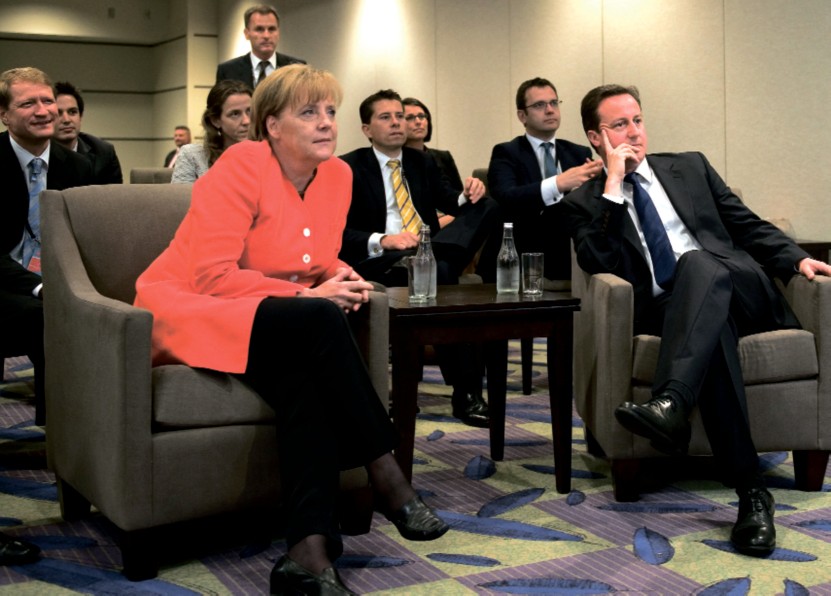
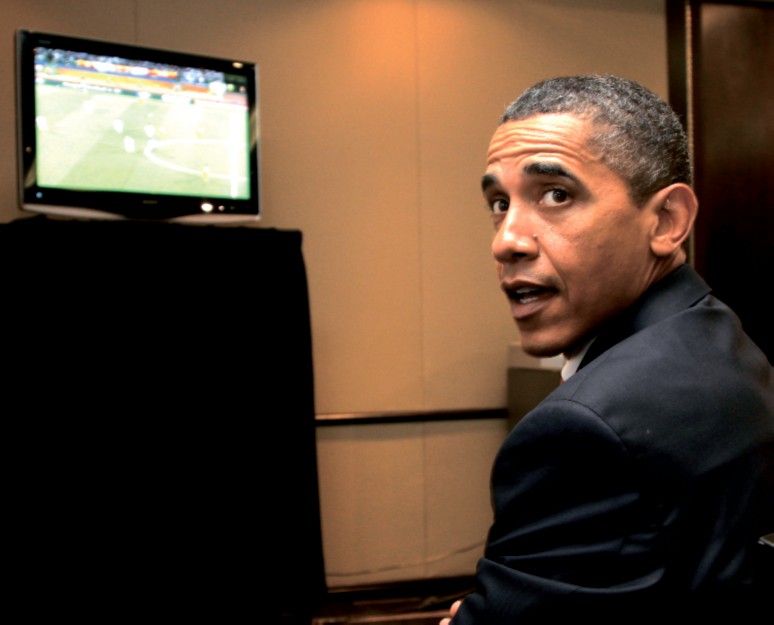
The planet's attention in late June was focused on two opposite parts of the world - the G8 and G20 summits held in Canada in the northern hemisphere, and the World Cup, which is taking place in the southern hemisphere - in South Africa. According to observers, the schedule of the Canadian summits was arranged so that the most important meetings did not coincide with the broadcasting of matches. But, apparently, it did not really work as Germany's Chancellor Angela Merkel and British Prime Minister David Cameron left a meeting of the G20 summit to catch the second half of the Germany-England match in the first knock-out round. Cameron admitted that during the match he and Merkel were "literally glued to the screen", forgetting all else...
So, football on the one hand, and politics and economics on the other, do not have so little in common as may appear at first sight. Modern world football is increasingly influenced by politics and economy, while politics and economy often resemble a "game" that has its own rules, winners, outsiders, fines and penalties...
Of course, the G8 and G20 could not compete with soccer games in terms of entertainment or emotion. However, if mistakes and failures in football sadden only the fans, errors in world politics and economy can cost all mankind dearly.
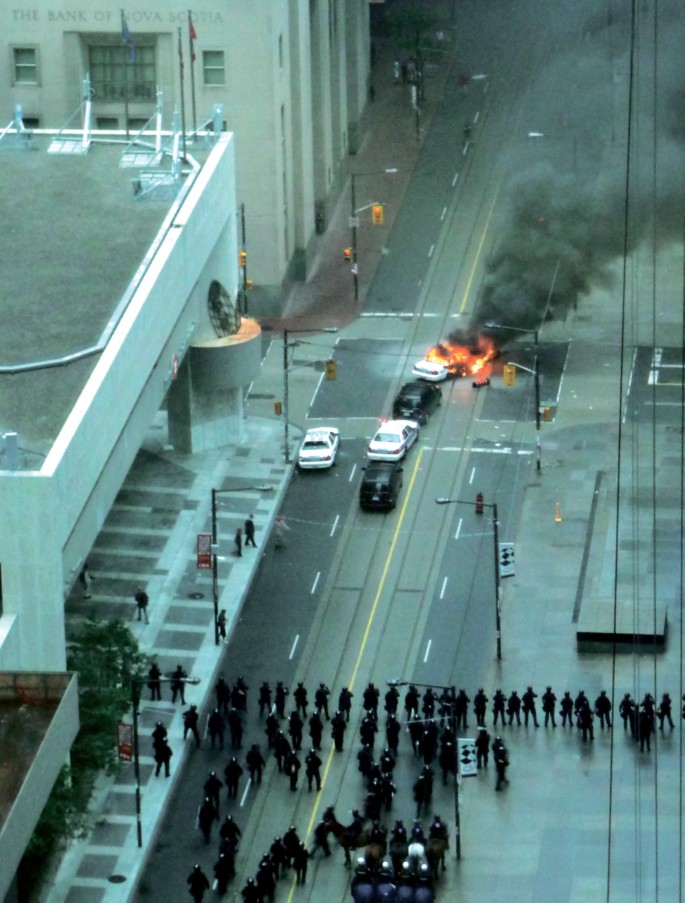
This is the first time that G8 and G20 summits have been held one after another, i.e. almost at the same time. The venue in 2010 was Canada - the G8 summit was held in Huntsville and the larger G20 summit in Toronto.
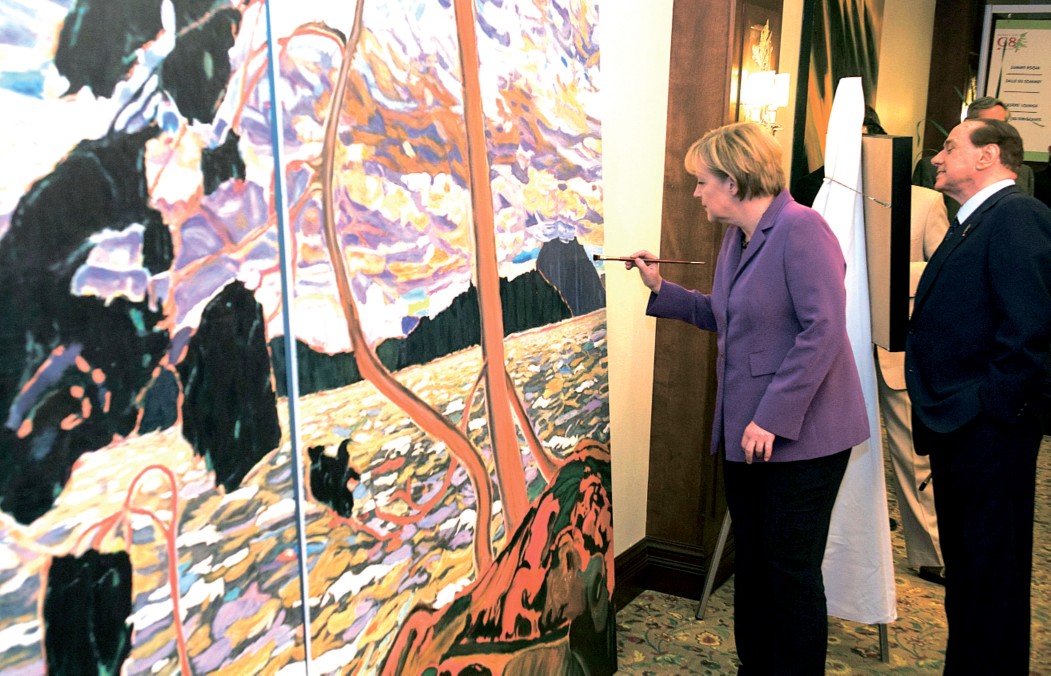
The G8 leaders - Chinese President Hu Jintao, the prime ministers of Italy, Britain and Japan - Silvio Berlusconi, David Cameron and Naoto Kan, German Chancellor Angela Merkel, the presidents of France, Russia and the US, Nicolas Sarkozy, Dmitriy Medvedev and Barack Obama gathered at the Deerhurst resort in Muskoka County, Ontario, which is poetically called the land of lakes and cottages.
Canada originally proposed three major themes: reducing women's mortality in childbirth, reducing infant mortality from infectious diseases in developing countries and combating international terrorism and nuclear proliferation. There was also the range of issues that are traditional for international summits - the non-proliferation of weapons of mass destruction, measures against maritime piracy, the situation in Afghanistan and the fight against drug trafficking, the Middle East settlement and the nuclear programmes of Iran and North Korea, this time supplemented by the sinking of the South Korean corvette Cheonan.
In particular, the G8 countries called on Tehran and Pyongyang to respect the rule of law and freedom of speech and they condemned the sinking of the South Korean ship, for which Seoul blames North Korea. At the same time, the Russian media noted that the document did not contain very strong language against Iran and North Korea, on which the US had particularly insisted. Some observers point out that this was mainly due to Moscow's efforts.
In addition, Russia said in Huntsville that new unilateral sanctions against Iran, which faced a new package of UN Security Council sanctions in early June, were unacceptable. In any case, for the time being, none of the international documents condemning Iran's nuclear programme has had any effect on the country. So it did not matter how many resolutions were adopted.
The G8 leaders expressed concern about the humanitarian situation in Gaza and called for the government of Afghanistan to intensify efforts to democratize the country and improve the security situation, state governance and the justice system.
With regard to initiatives to improve child and maternal health, Canada alone is going to allocate 1.1 billion Canadian dollars (about $ 1 billion) to this end. According to the UN Children's Fund (UNICEF), about 9 million children worldwide die each year before reaching the age of five. This happens because of infectious and other diseases which cannot be averted by low quality health care. The problem is particularly important in poor countries, especially in Africa.
The G8 also unanimously condemned terrorism in all its manifestations, including the bombing of the Moscow metro in March 2010 and the attempted bombing of an airliner in Detroit in December 2009. The declaration adopted at the summit says "all manifestations of terrorism are crimes that are contrary to humanity and have no justification, regardless of motivation". Particular emphasis was placed on the threat of nuclear terrorism.
As far as the global economy is concerned, the G8 reaffirmed its commitment to free and open markets "as a tool for sustainable recovery from the global economic crisis" and is going to continue to confront manifestations of trade protectionism.
Thus, as correctly noted by Russian presidential aide Arkadiy Dvorkovich, "there is no super-optimism on any issue, but at the same time, there is an understanding of how we should act in the near future". That there is no optimism is quite understandable, but the presence of "the understanding of how we should act" cannot but reassure us, of course...
Meanwhile, the G8 summit was almost immediately followed by the G20, which consists of 20 developed and developing countries. Besides the G8 itself, it includes Argentina, Australia, Brazil, India, Indonesia, Japan, South Korea, Mexico, Saudi Arabia, Turkey and South Africa, as well as the European Union, represented by the presiding country. The G20 countries comprise two-thirds of the world's population and produce about 85 per cent of world GDP.
The main topics of the summit were the struggle against the consequences of the global economic crisis and financial management.
Intrigue began long before the meeting. For example, Canada, the USA, Russia and several other countries refused to support the imposition of a crisis tax on banks (a global tax on all banking transactions), as advocated by the EU, especially Germany, France and Britain. According to the authors of this idea, this could help return the funds that were invested in the financial sector in the midst of the crisis. However, opponents of the initiative believe that the introduction of a banking tax should not be compulsory and should be decided by each country independently.
In turn, the US urged the EU not to stop stimulating economies for the sake of the struggle against budget deficits. US President Barack Obama even tried to appeal to "the economic conscience" of EU leaders to refrain from radical cuts in government spending.
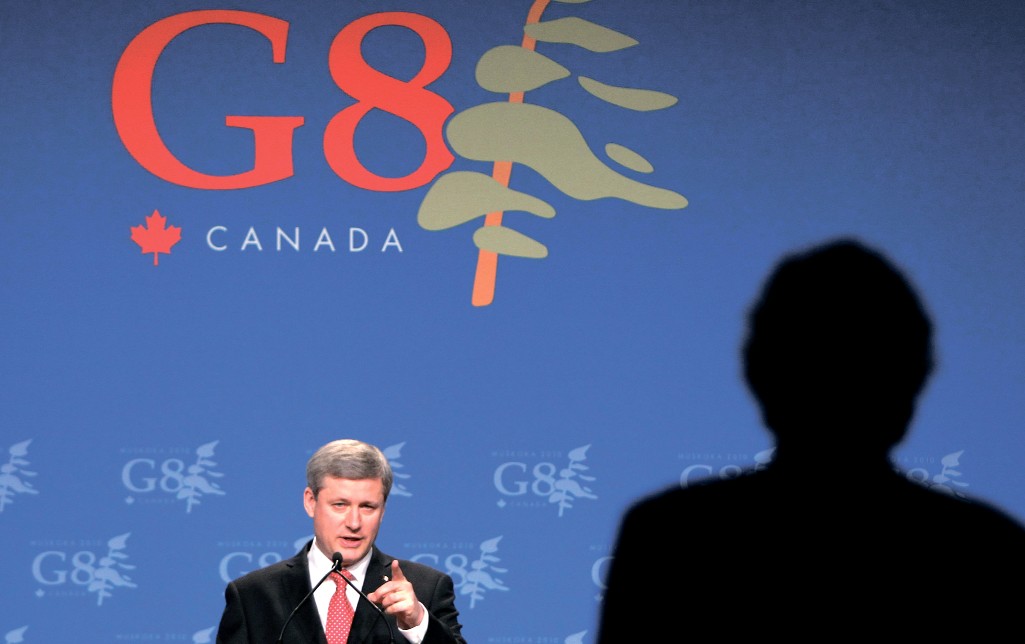
However, the US, which is trying to prevent the spread of an epidemic called "debt crisis" at home, is seeking any way possible to reduce budget deficits. Thus, the EU failed to agree on a drastic cut of 300 billion euros in state spending (Germany announced cuts of 80 billion euros in budget spending). However, such savings could adversely affect the pace of world economic recovery. According to Canadian Prime Minister Stephen Harper, the Europeans should not solve their financial problems by weakening global trade and increasing the imbalance in global trade and payments. As a result, as it turned out, the truth and willingness to compromise had to be sought somewhere in the middle.
Representatives of the G20 countries agreed to halve their budget deficits by 2013 and then to begin to stabilize the level of external debt. The G20 leaders also talked about establishing international regulators. This concerns mutual consultations about how monetary and fiscal policies are conducted etc. They also discussed multilateral reforms to the International Monetary Fund (IMF).
Thus, the post-crisis world has also turned out to be a difficult place. In the most acute phase there was no time to talk about nuances and world leaders found it much easier to reach consensus.
Against this background, there is much talk about the traditional theme that the G20 will gradually replace the G8. So what is the difference between them? Basically, it is that while the G8 devotes more attention to politics, the G20 is more focused on the economy.
Of course, the G8 has many shortcomings. For many people, for example, there is something abnormal in the fact that global problems such as poverty or the food crisis were discussed by the leaders of the world's strongest countries at a luxury resort overlooking a lake with emerald water and to the "accompaniment" of the finest wines, as well as dishes designed for true gourmets.
It is reported that $1 million was spent on checking the food for the leaders of G8 member states. And Canada spent a billion dollars on just two summits, which aroused indignation among anti-globalists and other protesters of various stripe.
That the G8 is already receding into the past is out of the question. The main reason for this is that it does not include many large countries that now have great economic and even political weight - notably China, India and Brazil.
The productivity of G8 decisions is also questionable, as their execution is almost impossible to control. In particular, a Canadian civil society organization estimated that in 35 years, ever since the founding of the G8, 3,000 "empty" agreements have been signed.
Both the G8 and the G20 are a platform for numerous bilateral meetings, during which presidents can synchronize their "clocks" and share their concerns. But if it is considered one of the main advantages of the summit, then such "sittings" are clearly costly for the taxpayers of any country. In any case, the same can be said of other international organizations such as the UN, for example. In this case, the fact that the G8 has a club format and is devoid of the need to go through various bureaucratic procedures, speaks in its favour.
As for the G20, as the world economy recovers, it is becoming increasingly difficult for member countries to negotiate with each other, the large number of countries means that they have many differing interests.
Nevertheless, today the G20 is the only platform upon which the weaknesses of the global economy are openly discussed. No wonder this summit has the status of a primary global forum on financial and economic issues.
The existence of the G8 and the G20 also offers hope that one day the world will indeed become not only multi-polar, but also that the various poles of world politics and economy will be able to develop mechanisms for finding agreement with each other. However, this is not the most important thing - it is essential to establish a system that would really be able to ensure and monitor the implementation of decisions taken. It is also clearly necessary to develop ways of interaction between the G8, G20 and other countries.
So, the political-economic show is over, and all attention can switch fully to the soccer show. Yet we wonder whether David Cameron's mood at the summit was influenced by the fact that Germany beat England by a crushing score.
RECOMMEND:
 562
562

