

REFERENDUM IN DRAMATIC TIMES
Kyrgyzstan still the epicentre of geopolitical tensions in Central Asia


Author: Natiq NAZIMOGLU Baku
Kyrgyzstan continues to be the epicentre of geopolitical tensions in Central Asia. The situation there, which was exacerbated considerably following the toppling of ex-president Kurmanbek Bakiyev, was aggravated by ethnic clashes between the Kyrgyz and Uzbeks which claimed 280 lives. A chance to stabilize the situation in the region's poorest country was provided by the referendum, which changed the political system in Kyrgyzstan. Whether this chance will be taken and whether it is worth counting on such a prospect, is still not known.
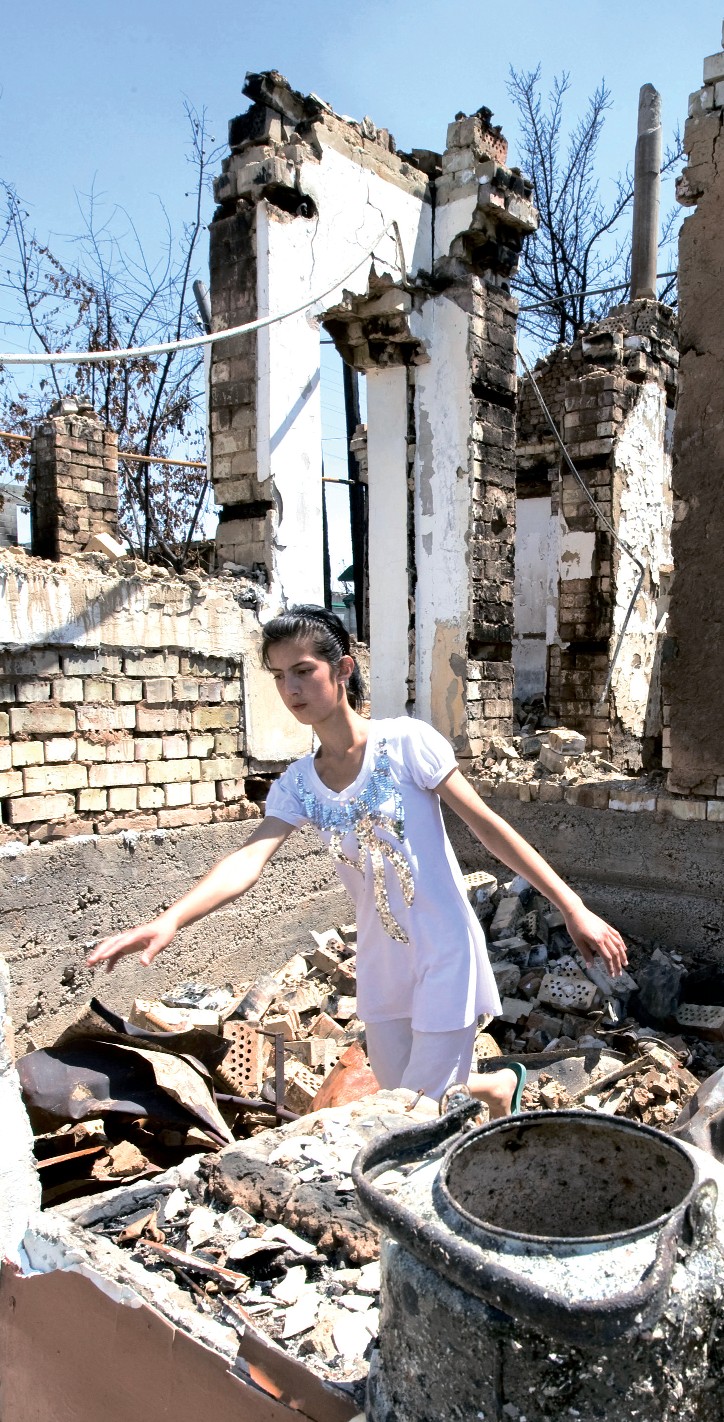
Ethnic clashes started with a mass fight in the south of Kyrgyzstan on 11 June. Pogroms, looting and arson lasted for a week, compelling the authorities to introduce a state of emergency in several districts of the Osh and neighbouring Dzhalalabad regions, also affected by the disturbances. But it was clear from the very beginning that they were a continuation of the developments which led to the toppling of Bakiyev's regime and the formation of a new government led by Roza Otunbayeva.
In fact, according to Kyrgyz authorities, the clashes were triggered by Bakiyev's forces. Law-enforcement agencies have arrested the nephew of the overthrown president, Sanzhar Bakiyev, who admitted his guilt in organizing clashes in Dzhalalabad on 13-14 May (hot on the heels of the yet another Kyrgyz revolution) and of inciting ethnic feuds.
However, the authorities have not only blamed the previous administration but also "international terrorist organizations which had been receiving money from Bakiyev's clan". The head of Kyrgyzstan's national security service, Keneshbek Dushebayev, stated that the Islamic Movement of Uzbekistan and the Union of Islamic Jihad had a hand in the tragedies in the Osh and Dzhalalabad Regions. He said Kurmanbek Bakiyev's son, Maksim, met with representatives of the Islamic Movement of Uzbekistan in Dubai in April, while in May representatives of Bakiyev's family reached agreement with the Taleban, the Islamic Movement of Uzbekistan and other terrorist organizations in Badahshan, Afghanistan, to destabilize the situation in Kyrgyzstan. "The Bakiyevs promised $30 million to this end," Dushebayev said.
Bakiyev denies the accusations against his family. However, Uzbek President Islam Karimov also hinted at the role of a "third party" in the Kyrgyz developments. Instead of issuing the expected harsh reaction to anti-Uzbek events in the neighbouring country, Karimov did not say anything to worsen bilateral relations. In fact, he succeeded in returning almost 100,000 Uzbek refugees to Kyrgyzstan. Many refugees who had crossed the Kyrgyz-Uzbek border in fleeing from violence have been expressing discontent about deportation from Uzbekistan. The reason for Tashkent's hasty return of the refugees was cited as the need for their participation in the Kyrgyz referendum scheduled for 27 June. Subsequently, however, most Uzbek citizens of Kyrgyzstan did not take part in the vote after being ignored by referendum organizers.
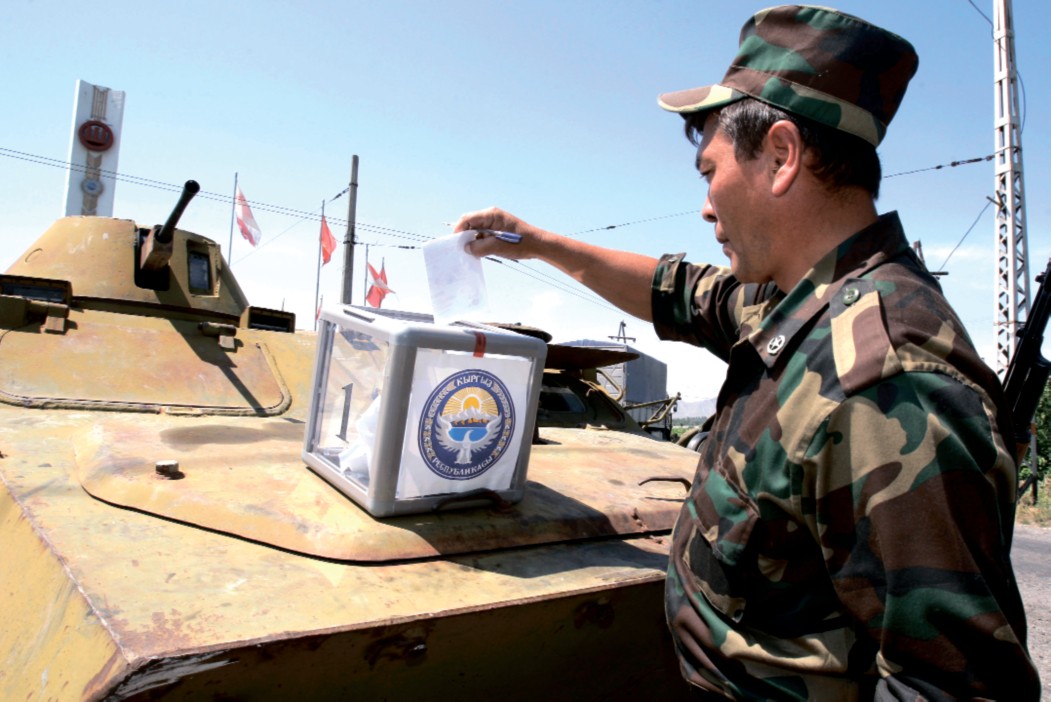
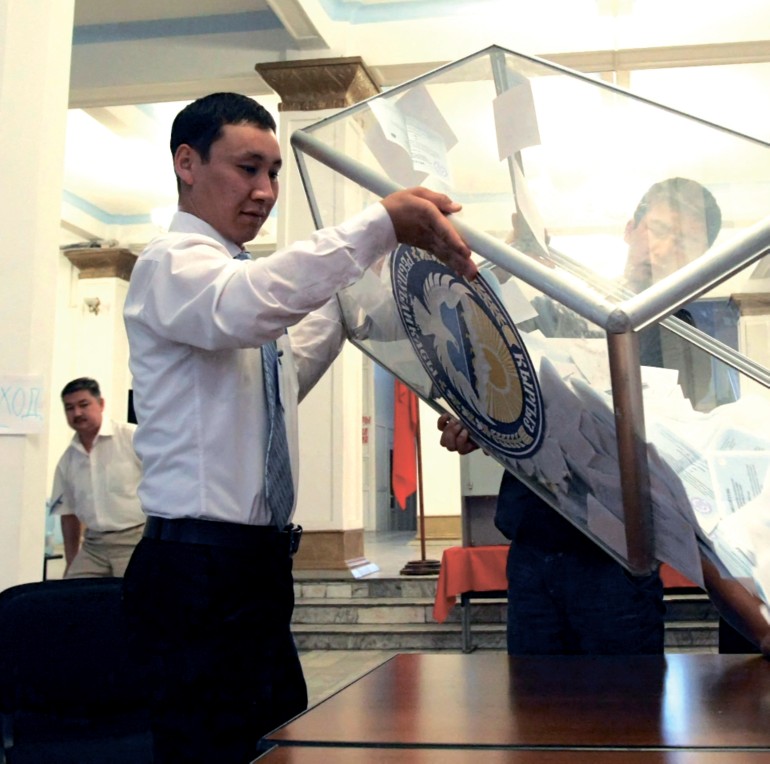
Lack of proper organization was one of the reasons given by opponents of the referendum, who insisted that it was unacceptable to conduct a nationwide vote in circumstances completely ruling out the expression of free will. Ethnic bloodshed, the state of emergency in the south of the country, mop-up operations by law-enforcement bodies enforcing passport checks and searches for arms certainly do not create a favourable background for conducting a referendum which is intended to change the course of the country's development. However, the new Kyrgyz authorities insisted that there was no other way out of the predicament. Voters were asked to answer questions regarding the granting of presidential authority to the head of the temporary government, Roza Otunbayeva, until the next parliamentary election and constitutional amendments whereby presidential powers are to be limited and a parliamentary form of governance introduced. Prior to the referendum, Otunbayeva urged citizens to take part in the referendum and vote to support the new fundamental law. She added that although the vote would take place "in a difficult and dramatic period, the new constitution would put an end to authoritarianism and the epoch of immoral political regimes of former presidents Askar Akayev and Kurmanbek Bakiyev.
It is worthy of note that the US embassy in Kyrgyzstan expressed support for the temporary government. It said the referendum "would be an effective step towards restoring democracy" in Kyrgyzstan. The Kyrgyzstan issue was also on the agenda during the Russian president's visit to the USA, which confirms again that the super-powers want developments in the Central Asian republic to unfold in an acceptable manner. However, statements by Dmitriy Medvedev and Barack Obama revealed that Moscow and Washington do not have a single view on Kyrgyzstan's geopolitical future. And the issue of Russian and US military bases in this country is not the only point of disagreement. For instance, on the prospect of introducing an international military contingent to Kyrgyzstan the Russian president stated that the country should restore order at home by itself. At the same time, Medvedev acknowledged that he had indeed been asked by the acting Kyrgyz president, Roza Otunbayeva, to provide military assistance within the Collective Security Treaty, but "secretaries of security councils have not deemed that necessary yet". The Russian president added: "The Organization of the Collective Security Treaty will certainly be responding to these problems. As and when necessary I, as chairman of the organization, may convene a meeting of secretaries of security councils or presidents of member-countries at any time."
The US president, for his part, said "one of the issues we have discussed is the creation of a mechanism whereby the international community would ensure a peaceful solution and measures to protect the civilian population should be taken not by one particular country but by the international community".
Thus the differences in the way the Kremlin and the White House look at the future development of the situation in Kyrgyzstan are obvious. While Russia prefers Kyrgyzstan to take care of its problems itself or at most with the help of the Collective Security Treaty, the USA is taking a broader view, giving preference to an international presence in Kyrgyzstan.
The answer to the question as to why Russia decided not to send troops to Kyrgyzstan, especially after Otunbayeva had officially requested help, should be sought in the geopolitical context. Moscow is not quite sure of the pro-Russian nature of the new Kyrgyz administration and does not think it appropriate to enter Kyrgyzstan in circumstances when, on the one hand, domestic political strife in the country still threatens unpredictable consequences and, on the other, there is still a US air-force base in Kyrgyzstan. In other words, Moscow has made it clear to Otunbayeva's government that it doesn't want to be duped, as was the case under Bakiyev, who took financial aid from Russia but who also encouraged the presence of a US air-force base.
The Americans, meanwhile, make clear their intention to hold on to the Manas air-force base, whose strategic importance has grown as the international coalition's position in Afghanistan has worsened. Isn't Washington's positive assessment of Otunbayeva's political initiative, namely the constitutional referendum, intended to win the support of the new Kyrgyz administration?
It is also notable that, contrary to the US stance, Russian President Medvedev expressed doubts about the potential of the new Kyrgyz authorities. He said "their legitimacy is low" and "I can't quite imagine how the parliamentary republic model will work in Kyrgyzstan, whether it won't turn into a chain of endless problems, reshufflings in the parliament, uncontrolled transfer of powers from one person to another and, at the end of the day, whether this won't lead to the ascent of extremist forces to power".
Such fears are indeed legitimate. But the fact today is that the referendum has been held and, according to official statements, the people have supported the extension of Otunbayeva's presidential term for a transitional period until 31 December 2011 and the conversion of Kyrgyzstan into a parliamentary republic.
Shortly after the referendum, Otunbayeva declared the legitimacy of the new authorities. "We have adopted a new constitution. The referendum has been held despite the difficulties and resistance from opponents. Thus our people have put an end to the epoch of authoritarian rule by two clans - the Akayevs and Bakiyevs."
Of course, the legitimacy of the referendum, held in the circumstances prevailing, will still be questioned for some time. Besides, it is likely that once the authorities have been completely established, Otunbayeva's current allies may break away. Such an experience is already there in Kyrgyzstan's recent history. Otunbayeva herself is a product of the revolution of five years ago, when Akayev was toppled and Bakiyev became president. But the failure of the current authorities, who have been displaying democratic aspirations, at least in words, may lead to a break-up of the whole Kyrgyz state. It is in the interests of the Kyrgyz people to thwart the plans of domestic and external forces interested in taking Kyrgyzstan the way of chaos and civil war.
RECOMMEND:
 605
605

