

MEDITERRANEAN DRAMA
Turkey and Israel face a complete breakdown of relations

Author: Natiq NAZIMOGLU Baku
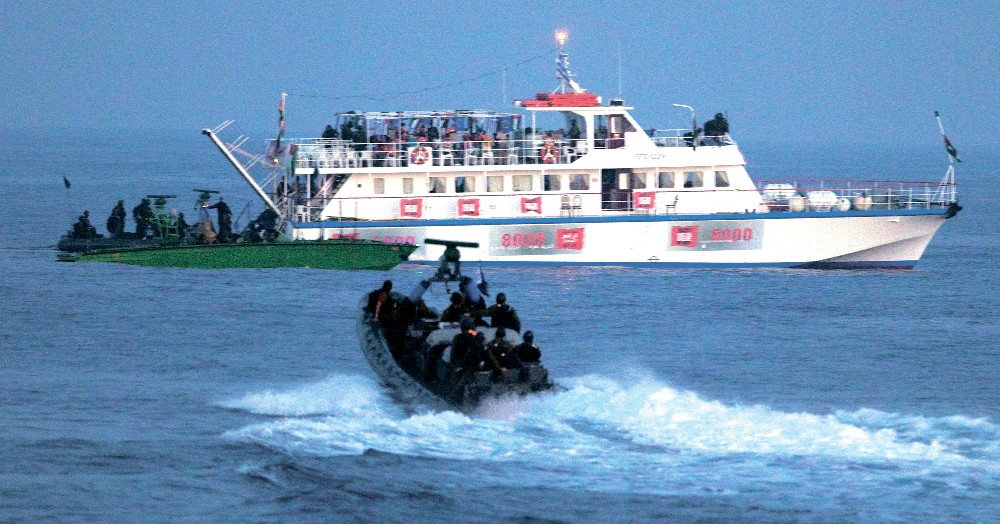
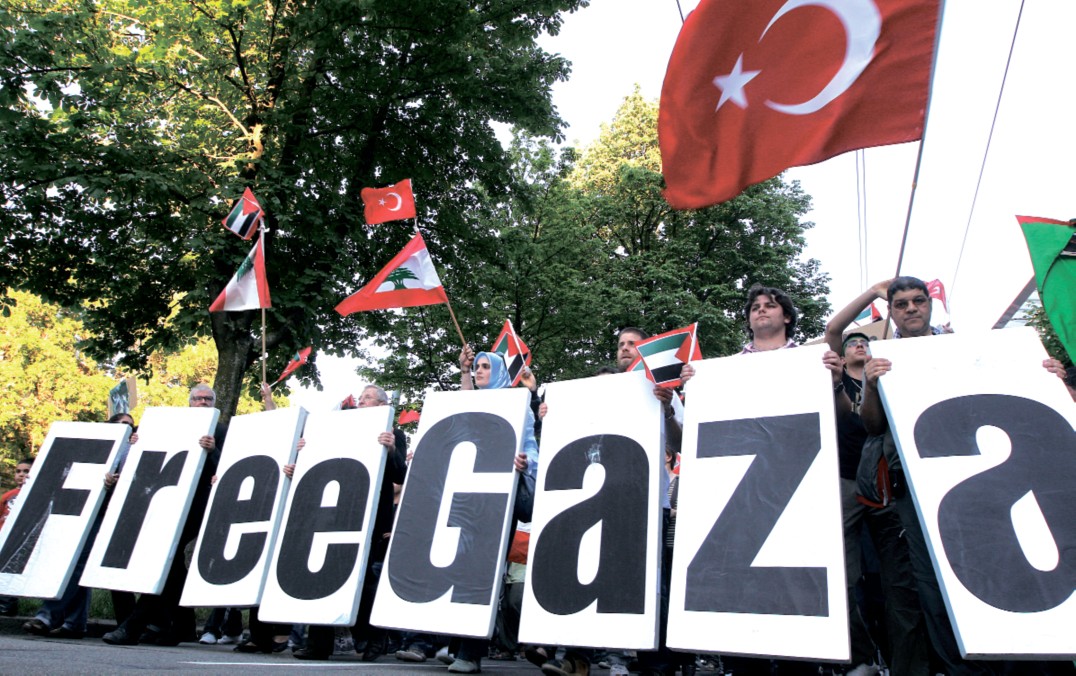
Turkey and Israel are on the verge of severing diplomatic relations. The tensions between the two countries began eighteen months ago as Ankara condemned the Israeli military operation in the Gaza Strip, and they have now reached a climax. The reason was an attack by Israeli armed forces on a Turkish ship carrying humanitarian aid to the shores of blockaded Palestine.
The "Freedom Flotilla", consisting of six ships carrying 10,000 tonnes of medicines, food and construction materials for the civilian population of Gaza, tried to break Israel's naval blockade. However, Israeli commandos carried out an operation to intercept the flotilla, although at the time of the attack it was in the neutral waters of the Mediterranean Sea. Nine people were killed in the operation, and most of them were citizens of Turkey. According to the Israelis, the firefight was provoked by the humanitarian convoy. Israeli President Shimon Peres even said that "the purpose of this mission was to organize provocations and support for the terrorist organization Hamas".
Subsequently, however, no cargo other than humanitarian was discovered on the "flotilla". It must be noted that, apart from Turkish citizens, there were also representatives from the US, Britain, Germany, Serbia, Belgium, Ireland, Norway, Sweden, Greece, Australia, Canada, Malaysia and Algeria on the ships. Therefore, the international community considered the arguments of the Israeli side totally unconvincing and sharply condemned the special operation to seize the "Freedom Flotilla".
Israel's actions were also condemned by the UN Security Council, which called for an investigation into all the circumstances of the tragedy in the Mediterranean Sea. The UN special rapporteur on the situation in the occupied Palestinian territories, Richard Falk, called the Israeli actions "a blatant crime against humanity". He urged the international community to prosecute the culprits in the murder of the peace activists. In addition to the UN, Israel was also condemned by the United States, France, Iran and many other countries. A joint statement by Russia and the EU called for a thorough and impartial investigation into the Israeli military operation against the "Freedom Flotilla".
However, the situation is aggravated by Israel's unwillingness to accept the establishment of an independent international commission to investigate the tragedy. Ankara insists on the establishment of a commission, warning that if Israel does not agree to an international investigation, there might be a complete severance of bilateral relations. Confirming the seriousness of its intentions, the Turkish side has already suspended military cooperation with the Jewish state.
Turkish Prime Minister Recep Tayyip Erdogan, who called the Israeli actions state terrorism, said that "nobody has the right to try the patience of Turkey, or flirt with it, which is why Israel must definitely be punished for its actions against the international fleet". Meanwhile, Ankara's harsh criticism of Israeli policies in the region should be considered not only as a protest against actions that are unacceptable to Turkey in terms of human morality, but also a step that fully complies with the growing geopolitical ambitions of the country.
In a recent statement, Turkish Foreign Minister Ahmet Davutoglu did not agree with statements about a change of priorities in Ankara's foreign policy, stressing that "we have never abandoned the ideals of the European Union". And that statement is quite true in the sense that, while criticizing the inappropriate use of military force by Israel against the Palestinians, Turkey proceeds from the same humanist ideals as the European community. At the same time, the Erdogan government's policy clearly indicates that Turkey seeks not only to become a full member of the Euro-Atlantic world, but also the leading country in the Islamic East. Another question is that in a situation in which the European Union itself does not agree to admit Turkey into its "home", it seems to compensate for its failures in relations with the West by overstressing its claims in an "Eastern" direction. It is simply unthinkable to become the first country in the East while turning a blind eye to Israel's policies, as did the former liberal cabinets in Turkey. Therefore, Ankara expresses dissatisfaction with Israel's actions, although until recently it did not question, at least at an official level, the strategic nature of Turkish-Israeli cooperation, as proven by the continuation of joint projects in the military-technical sphere. However, the "final straw" was the Israeli special forces' attack on the "Freedom Flotilla", which led to the death of Turkish citizens. Of course, Turkey cannot accept such an attack without consequences for bilateral cooperation, which, in fact, may already have ceased to exist if we believe the rhetoric of the Turkish leadership, in particular that of President Abdullah Gul.
Ankara's diplomatic success at the Istanbul Conference on Interaction and Confidence-Building Measures in Asia (CICA) is remarkable. During the summit, Turkey was able to enlist the support of all forum participants, except Israel's ambassador to Turkey. For Turkey, it was quite convenient that Russian Prime Minister Vladimir Putin condemned Israel's actions, promising to raise with the UN the question of investigating Israel's attack on the "Freedom Flotilla" and confirming the impossibility of implementing a plan to extend the Blue Stream-2 gas pipeline, which will connect Russia and Turkey, to Israel.
Israel, meanwhile, sticks to its guns and continues to lay the blame for the incident on the humanitarian convoy itself. Assuming that such accusations against Turkey were legitimate, it is impossible not to wonder how Israel could succumb to such provocation. Didn't Israel foresee all the negative consequences of its disproportionate response to the actions of the rights campaigners who were determined in their attempt to carry the cargo to Palestine?
The popular belief that Ankara should not allow such a sharp deterioration in relations with Israel is as true as the assertion that it is not in Israel's interest to spoil relations with Turkey - the only Muslim country to maintain a strategic partnership with the Jewish state for more than a decade despite many other factors. An interesting opinion on the matter was expressed by the Jewish publication Haaretz, which tried to look into the causes of hostility between Turkey and Israel. According to the newspaper, both Turkey and Israel are ruled by governments that seek to gradually dispose of the state models founded by Kemal Ataturk and David Ben-Gurion respectively. "When Erdogan strives for pan-Islamism and Netanyahu fights the world and develops Israeli Jewish identity, a clash between Turkey and Israel is inevitable. The story of the capture of the flotilla is of a catalyst that expedited the process," the publication believes.
But the problem is also that Israel has ceased to assess adequately events taking place around it. In the heat of the struggle for security, which Tel Aviv uses to motivate its military operations against the Arabs, the Israelis create fertile grounds for the development of a process that is no less dangerous for their state. This is the final forming of a negative image of Israel in the eyes of the world community - an image which is increasingly alienating the Jewish state from its generally accepted place in the world community. The reaction of most countries to the Israeli special operation in the international waters of the Mediterranean Sea shows that there are almost no states left in the world that are sincerely sympathetic to Israel. The most powerful blow to the credibility of Israel was dealt by the European Union's assessment of the latest developments. The EU had earlier condemned the policy of the Jewish state, but now it is not inclined to grant it any favours in the Middle East settlement. Even the US, which always supports Israel, is increasingly forced to take into account the moods of the international community with regard to Israel. Therefore, Washington's support for the Jewish state is now often accompanied by criticism of its actions, not least because failure to criticize these actions means a significant blow to Washington's own reputation, which is particularly unacceptable at a time when the Barack Obama administration is trying so vigorously to improve the global image of the United States, primarily in public opinion within the Muslim world.
Perhaps the only state to support Israel in this entire tragic story is Armenia. It did so purely out of malicious considerations, driven by its hate for Turkey and seeking to cause even greater problems in Turkish-Israeli relations and, at the same time, damage the growing dialogue between Tel Aviv and Baku. Armenia expects that the deterioration of Turkish-Israeli relations will lead to the recognition of the so-called "Armenian genocide" by the Jewish state. In an effort to back Israeli propaganda, Yerevan began to trumpet more than Tel Aviv did that it was all the fault of the Turks who had organized a provocation against Israel. Notably, one member of the Armenian delegation which blocked the adoption of a document condemning Israel during a meeting of the Parliamentary Assembly of the Black Sea Economic Cooperation Organization, explained the move with the following argument: "Maybe Israel took a step that should be condemned, but if Israel is not allowed to impose a blockade, no-one should be allowed to do so." This was an obvious allusion to Turkey which is not opening its border with Armenia - the fault of Yerevan itself which continues to occupy Azerbaijani lands. So Israel must realize the nature and price of Armenian support in this matter.
Unlike Armenia, Azerbaijan expressed sincere concern over the events that occurred off the coast of Gaza. The Azerbaijani Foreign Ministry said in a statement that the situation requires an immediate and thorough investigation and punishment of those responsible. Attending the CICA summit in Istanbul, Azerbaijani President Ilham Aliyev expressed on behalf of the Azerbaijani people his deep condolences to the fraternal people of Turkey in connection with the deaths of innocent civilians. Ilham Aliev said that "Azerbaijan will always side with fraternal Turkey in all matters and will support it". However, this support also derives from Azerbaijan's interest in the early prevention of a new escalation in the Middle East, especially as it has so tragically left Turkey and Israel - traditional and potential allies of our country - face to face with each other.
RECOMMEND:
 674
674

