

THREE TERRIBLE "DRAGONS"
Or what global threats can the Shanghai Cooperation Organization confront?
Author: Eldar PASAYEV Baku
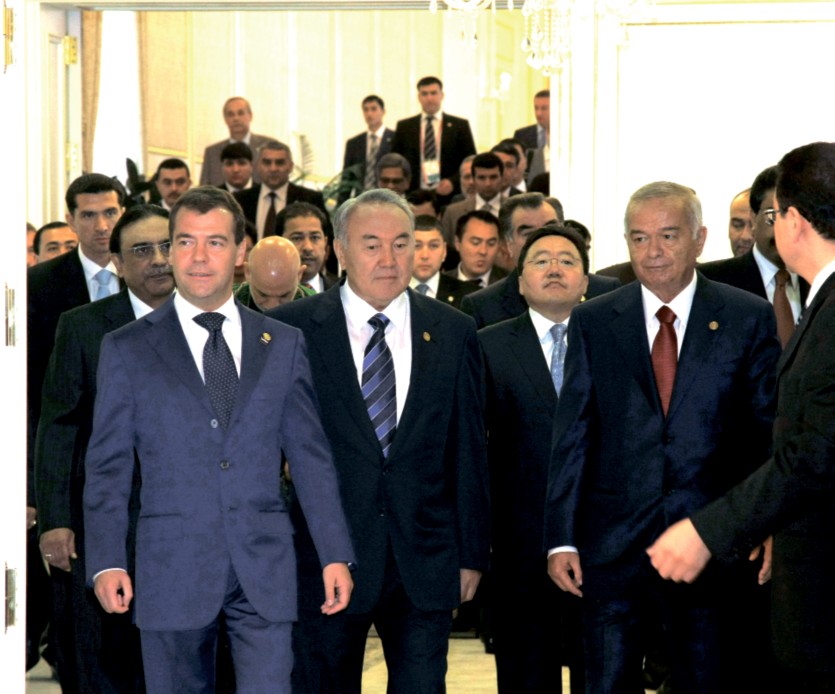
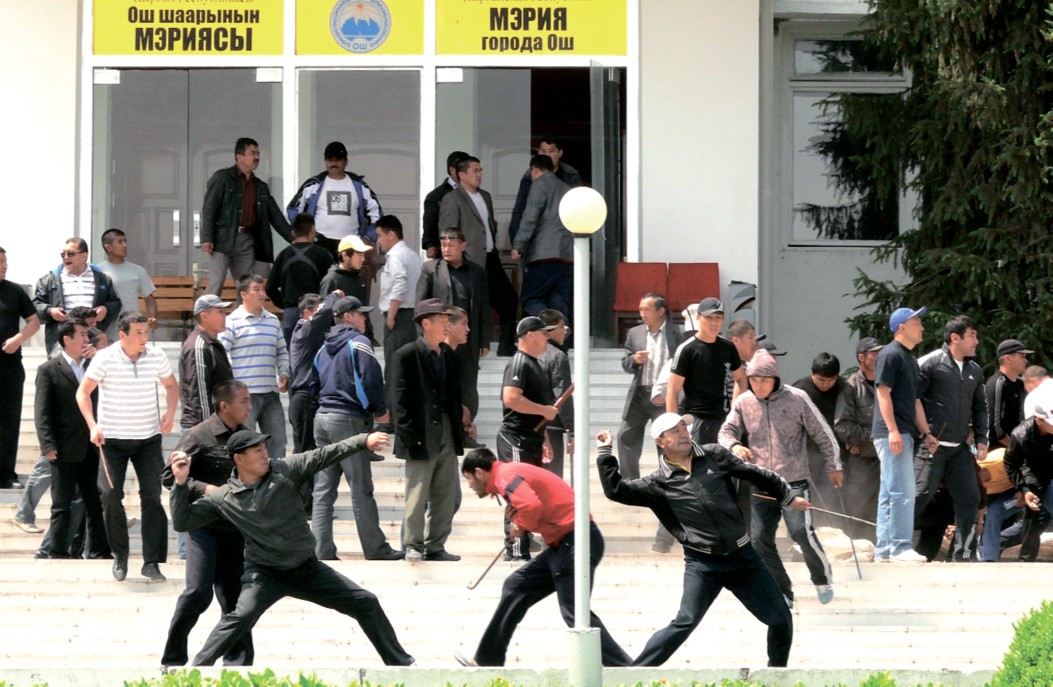
The 10-11 June annual summit of the Shanghai Cooperation Organization (SCO) in the Uzbek capital Tashkent was seriously marred by the situation in Kyrgyzstan, where the armed confrontation, instigated, as officially reported, by "local clashes between Kyrgyz and Uzbeks in Osh," claimed about 50 lives. As a state of emergency was imposed in the south of the country - in Osh and Uzgen, as well as in Kara Su, Aravan and Uzgen districts, it appeared that the provisional government of Kyrgyzstan had serious problems in introducing order.
The situation in the republic directly affects the interests of all SCO member states, as its further deterioration could lead to a resurgence of extremist and terrorist organizations, and consequently, destabilize the whole of Central Asia, and not only.
In a joint declaration adopted at the summit, the SCO leaders spoke about the unity of views on what is happening in Kyrgyzstan and agreed to coordinate aid to their partner. One of its areas will be that the organization will send an observation mission to the republic to monitor the referendum on a new constitution which will be held on 27 June.
At the same time, Tajik President Emomali Rahmon noted that "the events in Kyrgyzstan demonstrate the importance of creating effective response mechanisms in the SCO".
Incidentally, it is notable that the next day after the summit, the interim Kyrgyz government headed by Rosa Otunbayeva urged Russia to send in peacekeepers to prevent riots and ethnic clashes...
Another main subject of the Tashkent forum was the problem of drug trafficking from Afghanistan, where, according to experts, over 90 per cent of the world production of raw heroin - opium - is concentrated. This is a huge narcotics industry supported by a whole state. The most terrible thing is that hundreds of thousands of Afghan farmers engaged in opium cultivation cannot be blamed for anything, because they have no other sources of income.
Meanwhile, apart from the fact that drugs from Afghanistan claim the lives of thousands of people in different countries, their sale is the main source of financing for terrorists, extremists and separatists, and above all, those same Taliban militants whom the world's most powerful military alliance NATO has been fighting for many years.
In 2006, the SCO announced plans to combat drug trafficking from Afghanistan, and in 2008, they were directly linked to normalcy in that country. On 22 May 2010, the SCO Council of Ministers adopted a joint declaration on Afghanistan, which clearly stated that the situation there was a major threat to security in the region and needed to be addressed through the restoration of the country's economy ravaged by many years of war. And it is quite pleasing that in this area, the SCO is ready to cooperate with all the interested states and international organizations - from the UN to NATO. Russian President Dmitriy Medvedev, in particular, suggested that the SCO adopt an anti-drug strategy for 2011-2016 and a programme of action to implement it.
The summit also considered other important international problems and reviewed the activities of the regional antiterrorist centre and the fight against organized crime. As far as the economy is concerned, the major issues were energy, transport, telecommunication and investment cooperation. Ahead of the G8 and G20 summits, it was quite useful for the SCO heads of states to "synchronize watches".
The leaders of the SCO adopted a declaration at the summit and endorsed a number of procedural documents and reports on the results of the organization's activities in 2009. In addition, during the summit the governments of SCO member states signed agreements on cooperation in agriculture and in combating crime.
However, the question of whether Iranian President Mahmud Ahmadinezhad will attend the summit was especially intriguing. Almost at the same time as the meeting in Tashkent, the UN Security Council adopted yet another package of sanctions against the Islamic Republic, introducing new and tightening old political and economic reprisals. When it was reported that the Iranian leader was not going to Uzbekistan, it became clear that Tehran, which refuses to suspend its nuclear programme, had nothing reassuring to expect from the SCO.
The fact is that Iran normally takes part in SCO summits as an observer, and this time through diplomatic channels, all SCO member states were asked to invite Mahmud Ahmadinezhad to Uzbekistan. For Iran, the opportunity to attend the summit in Tashkent was extremely important. Tehran has long tried to join the SCO, but it was at the current meeting of the council of the leaders of the six member states of the organization that the provision on the procedure of admitting new members was approved, which looks very revealing.
Thus, according to the document, a state wishing to join the SCO should belong to the Euro-Asian region, have diplomatic relations with all member countries of the SCO, have observer status at the SCO or be a partner in dialogue, actively maintain trade-economic and humanitarian relations with the SCO member states, not be sanctioned by the UN or in an armed conflict with another state or states.
President Dmitriy Medvedev called the provision "an important internal corporate document" that "confirms the open nature of the organization". In turn, Uzbek President Islam Karimov said that the adoption of this document "does not mean an automatic increase in the number of SCO members through observer states," but testifies to the emergence of "a legal framework for the entry of new members into the SCO". But Iran obviously remains overboard...
The Shanghai Cooperation Organization was founded in 2001 and is now considered one of the most dynamic international organizations. It includes six member countries (Kazakhstan, Kyrgyzstan, China, Uzbekistan, Russia and Tajikistan), four observer countries (India, Iran, Mongolia and Pakistan) and two partners in dialogue (Belarus and Sri Lanka).
First of all, the geography of the states represented in the SCO is quite impressive. If, for example, we also count the observer countries that could potentially become full members, the organization brings together a territory with nearly half the world population. The demographic and economic potential of the SCO is huge, which, undoubtedly, is its greatest strength. But at the same time, it is its greatest weakness...
The bigger an organization, the harder it is to coordinate its joint projects and the more difficult it is to achieve real efficiency in the global political and economic arena. The SCO countries are not only radically different from each other, but they also have a number of problems with each other (for example, border disputes between Uzbekistan and Kyrgyzstan, rivalry over water resources).
You can say that the main point of focus for the SCO is Central Asia, which serves as a crossing point between the organization's two largest states - Russia and China. But apart from their economic interest in the region, Moscow and Beijing are also interested in its stability. After all, Central Asian states have such restless neighbours as Afghanistan and Pakistan where not only drugs, but also extremist and separatist sentiments originate.
It is still difficult to determine precisely the basis that holds the SCO countries together. Western experts are especially fond of guessing on this puzzle, and they see some sort of eastern flavour in the organization, and the East, as all post-Soviet citizens are well aware, is a very delicate thing...
Some might say that the SCO is an alliance of Russia and post-Soviet countries neighbouring on China. But it is certainly not the case. The countries of Central Asia, especially Kazakhstan, have been bolstering their power and ambitions in recent years. For example, in Tashkent, the presidency of the SCO was taken over by Astana, which, in view of its presidency of the OSCE, looks like a regional leader.
Meanwhile, apart from security issues, the SCO countries also need to solve as quickly as possible their environmental problems, symbolized by the almost lost Aral Sea, although ecology, of course, is also a problem in enormous Russia and China...
The next meeting of the Council of SCO Heads of State will be held in June 2011 in Astana, and we think that the next decade will provide answers to many questions in regard to this organization, and above all, indicate whether there is actually the "Shanghai spirit" that is allegedly based on the desire for tolerance, mutual aid, trust and openness to dialogue or whether it is just a fancy definition.
Will the alliance become an organization with greater authority and influence due to its economic projects in energy, agriculture, communications and even high-tech spheres or slide into the military sphere, justifying predictions by several experts who call the SCO "Eastern NATO"? Will the organization continue to strive for cooperation, stability and balance of interests or get carried away by various geopolitical contests?
According to Dmitriy Medvedev, the Shanghai Cooperation Organization "is able to fight the three forces of evil - terrorism, extremism and separatism". Thus, if we continue the theme of the mysterious East, we can say that the SCO is fighting the three most terrible "dragons" of our time. It is not an easy task, but it seems that the organization is not going to set itself easy goals.
RECOMMEND:
 689
689

