
LONG PAUSE
It is time for the OSCE Minsk Group to hurry Armenia to respond to the updated Madrid principles
Author: Rasim MUSABAYOV, a political scientist Baku
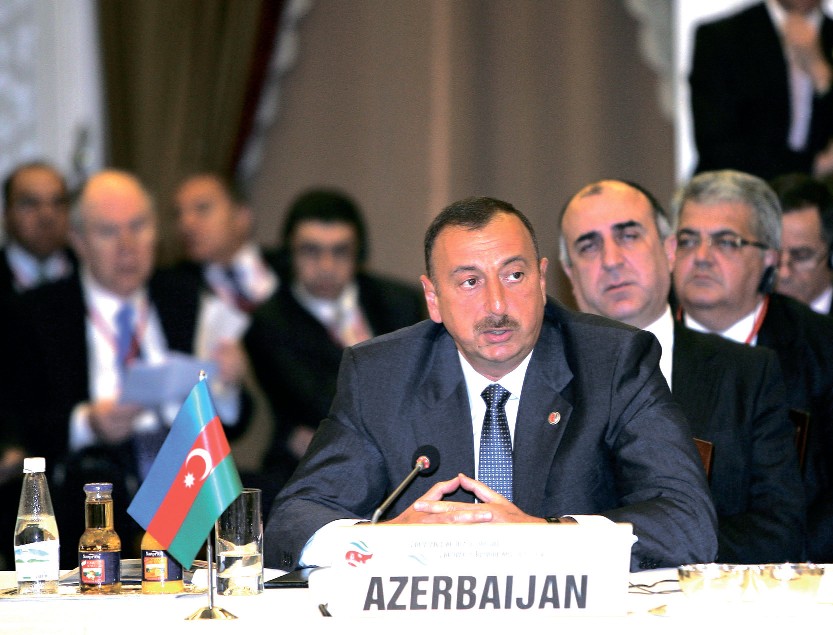
The pause in the process of the peaceful settlement of the Nagornyy Karabakh conflict is dragging on for too long. This fact was highlighted by Azerbaijani President Ilham Aliyev at a meeting with journalists: "Since the talks in Sochi, no meetings have been held. Although the Armenian president asked for two weeks to express his position on the proposals, six months have passed. Since then, there has been no news. We are now faced with a situation where the Armenian side is not saying 'yes' or 'no' to the updated Madrid principles."
Then the president noted that "the co-chair countries must express their clear position on this issue".
"How long will Azerbaijan have to wait for the answer? Or rather, how long will the co-chairs be waiting for this answer? Hopefully, the co-chairs will respect their own proposals and put significant pressure on Armenia during the negotiating process. If we are interested in continuing the negotiations, we should take some steps. If this does not happen, or the Armenian side continues to play for time and officially says no to these principles, then Azerbaijan, of course, will have to think seriously about the future of its participation in the negotiations and in the process, in general. We are considering various options and will try any means to restore the territorial integrity of Azerbaijan. I personally have no doubt that the territorial integrity of Azerbaijan will be restored. We wish a speedy and peaceful solution to this issue. If the Armenian side wants to continue its aggressive policy and conduct negotiations for the sake of imitation, Azerbaijan will seriously change its position," Ilham Aliyev said.
Unfortunately, the Minsk Group is not yet demonstrating a fundamental position. Azerbaijani Foreign Minister Elmar Mammadyarov said after his meeting with the OSCE Minsk Group co-chairs in Venice that "... since the Madrid principles were presented in Athens, the meetings have turned out to be unproductive, although everyone felt that the document on which we worked for two years would create opportunities for starting work on the main document, but the Armenian side did not express its consent."
Then the foreign minister said that for some reason, the co-chairs suggested a break in the talks. "But this break lasts too long. I repeat again that this document did not fall from the sky, and it took two years to reach agreement on it. It is no accident that the leaders of the countries co-chairing the OSCE Minsk Group stressed during the G8 summit in Italy that six major principles which form the basis of this document reflect the common and unified position of the co-chairs," said Mammadyarov.
It is obvious that the Armenians do not want to accept the updated Madrid principles, but they also lack the courage to reject them outright. Therefore, Serzh Sargsyan and his team are delaying their answer in the hope that "maybe everything settles down". However, the tricky wordplay, in which Armenian Foreign Minister Edward Nalbandyan is engaged, does not change anything in the situation. Speaking at the Armenian National Assembly on 9 June, he said, "the Madrid Principles, the core (?) element of which is the right of the Karabakh people to free expression on the basis of principles of international law, have been accepted by Armenia as a basis for negotiations on the Nagornyy Karabakh conflict". And then, he added in the spirit characteristic of the Armenians: "Everyone can see that the Karabakh people will no longer be part of Azerbaijan."
I wonder what "Karabakh people" Nalbandyan is talking about? After all, in fact, there are Armenian and Azerbaijani communities of Nagornyy Karabakh. This is how the question is understood not only in Baku but also in all the countries that are objectively aware of the essence of the Karabakh conflict. One should note that Nalbandyan made his statement in parliament immediately after talking on the phone with his Russian counterpart, or rather patron, Sergey Lavrov, the previous day. We all remember last year's note from Lavrov to Nalbandyan in Zurich, where he almost ordered him: "Edward, sign the protocols without a speech", which was immediately done. Now Lavrov is trying to convince Yerevan of the need to demonstrate a more flexible approach, because the rejection of the Madrid principles approved by the co-chairs will put the Armenians in a difficult position. Nevertheless, Nalbandyan's words do not imply that the Armenians accept the Madrid principles in their latest edition. In any case, the co-chairs of the Minsk Group still do not have a clear answer to this issue.
However, Yerevan's retreat into silent refusal did not stop the international efforts to get the process of the peaceful settlement of the Nagornyy Karabakh conflict out of the impasse. It is just that the Armenians have put themselves in an "offside" position, while the dialogue continues without their direct participation at the level of presidents, prime ministers and foreign ministers of Russia, Turkey, France, the United States and the European Union.
For example, during the Summit on Interaction and Confidence-Building Measures in Asia held on 8 June in Istanbul, the president and prime minister of Turkey, the presidents of Azerbaijan and Kazakhstan held a quadripartite meeting with Russia's prime minister and discussed the situation in the Nagornyy Karabakh conflict peace process. It should be taken into account that Kazakh President Nursultan Nazarbayev not only has personal experience in the Karabakh settlement, but as OSCE chairman-in-office, on whose behalf the Minsk Group operates, Astana is very interested in proceeding from endless negotiations to specific decisions and actions.
Publicly, Russian Prime Minister Vladimir Putin took a cautious position, saying at a press conference that only Armenia and Azerbaijan can find a compromise during the settlement of the Nagornyy Karabakh conflict.
"Both Russia and the other actors are ready to provide a shoulder, but we cannot substitute for either Armenia or Azerbaijan. Then we will be guilty before one side or the other. Only these two states can reach a compromise. Only Armenia and Azerbaijan themselves can say what is acceptable to them," said the Russian prime minister. He said other countries may act as guarantors: "This is how we intend to act."
Apparently, at the summit in Turkey where Armenia was not represented, Vladimir Putin could not publicly speak differently in order not to disappoint his Armenian ally-outpost. But it is unlikely that this position dominated bilateral and multilateral meetings. It is obvious that not only external guarantees from interested powers are needed to promote the Karabakh settlement, it is also necessary to use instruments of pressure and encourage the parties to compromise. In this case, it is Armenia that has to be chastised, as Baku has accepted the updated Madrid principles and is ready to move forward on this basis.
In contrast to Yerevan, Moscow has not announced a pause in the search for progress in the Karabakh settlement, and this can be seen from the fact that Russia is holding intensive consultations with other countries - co-chairs of the Minsk Group. On 7 June, Russian Foreign Minister Sergey Lavrov and his French counterpart Bernard Kouchner discussed by telephone the situation in the Nagornyy Karabakh settlement. Then Russian Prime Minister Vladimir Putin discussed the issue of Nagornyy Karabakh during his visit to France.
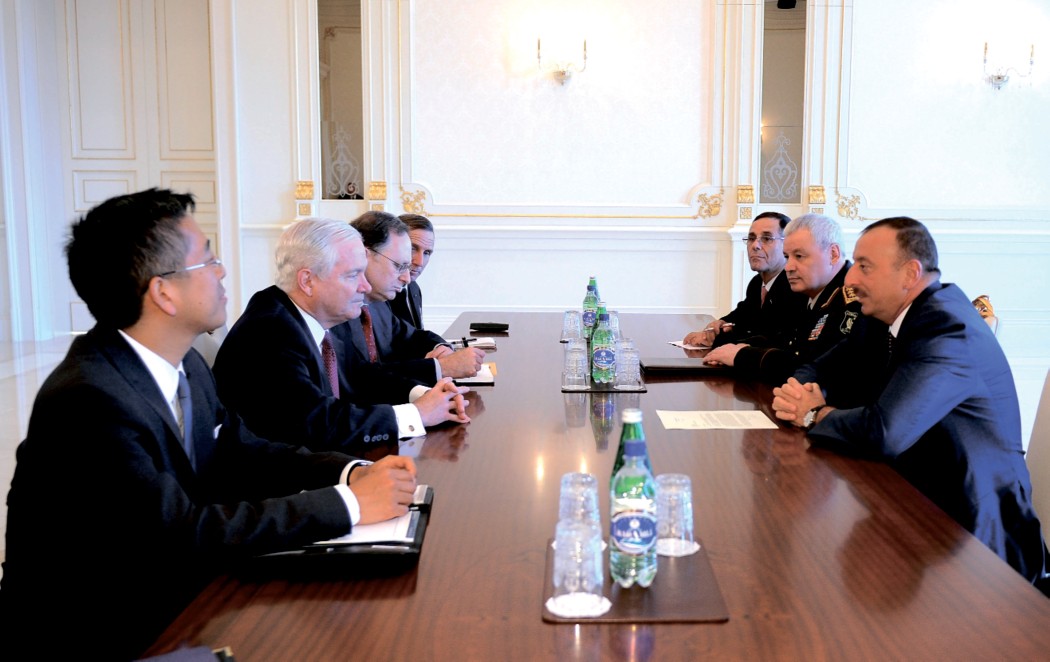
The US has been somewhat passive in the Karabakh settlement since the change of administration in Washington. But positive changes have been seen here of late. Despite the assertions by some mass media that the administration of President Obama has almost left the post-Soviet area at the mercy of Russia, the US launched a more active policy towards Azerbaijan and the South Caucasus at large in summer. This is proved by the surprise visit to Baku by US Defence Secretary Robert Gates.
The Pentagon chief spent two days in Azerbaijan. On 6-7 June, he met President Ilham Aliyev, and then his Azerbaijani counterpart Safar Abiyev. It was officially announced that the visit is linked to the sustainability of the Afghan transit. The main thing is to assure the leadership of Azerbaijan of the US commitment to develop bilateral relations. This is stated in President Barack Obama's letter which the Pentagon chief handed to Ilham Aliyev.
The contents of this letter were made public. So, without repeating, I will dwell only on a few points. This is President Obama's recognition of the presence, as stated in the letter, of "certain issues" in bilateral relations and his strong desire to overcome them together. The assurance that the peaceful settlement of the Karabakh conflict with the efforts of the Minsk Group will be a priority for the United States also sounds extremely important.
It is clear that the Pentagon chief, because of his status, was most interested in issues of security and military cooperation. It is the State Department that deals with the Karabakh issue. But Robert Gates said US Secretary of State Hillary Clinton is planning to visit Azerbaijan. Her regional tour, according to the media, is planned for July. The US intention to bolster its involvement in the Karabakh settlement is implicitly proved by the fact that the administration of President Obama finally decided to appoint the former US co-chairman of the Minsk Group, Matthew Bryza, as ambassador to Azerbaijan.
Thus, the Armenians failed in the diplomatic and propaganda game they led with the active support of their lobbyists in the US Congress and the State Department in order to strengthen their position in the conflict by forcing Turkey to open the border without taking into account the interests of Azerbaijan, or to ensure the recognition of the so-called "genocide of 1915". Now it is, let's put it this way, "Azerbaijani lobbyists" - the Pentagon and the Department of Energy - that are in business.
Unlike Armenia, which acts as an eternal whiner and beggar, Azerbaijan is playing its diplomatic game "for high stakes". Baku is not using historical myths and is not speculating on emotions, but is relying on real interests that directly affect such important areas as security and energy. Azerbaijan has much to offer or deny the interested powers. And Baku maintains prospects for all options, negotiating and taking preparatory actions in all directions. The energy, economic and geostrategic potential of Azerbaijan is so great that we can reward the competing powers if they support a peaceful settlement of the Karabakh conflict based on the principles of international law and justice.
However, Azerbaijan is also demonstrating that it is not going to wait forever and be satisfied with unproductive negotiations. Recently, the Azerbaijani parliament adopted the military doctrine of the Azerbaijan Republic, which expressly states that the armed forces must be prepared to restore the territorial integrity of the country and liberate the Armenian-occupied territories by force. It should be noted that this document was adopted after the visit to Azerbaijan by Russia's defence minister and almost at the same time as Pentagon chief Robert Gates' visit to Baku.
This is a serious signal that the issue is not confined only to military rhetoric, but may take a turn that is undesirable for the Armenians and their backers. The countries co-chairing the Minsk Group have leverage to encourage Armenia to take a more constructive position and move the peaceful settlement of the Nagornyy Karabakh conflict forward. But there is less and less time for it. Anyway, it would be rash to arrange a summer vacation in such a situation and put off the solution until a later date.
RECOMMEND:
 700
700