

YANUKOVICH DOES A U-TURN
or, Ukraine after the "period of missed opportunities"
Author: Azar XUDIYEV, political analyst Baku
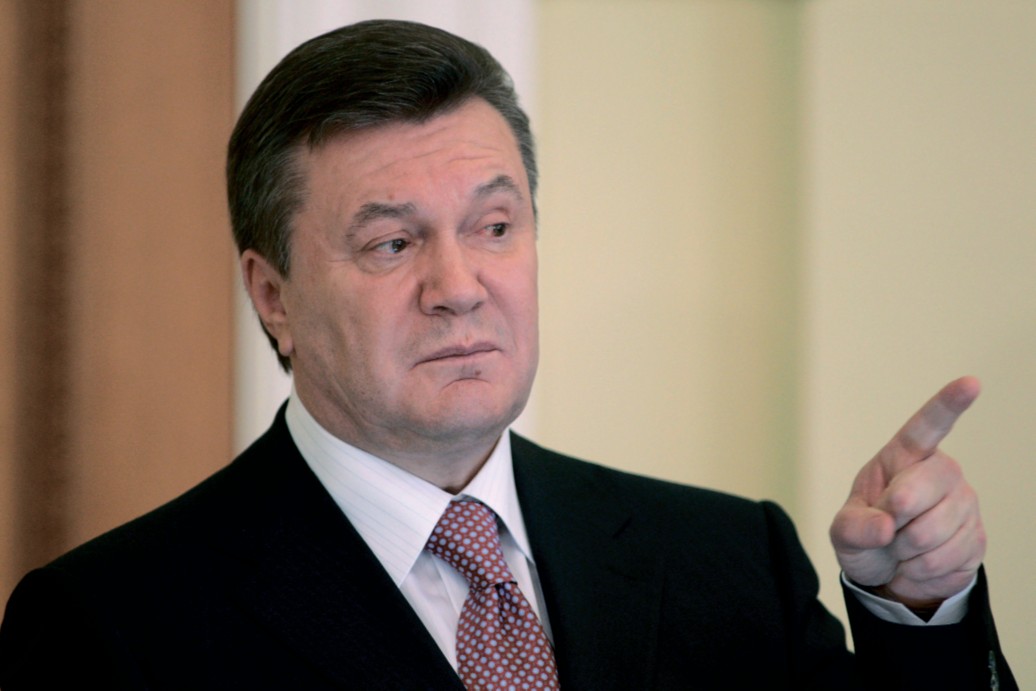
Imminent changes to Ukraine's foreign policy, caused by the return to power of pro-Russian politician Viktor Yanukovich, have been the focus of keen attention in the international political arena. All are watching the first steps taken by the new Ukrainian president with great interest. The preliminary impression is this: Yanukovich is striving to adopt a balanced position and his policy will not be so pro-Russian or so anti-Western as was suggested. However, taking note of Ukraine's role of buffer between Russia and the West, and the fact that the new president's foreign policy is not going to be so clear-cut as at first seemed likely, attempts to produce unambiguous forecasts about his direction seem futile. And yet it is still worth thinking about what position Ukraine - an influential state in the Black Sea region - might take on issues affecting regional security.
Yanukovich - another Lukashenko?
Jose Milhazes, an analyst with the Portuguese newspaper Publico, argues that in his foreign policy, Mr. Yanukovich will effectively become another Lukashenko. In other words, he will also strive to draw maximum benefit from the differences between Russia and the EU. This conclusion, which seems simplistic at first sight, is interesting when considered from a different angle: almost all analysts say that Yanukovich's policy will be radically different from that of Yushchenko, and that the main feature of his course will be its balanced nature. Time will tell how successful he will be. But already some of the Ukrainian president's moves have reflected signs of this type of approach. For example, immediately after he was sworn in, Mr. Yanukovich paid his first visit as Ukraine's president not to Moscow, as many people expected, but to Brussels, having at the same time declared in his speech that "all roads lead to Moscow." However, despite this phrase and Vladimir Putin's suggestion that Ukraine should join the Customs Union (the Russian prime minister meant the customs union between Russia, Kazakhstan and Belarus), V. Yanukovich did not express his consent, although he did not reject Putin's proposal outright, uttering only the vague phrase: "Ukraine must reach Russia's level."
Bearing these circumstances in mind, it can be said with confidence that the assessment that " Yanukovich is another Lukashenko," is far from true. The scenario here seems more complex. Essentially, the general principles of Yanukovich's putative course do not appear overly sophisticated: first, to bring Ukraine close to Russia, at the same time accelerating the adoption of European values; second, to concentrate not so much on military aspects (such as joining NATO, which irritates Moscow), as on social, economic and cultural ones during this process.
It has to be said that Ukraine cannot implement a downright pro-Russian policy. However, it must not overlook the prospects for establishing closer ties with Russia - after all, that country's standing continues to rise in the post-Soviet area. The importance of the Russia factor in security issues also grows. Statements by Russian President Dmitriy Medvedev on the new concept of European security provide further evidence: politicians are quite serious about this idea. And globally, the idea of shifting the centre of geopolitical gravity from the West to the East was propounded earlier by influential politicians and political analysts. And, therefore, the West needs the Russian factor, both because of Russia's proactive geopolitical position and because of expectations of global leadership from China, which exist at different levels. Why then should Ukraine - a Slavic and Eastern European country - turn its back on the Kremlin?
Increasing numbers of analysts believe that the USA is ceding its position in the post-Soviet area to Russia, and this also merits attention. For example, Aleksey Vlasov put forward the following premise: "Recent developments show that the post-Soviet area is of little interest to the USA, as it focuses on Afghanistan, Iraq and Iran. A unique situation has taken shape, in which Moscow and Paris can fill this niche, but this hinges on what they can offer to Turkey, Azerbaijan and Georgia." In general, one might guess what Russia will offer Turkey and Azerbaijan. Reports were also disseminated recently about a meeting between the Russian foreign minister and Georgian opposition leader Nino Burjanadze. In the current situation, Yanukovich will probably put an emphasis on relations with Russia. After talks with Yanukovich in Moscow, Mr. Putin said that the "black period" in relations between the two countries was hopefully over. And President Medvedev stressed the sides' readiness to cooperate in all areas. For his part, Yanukovich labels the last five years of Ukrainian history as the "period of missed opportunities," having hinted thereby that he intends to eliminate all the factors which displease Russia. For example, the question of the status of the Russian language in Ukraine will be revised and the status of national hero awarded to Stepan Bandera - a Ukrainian nationalist who cooperated with the Nazis from 1939-1941 - will be revoked.
New aspects of security in the Black Sea basin
Concerning the security of the Black Sea basin, the West prefers to stress NATO's role, and Russia promotes its Black Sea Fleet. The two sides have been involved in an intense struggle for influence in the region since 1991. NATO continues to push for the sidelining of the Black Sea Fleet from Sevastopol. Some adjustments have been made to this course. At the same time, Russia sought, in cooperation with Ukraine, a model legal framework to resolve the Black Sea Fleet issue and, on 28 May 1997, an agreement was signed in Kiev. In accordance with this agreement, the Black Sea Fleet was divided between Ukraine and Russia and the Russian Black Sea Fleet was to remain in Sevastopol until 2017. However, this agreement was ratified only two years later, on 1 April 1999 and consultations continued until recently. Forecasts that immediately after Viktor Yanukovich's election as Ukrainian president, Moscow and Kiev would reach an agreement on the Black Sea Fleet, proved to be accurate. In April, Presidents Yanukovich and Medvedev signed an Agreement in Kharkov on Stationing the Black Sea Fleet of Russia in Ukraine, according to which the term of the Russian fleet's stay in Sevastopol was extended by another 25 years from 2017. And if the sides agree, the term of agreement can be extended even further.
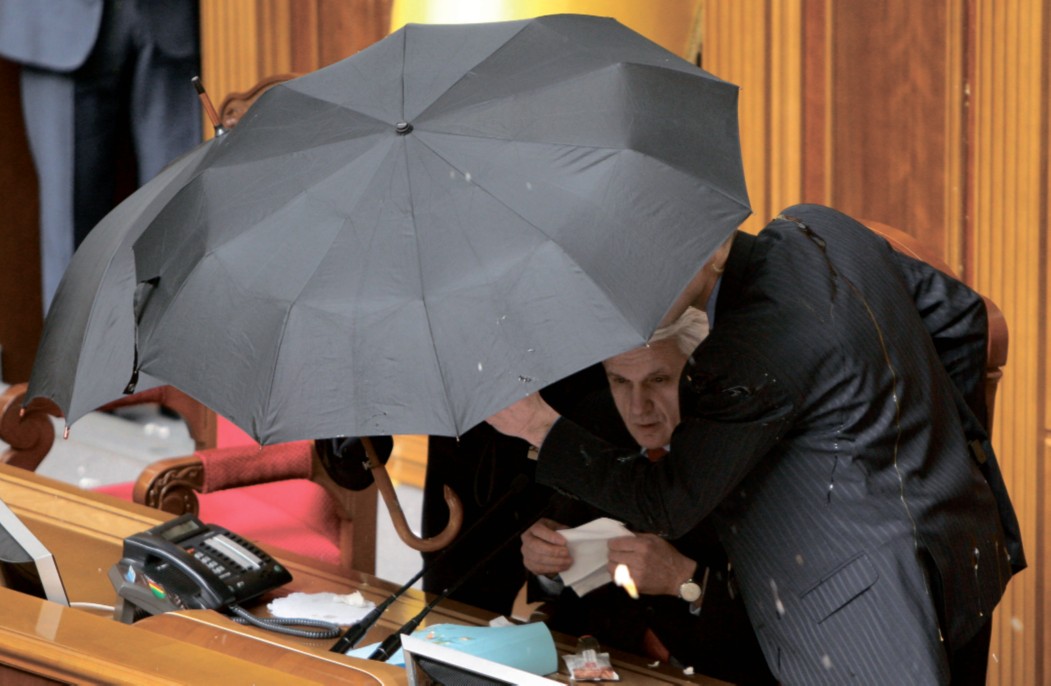
The response in political circles was speedy. In Ukraine itself, a number of experts accused Yanukovich of causing a rift in the country. And Yuliya Timoshenko's supporters said that the document would not get through Parliament. However, it was ratified after all at an uproarious session of Ukraine's Supreme Rada on 27 April 2010. The head of the Ukrainian state said that, in view of the current situation in the country, there was no choice. Mr. Yanukovich also described the concessions which Russia made in return as an achievement for the Ukrainian side. It should also be noted that, in return for lower prices for the natural gas which Russia supplies to Ukraine, Russia leased the Crimea's energy infrastructure. Russian President Medvedev described these agreements as steps which the sides took to meet each other half-way. The West's neutral reaction to these developments is quite interesting. US State Secretary Hillary Clinton said that Ukraine's policy was balanced. And NATO General Secretary Anders Fogh Rasmussen voiced a hope that the agreement signed on the navy base in Sevastopol would not constitute an obstacle to Ukraine's accession to NATO.
In this way, a problem which has haunted the Black Sea basin for several years and posed the threat to the region seems to have been resolved. However, despite the outward calm, it is not quite clear what this development might do to Ukraine's domestic political situation, its relations with different countries and relations between NATO and Russia. The risk factor remains.
Moscow views the deployment of its Black Sea Fleet in Sevastopol as a way of promoting its strategic interests. According to the Russian Federation's Naval Doctrine, the Black Sea basin belongs to the "category of top national interests" (Naval Collection, Issue No 9, 2001, page 5). At a 17 September 2003 meeting at which military-diplomatic issues of the Azov and Black Sea region were discussed, Mr. Putin specifically stressed that this zone was within the sphere of Russia' strategic interests. He said that the "Black Sea basin guarantees Russia's access to important global routes, including energy routes." This is precisely why Russian diplomacy has been struggling hard since 1991 for the stationing of the fleet in Sevastopol. The subtle political and geopolitical aspects of this struggle are discussed in a book entitled Diplomatic Marathon by a participant in these events, deputy Russian foreign minister and professor at the Moscow State Institute of Foreign Relations, Yu. Yu. Dubinin.
It is also clear that the Black Sea Fleet is important for Ukraine and Russian not simply at the level of interstate relations. This question is directly linked to the process of creating a security system for the Black Sea basin and to the prospects for Ukraine's accession to NATO. During Viktor Yushchenko's presidential tenure, both aspects were "frozen." That is why the position taken by Viktor Yanukovich on this issue is of fundamental importance. And his theses are quite simple: first, Ukraine must become one of Europe's neutral states. The Ukrainian president had this to say on the issue in Moscow: "As a state which has not joined any bloc, Ukraine will promote its relations with NATO in accordance with Ukraine's national interests. And that is how it will always be." It is hard to put it any clearer - Viktor Yanukovich does not envisage Ukraine's accession to NATO. Second, consultations on a prolonged presence of the Black Sea Fleet in Sevastopol will be conducted on the basis of agreements which were set down in the 1997 treaty. This implies a readiness to accept "Russian primacy in the Black Sea."
As we can see, if consultations are held on the basis of this document, the issue of a long-term stationing of the Black Sea Fleet in Sevastopol and the creation of a Ukrainian-Russian tandem as a guarantor of security will be the main subject for discussion.
The agreement on the Russian Black Sea Fleet, which was signed by the Ukrainian and Russian presidents confirms once again the latter theory. As for whether it signifies a collapse of the US-proposed models of security for the Black Sea basin, only time will tell. For now, one thing is clear: Ukraine has started to take Russia's interests into account when dealing with issues of security in the region.
"We are ready to make a sharp turn"...
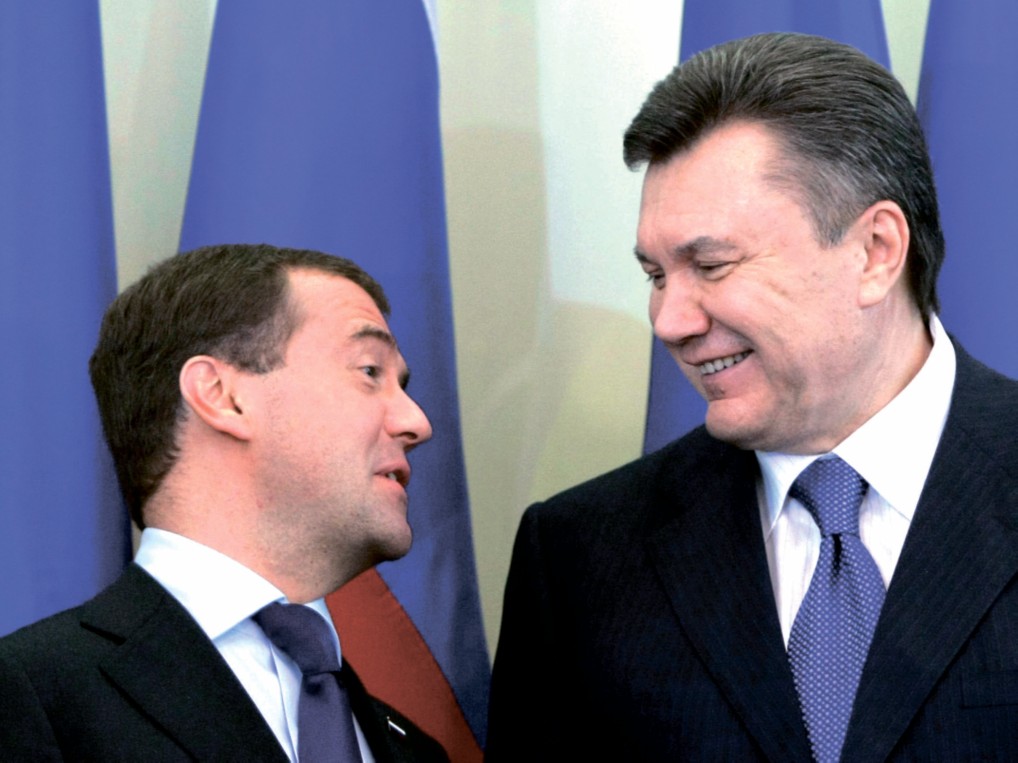
Mr. Yanukovich said this during his first visit to Moscow in his capacity as president. And Dmitriy Medvedev immediately replied: "In the right direction." Then he explained in greater detail: "The main point is that we can take the most decisive steps in the economy, on security matters, in the field of politics, on questions of our relations with Europe and on the creation of a modern secure area (including preparing and signing the appropriate European documents)."
These facts clearly demonstrate that at least serious changes are to be expected to the model of security for the Black Sea basin. The future of GUAM [an alliance of Georgia, Ukraine, Azerbaijan and Moldova] is also quite unclear in this respect. Mr. Yanukovich's negative attitude toward this organization is no secret to anyone. GUAM is directly involved in the Black Sea basin and was actively supported by the West precisely for this reason. The issue of energy security, which is important to modern security models, was also in focus within the framework of GUAM. Some calculations were being made in connection with the "energy route" which originates in the Caspian and goes to Europe and the Baltic region via the Black Sea. Now, however, Ukraine has altered its views on the security issue by granting the Russian Black Sea Fleet privileges and accepting its presence for the long term. Therefore, the model for the security system will also change. Now the prospects of Western-supported organizations with Ukrainian participation, including GUAM, are not so straightforward. President Yanukovich, who said in Brussels that there "will be no radical changes in Ukraine's foreign policy," promised "serious changes in foreign and domestic policy" in Moscow to V. Putin. Security in the Black Sea basin certainly belongs to the category of "serious changes." President Medvedev's statements on the creation of a new security area corroborate this conclusion. In the wider view, Ukraine will prefer the Russian-proposed model for a new security architecture for Europe. Promoting Russia's interests in the Black Sea at a new level might result in a large-scale shift in the balance of power. Among other things, the 2.5-times greater numerical strength of the Turkish Black Sea Fleet over the Russian Black Sea Fleet, which was the ratio after the dissolution of the Soviet Union, might end. A serious blow would be dealt indirectly to NATO's superiority in the Black Sea basin. This, in turn, increases the probability of the emergence of new security factors in the Caspian Sea basin too. The development of security systems for the Black and Caspian Sea basins will also become more pressing. New developments should be expected in terms of Azerbaijan's participation in this process. In our opinion, the rationality of Azerbaijan's tactic of diplomacy and dialogue manifests itself once again here. In other words, the rapprochement between Ukraine and Russia might effectively lead to a further increase in Azerbaijan's role across a huge geopolitical area. Azerbaijan plays a decisive role in matters concerning energy and geopolitical security. If Ukraine joins the successfully developing Azerbaijani-Russian energy programmes, it will earn more political and economic dividends. At the same time, new directions in the diversification of energy routes might also arise for Azerbaijan. This will increase Azerbaijan's importance in projects of the Nabucco type. As a result, all these factors will increase the role and importance of Azerbaijan in the new architecture of European security. The Memorandum of Intent to cooperate in the storage and transportation of condensed natural gas, which was signed by Azerbaijan, Georgia and Romania on 13 April 2010, is a clear example. The document is one of the factors confirming the broadening of Azerbaijan's opportunities to act as an important partner in energy security across a large geopolitical area. It has to be said that Azerbaijan already has agreements on cooperation in the energy sector with Turkey, Russia, Iran, Georgia, Ukraine and the Baltic countries. Baku has synchronized its course toward participation in the process of developing infrastructure with its policy of diversifying energy routes. And this ultimately increases the chances of occupying an important place in the European security system. In this respect, the current changes in Ukraine's foreign political course will once again underscore Azerbaijan's geopolitical standing.
RECOMMEND:
 507
507

