

NORTHERN CYPRUS SAYS NO TO THE WEST
Turkish Cypriots are disappointed in the prospects of talks to reunify the island and opt for independence

Author: Ramin ABDULLAYEV Baku
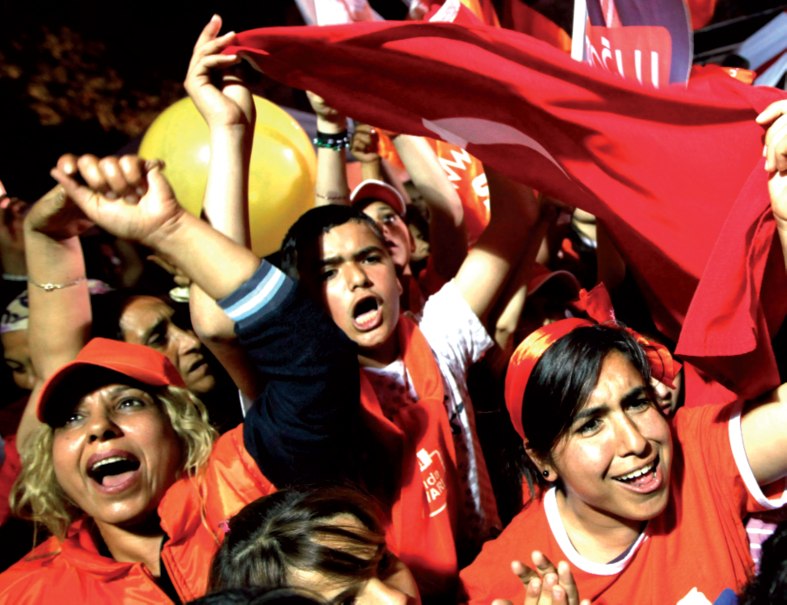
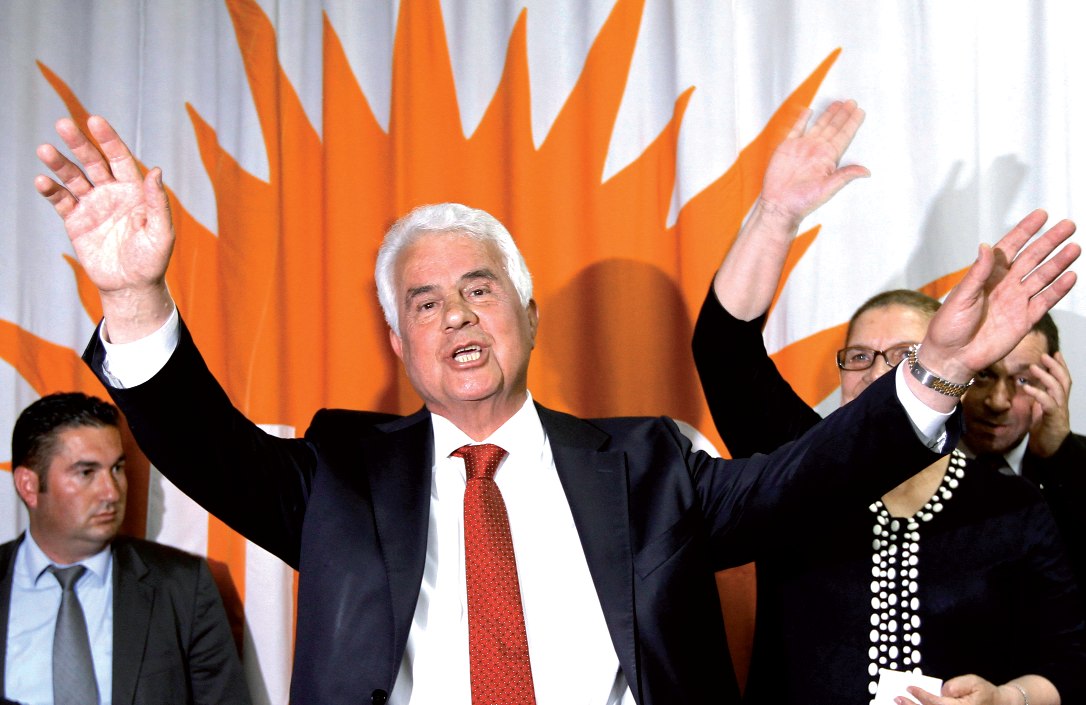
Northern Cyprus has opted for independence. The 18 April vote clearly showed that the Turkish Cypriots are disappointed in the prospects for negotiations to reunify the island, which brought a supporter of independence - the prime minister and leader of the National Unity Party, Dervis Eroglu - to power in the Turkish Republic of Northern Cyprus (TRNC). He gained 50.38 per cent of the vote, which was enough to secure victory in the first round of voting. Thus the Turkish Cypriots have their third president, following Rauf Denktas and Mehmet Ali Talat, since 1974. The turnout in the elections exceeded 76 per cent, which speaks of people's desire to change the situation in the country.
It is clear that the people have elected a politician who believes that compromise with the Greek Cypriots is impossible and that Turkey's policy towards Cyprus must be changed. Eroglu's position was known long before the elections. He does not rule out the creation of a unified Cypriot state, but with two politically equal sectors (Turkish and Greek), with no common citizenship. In his view, this is the only correct way forward, because the island is inhabited by two peoples, each of whom is entitled to their own public education.
Eroglu received particular support from settlers from Turkey, who would certainly lose their property if the island were reunified. This was confirmed by the results of voting in the Iskale area, which is densely populated by settlers. The only area won by supporters of the former head of state, Mehmet Ali Talat, was the capital - Lefkosa. Talat was supported by 47 per cent of residents of the capital, while 44 per cent voted for Eroglu.
Political commentators are unanimous in their opinion that the principle of "a single sovereign state", the basis of peace talks in recent years, will be forgotten for a long time. This means that all agreements reached by the parties in the past five years have been reduced to nothing.
The morning after the vote, Eroglu appeared before 10,000 of his supporters, confirming that he would not accept a return to the situation prevailing on the island before the start of open confrontation in 1974. Any attempt to sign an interim agreement on the future of the island, as in 1963, when a three-year agreement was signed, was unacceptable, he said. The new president also said that he would conduct a clear policy of even greater rapprochement with Turkey.
True, the newly elected president says that talks with the Greek Cypriot leadership are possible, but he will probably insist on compliance with a strict time schedule and a review of previous agreements. If negotiations on the future of the island fail, the question will be raised of implementing a model which provides for the establishment of a confederation on the island. It is assumed that in this confederation, both sides will have equal political rights and exercise independent control over their own part of the island.
Opinion polls show that the majority of Turkish Cypriots feel positive about Eroglu's election. The electorate believes that a strong and tough leader will be able to achieve independence and international recognition for their country, and this will greatly increase the attractiveness of the region for tourists and investors and raise the economy of Northern Cyprus to new heights within a few years.
At the same time, the Turkish Cypriots are particularly annoyed by the reluctance of the USA, EU and UN to fulfil the promises given ahead of the referendum in 2004. Then, the frantic efforts of supporters of a merger on the island, combined with support from Ankara and the West, resulted in Turkish Cypriots saying "yes" to UN Secretary General Kofi Annan's plan on 24 April 2004. In the north of the island, the document was supported by 64.90 per cent of voters. However, due to the refusal of the Greek community to support the international initiative (75.83 per cent voted against it), the "Annan plan" remained on paper. Just before the voting, both Washington and Brussels announced that if the Turks supported the UN Secretary-General's plan for the unification of the island, they would take concrete steps to lift the international isolation of the TRNC. But things are still the way they were. As a result, of the seven candidates running for president in the TRNC, the supporter of independence was elected.
However, Mehmet Ali Talat was the political figure willing to accept explicit concessions in rapprochement with the Greek part of the island over the past 6 years. For the first time since 1974, a man meeting the requirements of the West was sitting at the negotiating table. Moreover, Mehmet Ali Talat's position largely coincided with that of Turkish Prime Minister Recep Tayyip Erdogan, who wants a speedy resolution of the Cyprus issue, which would facilitate Ankara's accession to the EU. After all, in recent years, the Greek community has vetoed many items on the agenda of negotiations on Turkish membership of the EU.
The presence of the Cyprus problem is a serious obstacle to Ankara's aspirations to regional leadership and its policy of "zeroing" problems with its neighbours, while its resolution would ease the burden on the Turkish economy; it allocates billions of dollars annually in subsidies to support the economy of Northern Cyprus.
It is no accident that in his congratulatory message to Eroglu, Ankara placed special emphasis on support for negotiations, but it already is clear that the negative effects of the 18 April elections can no longer be avoided.
It's no secret that over the past ten years, Turkey's positions in the world have strengthened. Turkey's election as a non-permanent member of the UN Security Council, support for the Turkish candidate Mevlut Cavusoglu for president of the Parliamentary Assembly of the Council of Europe, as well as support for the peace process in Cyprus, have enhanced Ankara's image. It opposes the collapse of the peace process and, therefore, will not support Dervis Eroglu.
And this is despite the fact that, in recent years, the leaders of the two communities have met more than 70 times, but have been unable to agree on a draft document that could be put to a referendum. Negotiations with the new president will resume in May, however, no one believes in a positive outcome, at least in the medium term.
At the same time, Washington's feeble attempts to prevent the "inevitable" proved futile. For example, on 6 April, just 12 days before the vote, US Secretary of State Hillary Clinton telephoned Talat, inviting him to Washington "immediately after the election".
This gave him the chance to proclaim loudly that the world community supports his policy. However, this was not enough, and the promises of preferential treatment for EU membership did not help either. Complete passivity in the matter was displayed by the EU; it did not even try to adopt a trade statute authorizing the import of goods from the Republic of Turkey, which would have played into Talat's hands. The statute was included on the agenda of the European Parliament on 21 March, but then it was postponed until 1 June, which was a blow to supporters of rapprochement with the EU.
The reaction of the Greek community was also interesting. Immediately after the announcement of the results of voting in the TRNC, the President of the Republic of Cyprus, Dimitris Christofias, sent out letters to the UN Secretary General and members of the UN Security Council about impending complications at the negotiating table. In this way, the leader of the Greek Cypriots tried to prepare the ground for a possible rejection of the negotiating process which has yet to resume.
By the way, another result of the 18 April vote was that the Party of National Unity headed by Eroglu lost its parliamentary majority and, thus, the right to form a government. After all, it was Dervis Eroglu who received the 25th mandate in the 50-seat Legislative Assembly of Northern Cyprus following the parliamentary elections of 19 April 2009, which gave his party the right to form a cabinet unilaterally.
Now his party will have to accept a coalition agreement. As expected, Eroglu's supporters will unite with the Democratic Party, which supports the policy of independence and has five seats.
According to analysts, in the current situation, oddly enough, Dervis Eroglu's victory is of no benefit to the West or Turkey, which means that the new leader of the TRNC will face a very challenging five-year term.
RECOMMEND:
 663
663

