

KATYN TAKES NEW VICTIMS
The plane crash near Smolensk raises many questions about the political future of Poland
Author: Ramiz QASIMOV Baku
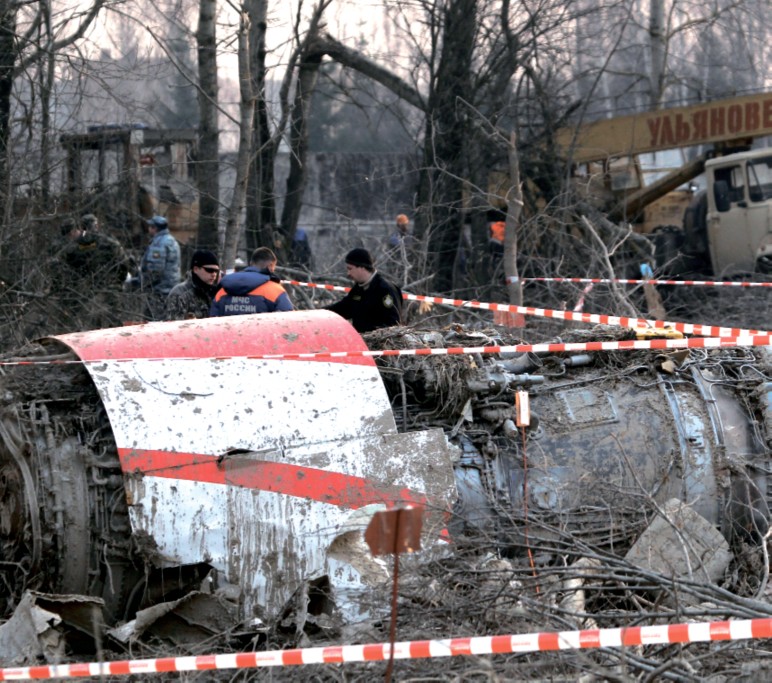
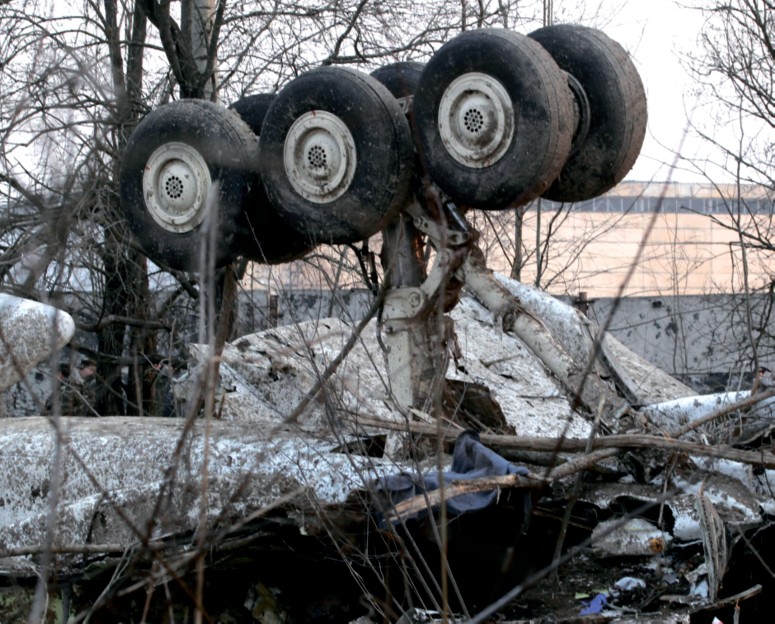
On the morning of 10 April, a Tu-154M plane, carrying Polish President Lech Kaczynski and his wife on a private visit to Russia, senior military leaders and other prominent representatives of the Polish political elite, crashed at the Severnyy military airfield in Smolensk. Upon landing in conditions of extremely poor visibility, the airliner hit trees and crashed just 300 metres away from the runway. None of the 96 people on board survived.
The members of the official Polish delegation were flying to participate in memorial events commemorating the 20,000 victims of mass killings in 1940 - the Katyn tragedy. "We lost 15 members of parliament, four deputy ministers, two of three possible candidates for the presidency of Poland and the entire general staff. The presidential administration and the party were destroyed," Polish Minister for European Affairs Mikolaj Dowgielewicz said, noting that the acting president Bronislaw Komorowski will have difficulty forming an army command.
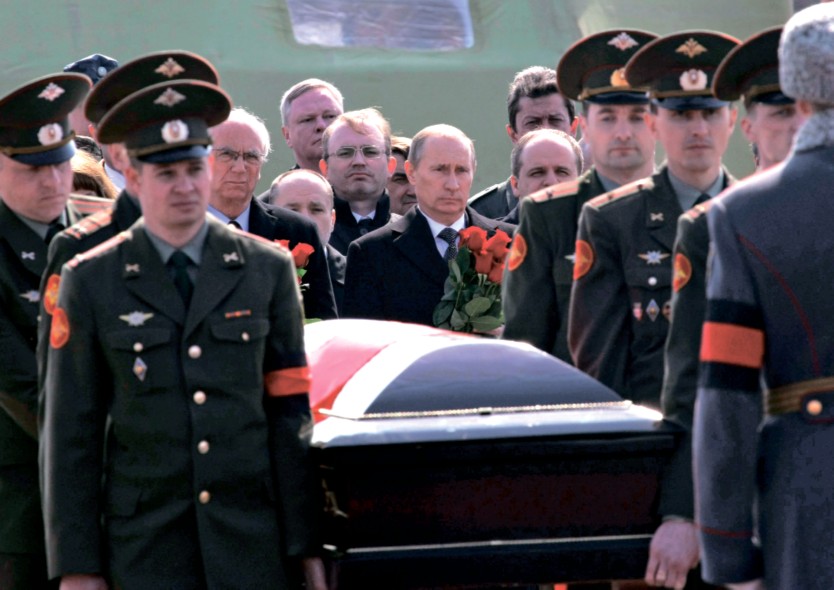
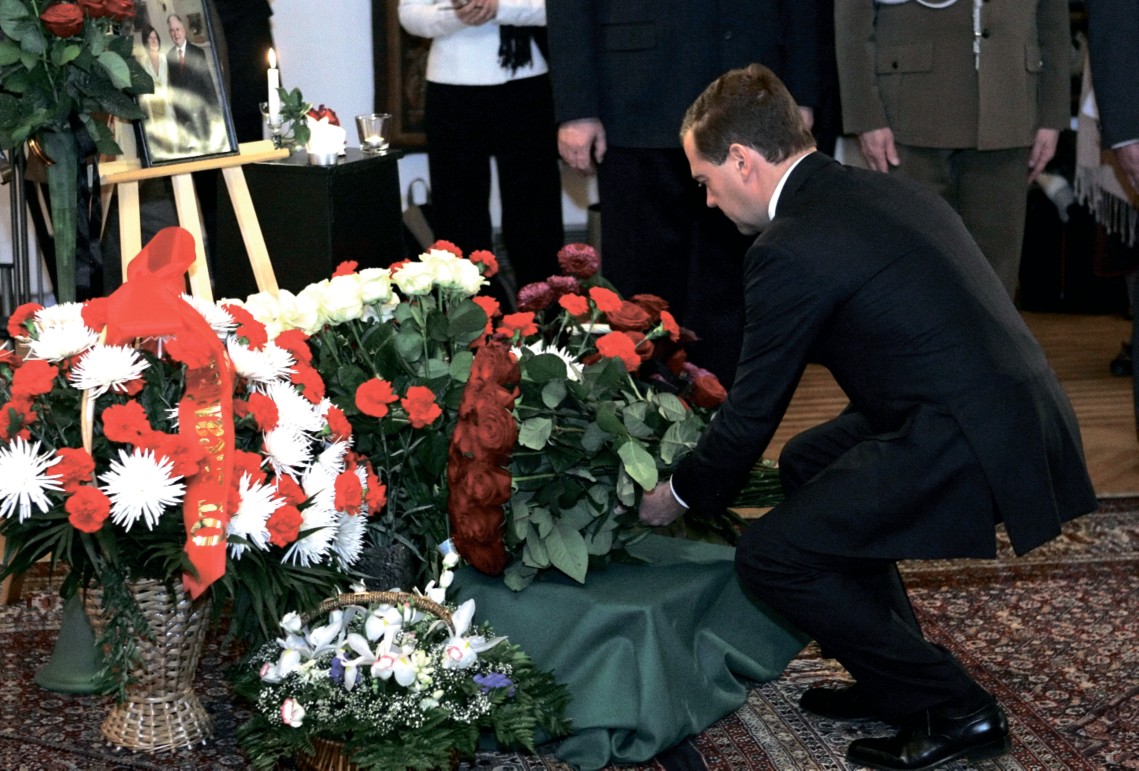
The whole world expressed sympathy for the Polish people. Seven-day mourning was declared in Poland. The EU leadership also decided to declare a day of mourning on 12 April. Mourning was declared in Russia, Georgia and even in distant Brazil. Azerbaijani President Ilham Aliyev visited the embassy of Poland and expressed his condolences on the tragic plane crash.
The version of an explosion on board the plane was immediately discarded. According to Russian Deputy Prime Minister Sergey Ivanov, preliminary information from the flight recorders and the inspection of the wreck showed that there was no explosion or fire on the airplane. According to Ivanov, the airplane engines worked until the plane crashed into the earth.
It is also known for certain that Kaczynski's plane was repaired in December 2009, i.e. it was "almost new". The president's Tu-154M plane was made in the USSR on 29 June 1990. It was consistently used by the Polish presidents Wojciech Jaruzelski, Lech Walesa and Aleksander Kwasniewski. Although the Polish president was asked to replace the Tu-154M with a Brazilian Embraer, Kaczynski decided not to rush.
If there were no technical problems, we must think about the human factor. It is doubtful that the 36-year-old pilot Arkadiusz Protasiuk, who had nearly 2,000 flight hours and was married with two children, independently decided to land after three unsuccessful attempts when visibility was less than 400 metres. Moreover, the air traffic controller had advised him to use the airport in Minsk or Moscow.
In this regard, we should recall another occasion when, during the Caucasian War in the summer of 2008, Kaczynski demanded that his plane land in Tbilisi, although it was dangerous because of bombardment, and the plane landed in Azerbaijan, after which Kaczynski fired the pilot for not obeying his orders. Therefore, many in Warsaw believe that the president insisted on landing in Smolensk.
Kaczynski had been trying to get an invitation to Katyn for too long. According to the Western media, Russia had long denied him an invitation as an unfriendly politician. If the plane had landed at another airport, the president would have missed the ceremony and perhaps his most important political appearance. The rhetoric used when discussing this issue was increasingly becoming a barometer that could determine the state of Polish-Russian relations.
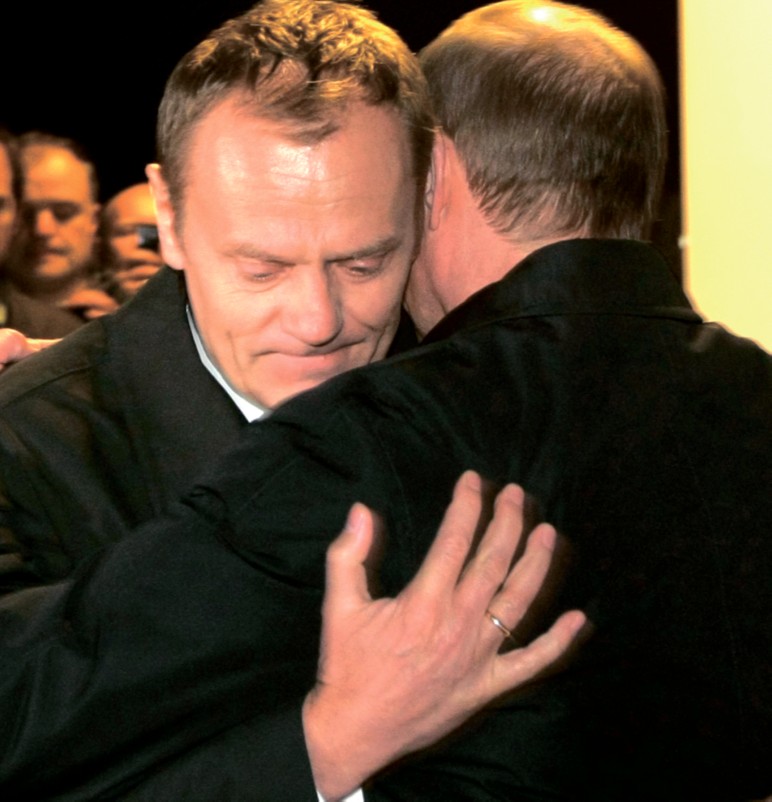
An interesting version was voiced on Radio Ekho of Moskvy by the well-known journalist Aleksandr Venediktov. People who personally knew Lech Kaczynski note that the Polish president was aware of the reluctance of Russia's leadership to see him in Katyn, he said. "That he knew. Because we know that if Prime Minister Tusk was invited by Putin officially, Kaczynski was not invited. He was, roughly speaking, on a private visit, and nobody except a presidential envoy was there to meet him. So, he initially knew that he was not expected and that his personal relations with the Russian leadership were bad. And at the moment when he was approaching the airport, he was told that the Russians were trying to divert him either to Minsk or Moscow. What did he have in mind? He thought they were disrupting the event and playing a bad trick on him. Especially as Tusk, his political opponent, and Putin had landed at this airport three days earlier. That's to say the airport was operational. And then, according to my interlocutors, he ordered landing. 'They say: No, they are diverting us to Moscow.' But he firmly ordered landing."
Although visits to Katyn by top delegations have already demonstrated how much has changed, now the Poles will associate Katyn not only with the former tragedy, but also with the loss of fellow citizens who represent the modern history of Poland.
The symbolic significance of Katyn was also reinforced by the fact that the Soviet and Polish communist regimes had blamed this crime on the Nazis. Yeltsin's decision to declassify the Politburo resolution, which proved the guilt of the Soviet authorities for the killings in Katyn, had briefly improved Polish-Russian relations.
At the same time, The Times says, even Vladimir Putin, who, as far as one can judge, recognizes the responsibility of Russia, has repeatedly refused to repent, which caused sharply negative reaction in Poland.
Either way, Katyn demanded new victims and this tragedy could have an impact on Russian-Polish relations. Many analysts are wondering: will it halt the process of historical reconciliation between the two countries? Events can take place in either direction, they believe.
Nonetheless, the Russians' sympathy for the bereaved Poles - both at the official level and in the streets - did more than any diplomacy to eliminate mutual suspicion since Poland emerged from the shadow of Moscow after the collapse of the Soviet Eastern Bloc.
Meanwhile, some Polish experts spoke about "a serious violation of safety rules". They believe that despite the absence of an explicit prohibition, it was impossible for so many prominent politicians and military elite to fly on one plane.
In the US, if a politician is killed on duty, he is often replaced by his relative. In Poland, it is simplified by the fact that the twin brother of the late President Kaczynski - Jaroslaw - is also an experienced politician. Until 2007, Poland was the only country in the world which was ruled by twin brothers as president and prime minister.
Before the crash, the major presidential candidates were Lech Kaczynski himself and Speaker of Parliament Bronislaw Komorowski, who, according to the Constitution, temporarily heads the country after the tragedy. According to opinion polls, before the plane crash, the latter had more chances of winning. But now chances are high that the race will be joined by the twin brother of the deceased president, Jaroslaw Kaczynski, who may well win in the wake of universal sympathy, although it is possible that the participation of the deceased president's brother in the presidential race may be regarded by society as cynicism, and then he will lose all chances.
Either way, we don't have to wait too long - by the end of June, Poland must choose a new leadership.
RECOMMEND:
 722
722

