

TIME IS RUNNING OUT FOR YEREVAN
Azerbaijan awaits Armenia's response to the Madrid principles
Author: Rasim MUSABAYOV, a political scientist Baku
Negotiations on a peaceful settlement of the Nagornyy Karabakh conflict, held with the mediation of the OSCE Minsk Group, have entered a decisive phase. The round of negotiations which began in Prague six years ago, when the mediators proposed combining the positive aspects of the "phased" and "package" approach to a conflict settlement, resulted in the Minsk Group co-chairs preparing the so-called Madrid principles. In 2007, a draft of these principles was submitted for discussion and negotiations on the issue have continued for several years now.
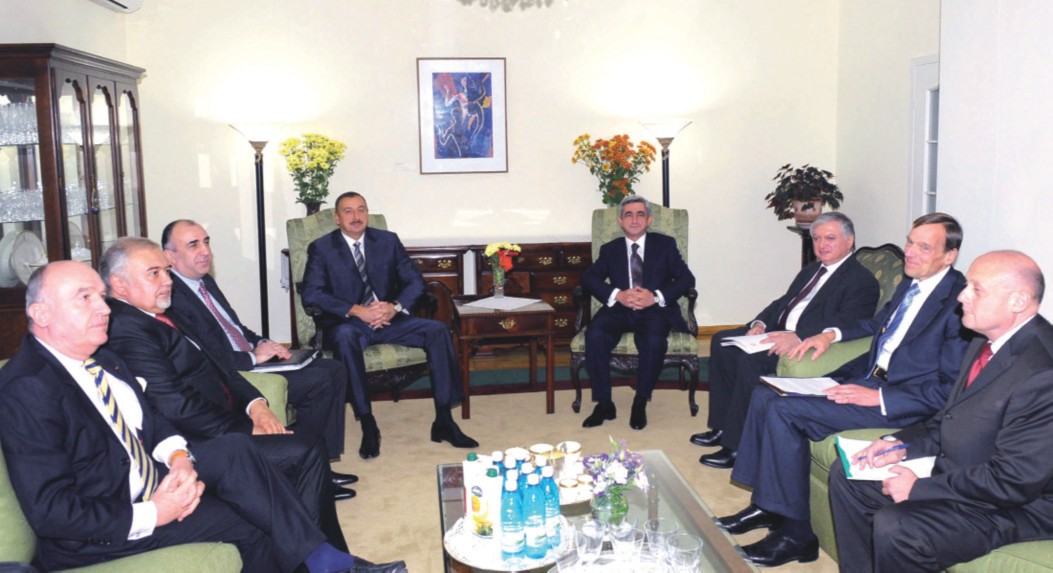
Attempts to overcome differences and bring the parties' positions closer were made in the course of numerous meetings between the presidents and foreign ministers, as well as visits to the region by the co-chairs of the Minsk Group. As a result, at the end of last year Azerbaijan and, earlier this year Armenia, were presented with an updated version of the Madrid principles. Their core principle is to ensure the implementation of the basic principles of the OSCE, namely: territorial integrity and the right to self-determination, as well as strengthening peace and security.
During the G8 summit in Aquila, the international community, represented by the presidents of the United States, Russia and France, called on Baku and Yerevan to overcome the remaining differences and finalize a joint agreement on the Nagornyy Karabakh conflict on the basis of the Madrid principles. Similar support and appeals were contained in the declaration adopted by the OSCE Foreign Ministers' Council in Athens last summer.
Describing the general meaning of the latest version of the Madrid principles, Azerbaijani Foreign Minister Elmar Mammadyarov said that in the first stage, the Armenian armed forces should withdraw from five districts plus 13 villages in the Lacin District. Following the withdrawal, the Armenian side should restore all communications. The roads would be opened after the withdrawal of Armenian forces from Lacin and Kalbacar. After the return of Azerbaijani refugees to their homes, the status of Nagornyy Karabakh would be discussed.
Elmar Mammadyarov announced that Azerbaijan had expressed its consent to the updated version of the Madrid principles with a few reservations. The reference to reservations may be a tactical step in order to balance negotiating positions if necessary. The Azerbaijani side simply reserves the right to counter-claims if the Armenians put forward their own counter-claims.
President Ilham Aliyev also publicly confirmed Baku's agreement with the updated Madrid principles.
"...Most of the negotiations have been completed. In general, with certain minor exceptions, the proposals ensure the interests of Azerbaijan, its territorial integrity and the return of all the occupied districts to Azerbaijan control. Thus, we believe that if the other side displays constructiveness and accepts the proposed option, then we can move forward more quickly to address the issue," said the President of Azerbaijan, while speaking to his fellow citizens on the occasion of Novruz.
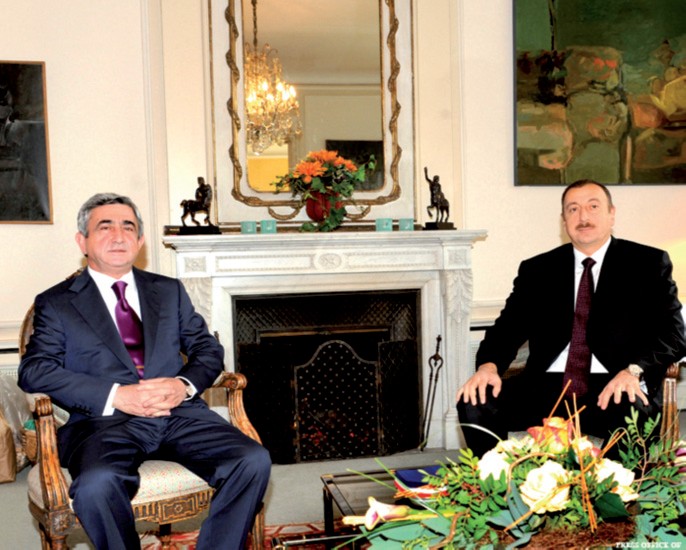
But if Azerbaijan's position is expressed quite clearly, it is hard to say the same in respect of Armenia. In mid-March, the co-chairs of the Minsk Group met in Paris with Armenian Foreign Minister Edward Nalbandyan to hear Yerevan's official reaction to the proposed updated version of the Madrid principles. However, at a time when Yerevan is expected to give a clear answer, the Armenians pretend that it is business as usual - they are not saying "yes" or "no" and are ready to "drown" the question in reservations and irrelevant initiatives.
For example, Nalbandyan said that the Madrid principles remain on the negotiating table: "We continue to negotiate on them. The working proposals, which the co-chairs of the Minsk Group have put forward throughout this process, have been made repeatedly, and now the same working proposals have been made." Then, the Armenian foreign minister decided to recall that the Armenians had agreed with the first version of the principles proposed in 2007 - but, then they were rejected by Baku. It follows logically that Yerevan tends to disagree with the updated version of the Madrid principles, but is afraid to say so explicitly.
One feels that Azerbaijan's consent to the latest proposals of the Minsk Group caught the Armenians unawares. Previously, knowing that the Azerbaijani side had raised fundamental objections, they showed their false "constructiveness". Now that Baku says "yes", Yerevan begins to wriggle out of it. Sargsyan (together with Kocharyan who overthrew President Levon Ter-Petrosyan for his willingness to compromise in 1998) cannot abandon territorial claims to Azerbaijan. But at the same time, the current Armenian authorities understand that rejection of the Minsk Group proposals, backed by the leading countries of the world, could cost Armenia dear, when it is in a difficult economic situation and needs financial assistance. That is why the Armenians are trying to resuscitate the process of recognizing the so-called "genocide of 1915" and to evoke sympathy, organizing in parallel various propaganda activities in the world media.
The latest such example is Serzh Sargsyan's interview with Euronews, in which he called on Azerbaijan to sign an agreement on the non-use of force "to lay the foundations of confidence in Armenia and Karabakh itself and to allow people to understand that Azerbaijan stands for a peaceful solution to the conflict."
It is obvious that, in making such a primitive demagogic move, Sargsyan does not expect a positive response. The most important thing for the Armenians is to demonstrate their false "peacefulness". For the general public is not aware of the fact that the updated Madrid principles offered to the parties, already contain obligations not to use force, coupled with other security measures, the withdrawal of troops etc. But instead of giving a clear and constructive response to them, the Armenians, in fact, propose starting new negotiations in a manner that is of benefit to them.
The Armenians received an immediate response to their demagoguery from the Azerbaijani Foreign Ministry. Foreign Ministry spokesman Elxan Poluxov stated that "Armenia must first withdraw from the occupied territories."
Meanwhile, despite all the unpleasant Armenian manoeuvres, it is too early to put a full stop and shelve the Madrid principles. Presumably, Moscow and Paris strongly recommend that Sargsyan accept the proposals of the Minsk Group. The Armenian president will soon travel to the US to attend an international conference on nuclear security and clearly work out for himself the prospects for American recognition of the so-called "genocide of 1915", as well as how far Washington can go to "push ahead" with the Madrid principles. Depending on this and on whether he can wrest promises of political support for himself and new financial handouts for his country, Sargsyan will make up his mind about Yerevan's position on the Madrid principles by the end of April.
Meanwhile, Baku still hopes to get a positive response from Armenia. According to Azerbaijani Foreign Minister Elmar Mammadyarov, Yerevan must say whether it accepts this document or not, and then Azerbaijan will determine its next steps.
"But I want to assure you that we, at the Foreign Ministry, are discussing various options, as well as ways to negotiate this year," said the minister.
But it is already clear that if the Armenians resort to delaying tactics, Azerbaijan will not participate in this unproductive diplomatic game.
Baku does not intend to tolerate the continuing occupation of its lands forever and has clearly communicated this to Armenia and its sponsors. After all, even if the parties are unable to agree on the basic principles of a Karabakh conflict settlement with the assistance of the Minsk Group, there is a body authorized to specify how the conflict should be resolved on the basis of international law. That body is the United Nations.
In essence, the UN has already determined the principles for settling the Armenian-Azerbaijani conflict over Nagornyy Karabakh in Resolutions 822, 853, 874 and 884, adopted by the Security Council back in 1993 and in UN General Assembly Resolutions 60/285 of 7 September 2006 and A/62/L.42 of 14 March 2008 ("The situation in the occupied territories of Azerbaijan"). The problem is that Armenia does not like these solutions and is flagrantly violating them due to the international community's inaction.
If Yerevan's desire to torpedo or sabotage the negotiations over the updated Madrid principles becomes apparent, Azerbaijan has the right to raise with the UN Security Council the futility of the OSCE Minsk Group's efforts; the body mandated to mediate in the conflict settlement. Turkey will soon take over the presidency of the UN Security Council and we can count on Turkey's support in advancing the issue of implementing the previous decisions, since otherwise, there will be an immediate threat to peace in the region.
But diplomatic initiatives are not the only means of sobering up the Armenians from their annexationist ambitions. President Ilham Aliyev explicitly said in the same recent speech on the occasion of Novruz: "Azerbaijan is intensifying diplomatic efforts and is taking a constructive position in the negotiations and, concomitantly, is increasing its strength by mobilizing its resources. This strengthening is manifested in the economic, political and military spheres. We are not hiding this. We live in a time of war. It is no accident that the bulk of our public spending is aimed at defensive ends. This is natural. After the settlement of the Armenian-Azerbaijani Nagornyy Karabakh conflict, there will be no need for such large expenditure on defence. But today there is a great need. Every year, we will increase our defence spending, strengthen our army, buy new weapons and make sure that the armed forces of Azerbaijan can fulfil the order of the commander-in-chief at any time and within a short period."
A military scenario is not the best way to solve conflicts, but Azerbaijan's growing military capabilities and its determination to resort to extreme measures must prompt Armenia and its sponsors to display constructiveness and abandon unattainable ambition. There is still time to do this.
RECOMMEND:
 659
659

