

HOLIDAY "MOOD"
What is novruz about? Traditions, rituals, beliefs
Author: Rena ASKEROVA Baku
For most of us, memories of celebrations of Novruz Bayrami are probably associated with our mothers. It seems that it was preserved and brought down to us from ancient times by women. Mother can make the holiday good, eventful, real and joyful. I remember that on the eve of the holiday, she used to buy sweets and dried fruits, and this was so full of ritualistic meaning that anticipation of the holiday could be felt in the air many days in advance. But first, she would clean our apartment thoroughly - even wiping the ceilings, dusting and shaking all the carpets and mattresses, cleaning and polishing the floors.
The smells of Novruz surround us everywhere - dried fruits, candles, pastries. Walnuts, hazelnuts, spices. I remember how grandmother's house in Iceri Seher was filled with the pleasant voices of women and playful children. The distaff side of the family would gather in the "brown house" to bake sekerbura, sor-gogali, paxlava. This labour-intensive process could not take place in just one family, and it seems that the whole meaning of the holiday was cooperation: conversations, laughter, children running and getting in the way of mothers wearing headscarves - working with dough requires cleanliness. Kneading and rolling out the dough for the gogali and paxlava, then spreading butter over it, cutting the intricate designs on sekerbura is no mean task. And the advice going around... What should you do if you want sekerbura to remain white as it is baked and not fall apart in the oven? What should you do to make your paxlava pleasantly brownish, oily but not sticky, and to make it show alternating layers of nuts and dough, instead of mixing them into a uniform mass? And gogali? They must rise and be light and crunchy.
Ah, that women's talk... And while the special holiday sweets were baked, which were then distributed among everyone and which lasted almost till May, our beloved moms discussed everyone - their husbands, the daughter of the neighbour who lives in the next apartment block, on the fourth floor, about the kind-hearted single woman next-door - "we must certainly give her some sweets of every kind." About relatives, cousins, grandchildren, the niece who recently went to university or got married, Novruz rituals - fortune-telling is allowed on every Tuesday before the holiday and on its eve (Bayram axsami - author), the spring equinox. And it is not surprising that this concerned the single women of the extended family. And later, in the evening, men would come to their wives and children. Usually, impatient husbands had to wait until baking was over. But it was good that they had to wait. They could play a hand or two of trick-track. And by then, the children, who would grow extremely noisy, would start sneaking to the table with the already baked gogali. The spring festival was in the air, the exclamations of trick-track players, the loud voices of the women and hushed conversations of the men, which would grow louder when the game took an unfavourable turn for one of the players. The tea in armudu glasses with, of course, kalla gand (loaf sugar - author). It seemed that men could drink it forever... Good-heartedness, laughter and joy. It was a true holiday
The festivity proper
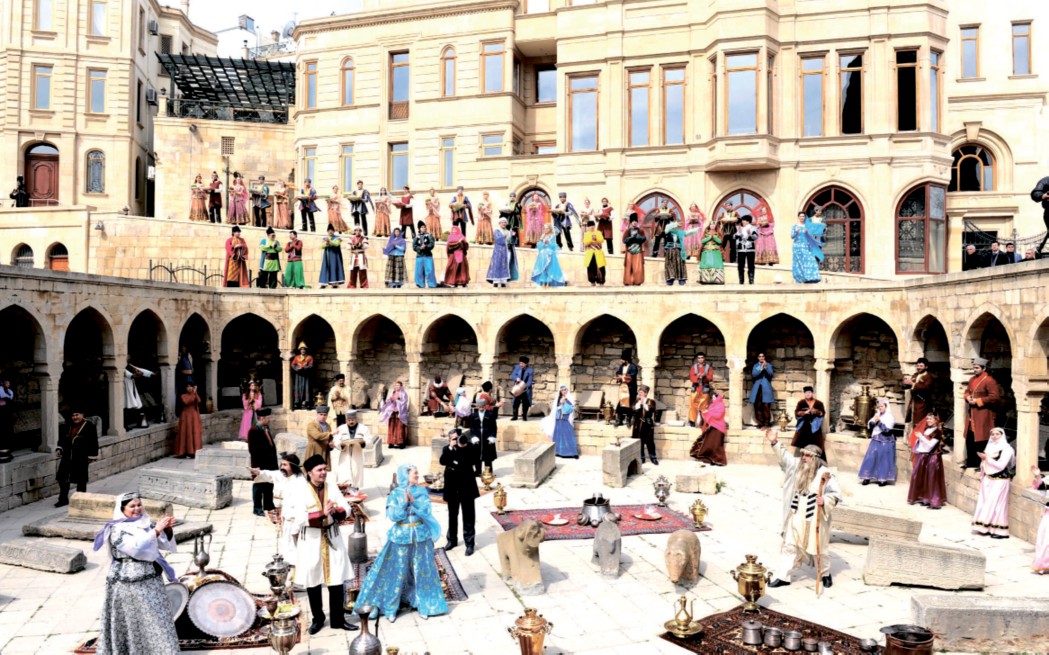
The celebrations of the ancient holiday of Novruz are accompanied by the performance of different popular rituals and everyday songs, rites, incantations, fiery dances, games, fairy-tale telling, sketches, citing proverbs and sayings, puzzles, biting jokes and witticisms. Since ancient times, Novruz Bayrami has meant performances by circus artists, folk comic theatrical plays. In this process, the most ancient and wonderful traditions of family life and social patterns were closely intertwined.
Novruz Bayrami is the most joyful and much-loved holiday in the East. After all, besides all else, it marked the start of the spring farming season. The very fact of Novruz's association with certain days (four Wednesdays - cille vece) proves its links with traditional rituals of cults of land and fertility, renovation and renewal of Nature after winter, and its awakening - the transition from spring to summer. People would traditionally invoke natural forces (the elements) and ask them for prosperity, for which Novruz paves the way. According to an ancient tradition, no one was to bicker or get angry before or during the holiday. Insults and swearwords were strictly forbidden and old feuds, conflicts and dislikes were to be forgotten. People who had had conflicts in the old year, were to demonstrate their regrets about old disputes and their desire to make peace during and after Novruz Bayrami. It was not permitted to supply false information, gossip, make inappropriate jokes, libel, steal or commit immoral acts during Novruz. By old custom, creditors and debtors were to settle their accounts by the time of Novruz.
The villagers, headed by the village elder, would visit the houses or families where someone had died during the year. They would again convey their condolences to the relatives, commemorate the dead, visit the cemetery and hand out sweets to those who attended the ceremony. The days before Novruz were filled with intense and busy preparations for the holiday. Special attention was paid to tidying up the house: People would sweep the dust from every corner, plaster the rooms, clean the windows, doors, and clean up their yards. This hard work, lasting for many days before the holiday, was to bring prosperity and well-being to the family, happiness, respect, and particularly, the birth of numerous male children. These traditions are still observed. In the past, the onset of the spring equinox was announced by the firing of cannons. The custom is known as "Novruz topu atilli." On the first day of the festivities, all family members were to be at home, not to visit anyone and not to accept visitors. Believers would spend the day in prayer and reading the Koran. There was a saying: "If you are not home on the holiday, you will wander for seven years."
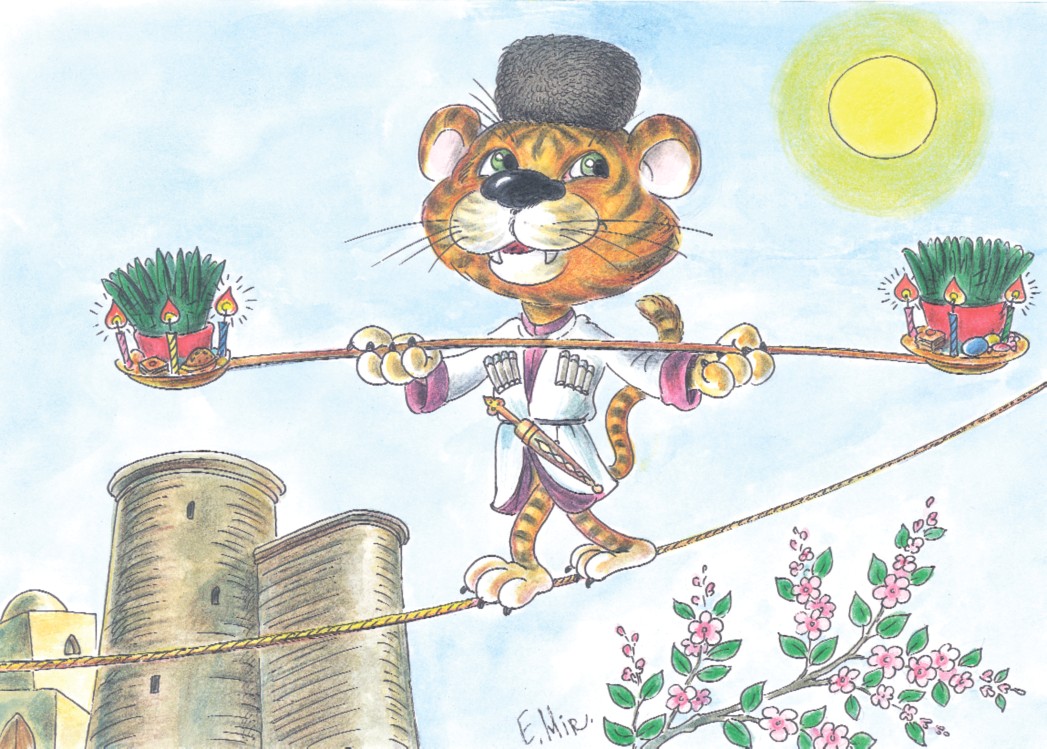
One of the surviving customs concerns horses. During the festivities, special care is taken of domestic animals - they are given better fodder than on ordinary days, and horses are adorned. In the countryside, horse races and games of covqan are organized. People are reluctant to lend money during Novruz, cautious about deterring prosperity. At the same time, there is a custom of handing out the festive "share" as gifts (Novruz payi). The tray (xonca) is filled with Novruz sweets, semeni (sprouted wheat seeds) and candles and sent out to neighbours and friends. The tray should not come back empty, because it is believed that prosperity will leave the house in that case. That is why it comes back full of other festive treats, in accordance with taste and wherewithal. On the last Tuesday, or during the festivities, there is the ritual of lowering (sallama) the bag (canta) through the chimney (bazha or baca) or the light hole (rizna) of the house. The rite has many different names. Among young girls, different forms of fortune-telling were popular, among young men - different sports contests, the games of "bitki," "yumurta doyussdurmak."
So everyone has fun
There is yet another Novruz-related custom in Azerbaijan, which has been preserved from the remote past: At night, the youth start bonfires in the mountains and keep vigil till the morning. The custom is called "the Sun." The young people sing a song called "Qoduxan" until dawn . It is important to give presents not only to ethnic Azerbaijanis, but also to representatives of other ethnic groups and religious denominations, so that they can share the joy of Novruz. And in Ordubad, Novruz has been celebrated in two phases since time immemorial, and the first phase was called "sem levin." "Sem Levin" begins early in the morning, on the day of Axir Cersenbe, when all the residents of Ordubad go to the market and buy the necessary food products and items; the number of kinds of merchandize purchased must equal seven: Raisins, hazelnuts, chestnuts, pistachios, dried fruits, roast wheat (govurga) and sweets (shirni). A tray is filled with these, and again, seven different types of presents were placed on it (sovgat baxcasi baglanir) and sent out to seven households; seven types of yalla and seven different dances were performed.
The very ritual of food, its magical significance and components all signified the main event, the renewal of life. This is why Novruz dishes are different from ordinary ones, not only because of the magic number 7; they are also cooked differently. On axir cersenbe day, or Novruz, there had to be salt, bread, rue table (sufra, dastarxan), rue, charcoal and a mirror on a copper tray (mecmei)... According to custom, the tray was not to be touched for 12 days. It is thought that this was a symbolic gift (nazir) to the Sun. Ritual dances and songs were performed around the tray. And according to a different custom, there had to be food whose names begin with "s" on the tray: Semeni, sirke (vinegar), sarimsag (garlick), sebzi, simuzar, semek...
There are different rituals in different districts of Azerbaijan. Among Persian-speaking peoples, garlick (sir), sprouted wheat seeds (sebzi), cidda (cancid), apple (sib), vinegar (sirke), rue (sinaid) and a rasp-file (suxon) were to be placed on the table. On the Abseron peninsula, milk pilaf (sudlu plov) was usually cooked for Novruz Bayrami. And the xonca was filled with dried figs, raisins, apples, oranges, inab, lablabi, iyide, nogul, nabat.
In Baku, besides all of the above, coffee, tea with lemon and different fruit conserves, juices (iskencebi), different sherbets and rose water - gulab - is served.
RECOMMEND:
 775
775

