

HELLAS SHAKES THE WORLD
The crisis in Greece raises fears about the future of the EU
Author: Natiq NAZIMOGLU Baku
Greece has been shaken by political unrest and social protest for several years, but now its economy is experiencing real default. The leading capitals of the world are considering ways of leading Greece out of the abyss in which it has found itself. This is no accident, because not a single state is immune from what has happened in this country, especially at a time of unresolved global financial crisis.
"Fraudsters in the European family" against "unscrupulous speculators"
The political crisis in Greece in 2007-2008 was followed by an economic one. By mid-March 2010, the level of Greece's external debt had reached almost 300 billion euros, and this is no less than about 140 per cent of national GDP. No such debt has been seen in Europe since the middle of the last century.
In any case, the European Union, willingly or unwillingly, pandered to the unenviable fate of Greece. Throughout the 1970-1980s, the EU provided substantial assistance to the Greek economy in such sectors as tourism, services and road construction, resulting in dozens of heavy industry enterprises closing or being turned into entertainment centres. In addition, EU aid was injected into Greece without appropriate controls, which led to the formation of a political and economic system based on corruption, parochialism and kinship in the country.
In 1990s, the Greek leadership very cleverly deluded the EU into thinking that development in their country was progressive. And in 2002, the government of Greece took out credit of 1 billion euros, without including it in the overall balance of the budget. This allowed Athens to "fulfil" the EU requirement that external debt should not exceed 60 per cent of GDP.
But the true situation in Greece was revealed only last year in connection with the global economic crisis, because of which Athens' income from tourism and the banking sector fell significantly. Soon, Greece was simply unable to service its debt.
The default forced the government of the socialist George Papandreou to take a path of painful reforms to the economy. Athens promised the European Commission that it would reduce the budget deficit, which amounted to 12.7 per cent of GDP at the end of 2009, by four per cent by the end of this year. However, the measures taken by the Greek authorities to freeze growth in wages and to increase consumer taxes have been recognized as insufficient by the EU. Therefore, the Papandreou government decided to reduce the budget deficit by another 4.8 billion euros. This will be done through the indexation of pensions, raising the excise taxes on fuel, tobacco and alcohol, reducing bonus payments to civil servants and increasing VAT to 21 per cent. The Greek government expects the EU to save the country of the Hellenes, since Brussels had promised to help them after Athens had taken effective measures to reduce the national budget deficit. The Greeks really need help, as the ambiguous "shock therapy" will yield results within a year, in the best case scenario and, until then, Athens will need new loans to override the budget deficit.
Thus Papandreou asked their European partners for help. However, the ECB, which is controlled largely by the Germans, refused assistance. Germany's government even stated that not a single euro in aid should go to Athens from the EU. Berlin's position is motivated mainly by two factors. First, Germany has played an important role in implementing the EU's financial policies, as the country contributes about 15 per cent to the overall budget of the euro zone. Second, the Germans openly suggest that the current situation in Greece is due to corruption taking over the state system from head to toe. The Greeks, of course, are also blamed for providing distorted economic information to the European Commission and the European Central Bank. The German press is puzzled by the fact that every Greek pays bribes worth 1,355 euros annually. Great repercussions resulted from a collage in the Munich magazine Focus, which depicted the famous armless statue of Venus de Milo with a pencilled hand, making an offensive gesture, and accompanied by the inscription "Fraudsters in the European family".
In response to the publication of the collage, a Greek consumer protection organization urged the population to boycott German goods, while political circles in Greece recalled that Germany has still not paid their country for the crimes of national socialists, namely, it has not compensated for the damage from the occupation and the treasures taken away by the Nazis.
It is noteworthy that Greece considers other countries and global financial centres more responsible for the crisis it is experiencing. Athens accuses the EU of having no strict monitoring of the implementation of the euro stability pact. In this context, Papandreou expressed the view that the European statistical office should continue to ensure the right of direct access to data from individual member countries. "We have already suggested this, but not all countries want such transparency," he complained in an interview with the German magazine Spiegel.
In addition, the Greek government points to the "negative activities of various hedge funds which engaged in short selling without cover, adding to the budget and debt crisis in Greece" (from a statement by Greek Finance Minister Georgios Papakonstantinou). During a visit to the United States, George Papandreou lashed out at foreign banks, which he said are cashing in on his country's problems: "Unscrupulous speculators earn billions on the default in Greece every day". The attention of the Greek secret services focused on large-scale speculative transactions involving foreign banks. The Greece secret services are also suspicious about the fact that financial institutions from the United States and Britain have been buying Greek bonds in huge volumes.
In any case, whoever is to blame for the current situation in Greece, its ordinary citizens will have to pay for the mistakes. George Papandreou called on his people to make painful sacrifices in order to pull the country out of the pit of debt. The prime minister said Greece is actually in a state of war and is struggling for national survival. It takes time to see the results of structural reforms, but lenders do not want to wait, Papandreou said at an emergency meeting of the ruling Socialist Party.
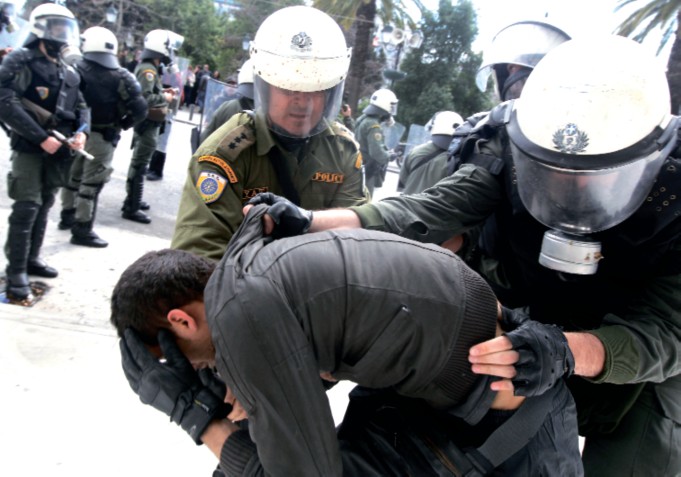
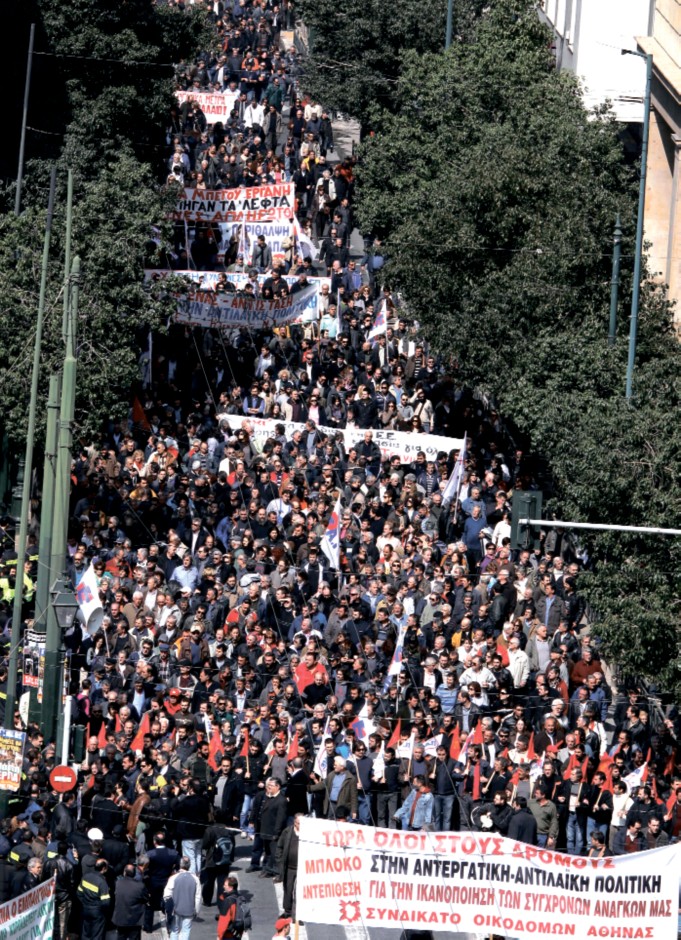
However, Greek trade unions have sharply criticized the government's policy. They described as a "declaration of war" the decision of the country's leadership to reduce wages in the public sector, in which a third of the employed population works, and to cancel the payment of holiday allowances and annual bonuses. Protests in the streets of Athens have been going on for many days now. Trying to solve its economic problems, Greece once again faces the threat of political unrest. In late 2008, clashes between demonstrators and police in the streets of Greek cities showed the deep crisis affecting Greece. Since then, it has been impossible to eliminate the causes that prompted protesting Greek youth to join battle with the law enforcement authorities. This is graphically proved by current events in Greece.
Lessons for Europe and the world
Meanwhile, the crisis in Greece has raised fears about the future of the European Union. Germany's former foreign minister Joschka Fischer argues in his article "Greek Lessons for Europe", published in the United States' Project Syndicate, that the EU "can neither allow Greece to slide into national bankruptcy nor hand it over to the International Monetary Fund, as other members of the euro zone - namely Portugal, Spain and Italy - may also come under attack from the financial markets. In this case, the euro would be on the verge of failure, and the very project of European integration would be in serious danger for the first time in its history". Fischer believes that "even taking one, two or three steps forward, the German and French governments will be at risk politically in their own countries, if the euro crisis in the Mediterranean worsens and financial assistance is required to save the single currency. Citizens of countries which will have to pay such costs are not ready for such sacrifices, and that will encourage even more Euroscepticism..."
In this situation, it is no accident that Germany and France discussed the possibility of creating a European Monetary Fund whose goal would be to provide financial assistance to states such as Greece. According to German Chancellor Angela Merkel, who found the idea "good and interesting", the establishment of a European version of the IMF may require the signing of a new agreement between all 27 EU members, since any interstate financial assistance within the euro area is banned by the Maastricht Treaty.
The crisis in Greece may herald very important processes worldwide. According to City of London analysts, the global financial system may expect the collapse of national currencies because of the huge deficits in the budgets of the West's leading industrialized countries. Measures aimed at preventing such a perspective may reverse the processes that gave rise to the phenomenon of globalization. In other words, the world is witnessing the birth of a new phenomenon - a deglobalization of the world economy.
Regardless of the conceptual characteristics of today's global reality, it is time for major changes in the world economic system. German Chancellor Angela Merkel supported the banning of the market in default swaps, calling on the US to take similar measures. A similar position is shared by France. According to Greek Prime Minister George Papandreou, who met Barack Obama in Washington, the US president shares European concern about the uncontrolled derivatives market (financial instruments such as futures and options). Moreover, it became known that Obama has already sent a new initiative on swaps to Congress in order to prevent risky manipulations of financial instruments. Among other things, it is proposed to tighten the rules on conducting business transactions.
Papandreou also said that the question of speculators who cash in on the situation on the world economic markets may be included on the agenda of the next G20 meeting, which will be held in June in Canada.
RECOMMEND:
 738
738

