

CHILDREN OF ATUR
Facts about the history of the Azerbaijani people
Author: Leyla SABZALI Baku
The author of an unfinished book of historical journalism presents readers with a few chapters. The text has been abridged especially for R+ (End)
Hun-zer - Albana - Al-Bacchus - Bhaga-Bahua - Baruka-Bagvan - Baguan - Ateshi-Baguan - Bagu, Bade-Kubeh ... - Baku
Baku has had so many names! Each of them reflects its historic destiny. Almost all of them reflect a divine purpose.
Hun-zer was a city of the Caspians. According to an ancient primitive legend, recorded by the Polish historian Ajrzekowicz in the 18th century, the city received this name from the first settler, who founded it. According to legend, he arrived on the fiery shore on a large ship with his wife who said that she was a goddess and ordered that a tower be built to worship her. However, the word "wife" could mean a woman in those days. Hunzar built a tower where the goddess retired. Hunzar served her. The tower and the city were later called Hunzar. By the way, if we apply the name to Turkic, it means a "shining sun". The city was named Albana later, with the arrival of Aryan Albans from Hyperborean and Arctic lands - after an Aryan tribe that later headed a tribal union - Caucasian Albania. The ancient Greeks, who came to this land, called Albana "Al-Bacchus", putting the city under the protection of the god of wine - Bacchus. Zoroaster, who returned from a long journey with his Avesta, would bring Sanskrit to the land of ancient Albania; this was the language of Indians who were the first to accept his teachings. They also accepted a new name for the city - "Bhaga", which means God in Sanskrit. The Pars tribes, who adopted the Aryan religion, rendered the city's name "Bakhau", in accordance with Persian phonetics - with the same meaning. It was under this name that Baku was mentioned in ancient manuscripts of the Egyptian Book of the Dead. In the pronunciation of the Albanians themselves, the name of the city sounded like "Bag-Van" - a city of God, or later - "Baguan" - the Divine. Some time later, Baguan was supplemented by the Caspian-Turkic word "Ateshi", which means "fiery". And Baguan would be called "Ateshi-Baguan" for some time. Generally, such a mixture of the northern Aryan and Caspian Turkic languages was quite common on the territories of Arran in those days, and not only in Arran, but also in many areas of Eurasia. As some Albanians adopted Christianity, the city began to be called "Baruka" (in the language of the Bible, "Baruch" is one of the addresses to God), a name under which it would be mentioned in the Bible. In any case, the Zoroastrian Albanians continued to call it Baguan or, in short, "Bagu". With the arrival of the Arabs and the spread of Islam, a Persian ruler and governor of the Arab caliphate renamed the city "Bade-Kubeh", which means "a city where the winds strike" in Persian. This change to the name of the destroyed spiritual centre of Zoroastrianism was of a political and religious nature. The city of God became a city of the wind. Later, according to Mas'udi and Al-Muqaddasi, the Persian "Bade-Kubeh" became Baku in the 10th-11th centuries. In addition, in some Arab sources, the city is referred to as "Ba-Kuh", "Bakuya" and "Bakuye", while in European sources it was "Baki" and "Bakhi". In Russian sources, it is mentioned as "Baka" and even "Buka".
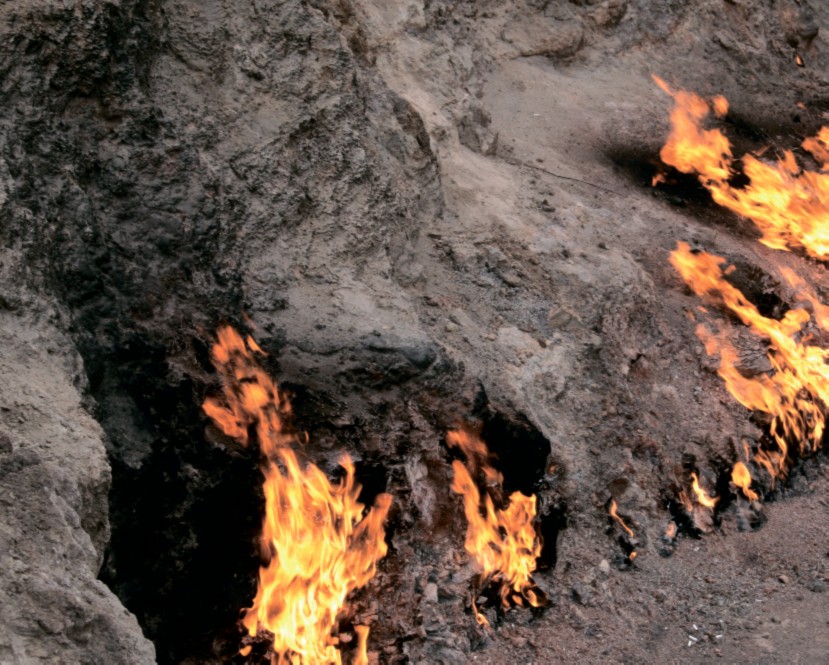
Ateshi Baguan is a city of the fiery god - a spiritual centre of Caucasian Albania and a place of worship for true Zoroastrians. Perhaps the city owed its status as a spiritual centre to its location. It is a windy hill washed by the sea on three sides, where fires ignite spontaneously in places where natural gas and oil surface and a place where the four sacred elements of Zoroastrianism - fire, water, earth and wind (air) - converge on a fault line. The special energy of the huge geopathogenic zone lent this area spiritual attraction, making this place a "holy land". Maybe everything was the opposite...
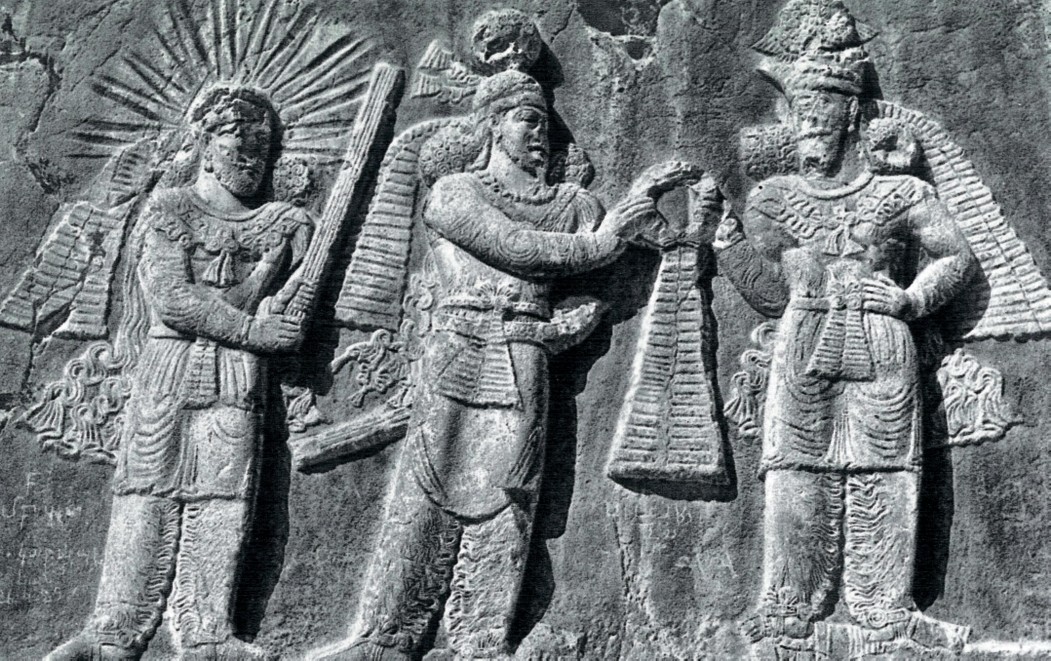
The city was a real temple which emerged initially as a complex of Caspian religious buildings devoted to ancient Caspian deities. These buildings are engraved on the walls of Qobustan (picture attached). They were also mentioned by many ancient authors. Unfortunately, these facilities have not survived. It is obvious that they shared the fate of most of the pre-Islamic temples which were razed to the ground during invasions by Arabs and later, by Persian troops. Near the temple there was a small settlement of ministers of the ancient cult - the Mug priests. In a word, both the name and origin of the ancient traditional musical art of the Azerbaijani people - mugham - are associated with the custodians of ancient magical knowledge - the Mug priests, and not only etymologically. Eventually, Baguan became a spiritual centre for Alban Zoroastrians. It was a city visited by pilgrims from all parts of the world to worship the sacred fire, the shining incarnation of the supreme deity, which was worshipped by everyone without exception, in the minds of the followers of forgotten ancient religions.
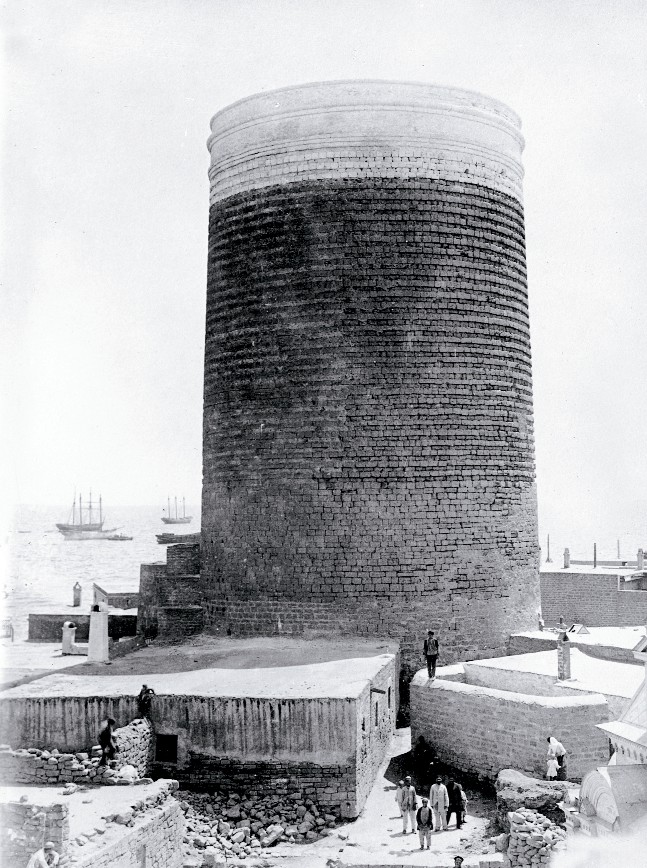
Ateshi Baguan had five temples ("Bes Gulla") and a central place of worship - an eight-storey semi-altar, tower temple of "golden-faced" Ahura Mazda (now - Maiden's Tower) - the chief deity in the hierarchy of the cult of Zoroastrianism; six "Amesha Spentas" - immortal, holy and righteous men; and four temples - the tower temple of Zummuriada - Vanant Vega - the goddess of the green star Vega (5th-4th millennia BC); the temple of Apam Napata (3rd-2nd millennia BC) - the goddess of oil in water; the temple of Arta Vakhishta (3rd-2nd millennia BC) - the son of Ahura Mazda - the god of burning air; and the temple of Vogu Mana - a good thought.
Ancient people said that the remains of the religion's founder - Zoroaster - lay in the crypt under the eight-storey, semi-altar temple. Outside the city gates of the ancient settlement there were: the religious fortress of Sa-ba-il, with a three-stage ziggurat in the centre and the second Baku fortress of Gaytara which apparently appeared in place of a settlement of Mug priests. Iranian shahs were crowned in the holy city of Zoroastrians - Baguan. Ardashir I (224-239) of the Sassanid dynasty was also crowned here. Every year, he made a pilgrimage on foot to these holy places, as proven by written sources. The city experienced glory, wealth and prosperity. It survived devastations and the bitter enslavement of its famous sons - warriors of the solar god of Goodness - Ahura Mazda and novices of Zoroaster. And, each time, the holy city was reborn. Its historical part still exists within the walls of Icari Sahar. And it is even under the protection of UNESCO... But lately, it has been losing more and more of its ancient features, hiding its innermost secrets under the mediocre buildings of new Baku architecture.
The Maiden's Tower
In Russian documents of the early 19th century, the building is referred to as Honzar-Kalys. Now it is known as "Qiz Qalasi" or the "Maiden's Tower". Perhaps this is the most ancient and most mysterious building on the territory of Azerbaijan. A debate about its date of construction and purpose has been going on for several centuries (more details in the book). I mention it for the following reason. I suddenly asked myself - why is it that the name of a temple, which was once dedicated to the highest Zoroastrian deity, Ahura Mazda, suddenly entered history under the name of "Maiden's Tower"? What is this - historical forgetfulness? Or, conversely, a good genetic memory? Perhaps in pre-Zoroastrian times, i.e. until a new character - Ahura Mazda - appeared in the pantheon of ancient Arran gods, this temple was indeed dedicated to a female deity? For example, to the same Anna-nna. By the way, she did not, later, leave the land of Arran- at the time of Zoroastrianism. In the Zoroastrian pantheon, she appeared under a new name - Anahit. And in her new important position in the era of patriarchy, she moved slightly into the background, gently giving way to male deities - Ahura Mazda and the six Amesho Spentas, the radiant Mitra, and even the bull - Gaush Urvan. Also, the nature of the goddess who was "pushed" into the background, underwent significant changes. Anahit was no longer a goddess of licentiousness, but an innocent, chaste virgin who was tired of waiting for a good husband. Her belligerence softened slightly, although her duties remained the same - to help people with procreation and nature with recovery, as well as to protect the Aryans from non-Aryans who had evil intentions towards them. All rivers and springs of fresh water were now in her domain, because she was now also Ardvisura (Immaculate). The harvest and the fatness of the herds depended on her. And although she lost her significance and priority, the people's love for her, or perhaps it was a habit, did not abate. And perhaps it was for her that the legendary Hunzar once built this strange stone building on a steep cliff overlooking the sea - despite all its rocky permanence and architectural stability based on a buttress. The buttress itself also rests on two stone cylinders whose purpose has long given rise to many disputes among architects. Why did the tower need such super-steadiness? It is not clear. It is hollow inside and has eight modern storeys. Initially, it had absolutely no storey floors; they appeared much later. It had almost no windows or doors. The doors in this tower were cut out much later. It also has something inside - either a well or an underground passage leading nowhere. The tower has five-metre thick walls with tall steps recessed into them, on which it is not so easy to climb up the tower. Clearly, the temple was not built for "small men", but for a beautiful, majestic and statuesque, goddess - the "fiery maiden" who, according to ancient legend, regularly flew out of this tower to deal with various affairs and sometimes even to fight Aryan enemies.
Zoroaster's innovations, with the recognition of a new character - Ahura Mazda - and his proclamation as a supreme deity did not gain a foothold in the ancient cult so easily. Ancient priests were unhappy, and people who were accustomed to the old gods preferred them to new ones. And Zoroaster would be assassinated by a disgruntled priest who treacherously stabbed Spitam in the back.
Perhaps the tower was used as a temple to Ahura Mazda for a much shorter period than it belonged to the ancient goddess - the mother and mistress of all the Aryans...? And therefore, after Zoroastrianism in Arran was destroyed by the Arabs and the very mention of the names of former gods was banned, the brief involvement of Ahura Mazda with the eight-storey temple gradually faded from people's memory...? What remained is only an idea that had stuck firmly in people's memory many thousands of years earlier... And the building retained its original essence as a temple to a girl whose name would gradually be erased from memory.
Fire chronology
Historical sources of antiquity frequently mention the burning flames of Abseron and Baku. According to the British Egyptologist Flinders Petrie, the earliest of them, from approximately the 3rd-2nd millennia BC, are found in the ancient Egyptian Book of the Dead, in connection with a description of the Holy City of God - Bakhau. The flames of Baku are also mentioned in the Bible and the Gospel. The Land of Fire impressed everyone who saw it, giving birth to delight and reverent awe before the unquenchable sacred flame in their hearts. Since ancient times, Caucasian Albania and the flames of Gaytara and Baruk - cities on the site of modern Baku - have been mentioned by Apollonius of Rhodes in the "Argonautica" (3rd century BC), Polybius in "The Histories" (2nd BC), Stephanus of Byzantium in his "Ethnica" (2nd century BC), Strabo in his "Geographica", Dionysius in his "Description of the World's Population", Cornelius Tacitus in his "Annals" (1st century AD), Sextus Julius Frontinus in his "Strategemata" (1st century AD), Quintus Curtius Rufus in "The History of Alexander" (1st century AD), as well as Plutarch, Pliny, Ptolemy....
The "burning land" was also mentioned by the writers of more recent historical periods - beginning with notes by an unknown author, written in 395 AD in connection with the arrival of the warlike Huns in the Near East, including in Media. The notes told of "fire arrows", with which the warlike Medes repelled Hun attacks. Ancient historians would write about the military enterprises of Alexander the Great in the Hirkan (Caspian) Sea in 331 BC, combustible material unknown to Alexander's army, which fortress defenders used to repel the advancing armies of Alexander the Great, launching clay pots of the burning material from a device called the "naffatin". This substance, which had the properties of modern napalm and consisted of Abseron oil mixed with sulphur, wine stone, wood resin and sodium chloride, was later called "Alexandrian" or "Greek" fire.
Historians would also write about the fire Zoroastrianism of the Albanians, "marine resin" which burnt in the temples and homes of followers of the ancient religion. The Byzantine geographer Priscus of Panium wrote about the "eternal flames" of Caucasian Albania and healing "Median oil" collected from the surface of the earth. The Albanian annals of Moses Kalankatuklu refer to the production of salt and oil in the upper reaches of the Kura. In the Middle Ages, with the adoption of Islam here, Baku and Abseron would also be mentioned by eastern, predominantly Arab, historians. In 754, Al-Bazuri reported on salt lakes and Sirvan oil extracted from shallow wells in seal waterskins. It was used in the economy to grease the wheels of carts, burn in earthen lamps and was used in construction. From the ninth century, there appeared information about grey and white oil in Abseron. Historians would report how oil was produced in Abseron - from shallow wells with wooden buckets, and record that in 1594, a resident of Abseron named Nur drilled the first oil well to a depth of 35 elbows and that oil was loaded onto donkeys, carts and camels and exported to different countries. They would also write about a fountain of oil and burning gas, hot springs and mud volcanoes, which were signs of oil-rich Abseron at the time. This would be mentioned by Mas'udi, Muqaddasi, al-Istahri, Yaqut Hamawi, Balazuri, Abu Dulaf, Zakariya al-Qazvini and Abdurrashid Bakuvi. Oil-rich Abseron would also be mentioned by European travellers in the late Middle Ages - Marco Polo of Venice, Adam Olearius of Germany and Jan Streiss of Holland. The French monk and missionary - Jordan Catalani de Severac, struck by the grandeur of the element of fire and the gentleness of the common people, would write about all this in his memoirs about the city of fire. Baku and Abseron were also mentioned by Italians - Allessandri and Vechietti, Britons - Jenkinson, Edwards and Duckett, French - Jean Chardin, Raphael Dumas and Samson. Russian travellers Afanasiy Nikitin and Fedot Kotov also wrote about the "city of fire". It is not possible to list all the sources.
The fires of Abseron attracted not only visitors - travellers and historians. The presence of wealth, generously bestowed on the Land of Fire, became a serious challenge to the people who owned it over the centuries, as it attracted multiple invaders to these lands. And, many times in their hard-won history, Abseron and Baku became a testing ground for cruel wars of conquest and dishonest political games. Nomadic raids, the Greek army of Alexander the Great, the Roman legions of Tiberius, Arab conquerors and Safavid troops. Mongol khans, raids by Nadir Shah, Turkish invaders of the Ottoman Empire and the troops of Peter I. This land was the focus of interest twice during the Russian-Turkish and Russian-Persian wars. As a result of the latter war, the territory of Azerbaijan was divided into two - the northern part was ceded to Russia and the southern to Iran. In 1918, Baku was also occupied by British and Turkish troops. In the 21st century, part of the territory of historical Arran is under Armenian occupation. And today, ancient monuments of the Caspian and Arran cultures are being savagely destroyed in these territories! Attempts are being made to rewrite the history of this region and the whole of old Abseron.
Afterword. Legend
The siege of holy Baguana lasted 90 days. Under cover of darkness, all residents of the city of God gathered on the bank of the Kulzum Deniz at the gate of the temple of golden-faced Ahura Mazda, where the hierophant Atropat Egerband performed sacred rites all night and prayed to the gods in the temple with fading flames. Appealing to the Great God of Goodness and Wisdom, he asked him only for one thing - to save the holy city and protect it from the hordes of invaders, whose ships, having lined up, were preparing for a morning attack on the city. He begged Mazda to ensure that the sacred fire was not defiled by impious hands and that the pagan fires in the homes of the faithful servants of the gods would not go out. He talked to other gods as well, and they listened to him. In the morning, coming out of the temple to see his fire-worshipping people, Egerband declared the will of the gods - the enemy must be killed. He would fall at the hands of an innocent fiery virgin. The next morning, a beautiful maiden appeared on top of the temple, surrounded by a fiery glow. Her dress was made of fire, while her beautiful fiery hair framed a beautiful face full of determination. The maiden clutched a fiery sword in her hand. The chief priest proclaimed - save the temple and the holy city of the god of fire, whose product you are! And the fiery virgin soared into the air, flying off with a sword in her hand to attack the powerful enemy - the commander Nureddin Shah. She stabbed him to death, fulfilling the gods' will. But, plunging the sword into the chest of the enemy, she was struck by her love for him - young and beautiful. Out of grief, the maid plunged her sword where her own hot heart, full of love and pain, pounded. The fiery soul of the virgin left her beautiful body and returned to the temple... Strong winds - the Khazri and Gilavari - howled for seven days and seven nights. The sacred fires in the temple went out. But they started to burn again at seven farsangs distance. And the temple was left without fire. Since then, it has been called Qiz Qalasi - the Maiden's Tower. Sometimes the soul of the virgin, inhabiting the abandoned temple, flies to the sea together with a slight breeze - to look for her beloved. As she fails to find him, she calls up the evil winds that raise a storm in the sea...
In the 7th-6th centuries BC, Baku was struck by a devastating earthquake which coincided with a siege of the city by the troops of Nureddin Shah. As soil was displaced on the territory of Baku, the access of gas to the surface was blocked in several locations. "The sacred fires of the temple went out, but started to burn again at seven farsangs distance" - in an area which still bears its ancient name - "Sura - Khani"- the temple of the moon and water.
And even today, having travelled a path from serving cruel pagan gods, through fire-worshipping Zoroastrianism to faith in the Creator... the names of settlements still remind the children of Atur, who once recanted their faith, about the long-forgotten fiery past of the oil-soaked lands of Abseron. They remind us of it as a historical fact of the ancient origin of the people of the Land of Fire.
RECOMMEND:
 713
713

