

STRONG-ARM SCENARIO OR STRICTER SANCTIONS?
Iranian crisis - Subtle and dangerous diplomatic games
Author: Rasim Musabayov, political analyst Baku
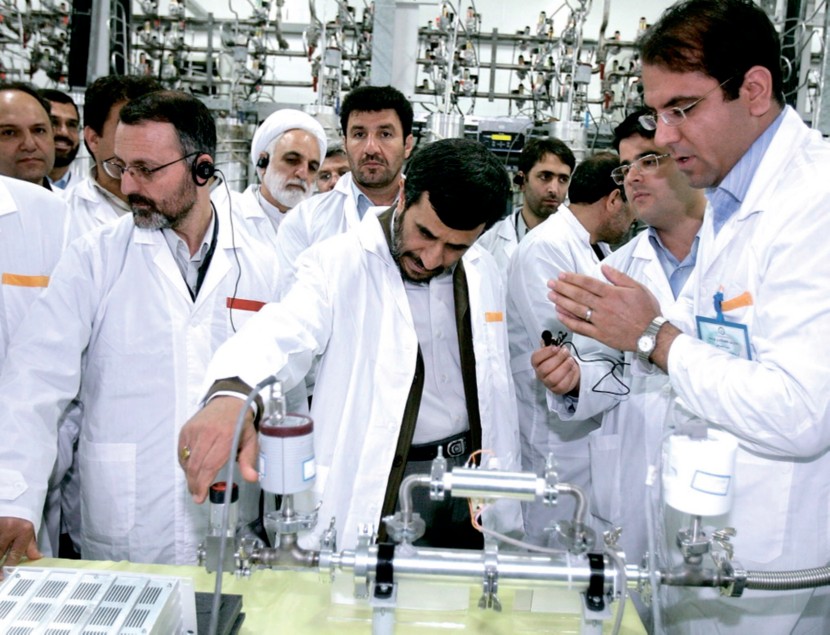
The situation surrounding Iran's nuclear programme is becoming increasingly tense. President Mahmoud Ahmadinejad of the Islamic Republic of Iran made an oral agreement to hand over some of Iran's uranium for Russia and France to manufacture fuel assemblies enriched to 20% (these can be used in research reactors). However, at the same time he announced that Tehran had begun to enrich uranium to this level independently. The Iranian president also boasted that his country was a "nuclear power."
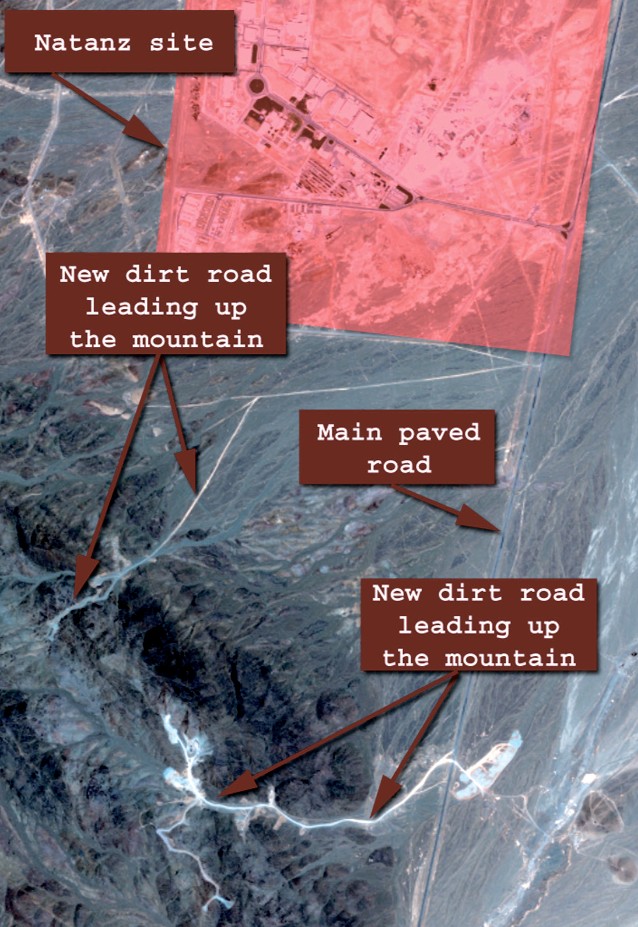
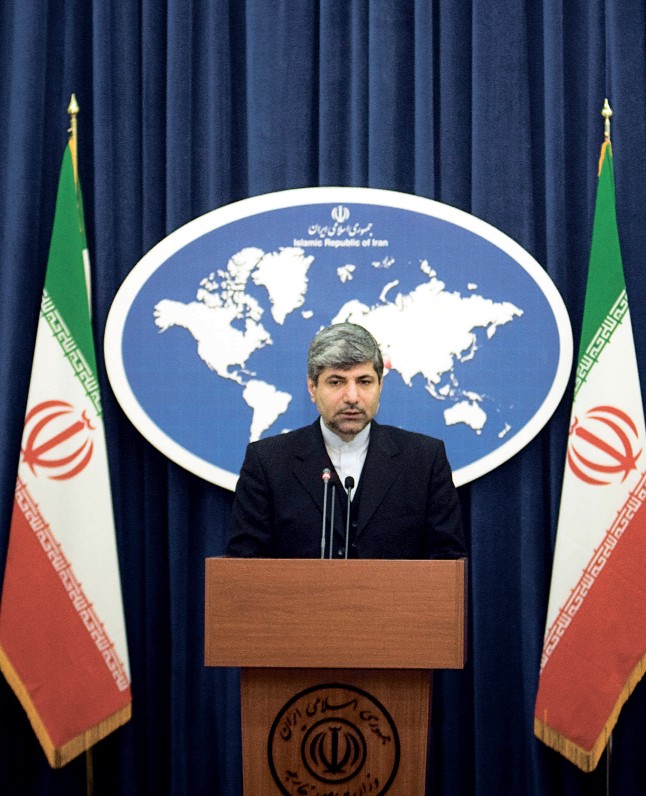
Radio Liberty, citing Ali Akbar Salehi, the head of Iran's nuclear agency, reported that construction of two new enrichment facilities is to start in late March in a mountainous area of Iran (the location was selected for greater security against possible attack). Tehran also has ambitious plans to build 10 new nuclear fuel facilities. For its part, the IAEA disseminated a report stating that Iran is deliberately preventing the agency from assessing reliably the quantity and purpose of fissile materials in Iran; this raises suspicions about their possible employment for military purposes. Iranian Foreign Ministry spokesman Ramin Mehmanparast (according to an IRNA report) voiced his disappointment with the report and accused IAEA General Director Yukiya Amano of political motivation and catering to another country's interests. Iranian Parliament Speaker Ali Larijani, Iran's former chief negotiator on nuclear issues, went even further and labelled the IAEA report "misinformation which does not help to improve the agency's prestige." "Some Western countries are trying to mislead public opinion about the peaceful nature of the Iranian nuclear programme by focusing on statements by the new head of the IAEA. But this will not prevent Iran from continuing along its chosen path," he said.
So it is clear that the Iranian authorities are still unwilling to take account of the views of the international community. Tehran is convinced that no one wants to go to war, and no one believes in the effectiveness of sanctions. The reconciliatory gestures made by the Barack Obama administration have apparently had no visible effect and endless talk about "traumatic" sanctions without converting words into deeds only worsens the situation and makes a military scenario more likely. This is now being discussed openly, not only in Israel and Western capitals, but even in Moscow. So, Nikolay Makarov, Chief of the Russian Federation's General Staff said, citing his US counterpart Michael Mullen, that the USA has a plan to strike Iran. Of course, this is not a question of planning - plans are routinely developed in these situations - but of their implementation. In this respect, the Russian military command warns of unforeseen consequences of such a scenario for countries of the Near Eastern and the world. "A strike against Iran by the United States and Israel is quite likely, and is on the agenda, but a great deal will depend on the positions taken by Russia and China," argues Leonid Ivashov, president of the Geopolitical Problems Academy. In his opinion, the employment of nuclear weapons by any of the potential parties to the conflict is out of the question for now. "If Israel decides to go for even limited use of nuclear weapons, it will unfetter all those forces which express their solidarity with Iran against the US-Israel diktat," said the analyst.
In the mean time, the USA is stepping up its diplomatic and military activity in the region. Iran is effectively surrounded by US and NATO military bases and naval forces, which cover the whole length of its borders - in the Persian Gulf, in Turkey, in Afghanistan, Iraq and Kuwait. However, Washington's decision to position Patriot missile systems in Gulf countries (Qatar, Bahrain, Kuwait and the UAE) may be seen not only as preparation for military operations, but also in the context of a change in the strategy of the "prevention" of Iranian possession of nuclear weapons and "deterrence", in case prevention fails.
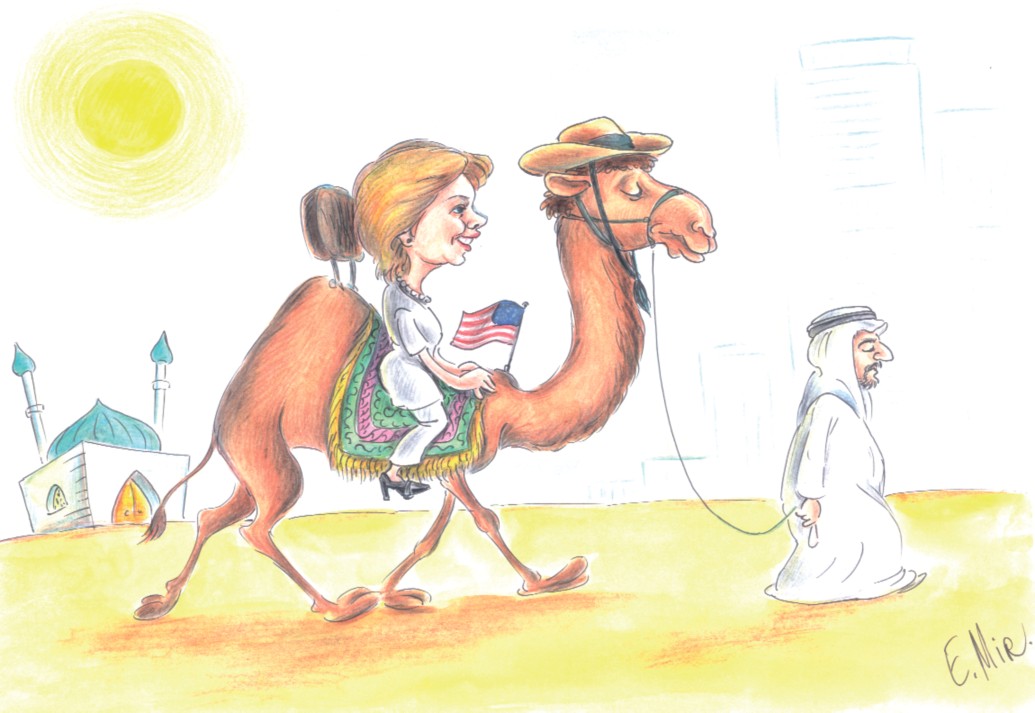
Without ruling out military scenarios, Washington apparently leans more towards tightening sanctions and transforming the Iranian authorities from the inside. At the same time, the objective is to isolate and undermine support for the most radical wing of the ruling elite. In pursuit of this aim, the United States gives moral support and information to forces opposing the Ahmadinejad government. However, it cannot be ruled out that the incumbent regime in Iran will become even more severe. Speaking in February in Qatar, Secretary of State Hillary Clinton warned of the possibility of a military coup in Iran, in which power would be seized by the most aggressive section of the Iranian establishment, from the Army of the Guardians of the Islamic Revolution, who would sideline the religious authorities.
The secretary of state also announced that nuclear guarantees could be given to Iran's neighbouring countries. In this way the USA hopes to rally those Arabic countries alarmed by a growing Persian nationalism wrapped in Shia clothing. And the US "nuclear umbrella" might also become an important component in the transition from the strategy of "deterring" Iran.
It is possible that all these "information leaks" and public discussions about a possible military strike against Iran are aimed by the USA at undecided countries, first and foremost, Russia, China and Turkey, to persuade them to support the Washington-proposed project to tighten sanctions against Iran at the UN Security Council. The positions of Moscow, Beijing and Ankara are still unclear and ambiguous.
Moscow seems to be formally moving to accept the need for sanctions, but it lays down many qualifications. Russia suspended the sale of the S-300 air defence missile system to Iran after numerous requests from Washington and Tel Aviv, but Moscow is dodging the imposition of a total ban on military-technical cooperation with Iran. Another source of discord is the embargo on oil products. According to the Americans, this could be an effective measure, because obsolete Iranian oil refineries are unable to meet the country's domestic demand for oil. Moscow, for its part, argues that sanctions must not affect ordinary Iranians.
Russia is manoeuvring, trying to resolve three mutually exclusive objectives. First, it does not want a rapid normalization of relations between Iran and the USA, which might undermine the energy and regional strength of the Russian Federation. Second, it wants Iran to slow down development of its energy industries, especially in the natural gas sector. And, third, Moscow wants to take advantage of US interest in Russian support for the Iran dossier to develop a special relationship with Washington.
Russia is trying to play a subtle diplomatic game, so that an armed attack Iran is avoided, but settlement of the problem is delayed. Moscow supports sanctions, but only to some extent and in order to prevent Tehran from abandoning its objectives or discontinuing its conflict with the West. For Russia, the measure of success in this policy would be rising oil and gas prices, or their maintenance at an acceptable level. However, Iran's transformation into a nuclear power, with claims to great power status and leadership of the Islamic world, is not in Russia's interests, because this would significantly reduce its room for manoeuvre.
Beijing's situation is different. It is not worried about geopolitical games and is primarily concerned with protecting its own trade and economic interests and secure oil supplies for its rapidly developing economy. China is Iran's largest partner; trade turnover between the two countries is measured in tens of billions of dollars. Until recently, Beijing was trying to avoid political debate about Iran and, in some sense, was hiding behind Russia. Now, however, when the signs are that Russia will support the Western project of additional sanctions against Iran at the Security Council, China says that it does not believe any new document is necessary. Analysts believe that if Russia opposes sanctions at the Security Council, Beijing will support Moscow, but if it is alone, it will most probably abstain from voting.
Washington must be aware of the real difficulties which Beijing has with a tightening of sanctions against Iran. As a result, to at least partially meet Beijing's objections, Secretary of State Hillary Clinton attempted, during her visit to the Near East, to persuade Saudi Arabia to guarantee oil deliveries to China. At present, Beijing buys about 400,000 barrels of oil a day from Tehran; they would be expensive and difficult to replace in case of a tightening of sanctions. But the real nightmare scenario for China would be an air strike against Iranian nuclear facilities and military infrastructure because, in retaliation, Tehran threatens to paralyze oil exports from the Persian Gulf at the most vulnerable point, the Straight of Ormuz. Given that almost half of the world's oil exports pass through this straight, it is not difficult to estimate the potential damage to the economies of China, India, Japan and South-eastern Asia countries.
As for Ankara, although it is not a member of the contact "six" on Iran, it has its say on the issue. This is because Turkey is the only NATO member country bordering Iran. In addition, Ankara's standing in the Muslim world has improved significantly of late and Tehran also takes this into account. Also, Turkey is, for now, one of the non-permanent members of the UN Security Council who are to examine the proposal for anti-Iran sanctions. During a visit to Madrid in mid-February, Turkish Prime Minister Erdogan said: "If Iran's nuclear programme is of a military nature, of course Ankara will also oppose it, because we are against our neighbours' acquisition of nuclear weapons."
"Ankara's opinion is this: the Iranian problem must be resolved by peaceful diplomatic methods alone. Iran is our neighbour, and we maintain strategic relations, which is why we are interested in a continuation of the talks, but if this problem is resolved in some other way, I cannot imagine the tragic consequences which might await our region," Erdogan added.
Almost at the same time, Turkish Foreign Minister Davutoglu was in Tehran trying to ease the tension in Iran's debate with the West. It was his fourth visit to Iran in five months, which clearly testifies to Ankara's direct interest in a peaceful settlement of this problem. And this is not just a matter of Turkey's reluctance to choose between Iran and Ankara's western allies, first and foremost the USA. If sanctions are imposed on Iran, not to mention military operations, Iranian-Turkish trade and economic relations will be damaged, and they are worth $10 billion a year. This is why Turkey is stepping up its mediating efforts which, although they have not been rejected, have not yet yielded any practical results.
Azerbaijan's situation is also not simple. A tightening of sanctions and, especially, military action against Iran, will affect our interests considerably. The United States, NATO and other countries constantly consult Baku on this issue. Azerbaijan does not deviate the slightest from its principled position that no threat will emanate from its territory to neighbouring countries. The prospect of joining sanctions against Iran is also undesirable. But at the same time, to consolidate its security, Baku is developing military-technical cooperation with foreign partners, including the USA and Israel, whether Tehran likes it or not.
Overall, Azerbaijani-Iranian relations are expanding. The transit of Azerbaijani natural gas to Iran has begun. The Baku-Anzali ferry service has been resumed. Tehran has introduced a visa-free regime for Azerbaijani citizens visiting Iran for a short period (up to 15 days). A new Iranian embassy building has opened in Baku, housing the consular department, press service and a cultural centre. Political consultations are held systematically at both head of state and foreign minister levels. In late February, Milli Maclis Speaker Oktay Asadov made an official visit to Tehran. However, there are annoying incidents too, like the organization of noisy actions against the development of Baku's relations with Tel Aviv in front of Azerbaijan's diplomatic missions in Iran, which may have been staged by the authorities. The retaliatory picket organized by a group of parties and nongovernmental organizations in front of the Iranian embassy in Baku, probably cooled down those circles in Tehran who intended to put pressure on Azerbaijan's balanced foreign policy in this way.
RECOMMEND:
 729
729

