

A YEAR OF BREAKTHROUGH OR CAUTIOUS OPTIMISM?
Will Astana, chairing the OSCE, be able to secure progress in resolving the Armenian-Azerbaijani conflict?
Author: Sahil ISKANDAROV, a political scientist Baku
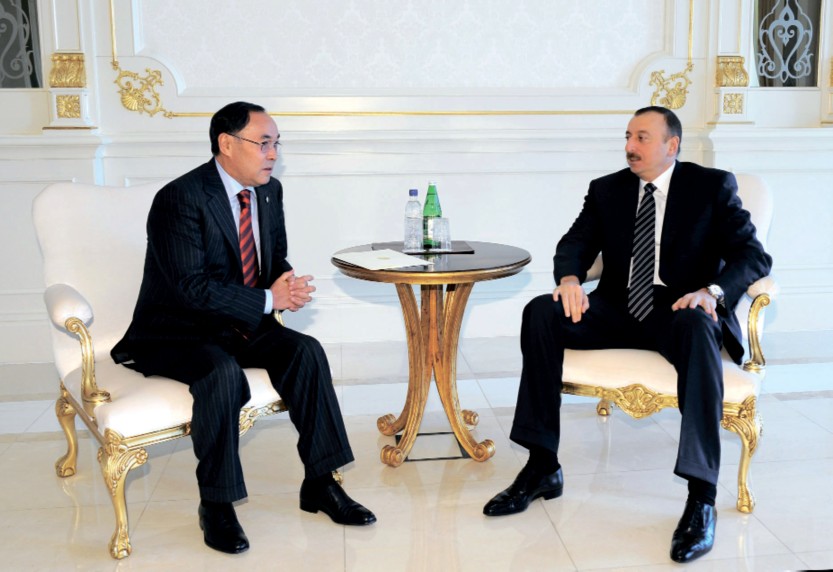
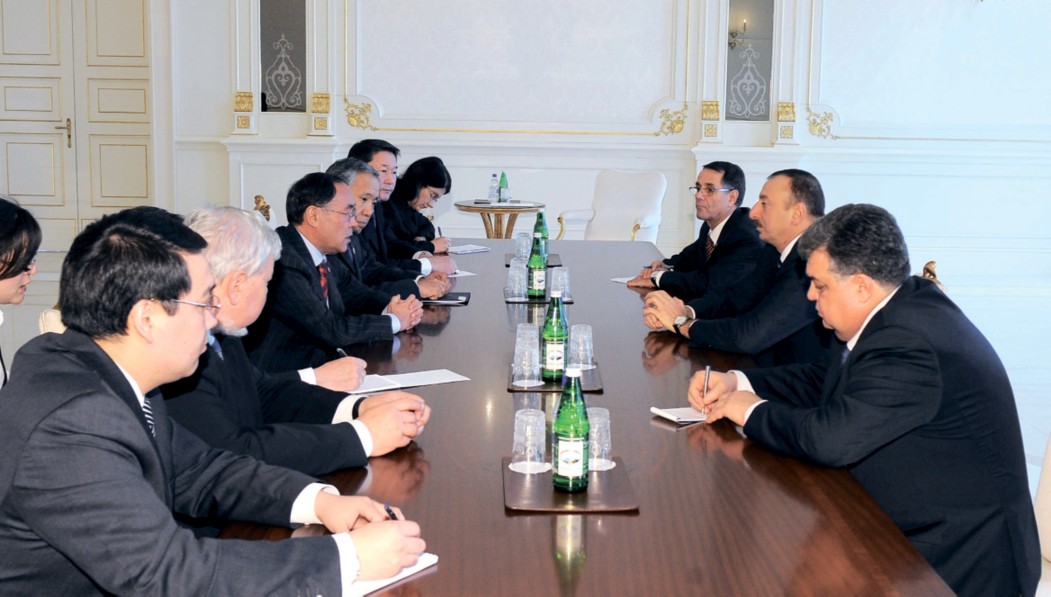
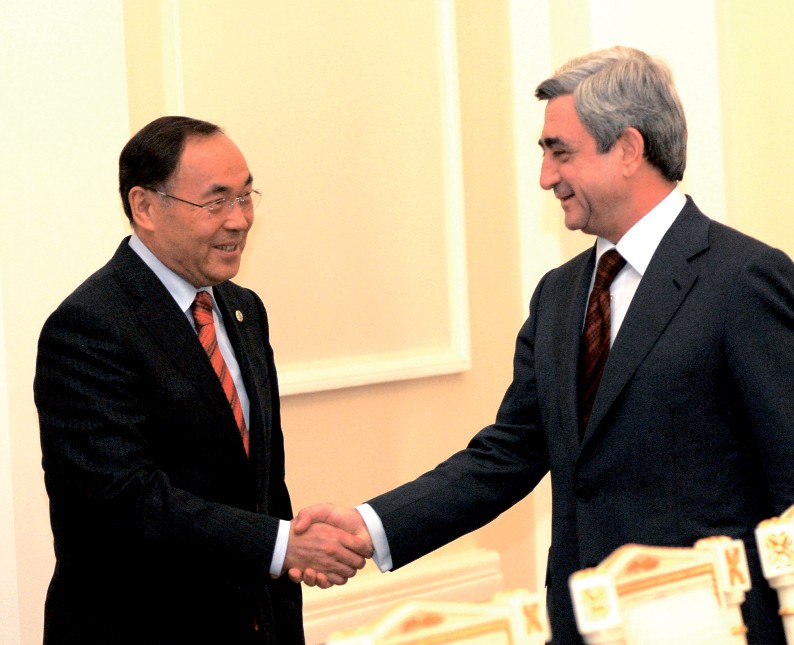
In mid-February, Kazak-hstan's foreign minister and OSCE chairman-in-office, Kanat Saudabayev, visited the South Caucasus. The main objective of the visit was to study the situation on the ground and to outline the further course of action to resolve conflicts in the region, first of all, the Nagornyy Karabakh conflict. After meetings with officials in Baku and Yerevan, Saudabayev said that he had presented the Presidents of Azerbaijan and Armenia with proposals from Kazakh President Nursultan Nazarbayev to resolve the conflict. The senior diplomat declined to reveal the essence of the proposals, but said that they reflect a settlement mechanism and take the interests of both parties into account. According to Kazakhstan's foreign minister, the settlement of the Nagornyy Karabakh problem will be a priority for the OSCE during his country's presidency and, if the parties to the conflict adhere to the agreements, he hopes that this year will be a turning point in the process of settling the longest interstate conflict in the former Soviet Union. Following his visit to the region, Saudabayev spoke at a joint meeting of three general committees of the OSCE Parliamentary Assembly in Vienna, saying that Kazakhstan, as chairman of the OSCE, intends to develop a "roadmap" for a peaceful resolution of the Nagornyy Karabakh conflict. The chairman of the OSCE also noted the positive developments achieved by the parties on this issue: "It is necessary to consider and support all possible steps to reduce tensions and to increase confidence in the conflict zone within the framework of the agreements." At the same time, he focused on strengthening cooperation with parliamentarians of OSCE countries, which is an important element in solving regional problems, including protracted conflicts: "I would urge MPs to make better use of parliamentary diplomacy to overcome the distrust between states and peoples. Your words and beliefs will help people on all sides of the conflict to understand the importance of overcoming the confrontation and the importance of work to build cooperation and peaceful coexistence." Thus, Astana makes it clear that it is going to take the Nagornyy Karabakh conflict seriously.
But how is it going to work? Or rather, will the world's leading powers, which have serious geopolitical interests in the region, allow Astana to work here? The dynamics of developments over the past 15 years prove that all is not so simple.
There is no doubt about Astana's sincere desire to achieve a solution to the conflict within the framework of international law. But will it be able to do so? Yes, during repeated votes in the UN, Kazakhstan has always supported the just position of Azerbaijan. But it is one thing to vote in the UN and another to display a principled position as chairman of the OSCE. Nor can we overlook the fact that on this issue, Astana will be taking account of the Kremlin's view, especially considering the fact that Kazakhstan has forged an alliance with Russia and Armenia within the framework of the EurAsEC economic organization and the CSTO military-political structure. It is no accident that Saudabayev was reminded of that during his visit to Armenia.
It is worth recalling another episode. When CSTO Secretary General Nikolay Bordyuzha said, a few months ago, that aggression against Armenia (the issue was the military liberation of Azerbaijani lands) would be regarded as aggression against all members of the Collective Security Treaty Organization, no member country of the organization, including Kazakhstan, reacted to this statement.
Saudabayev himself did not object when the leader of the Armenian separatists of Karabakh, Bako Sahakyan, was introduced to him as "President of the Nagornyy Karabakh republic" in Yerevan.
As for the "roadmap", it also looks tempting. The updated Madrid principles are, in essence, a "roadmap" which Azerbaijan could support in principle. But again, everything depends on Armenia's destructive position. In this case, is there a need to reinvent the wheel?
The view that, given its greater awareness of the history and causes of the conflict, Astana, as chairman of the OSCE, could play a more significant role in its settlement, is also untenable. Global centres of power are also well-informed about the Armenian-Azerbaijani conflict and they are unlikely to agree to leave the diplomatic laurels in this difficult matter with Kazakhstan. The maximum that can be expected from Kazakhstan's presidency of the OSCE is a neutral position on the Nagornyy Karabakh issue. To resolve the conflict, the OSCE chairman and the international community need to take not a neutral, but a principled, position.
A brief analysis of the OSCE's performance in the Nagornyy Karabakh conflict does not put this organization in the best light, despite optimistic statements by numerous co-chairs.
In 2006, Belgian Foreign Minister Karel De Gucht began his work in the post of OSCE chairman-in-office quite positively. Addressing the UN Security Council, he stated that this year the Nagornyy Karabakh conflict would be among the priorities of his organization and opportunities would be created to solve it. Gucht promised that during his visits to the region, he would encourage the parties to continue their dialogue, take constructive positions and reduce conflicts. Before his first visit to the region, he was remembered for the statement that "for the first time in many years, there are signs that Armenia and Azerbaijan can settle the Nagornyy Karabakh conflict." The Belgian minister did not rule out that agreement could be reached to send OSCE observers or a peacekeeping mission to the region. But by the end of his term in office, in his speech from the rostrum of the UN Security Council, Gucht confined himself to general remarks on progress in the negotiating process and a reduction in conventional weapons. In the end, he was remembered for only one specific case - a statement that the OSCE did not recognize the results of the Nagornyy Karabakh constitutional referendum.
In 2007, the baton of the presidency of the OSCE was picked up by Spain. Spanish Foreign Minister Miguel Angel Moratinos decided immediately to take the bull by the horns. He stated that his main tasks would be to destroy the wall of alienation between the peoples and to build confidence between the conflicting parties. For this purpose, we should encourage regular meetings between the presidents of the two countries, since any meeting is a step towards progress in the settlement of the Nagornyy Karabakh conflict: "Frequent contacts between the Presidents of Armenia and Azerbaijan created positive dynamics which should not be lost." Mr Moratinos was confident that the parties had never been as prepared to solve the problem as they were at that time: "Armenia and Azerbaijan have got an opportunity to resolve the conflict and the parties should use it to make positive progress in this process." The Spanish foreign minister nevertheless admitted in one of his speeches that it was too problematic to combine the principle of territorial integrity and nations' right to self-determination in a single document. Nevertheless, it was during his presidency that a document called the "Madrid principles" emerged. The fate of this document is well known. Although Moratinos began his work as chairman of the OSCE optimistically, he was forced to admit at a meeting of the UN Security Council at the end of 2007 that, unfortunately, he had failed to make significant progress on the Nagornyy Karabakh conflict. Today Moratinos is trying to take revenge for his previous failures as chairman of the European Union.
Although the next chairman of the OSCE (2008), Finnish Foreign Minister Alexander Stubb, made optimistic statements, he tried not to go too far. Speaking at the 17th session of the OSCE Parliamentary Assembly, he said: "One of the main tasks of the OSCE is conflict; first and foremost, I am referring to the Caucasus. I believe that the OSCE should be involved in the settlement of conflicts, not only in managing them. One of the conflicts is Nagornyy Karabakh. We have a special representative in Nagornyy Karabakh, and this conflict is a priority for resolution." But he needed to do something different, i.e. to make optimistic statements that did not keep us waiting. Stubb was soon saying that Azerbaijan and Armenia had moved from a frozen conflict in Nagornyy Karabakh towards settlement. Even in December 2008 (at the end of his presidency), he expressed confidence that Armenia and Azerbaijan had made progress in resolving their lengthy conflict over Nagornyy Karabakh, and the OSCE hoped that very soon a regional declaration would be signed on this issue. To be fair, we should note that Mr Stubb repeatedly advised everyone not to hope for a miracle.
And finally, last year Greece took over the presidency of the OSCE. Greek Foreign Minister Dora Bakoyannis immediately said that she hoped to achieve a breakthrough in the settlement process. She said the regular meetings between the two countries' presidents contribute to mutual confidence between the conflicting parties. It should be recalled that as OSCE president, Mrs Bakoyannis tried harder to resolve the Turkish-Armenian and Cyprus issues (it is not hard to guess in whose interests) than the Nagornyy Karabakh conflict.
There is another interesting point. During her visit to Yerevan, Bakoyannis, who called on the parties to come to a common denominator to solve the conflict, described Armenia as a country playing an important role in ensuring security in the South Caucasus (?!). I wonder - if the OSCE president describes an aggressor country almost as a guarantor of security in the region, who, then, is the destabilizing factor?
Thus, an analysis of the activities of OSCE chairmen in seeking a resolution of the Armenian-Azerbaijani conflict shows that they are all afraid to hurt the interests of the great powers in the region. This is why they confine themselves to platitudes and express support for the OSCE Minsk Group, which has monopolized the process of Nagornyy Karabakh conflict settlement and turned it into a long-playing record. It is clear that the OSCE, for its part, is happy to leave this issue to the mercy of the Minsk Group co-chairs, while the OSCE Minsk Group uses every opportunity to blame failures in the negotiating process on the conflicting parties, accusing them of an inability to coordinate their positions. And as long as the OSCE chairmen do not call a spade a spade and differentiate their approaches to aggressor and victim, there is no point in counting on substantial positive change in the situation. And so every year we observe only endless, fruitless visits to the region by OSCE presidents, as well as meetings and discussions that imitate a process of mediation towards a peaceful settlement.
RECOMMEND:
 584
584

