
"HOPE" IN THE SKY AND PROBLEMS ON THE EARTH
The “space breakthrough” may cost Tehran dearly
Author: Nurani Baku
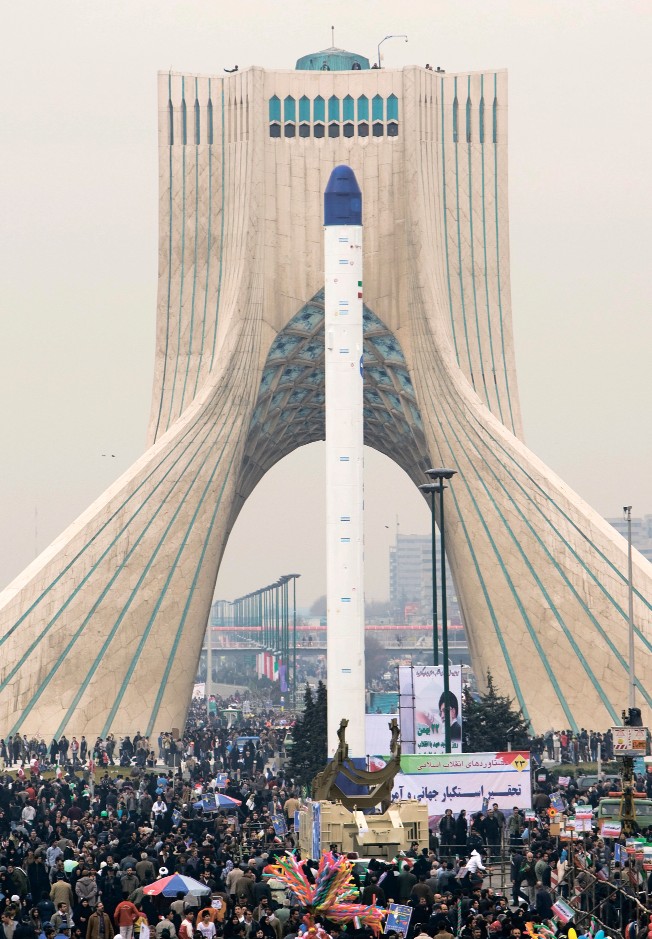
The footage which shows Iranian President Mahmud Ahmadinezhad saying "Allah Akbar" to microphone three times and giving a command to launch the Safir rocket carrying the first Iranian satellite Omid (Hope) hit the headlines on all TV channels around the world. The launch of the Iranian satellite, in quite a Soviet manner, was timed to coincide with the 30th anniversary of the anti-shah revolution in Iran, which, strictly speaking, became Islamic only after the takeover of the US embassy in Tehran in November 1979. The official commentary said that the satellite was "yet another achievement of Iranian scientists working under sanctions". The local media said that the Omid is supposed to contribute to "research and work in the sphere of telecommunications" and also carries equipment that makes it possible to carry out territorial surveys. Data from the satellite will return to the Earth after one to three months of work in orbit. "The satellite will deliver information that will allow Iranian experts to send another working satellite to space," Iranian television said. According to the Iranian leader himself, this breakthrough of Iranian science must promote "monotheism, peace and justice around the world".
Actually, the launch of the satellite was expected. On 17 August 2008, Tehran reported trials of a Safir rocket which will put satellites in orbit in the future. In February 2008, Iran tested another rocket Kaveshgar-1 (Researcher-1) which could also carry satellites to orbit. On 26 November 2008, the Iranian authorities announced the second successful launch of a Kaveshgah-2 rocket which accomplished its mission in 40 minutes and returned to the Earth with scientific data on a special parachute.
But promises and tests are one thing and the launch of a rocket is another thing. At least it is notable that unlike the satellite the launch of which was announced by North Korea several years ago, no-one doubts that the Iranian satellite can really fly, at least publicly, though Tehran has already been accused of using convincing dummies instead of real military equipment. Nor is there information as to whether this satellite is really Iranian.
However, there is another thing which is even more notable. On the same days, the official spokesman for the Iranian Foreign Ministry, Hasan Qashqavi, said that solving the problem of Iran's nuclear programme, the six international mediators should put up with the fact that Iran possesses peaceful nuclear technologies. "Iran has no intention of halting its nuclear activity," RIA Novosti quoted the diplomat as saying. "In this regard, the six mediators should draw up a 'logical approach' and accept the reality, i.e. the fact that Iran is a nuclear power."
According to most experts, it is possible that such a demonstration of success also has domestic political reasons in Iran. Presidential elections will be held in Iran on 12 June. The incumbent Iranian president, Mahmud Ahmadinezhad, said that he will put forward his candidacy, and to all appearances, his main rival will be the former president, Mohammad Khatami. To be honest, it is difficult to invent a better campaign slogan than the launch of a satellite and the status of a "nuclear power".
However, the method of electioneering chosen by Mahmud Ahmadinezhad may be quite dangerous for the country. The peacefulness of Iran's nuclear programme is an open question: if this country has nothing to hide, it would hardly be playing "a game of cat and mouse" with the IAEA, especially against the background of the sad example of Iraq. Of course, we can make dozens of assumptions as to whether a second war in the Gulf would have started if Iraq did not have major oil reserves. However, the fact remains a fact: it was exactly Baghdad's resistance to UN inspectors that served as main proof confirming that the Iraqi authorities were hiding something and Iraqi weapons of mass destruction really existed, especially as such programmes did exist in Saddam's Iraq until 1991. What is more, UN inspectors drew the conclusion after the first war that Baghdad really effectively deceived the world community. Now that it is clear that no weapons of mass destruction were found in Iraq after the second war, all this talk causes clear scepticism. But there is no doubt that playing hide-and-seek with UN and IAEA inspectors may turn out quite dangerous.
The launch of the Iranian satellite causes clear concern in the West, not to mention Israel. Experts say that the launch of a carrier rocket to near-earth orbit and the launch of Iran's own satellite testify to the serious development of rocket technology: a rocket like Safir can carry not only a satellite, but also a nuclear warhead. There is no doubt that Iran belongs to those same "threshold countries" - as some technical specialists analyzed the launch of the satellite, others feverishly sought the answer to the question as to how far Tehran is from "the nuclear threshold". Their forecasts are unfavourable.
Iran is developing the most dangerous "cocktail" that one can think of: nuclear weapons and means of delivery in the hands of a regime whose leader has already promised to "wipe Israel off the map" and where pro-government newspapers have already laid a claim to the whole territory of Azerbaijan.
This way or another, while commenting on the launch of the Iranian satellite, the US publication Investor's Business Daily wondered: "Will the US and its allies now get serious about Iran's drive to become a nuclear power?" "In one bold swoop, as with the USSR's launch of Sputnik in 1957, Iran has announced its intention to be a world military power and a potentially global threat," it said. It also quoted an official representative of the French Foreign Ministry, Eric Chevallier, as saying that how "very similar" the rocket technology is to that used for ballistic missiles. An unnamed NATO officer said: "It would mean that their rockets are capable of firing 2,000-3,000 kilometres, and would therefore have the range to hit part of Europe and Israel. It would be confirmation of their potential." The Investor's Business Daily is sure that "those who argue this is unfair to Iran, since they don't now have a nuclear weapon, are being a bit disingenuous. Just last week, the widely respected Institute for International and Strategic Studies in London warned that Iran would have enough fissionable material by 2010 to make a nuclear bomb - despite repeated UN demands that it halt its nuclear programme." Another thing is also notable. "Responding to the satellite launch, President Barack Obama's spokesman Robert Gibbs said the US will use 'all elements of our national power' to handle the situation. And Secretary of State Hillary Clinton said there would be 'consequences' for Iran if it continues with its nuclear programme."
The newspaper said that "for its part, Iran has played its intimidation card to the hilt" just before another round of talks between the "six" in Germany. This meeting comes just two weeks after President Obama's pledge during his inaugural address to extend an open hand of friendship to Iran if its leaders would only "unclench their fist".
This way or another, official circles reacted to the launch of the Iranian satellite in quite an expected way. "The approaches of the USA and Europe to Iran will come closer soon. Between the USA, our European allies and friends in the Middle East, there is growing understanding that we need a more effective joint approach to Iran," US State Secretary Hillary Clinton said after negotiations with German Foreign Minister Frank-Walter Steinmeier. "Efforts to create ballistic missiles and to continue the illegal nuclear programme and threats from Iran against Israel, as well as Tehran's support for terrorism cause serious concern in the current administration," White House press secretary Robert Gibbs said at a regular briefing for journalists.
The official representative of the Pentagon, Geoff Morrell, said that some technologies used in the launch of the satellite can also be used to create ballistic missiles. "Of course, this is a reason for concern about Iran and its continuing programme to create ballistic missiles of even longer range," Morrell said. He added that Israel, Arab countries of the region and US allies in Europe are also concerned about Iran's space programme.
At the same time, the USA has let it be known what they expect from Iran's European partners. The authoritative Wall Street Journal has published an article by the Berlin journalist of the Jerusalem Post, Benjamin Weinthal, saying that European companies are helping create the Iranian bomb. The fact that an Israeli journalist was given the floor is notable, even though, for clear reasons, the Israelis are better aware of Iran's nuclear programme than anyone else in the West. According to Weinthal, it seems that Tehran has no problems with buying technologies required for its nuclear programme. This makes us think about how effective the UN sanctions against Iran are. Weinthal says that while the US has ratcheted up its efforts to prevent Iran from obtaining nuclear arms, the Islamic Republic is reaping a windfall from European companies. These firms' deals aid a regime that is bent on developing nuclear weapons and which financially supports the terror organizations Hamas and Hezbollah.
The Austrian oil giant OMV is itching to implement a 22 billion euro agreement signed in April 2007 to produce liquefied natural gas. Raiffeisen Zentralbank, Austria's third-largest bank, is active in Iran and has absorbed the transactions of key European banks that shut down their operations in Iran. And in late January Paolo Scaroni, CEO of Italian energy corporation Eni SpA, told the Associated Press that his firm will continue to fulfill its contractual obligations in Iran and feels no external pressure to sever ties with Iran's energy sector.
The author of the article thinks that Germany, the economic engine of Europe, is uniquely positioned to pressure Tehran. Still, the obvious danger of a nuclear-armed Iran has not stopped Germany from rewarding the country with a roughly 4 billion euro trade relationship in 2008, thereby remaining Iran's most important European trade partner. Siemens acknowledged last week at its annual stockholder meeting in Munich that it conducted 438 million euro in trade with Iran in 2008.
In theory, of course, we can assume that the USA and Israel are simply hinting to their European companies that it is necessary to control more strictly their cooperation with Iran. However, it is also possible that in reality, the issue is about the serious undermining of the positions of those who support sanctions combined with diplomacy. The sanctions are not working, diplomatic pressure on Iran is not effective and attempts to "extend a hand" cause only new deterrence campaigns, The Wall Street Journal says.
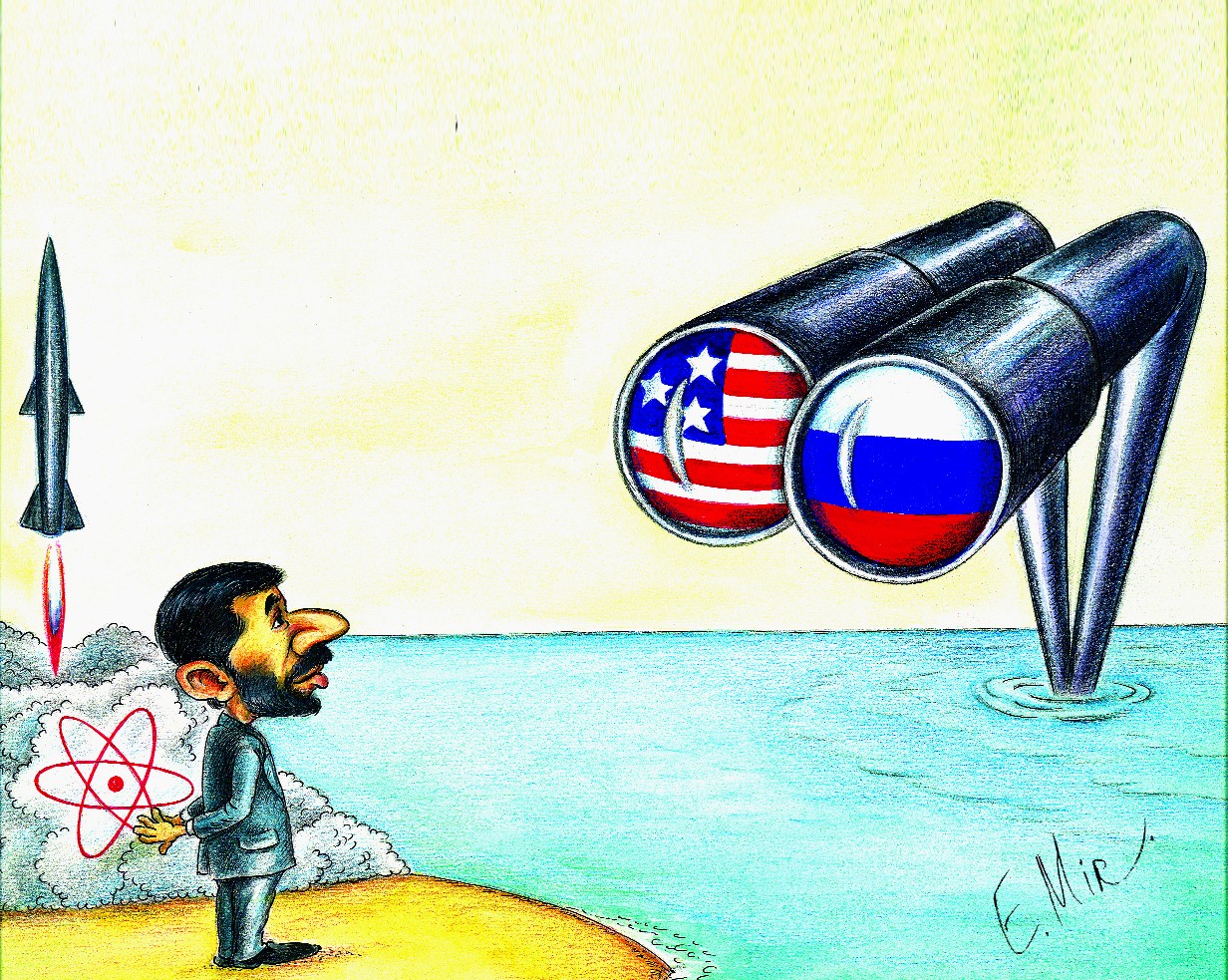
Many experts suppose that a lot in this situation depends on the position and behaviour of Russia. However, the results of the Munich conference leave no doubt that the launch of the Iranian satellite, alas, failed to make Moscow assess the threat of Iran's missile strike at "third countries" and change its position on the US missile defence system. The Washington Post says in this regard that "over the past year, Russia has invaded the sovereign state of Georgia, parts of which it continues to occupy; cut off natural gas to parts of Europe during the depth of winter; sold weapons to Iran and Venezuela; and otherwise made itself disagreeable. A result, the newspaper thinks, "Russia wants to derail a NATO missile-defence project directed at Iran, not because the deployment would threaten Russia or its nuclear arsenal - it would not - but because the system would be deployed in Poland and the Czech Republic, two former Warsaw Pact nations." It says: "Russia wants to keep Georgia and Ukraine out of the European Union or NATO, because both countries used to be part of the Soviet Union. It does not want Europe building a natural-gas pipeline towards Azerbaijan and the Caspian Sea, because that would threaten Russia's monopoly position, with which it enhances its political influence.
Paradoxical as it may seem, the more obstinate Moscow is, the more chances there are that "hawks" will gain the upper hand in the USA. Since Iran is persistently promoting its rocket and nuclear programmes and the six negotiators are unable to agree amongst themselves, we can only hope on aircraft carriers.
RECOMMEND:
 593
593