

A "YOUNG WOLF" WINS
The election of Andrzej Duda as president of Poland has become a landmark event in the life of that country and entire Europe
Author: Natiq NAZIMOGLU Baku
The presidential polls in Poland can be viewed as truly significant. Andrzej Duda has taken the helm of state in Poland which is evidently going to affect the destinies of not only the country itself but also the entire space of Europe.
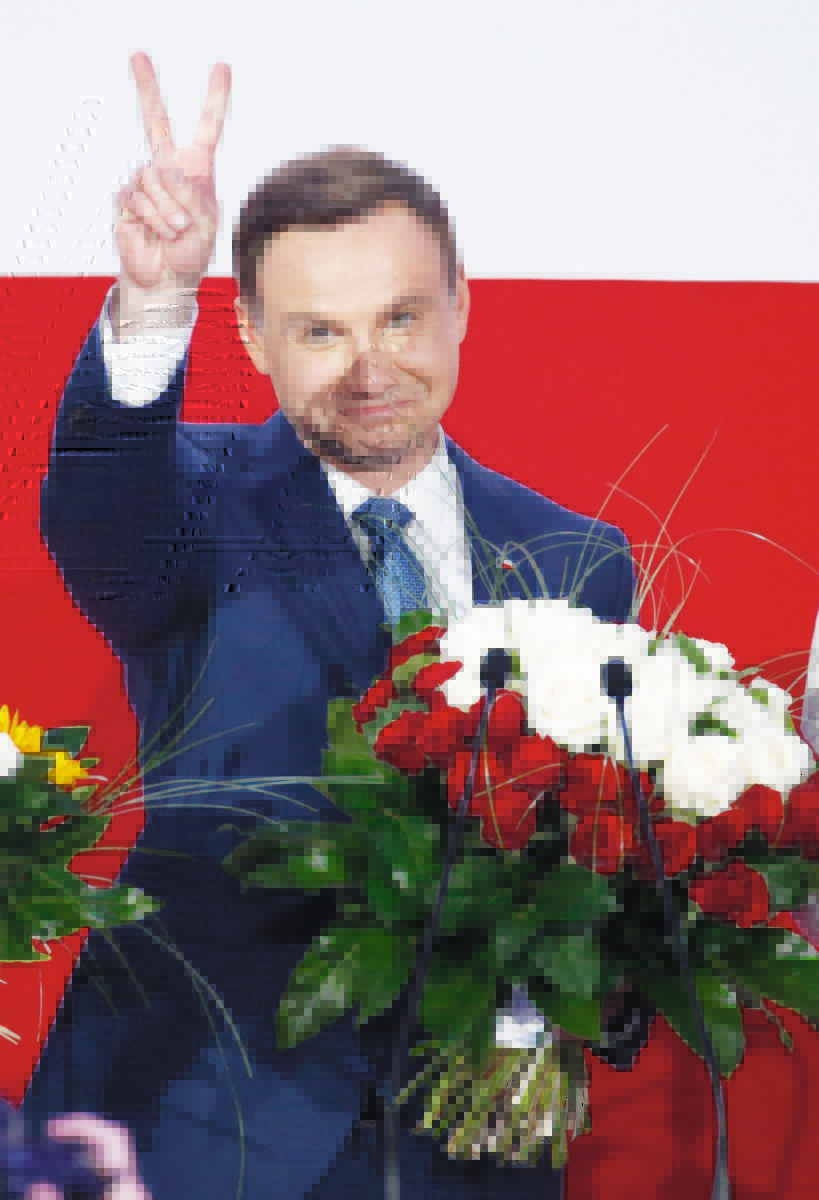
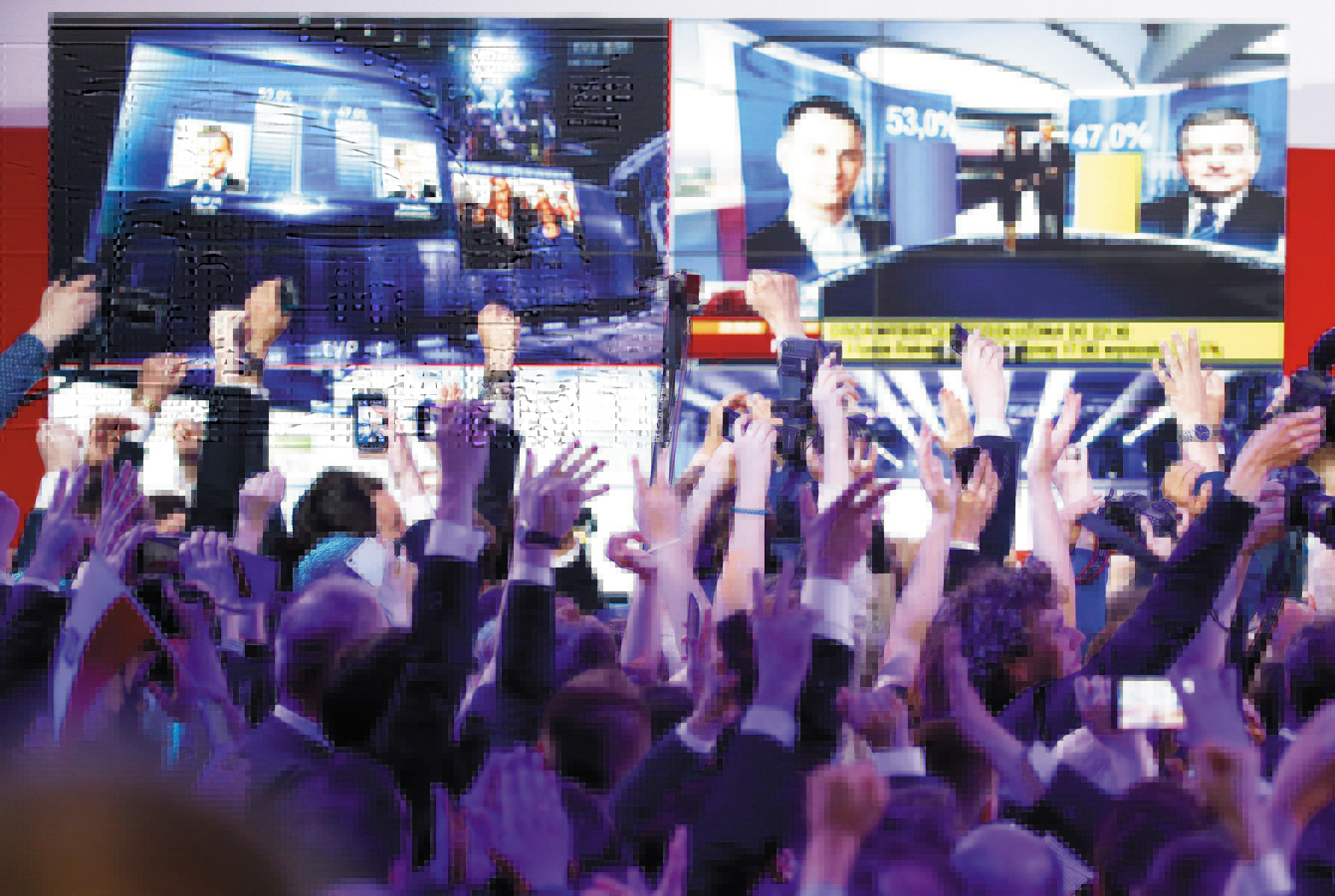
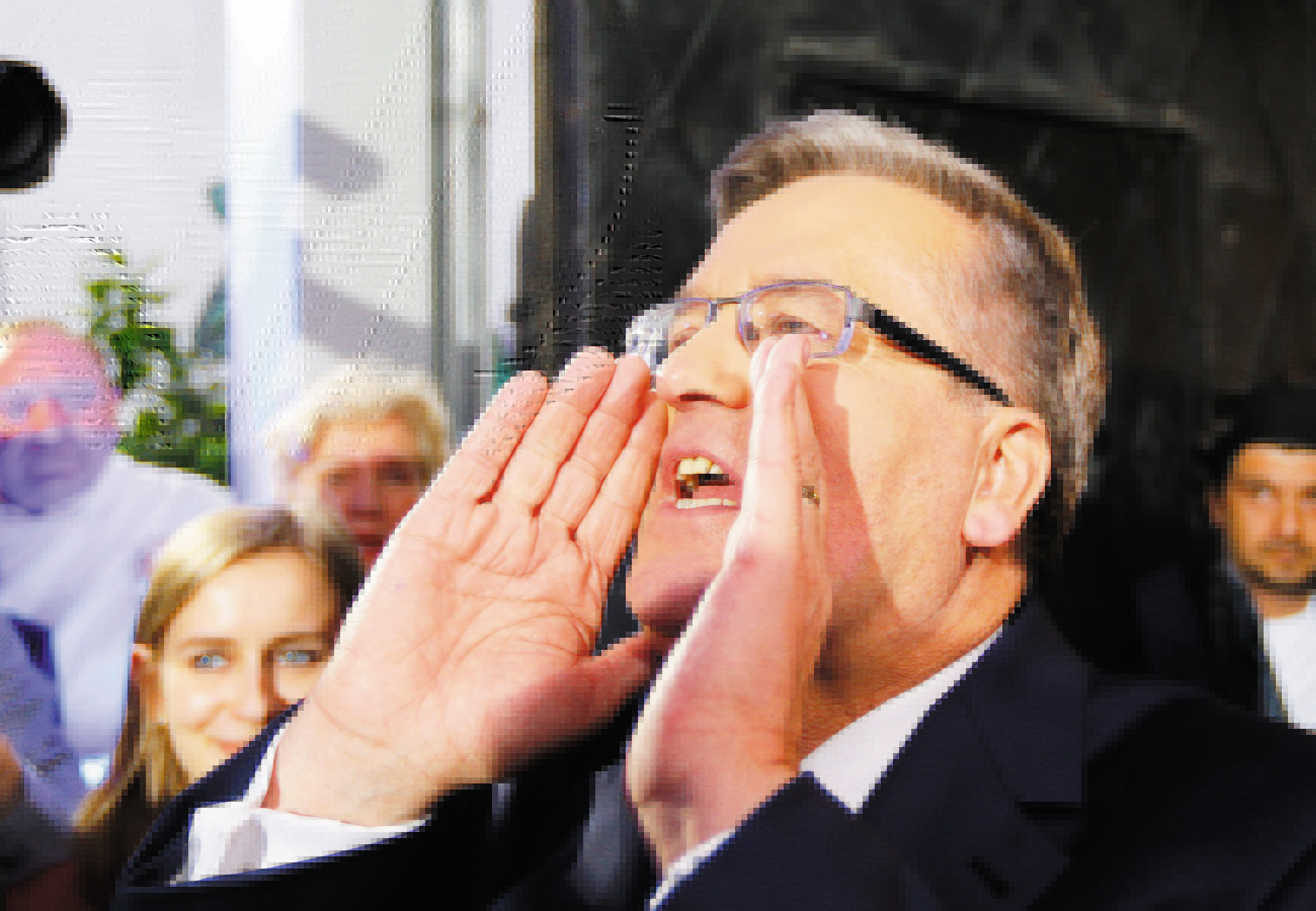
Andrzej Duda, the candidate of the opposition Law and Justice party has been elected new Polish president as a result of his victory over Bronislaw Komorowski, Poland's incumbent head representing the Civic Platform party. The president elect formerly held the posts of deputy minister of justice and deputy secretary of state in the administration of Lech Kachynski (2008-10) who tragically died in an air crash over Smolensk; he was also a European Parliament member (the European Conservatives and Reformists group).
Andrzej Duda positions himself as a conservative who preaches traditional religious values. It is no surprise that, at the presidential election, he first and foremost enlisted the support for the conservatives from their traditional electorate - residents of rural areas and small towns. Duda was supported by a considerable part of young people critical of Civic Platform which had been in power in Poland since 2007.
Polish analysts regard Andrzej Duda's victory as a "result of discontent and fatigue with Komorowski's presidency and eight years of Civic Platform's rule. In their opinion, Duda's presidency will mark the beginning of a new era in the history of Poland. To all appearances though, changes in the power elite of the Polish state will not be confined to Duda's rise to the presidential post. This success of the Law and Justice representative may possibly be followed by the organization's triumph at the parliamentary polls next autumn. In addition, the new government may shortly be strengthened with Law and Justice leader Jaroslaw Kachynski (brother of deceased Lech Kachynski) who may head the government and whose protege Andrzej Duda is actually believed to be.
Meanwhile in assessing Duda's triumph at the presidential polls, we cannot pass over the fair comment by Lech Walesa, the legendary person in Polish politics, the founder of the Solidarity movement and ex-president: "When the same people hold political posts for a very long time, their ties with the people will weaken and the victory will go to young wolves".
Duda and the "young wolves" surrounding him will no doubt try to introduce certain changes in the country's internal political system in terms of personnel and organization as well as current strategy which is expected to become more conservative and at the same time more socially oriented. Duda's rise to power will have consequences for Poland's foreign policy, too, primarily its role in the life of Europe.
The president elect is said to be a eurosceptic which was manifested in his negative attitude to his country switching over to the euro. In Duda's opinion, giving up the Polish currency (zloty) will send prices up as was the case in other states of Eastern Europe which joined the euro zone. Meanwhile Duda's election as president of Poland has again confirmed the tendency among Europeans to reject the European Union's policy. The results of elections not only in Poland but also in Spain where far leftists and eurosceptics won at the regional and local levels (the former are against Euro-Atlantic unity and the latter criticize the EU policies), as well as the latest events in Greece and the UK where the authorities have taken the decision to call a referendum on the issue of EU membership, signal a general trend throughout the continent. Its essence consists in the fact that politicians, who are not associated with systemic power as viewed by a majority of the population, are strengthening their positions and even coming to power.
Indicative in this respect is the statement by [EU] foreign policy chief Federica Mogherini that the election results in Poland proved the need to revise the European Union project. Mogherini highlighted the increasingly frequent cases of eurosceptics winning elections and urged "rethinking our being European if we want to save the project of our founding fathers". "It will not be Europe if it gets filled with ghettos, of new marginals, if we make it live in the fear of the other. Our history, European history has taught us that the other is us," she explained.
Federica Mogherini did not specify measures to be taken by Brussels as regards the need to "rethink" the European idea. For his part, Andrzej Duda has made it absolutely clear that Warsaw will not dance to Brussels' pipe and that it was set to put an end to the practice of Germany playing a special role in Poland's politics. However, in seeking to loosen the influence of Brussels and Berlin on his country's policies, the new Polish president sees nothing wrong in strengthening strategic alliance with Washington. To reason his pro-US stance, Duda pleads the need to counter Russia to which quite a lot of his compatriots have feelings far from being friendly. Duda's wish to strengthen cooperation with Washington also explains his initiative for NATO to place its permanent military bases in Poland. He promises to get this particular decision taken by the NATO summit in Warsaw next year.
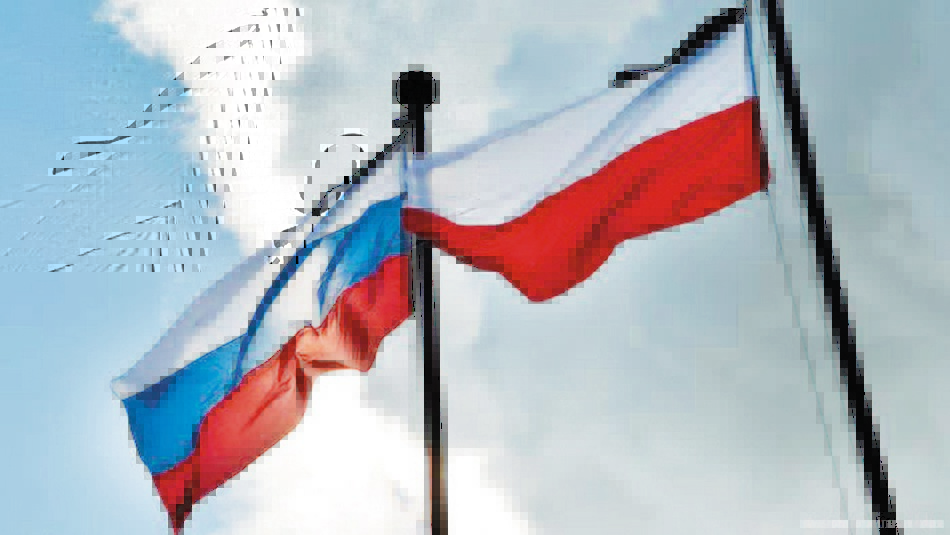
Thus Poland's policy in the Russian sector will undergo no major changes under the new president. Warsaw has been and will remain one of the harshest critics of Moscow on the international scene. Poland's stance on the Ukraine crisis will also remain unchanged. It should not be ruled out that it may even become more radical as Duda often voices the views of nationalist circles, supporters of the Greater Poland idea who advocate restoring the state within the borders it had before the Molotov-Ribbentrop pact of 1939 and including some western regions of today's Ukraine. However, Duda will naturally lay no official claims to Kiev. "Nationalist" as he is, he gives the impression of a pragmatic that will never go against today's realities. It is another matter that, with all his "anti-Russian" sentiment, Duda may hit Ukraine's interests, too. Thus for instance, the new president promised in one of his campaign speeches to "raise the issue of glorification of the UPA in his dialogue with Kiev". At issue in this case is Duda's resentment of the rehabilitation of the Ukrainian Insurgent Army blamed for the death of 80,000 Polish residents of Volyn in 1943.
At the same time, the new Polish president's anti-Russian sentiment will most probably not go beyond the limits of realistic policy. Experts point out that Duda's statements about Russia made during his election campaign were more conciliatory in tone compared to the rhetoric of incumbent President Bronislaw Komorowski. In addition, Moscow itself is expressing its hope to build "good, unbiased, stereotype-free and mutually beneficial relations" with Poland as its next-door neighbour. However, some attribute Kremlin's loyal stance on Andrzej Duda's election victory to Moscow's desire to use the euroscepticism of the Polish president elect for "isolating Poland from the rest of Europe". It is still highly unlikely for the Russian leadership ever to consider this kind of prospects in earnest. Duda's euroscepticism is no more than just a component of Polish and general European politics. It is another matter that people both in Moscow and Warsaw are aware of the importance of maintaining a more or less constructive dialogue in the interests of the sides and the entire region. Hence, Duda's relatively low-key rhetoric on the issue of relations with Russia and the Kremlin's undisguised satisfaction at new forces coming to power in Poland.
RECOMMEND:
 806
806

