
A NULL RESULT
The EU's unsuccessful attempt to treat all Eastern Partnership countries alike may bring the programme to a collapse
Author: Sahil ISGANDAROV, political analyst Baku
Former European Commis-sioner for Enlargement and Neighbourhood Policy Stefan Fule had to admit towards the end of his term in office that a stupor in the EU's relations with the participants in the Eastern Partnership (EaP) programme was very often predetermined by Brussels' identical approach to all post-Soviet countries, though common sense dictates the adoption of the tactics of individual approaches with due account for the differences in political and economic indicators, local traditions and values of these countries. Therefore, the EaP prospects have been rather uncertain for some time past, while there still was hope for the success of the new composition of the European Commission (EC).
It is noteworthy that Johannes Hahn, who succeeded Fule in the above position, immediately announced the EC's intention to correct this imbalance. Furthermore, certain officials in Brussels made optimistic statements about the EaP programme on the eve of the Riga Summit. In particular, President of the European Parliament (EP) Martin Schulz pointed out the need to review the Eastern Partnership policy due to the new geopolitical situation in Eastern Europe. According to him, this programme should be more efficient and differentiated to give concrete results in the field of trade and the implementation of the visa regime.
It is equally important to think over the improvement of the communication strategy. Latvia's Ambassador-at-Large for the EaP programme Juris Poikans was even more specific. He said that Georgia, Ukraine and Moldova would be supported in the implementation of their respective Association Agreements at the Eastern Partnership Summit in Riga. Moreover, Ukraine and Georgia, which are rapidly approaching a visa-free regime, would receive important signs of support for the implementation of the Association Agreements with the EU at the Riga summit. In turn, special offers would be made to Armenia, Azerbaijan and Belarus. In addition, there was a possibility of developing a new association agreement between the EU and Armenia.
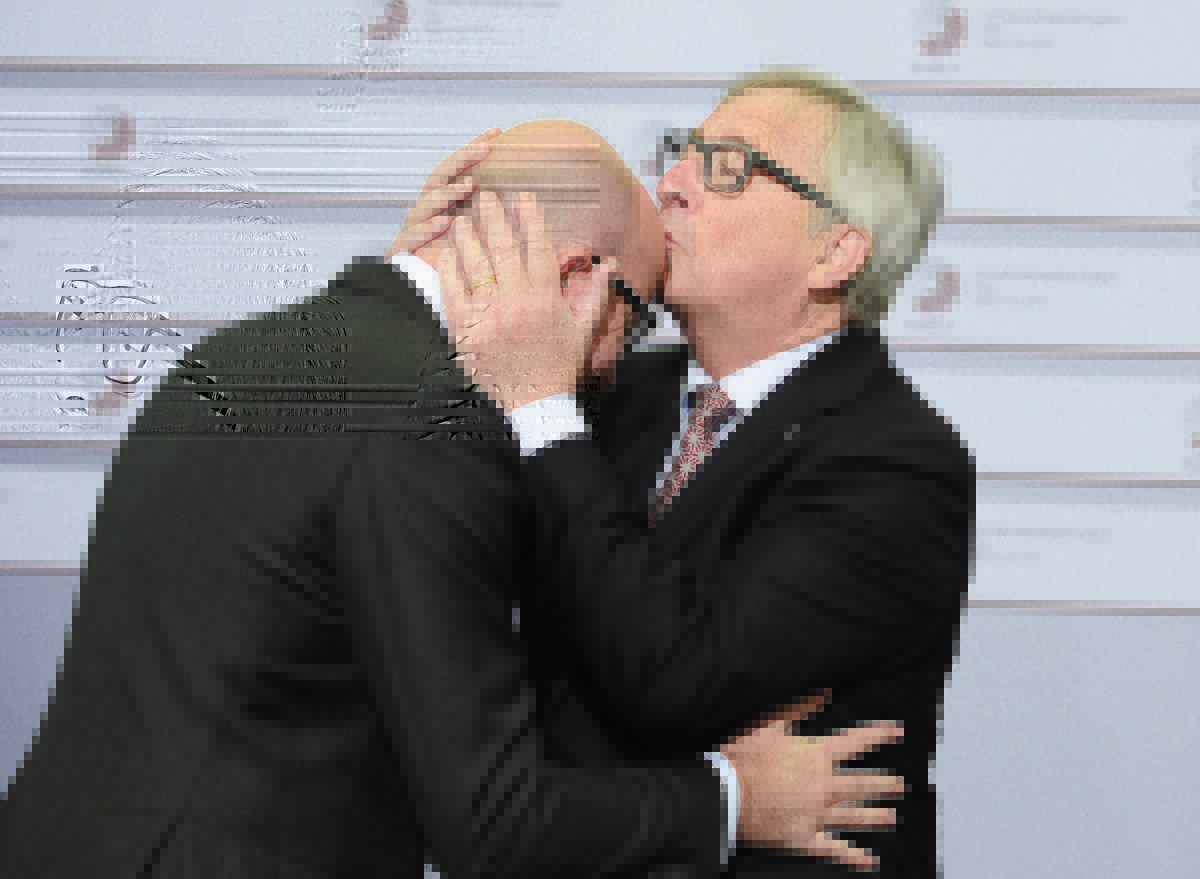
However, the actual outcome of the Riga Summit fell short of even modest expectations. The EU has not softened the visa regime much sought for by residents of Ukraine and Georgia. German Chancellor Angela Merkel said that this is not possible at the moment because serious reforms should first be carried out in these countries, of course, taking into account the requirements of Brussels. Of particular interest is the statement of Austrian Chancellor Werner Faymann made on his arrival at the summit: "We must not give promises we cannot keep. One does not do such things to good friends. To my mind, it would be unfair to talk about their membership in the EU. I am convinced that the countries of the European Union and the Eastern Partnership have a lot of opportunities for cooperation".
Such an approach, virtually echoing the position of Azerbaijan, is more than worthy of respect. Firstly, because it was Brussels officials and high-ranking politicians of the leading European countries who periodically fuelled overoptimistic expectations in some of the EaP countries, from time to time making strong statements with vague hints at EU membership despite the fact that such an outcome was not reflected in the project documents. Secondly, it has become clear over time that not all areas of cooperation between the EU and post-Soviet countries within the EaP framework were a priority for Brussels. Showing reverent care for its own energy security and occasionally trying to put unduly severe pressure in the area of strengthening democracy and natural human rights (often for no good reason and in its own way), the EU was less than efficient in the other two areas, in particular, in the area of economic integration and convergence with the EU's sectoral economic policy, including the establishment of free trade areas. Brussels was mainly concerned with the opening of new markets for European goods in the post-Soviet countries. As for the transfer of the economies of these countries to the European standards, the EU was in no hurry to support them, either financially or with advanced technology products.
In this respect, the laughable 600m euros allocated by Brussels to support economic reforms in these countries is ironic, not to mention the strangeness of the distribution of the "pie" from Brussels between the project participants. For example, Armenia, the aggressor, which has occupied 20 per cent of Azerbaijani lands and has territorial claims to all of the neighbouring countries, was second among the EaP countries in terms of the aid allocated by the EU, whereas Azerbaijan, which is faced with the influx of one million refugees and internally displaced persons, was the last on Brussels' aid list. A similarly amorphous position is displayed by the EU on the issue of developing contacts between people. Though Brussels is quite consistent in pursuing its policy of combating illegal migration, things have not moved an inch as far as liberalization of the visa regime is concerned. All of the above suggest that Brussels, while declaring the principle of equal partnerships with the EaP countries, is actually not interested in this format.
In the meantime, the EU is trying, overtly or covertly, to impose its own conditions. To some, it would seem quite natural, like following the proverb "When in Rome, do as the Romans do". So, Brussels has the right to put forward its own requirements. However, we are not speaking about Rome; we are speaking about the European Union, and only about cooperation in certain areas on the basis of equality. Therefore, the EU can also be expected not to dictate its terms in other lands (in the EaP countries) proceeding solely from its own interests.
Hence, the third matrix of Brussels' uneasy relations with the countries of the Eastern Partnership. Why does the EU, which only displays a pragmatic policy to advance its own interests, meets a similar position of post-Soviet countries with irritation? Is this not a sign that the EU does not really consider these countries as equal partners despite its statements that the relations with all countries of the Eastern Partnership are based on the principles of equality? But is it really so? And in any case, to what extent is this approach true to life? Metaphorically speaking, these countries are in different weight categories, judging by the indicators of their economic and military-political development as well as the ability to influence regional processes. Therefore, cooperation between the EU and each individual country of the Eastern Partnership is bound to be different, at least in substance and scope. It is reasonable that the platforms of cooperation should be identical for all countries. On the other hand, how can we explain by common-sense logic the EU's desire to build equal relations with both the country subjected to aggression and the aggressor state within one project?
Moreover, Brussels has nothing to brag about in terms of settlement of conflicts in the post-Soviet space. In relation to the conflicts in Georgia and Ukraine, the European Union demonstrates an enviable zeal, unlike to the Armenia-Azerbaijan conflict, which is just another proof of its political bias. Each time Brussels tries to explain its selective (not differentiated) position by the fact that the EU is not officially involved in the process of settling the Nagornyy Karabakh conflict. But the problem is that even the Transnistrian conflict, where the EU is one of the observing Parties, could not be resolved. Thus, the question is not about the involvement to one extent or another, but in the presence or, more likely, lack of political will and commitment. It appears that Brussels prefers to assume a contemplative position in any case.
Let us recall another important fact that is a speaking proof of the EU's selective approach. The tragic events in Ukraine, which took place about a year and a half ago, were the result of Brussels' ultimatum to the then Ukrainian authorities requiring them to make a clear choice. Today, however, the EU looks very dubious when it kindly offers aggressive Armenia, which has already joined the Eurasian Economic Union (EEU), to develop a version of the agreement that would suit it best. If Brussels views all of the EaP countries as equal partners, then why it should provide Armenia with such inexplicable preferences?
After all this, should we be surprised at the reports by some European media on the eve of the meeting in Riga that this Eastern Partnership Summit would actually demonstrate the failure of the EU programme, according to which the six former Soviet republics were to get out from under Moscow's influence. And Brussels has nobody to blame for this except its own political short-sightedness, or rather blindness.
RECOMMEND:
 840
840