
THE OLD-TIME HEALER
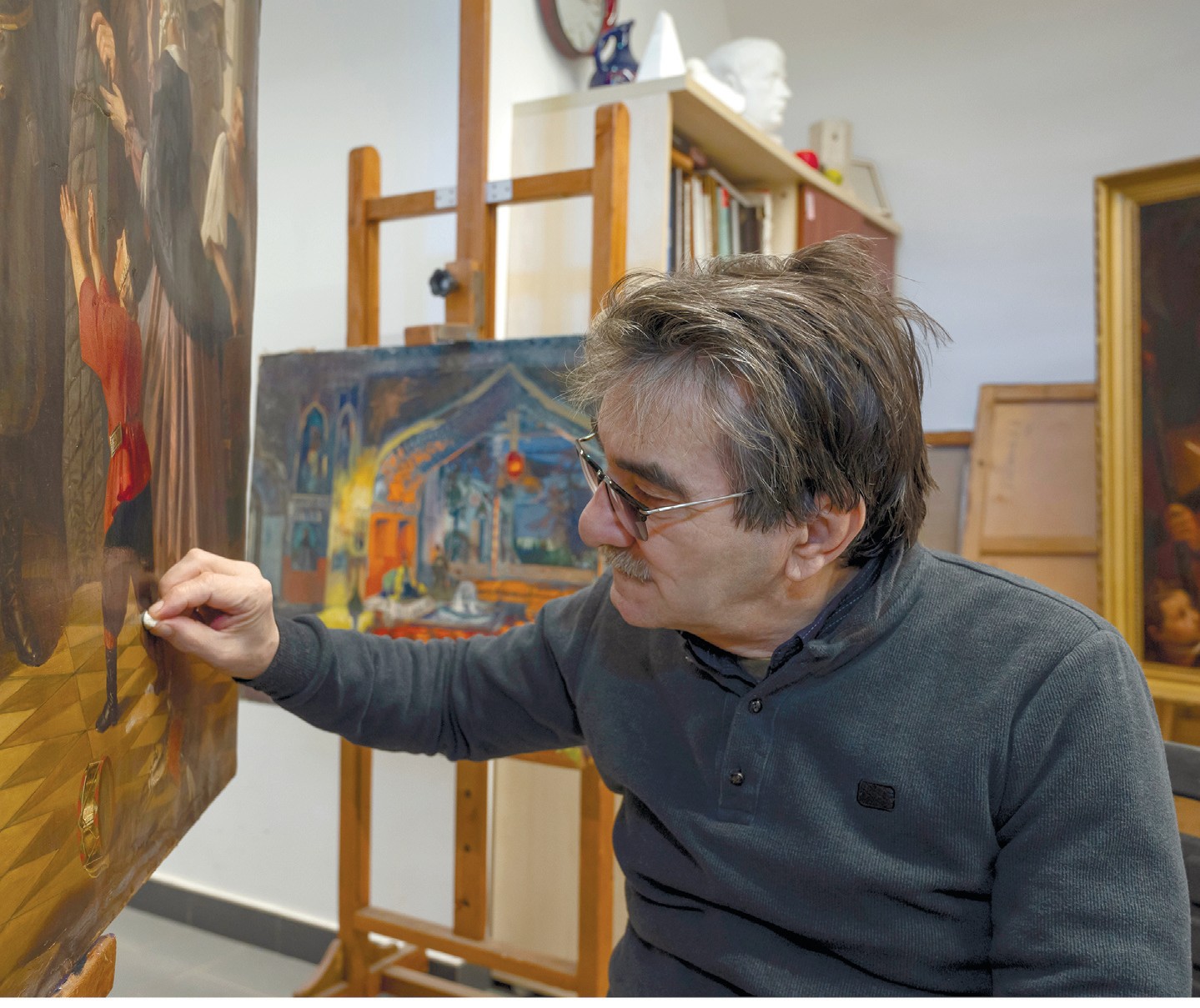
Natig SAFAROV: "A skilled restorer is the one who can delve deeply into the era of the artwork's creation, envisioning themselves as its original creator."


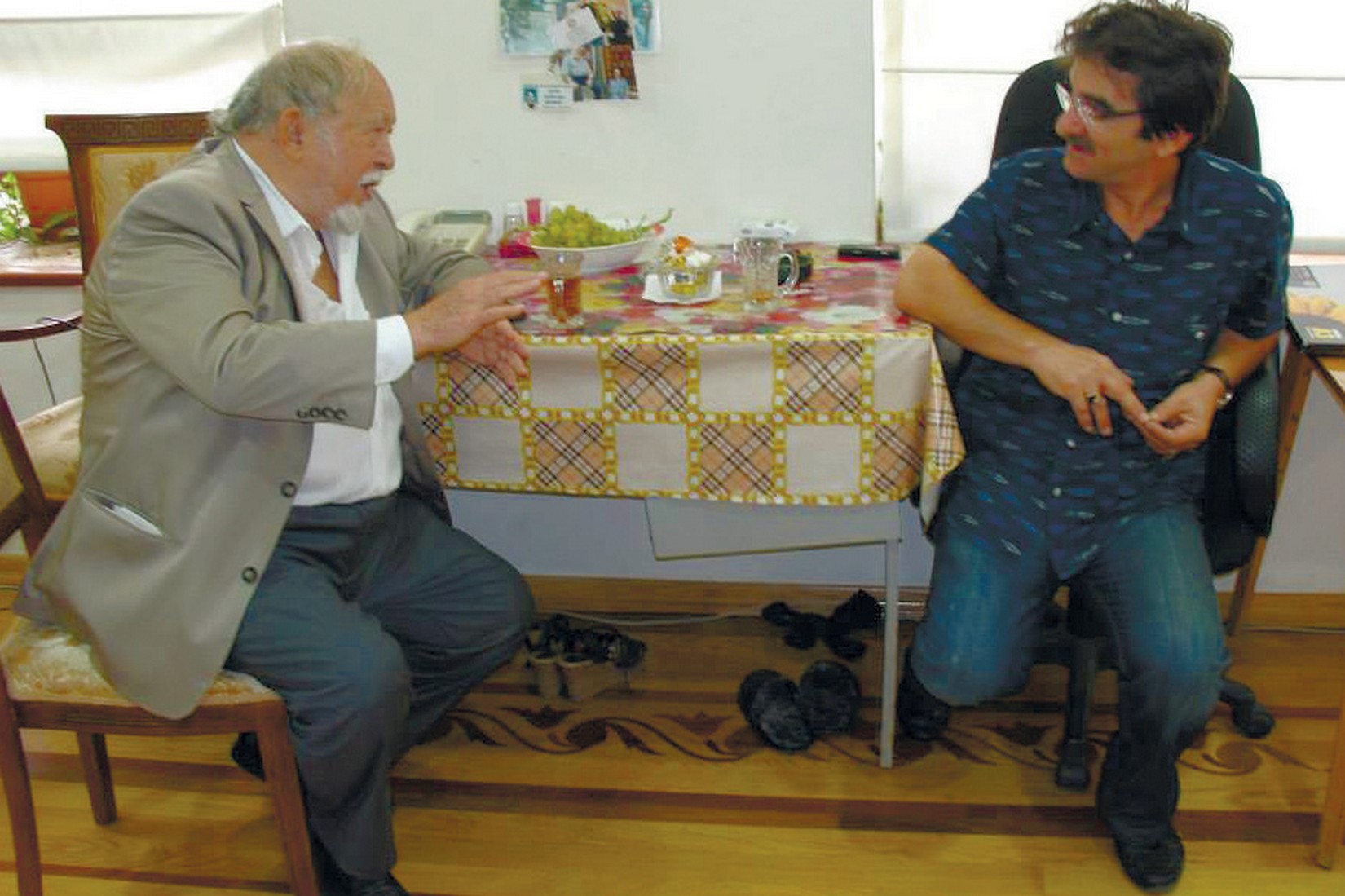
Author: Tatiana IVANAYEVA
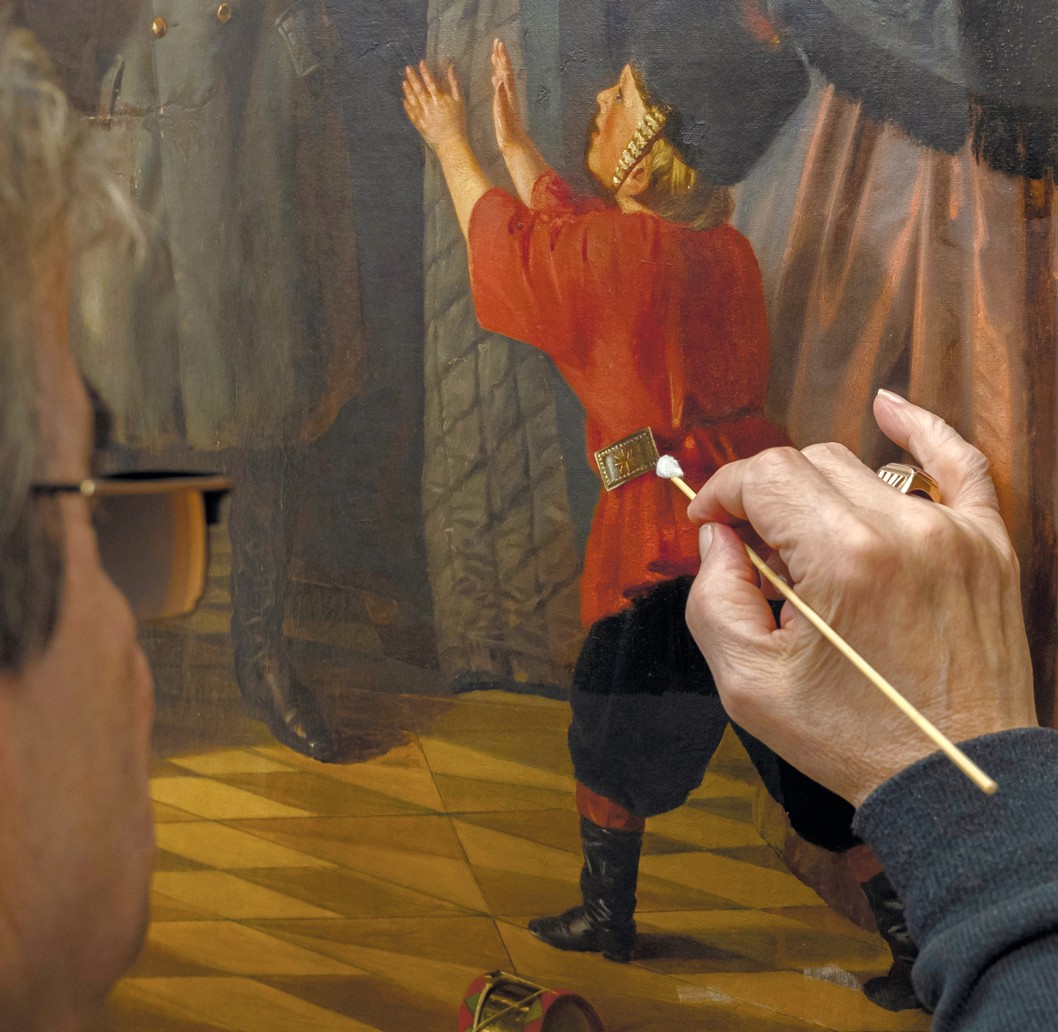
There is a saying that the art of restoration is an elitist pastime for those with a refined taste for life! However, restoration (from the Latin restauratio—"restoration") is one of the most secluded realms in the life of a work of art. When we visit exhibition halls, we seldom ponder what these objects of art endured before reaching us—whether a hundred or even three hundred years ago. The restorer reads the life story of each exhibit, meticulously scraping away the dust of centuries and unravelling the mysteries of time.
History also recalls periods when the preservation and restoration of artworks were not always treated with equal reverence. For instance, during the Renaissance, ancient monuments were carefully preserved and restored, while medieval works were often undervalued or even destroyed. However, once humanity recognised the value of everything bearing the "touch of time," restoration evolved into both a science and an art.
What lies behind the scenes of this field? Natig Safarov, an honoured artist, restorer, and head of the Scientific Restoration Department at the Azerbaijan National Museum of Art, shared insights into where these seemingly disparate directions intertwine.
"The history of the Azerbaijani restoration school began in the mid-1950s when Farhad Hajiyev, Azerbaijan's first professional artist-restorer, returned to Baku in 1957 after studying in Moscow. He established a small restoration workshop at the museum, which today proudly bears the name of the Azerbaijan National Museum of Art. For a long time, he worked alone. By the late 1970s, thanks to his dedication, this workshop was reorganised into the Central Art Restoration Workshop, covering various areas within the field. I joined its small team and witnessed its transformation into the Scientific Centre for Restoration of Museum Valuables and Relics. Thus, for nearly half a century, my life has been inextricably linked to one of the most secluded yet fascinating realms of art. I long ago lost count of the art objects I have worked on over the years—paintings, sculptures, and more. Our laboratory at the Museum of Art, rooted in that very first workshop, has become its true successor. Today, the qualified specialists within its walls care for, without exaggeration, the treasures stored in its collections."
"Surely, working in this field involves encountering special 'patients'..."
"One such 'patient' was a 300-square-metre panel in the foyer of the Azerbaijan State Puppet Theatre, painted by the great Toghrul Narimanbayov. When he created it, he did not account for the building's location in a coastal zone with high humidity. Creative minds often overlook such practicalities. The painting was executed on plaster, clay, and straw mixtures—materials not resistant to moisture. Over time, the pictorial layer began to separate from the wall. To save this masterpiece, we had to reinforce the walls. After extensive analysis, our team developed a formulation to strengthen the painting, restored the lost sections, and applied a protective wax layer to prevent moisture penetration. To this day, I monitor the painting's condition, and I am pleased that, nearly two decades later, no further damage has occurred.
"I also recall the panels in the Milli Majlis building, where the author's paintings had suffered not only from time but also mechanical damage. These too became the focus of our restoration efforts, similar to the project mentioned earlier.
"Among the more recent major projects, the unique 'transplantation' of a mural in Ganja stands out. This project unexpectedly became a landmark in my career. It began with an appeal from city residents to Mehriban Aliyeva about an ancient mosque destroyed by an earthquake, which at the time housed a library. When we arrived, we had to illuminate the mosque with mobile phones as it was already dark. The harsh, linear light seemed to transport us to another dimension. I remember how I, too, replicated the same technique and truly felt the surreal nature of what I was witnessing. It was as if I had entered a different space, filled with unique sensations. The U-shaped painting itself, created by Toghrul Narimanbayov, was already extraordinary in its composition, richly layered with narrative and showcasing the artist’s genius. The way graphics and painting were so seamlessly intertwined was something few could achieve. Perhaps that’s why I made what might have seemed like an audacious proposal: 'I can remove the entire panel and make it vertically flat on any surface you choose. Just specify the wall.' Of course, I made it clear from the outset that this would require significant funding. To be honest, this was the first time anything like this had been attempted, and initially, I had no idea where to begin, how to execute it, or even how to address the many 'hows' that arose.
"In a way, we became pioneers in our nation’s history. No one had ever undertaken such a project before us, nor has anyone done so since. It was a professional challenge unlike any other, and while awaiting approval from the relevant authorities, I was already mentally mapping out how to approach the task. I cannot express enough gratitude to the highest leaders of our state, who provided all the necessary conditions for this endeavour. Today, one of the unique works of the great Azerbaijani painter can be admired in all its glory in the specially designated 'corner' of Toghrul Narimanbayov at the Urban Centre of the Fikret Amirov Ganja State Philharmonic. But before that could happen, it was a painstaking process—millimetre by millimetre, we separated the image layer from the wall. This alone was a monumental task, as the depth and composition of the plaster varied across the surface. We employed innovative techniques developed by our team to dismantle and preserve the upper layer of the painting, meticulously working on the seams and carefully detaching it. The panel itself covered 80 square metres and spanned three walls, so we decided to remove it section by section. We created a special base composition onto which the cleaned 3-4 mm layer of painting was laid. Eventually, all these sections were reassembled into a single masterpiece on a 16.2-metre wall in the Philharmonic Hall, which perfectly accommodated the panel.
"Now, the renowned work 'Nizami - Pushkin,' which we fully restored, has been brought out from the small library hidden beneath the vaults of the ancient mosque and presented to the public. The people, by the way, showed genuine interest throughout our work. I remember how the city’s residents would gather, especially in the evenings, standing a little further back and peering through the outer glass walls to catch a glimpse of what we were doing. The kindness and care they expressed were overwhelming. It’s impossible to put into words the sheer admiration of those who saw Narimanbayov’s heritage in Ganja for the first time. I have encountered many masterpieces in my career, but I have never seen anything quite like this. In one panel, graphic portraits of Nizami and Pushkin—two giants of world poetry—are depicted. The artist encapsulated the visual world of their works within a pictorial carpet of sabat, seemingly unveiled by a boy and a girl on either side. I am utterly captivated by this work of Toghrul’s; it is irreplicable. One can only absorb its multi-layered narrative. It is a story in its own right. And I am deeply gratified to know that it now carries a piece of my soul as well."
"Does one feel a touch of history itself when working on art restoration?"
"I once thought that a good restorer becomes a professional when, during restoration, they immerse themselves in the era of the artwork and begin to imagine themselves as its creator. I am no exception, often envisioning myself as a Flemish, French, Italian, German, or Russian painter, not to mention Azerbaijani artists. Restoration is an ongoing dialogue with the artist's inner world: here, they were nervous; there, they took a break; here, they found peace. The energy of the artist's hand is palpable, and it guides the restorer's work. It is as if the brain switches, and the hand adjusts to the technique. This is how I live, transported through centuries, embodying the spirit of each artist. It is an incredible form of self-renewal, where all ailments and worries dissolve, leaving only pure happiness."
"If a painting goes to a restorer, something is wrong with it. What do you feel at that moment?"
"My heart aches immediately. I start thinking of ways to help, even before a formal request is made. As a member of the State Expert Commission, I have seen many people bring family heirlooms for appraisal. It is disheartening when hopes for a high valuation are dashed. Behind each appeal often lies a personal struggle, and the disappointment is palpable. Yet, when I see a deteriorating antique, I feel compelled to offer my assistance. I often surprise people by explaining that my motivation is not altruism but a desire to save the artwork. I know that even if sold in poor condition, the piece will eventually return to me, and I can help restore its value."
"Are there 'inoperable' cases in restoration?"
"No! There is a process called conservation, applicable when more than 70% of the original is lost. Even a single decimetre of a relic can be saved and preserved—it is our duty. We work closely with archives and specialised literature, drawing on global expertise."
"Does Azerbaijani restoration differ from practices elsewhere? After all, restorers here preserve national treasures."
"Financially, global restoration practices involve significant sums, which is understandable given the historical and monetary value of artworks. However, the research and educational foundations are equally important. The Azerbaijani restoration school has strong advantages here. Farhad Hajiyev introduced the Russian approach to restoration, having studied under luminaries like I. Grabar, V. Churakov, A. Yakovlev, and V. Filatov at the Surikov Moscow State Academic Art Institute.
Recently, a British specialist with international recognition visited us. I was particularly drawn to the equipment he brought. However, this is understandable, as the oldest items in our collections date back to the 17th century, while Western specialists often work with artefacts whose origins stretch back to much earlier, almost mythical times. By the second day, I couldn’t hold back from sharing my thoughts, which initially seemed to both alarm and intrigue the British specialist. As his visit progressed, a mutual respect developed between him and our Azerbaijani colleagues, evident in his words and reactions. This allowed me to occasionally take the lead during the training sessions. At one point, I felt compelled to demonstrate that our skills were on par with his, and I suggested we work using the 'egg yolk' technique, a method frequently employed in traditional painting. It was a kind of friendly challenge. The technique relies on the yolk as a binding agent, while the egg white serves as a varnish, acting as a foundational material. We cracked the prepared eggs simultaneously, but my guest attempted to pour both the yolk and albumen into the dish at once. For me, separating the yolk from the white was second nature—a simple, familiar action—but for him, it proved to be a challenge without prior practice. I chose not to put my European colleague in an awkward position, instead acting as though there was nothing unusual about the process. We often turn to such historical techniques when working on paintings from earlier centuries, where natural materials were used to create colours. Modern paintings are somewhat easier to handle, as they increasingly rely on chemically based paints. That said, I cannot claim that restoration work is universally similar, aside from some practical personal innovations. Having visited the workshops of the world’s leading museums, I can say with full confidence that our domestic restoration school is every bit as skilled as those abroad."
"Today, modern technology enables the creation of specialised equipment for restoration work, which can significantly ease the demands of this profession."
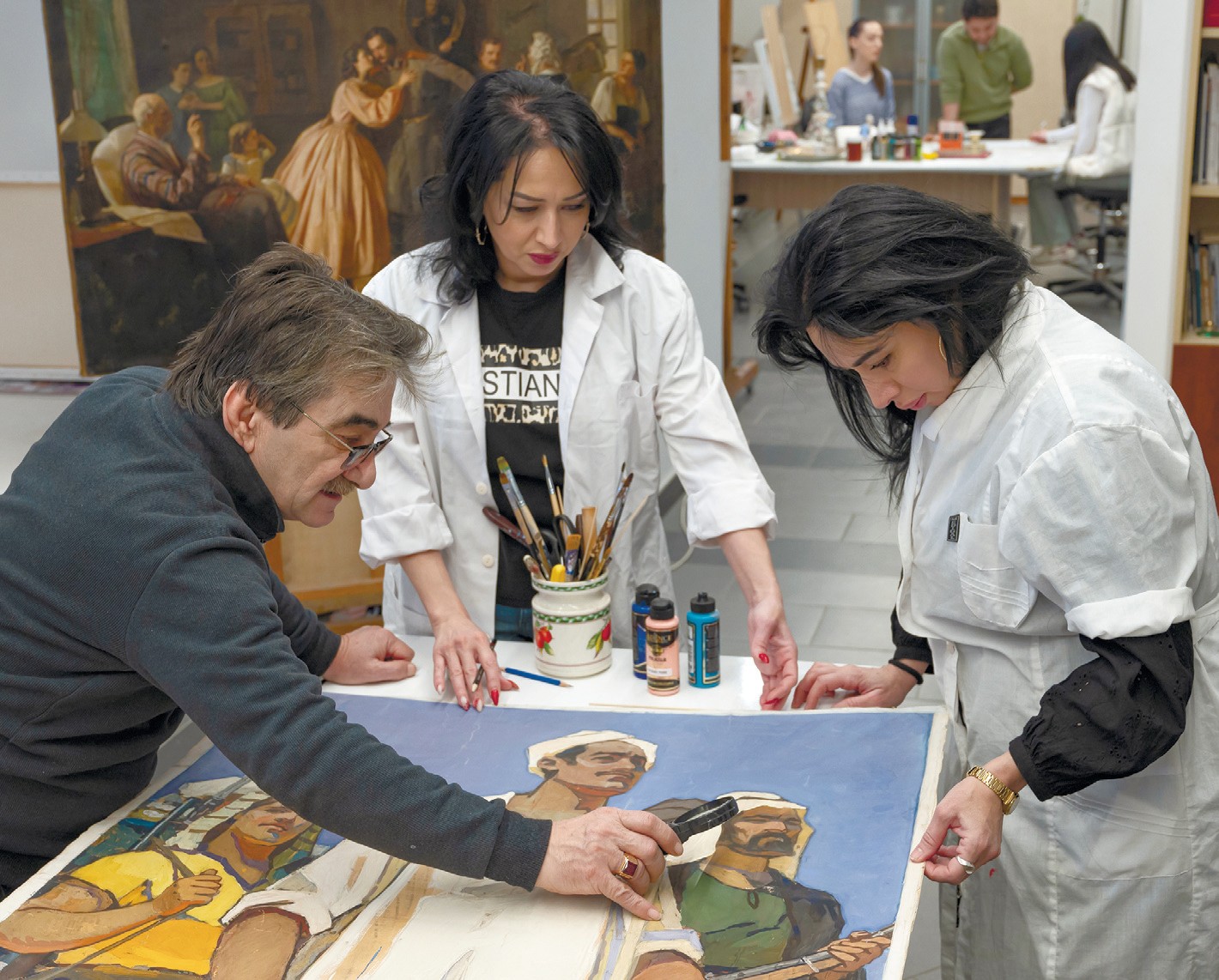
"However, no matter how advanced the tools may be, one cannot become a restorer without a deep understanding of the subject! This is why I take particular pride in the wealth of knowledge we possess. The individuals I have trained, who are now working at full capacity, are every bit as skilled as their counterparts abroad. I am pleased that since 2000, our specialised educational institutions have placed greater emphasis on restoration. For a time, I even took on a teaching role myself. Through trial and error, and with the support of the former head of the Azerbaijan National Museum of Art, Chingiz Farzaliyev, we established a training centre at the museum. This initiative continues to receive strong support from the current director, Shirin Melikova. We have already graduated one master’s student, who has joined our scientific restoration department, and another is nearing graduation. This year, three more students have begun their master’s programmes. In this way, we are steadily and thoughtfully cultivating a new generation of specialists, ensuring that our school is represented at the highest level by professionals whose expertise is not merely theoretical but thoroughly tested in practice."
"But you are also a practising artist. Doesn’t your deep involvement in restoration overshadow your own creative work?"
"I won’t deny that my profession sometimes holds me back. Had I not chosen this path, I might have achieved greater success as an artist. This is based on the opinions of those who have seen my work. It still surprises people when they discover that I create my own paintings. I recall how, in 2007, I presented my personal works as part of a group exhibition at the Restoration Centre. The then Minister of Culture was visibly astonished when he saw them and expressed his admiration. Similarly, one of our folk artists was stunned and exclaimed, 'You paint too?' I always emphasise that I am an artist-restorer, not the other way around! I received my education as a painter after retraining as a restorer, a field my uncle introduced me to and which captivated me. The influence of the artists whose works I have 'communicated' with through my profession is profound, both narratively and technically. To be honest, the technical knowledge and nuances I gain from restoration greatly aid my artistic work. However, my creative output is far from consistent, with long breaks between projects. I only pick up my brushes when I feel truly inspired."
"Are you saying that classical training is essential for a restorer?"
"Absolutely! I’m not just referring to technical skills. When you approach a historical work with a brush and paints, you cannot do without the hand and eye of a painter. One must be an artist to truly understand form. After all, we often work with paintings that have lost significant portions of their original surface. Without knowing how to paint, for example, a portrait, it would be nearly impossible to restore a historical piece in the manner of its original creator. The nuances provided by classical training allow you to engage with the artwork as an equal. This is the mark of a true restorer."
"So, with passion and a clear understanding of the craft, one can become a true restorer?"
"Without a doubt! There is an initial stage where I speak to aspiring restorers, explaining the intricacies of our field and assigning tasks to gauge their potential. It’s crucial for me to understand the level of expertise a student is capable of achieving. I believe it’s essential for individuals to be fully prepared for the challenges they will face when choosing restoration as a profession."
RECOMMEND:
 259
259