

NOVRUZ HAS ALWAYS BEEN
Shakir ALBALIYEV: "...Azerbaijani Novruz has its own face, its own unique tradition. This makes it a true national holiday of Azerbaijan."
Author: Nigar BAGHIROVA
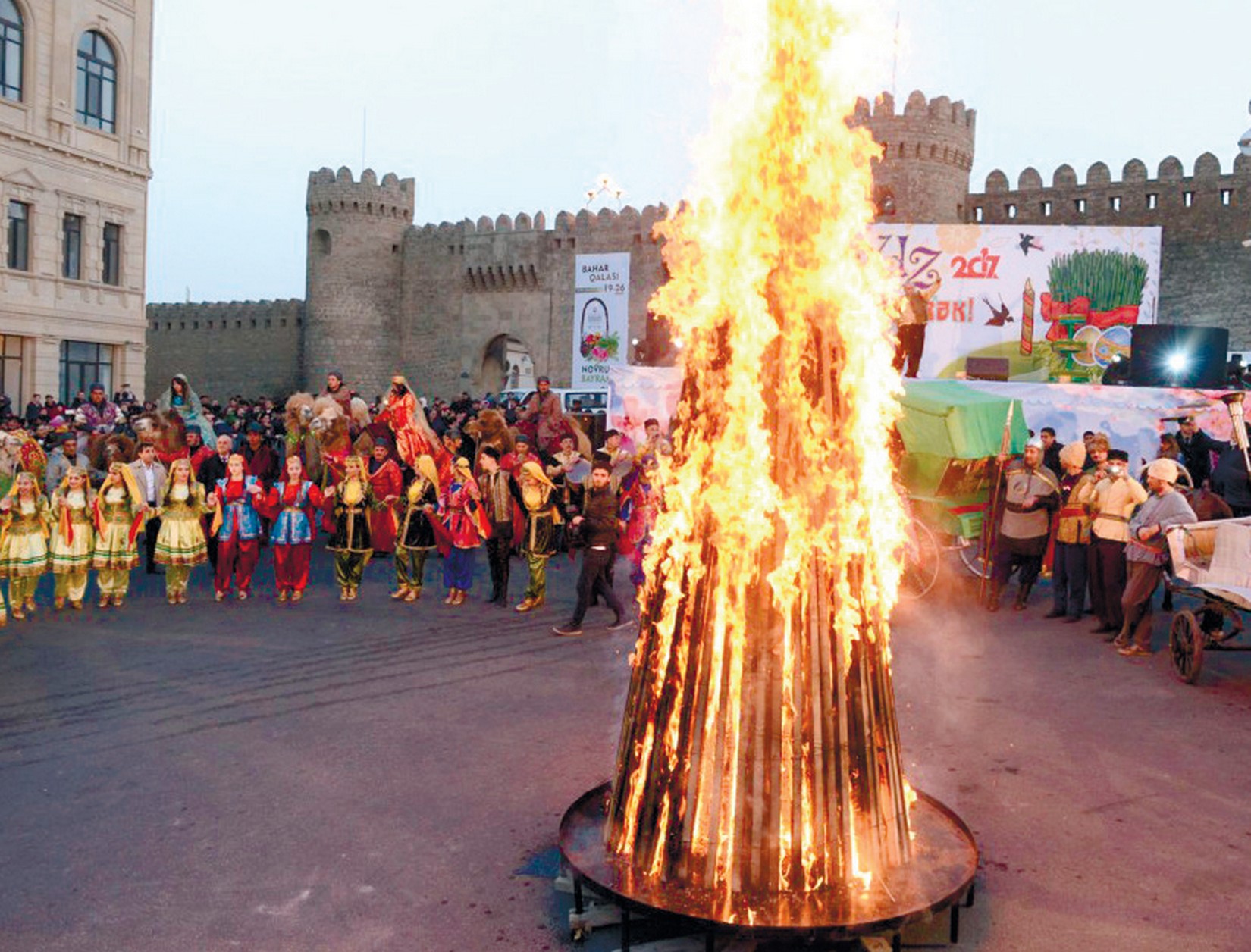
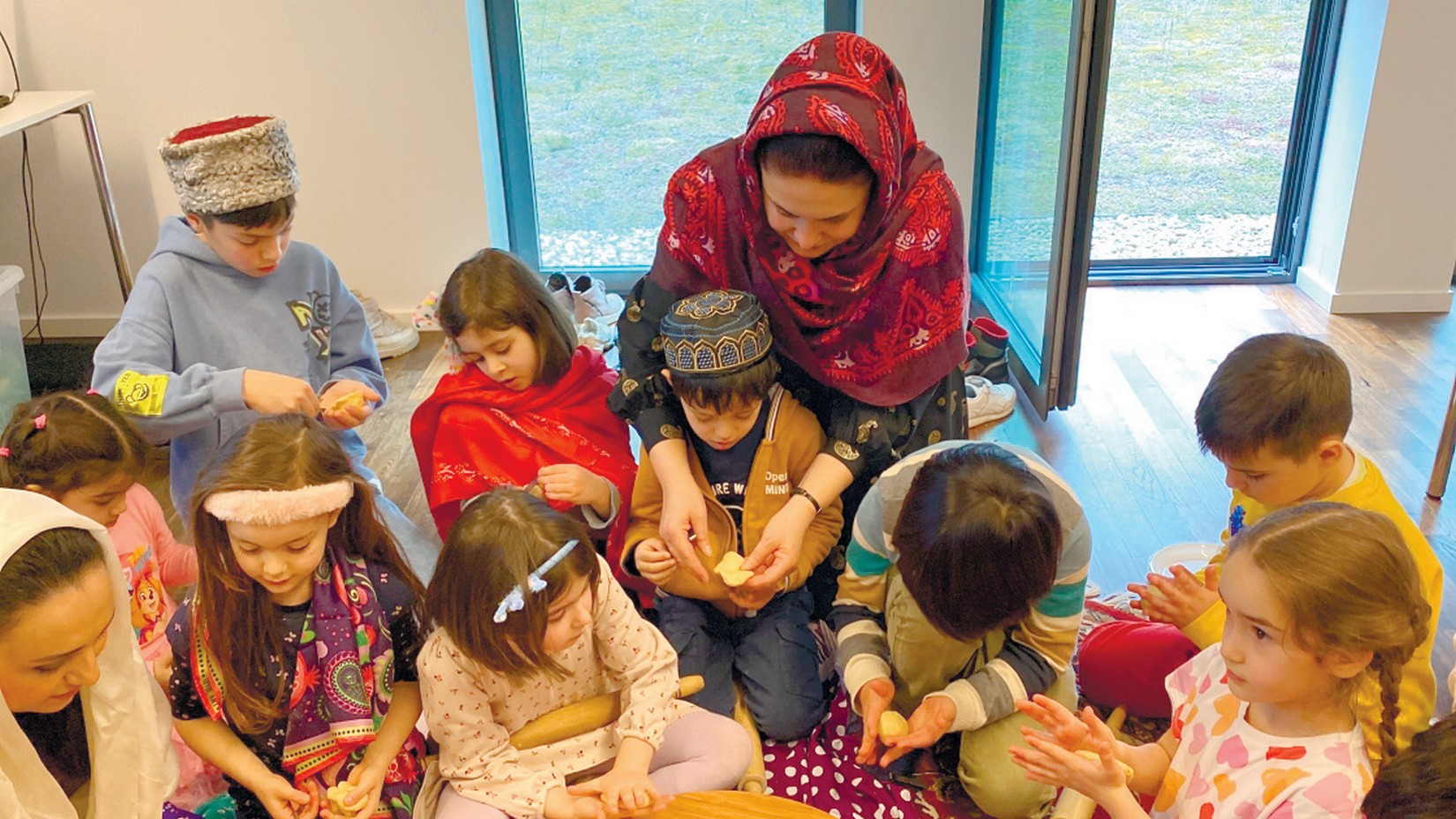
There's a sense that Novruz has always been with us—both in those years when the holiday was banned and during times when people weren't in the mood for celebrations. Even in the atheistic Soviet Union, when it was impossible to celebrate openly, seeds were still sprouted in homes, the aromas of baklava, shekerbura, and goghal filled the air, and candles were lit. People found joy in the preparation itself—in the waiting, in the cleanliness, in the special warmth of family gatherings.
Novruz is often called the most "delicious" holiday—not just because of the food but also because of the inner tranquillity, renewal, and hope it brings. We spoke with folklorist Shakir ALBALIYEV, a Assoc. Professor of Philology, about the essence of this ancient holiday and why it continues to resonate deeply within us.
"Novruz is the holiday of spring, renewal, and the awakening of nature. But how did the tradition of celebrating it begin? Who first decided to mark spring so brightly and solemnly?"
"That's an excellent question. Perhaps it's impossible to answer definitively—its roots run too deep. The holiday of Novruz is so ancient that we have neither an exact date of its origin nor any specific nation to whom its creation can be attributed.
"However, it is absolutely certain that Novruz emerged when humans began observing nature, realizing that with the spring equinox, the day becomes longer than the night, marking the start of a new life cycle. This isn't merely a calendar fact—it's an image, a symbol, which humanity imbued with profound meaning. In ancient times, spring wasn't just seen as a seasonal change but as a mystical event. It promised harvests, the continuation of families, and prosperity. It was during these days, at the moment of equal day and night, that the idea of celebrating a 'new day' arose—Novruz.
"As early as the 11th century, under Sultan Jalal al-Din Malik Shah, the solar calendar was officially adopted, with the year beginning on the vernal equinox. Thus, Novruz not only gained state recognition but also became part of a scientific approach to time. Astronomy, mythology, poetry, and folk rituals merged into one cohesive celebration.
"Novruz went through various phases in later centuries. It was included in state calendars or celebrated unofficially, but it never vanished entirely. Even in the 20th century, during the era of atheistic ideology when religious and folk holidays were banned, Novruz endured among the people. It was passed down orally and through family traditions. And after independence was restored in the 1990s, Novruz regained its rightful place as an official holiday. But the key point is that it remains alive. It is anticipated, prepared for, and its meaning continues to resonate clearly and relevantly to this day.
"Novruz is more than just a date on the calendar; it is a cultural code that connects us with our ancestors, with nature, and with the cosmos."
"How have the traditions of celebrating Novruz evolved over time? What has endured, and what has faded into history?"
"The history of Novruz resembles an ancient tapestry: it contains threads stretching back to the deepest antiquity, as well as newer patterns that have emerged over time. This holiday originated from the most ancient beliefs and rituals, and each generation added something distinct to it—sometimes consciously, sometimes instinctively, following the spirit of the times.
"Holidays, especially folk holidays, live within people. They are preserved in memory, passed from father to son, from grandmother to granddaughter—not as rigid doctrines but as family habits, as a feeling of festivity, like the aroma of baking or the crackling of fire on the eve of Novruz.
"Yes, many things have changed. Of the seven chershanbeh—the preparatory days leading up to Novruz—only four are widely observed today: Water, Fire, Wind, and Earth. The other three have been largely forgotten. They may not have been as significant, but they were once part of the broader picture. Nowadays, they are remembered only in particularly traditional regions, where every detail of the ancient rituals is meticulously preserved.
"Another important aspect is the changes brought by time and circumstances. In Garabagh, in Western Azerbaijan, Novruz was once a vibrant folk celebration: filled with songs, dances, fairs, and performances featuring Kösa and Kechal. But when people were forced to leave their ancestral lands, migrate, and lose their homes and neighbours, they carried not only their belongings but also their memories to the cities. However, not all old traditions adapted to the new conditions.
"One such tradition is the scarf ritual described by Mohammed Hussein Shahriyar. In southern Azerbaijan, it was customary to lower a long scarf or sash into the chimney on Novruz, to which treats or gifts were tied. Brides and grooms used this method to exchange tokens of affection, with brides often responding with handmade items.
"All of this existed within a specific architectural and lifestyle context. Houses were different then, and chimneys were part of daily life. Today, with modern housing and habits, such a ritual has become impractical.
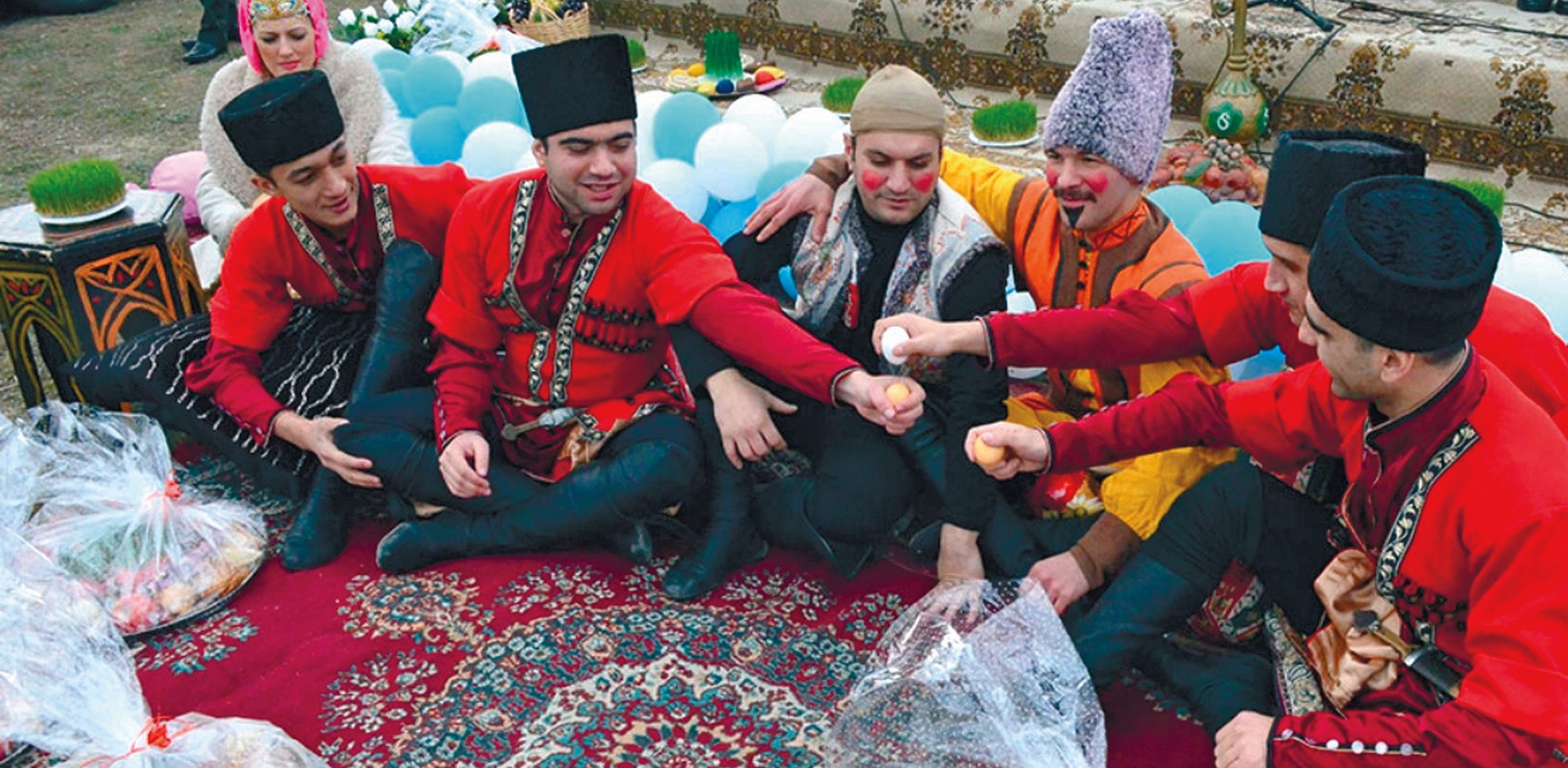
"The same applies to the tradition of 'papag-atdy'—throwing a hat. Nowadays, young people rarely remember it, except in some places where children still enjoy playing this way. But it was once one of the favourite traditions of Novruz.
"Gradually, the details fade away. Not abruptly—no one notices in the moment that a ritual has ceased to be performed. It happens slowly, almost imperceptibly. Then, decades later, a historian or ethnographer uncovers an old manuscript or oral account and realizes: things were done differently back then.
"Nevertheless, the core of Novruz endures. The essence of the holiday—renewal, hope, light—remains unchanged. The holiday stays alive as long as it is awaited. As long as at least one family lights candles, sprouts seeds, jumps over the fire, and remembers that every New Day offers a chance to begin anew."
"Which nations were the first to celebrate Novruz, and how did this holiday spread across the world?"
"This is one of those questions everyone wants to answer: 'We were the first.' Iranians, Turks, Arabs, Kurds, and even some Slavic peoples—all celebrated the arrival of spring at different times and in various forms. That's why debates about Novruz's origins persist—not so much scientific as emotional. After all, when a holiday becomes part of a culture, people want to claim it as their own, native, and original.
"In reality, Novruz originated in a region where humans have lived in close connection with nature since antiquity. Agriculture, the sun, and the changing seasons played pivotal roles in people's lives. Even in the Zoroastrian tradition, the vernal equinox was seen as a special moment—the triumph of light over darkness, life over death.
"But Novruz quickly transcended the boundaries of any single people, culture, or religion. Its universality lies in its appeal to universal human values: renewal, the awakening of nature, peace, family, and hope. These values need no translation. That's why Novruz has been embraced across the Islamic world, especially in its eastern regions—Türkiye, Azerbaijan, Iran, Afghanistan, Pakistan, Uzbekistan, Tajikistan, and beyond. The holiday has even reached India and the Balkans—with local variations but retaining the same core meaning."
"Just as Christians celebrate Shrovetide—an essentially pagan holiday—Novruz today is often associated with Islam. Why is that?"
"As I've already mentioned, Novruz is a product of Eastern thought. But after the 7th century, when Islam became the last world religion, the Muslim world began, so to speak, to adopt this holiday, giving it its own features. Gradually, it spread to Islamic countries and began to be celebrated there.
"But it's important to understand: not everything was straightforward. In the early centuries, Islam approached Novruz cautiously, viewing it as a holiday of fire worshippers—a pagan remnant. There were practical considerations as well. After all, the Islamic calendar is lunar and shifts annually, while the Novruz calendar is solar, tied to the equinox. This created certain tensions.
"Over time, however, Novruz became associated with Islamic imagery, such as the name of Caliph Ali, who was said to have ascended the throne or worn red robes on Novruz Day. All of this suggests that Novruz carries universal values. It is these values that have allowed it to take root in the Islamic world.
"Novruz-Bayram and Shrovetide share many similarities—fire, solar symbols, and the welcoming of guests. Why do such festivals celebrating the arrival of spring remain relevant?"
"You're absolutely right; there are indeed parallels between Novruz and Shrovetide. The Russians have round pancakes, and we have goghal, which are also round and symbolise the sun. In both cases, there are treats, guests, and the anticipation of warmth.
"A legitimate question arises: why do such holidays continue to endure? Why do they retain their significance despite millennia of change?
"The answer, surprisingly, is simple. Regardless of nationality, humans are part of nature. We all experience the changing seasons in the same way, rejoice in the first sunny days, and crave light and warmth. If we set aside what divides us—national prejudices, religious intolerance—it becomes clear: internally, we are structured the same way.
"That's why different peoples share similar images and traditions. This applies not only to holidays. History offers countless examples of writers, philosophers, or scientists arriving at the same ideas independently. This reflects a shared human perception of the world.
"So it is with Novruz and Shrovetide. They reflect a universal need—the celebration of spring, the awakening of life. This is especially felt in northern regions, where winters can be long and harsh. There, as in our country, the sun is awaited with particular anticipation.
"If we delve deeper into Earth's history, climate change has left its mark on us. We've experienced ice ages, warming periods, and extinctions. At the heart of it all is the sun. It gave life and warmed us. Therefore, reverence for the sun is not merely symbolic—it's part of ancient psycho-mythology. That's why holidays dedicated to spring and the sun continue to thrive. Because they are an intrinsic part of who we are."
"Can Novruz be considered a national tradition?"
"The point is that Novruz is celebrated by many nations—it doesn't belong exclusively to any one group. But your question leads to a logical conclusion: yes, Novruz can rightly be called a holiday of the Azerbaijani people.
"The Turkic origin is at its core, in its very spirit. If we look at the history of the Turks, their way of life, mentality, and traditions, we notice that unlike many peoples who built empires on suppression, the Turks relied on principles of justice and generosity.
"This internal ethos—kindness, respect for others, a striving for harmony—is reflected in the spirit of Novruz. After all, it is a holiday of peace, humanism, renewal, and well-being. These values are closely intertwined with the Turkic cultural foundation. Therefore, we have strong historical and cultural reasons to consider Novruz a national holiday of the Azerbaijani people. It has long held a special place in our lives.
"And if we compare how it is celebrated in different countries, it's easy to see: Azerbaijani Novruz has its own character, its own unique traditions. This makes it not just part of an international calendar but a true national holiday of Azerbaijan."
"What are the most important symbols of Novruz, and what do they signify?"
"First and foremost, it's worth noting that Novruz is not just a day on the calendar. It is an entire cultural world brimming with rites, customs, and rituals. Over the centuries, the Azerbaijani people have imbued this holiday with numerous symbols, each carrying its own meaning. If you ask which is the most important, it's difficult to say. Because all of them matter. Novruz cannot be dissected into parts like a structure—it thrives in the unity of traditions, in cuisine, in songs, in fire, in sprouted seeds.
"Here, it's worth recalling the famous treatise by Mohammed Fuzuli, Sohbatu-l-asmar—Conversation of Fruits. In it, different fruits debate which is most important. Each claims, “Without me, there would be no purpose.” But in the end, they all agree: each has its own flavor and value. So it is with Novruz symbols—each has its role, its place. One cannot highlight one and diminish another."
"In Azerbaijan, representatives of different religions live in harmony and mutual respect. Could this be due to the fact that Zoroastrianism, Christianity, and later Islam were practiced on our land? Is it a kind of genetic memory?"
"The question is highly relevant. Yes, our land has long been home to followers of various religions and cultures. We have always treated them with respect, and this is no coincidence. I believe this attitude is rooted in a certain historical memory passed down through generations—and perhaps something more: what might be called genetic memory.
"In different eras, Zoroastrianism was practiced here, followed by Christianity, and finally Islam, which has become part of our spiritual essence. These religions didn't replace one another abruptly but overlapped, leaving traces in culture, daily life, and people's world-view. When Islam arrived in this land in the 7th century, it was accepted naturally. It was seen as a continuation and evolution of earlier traditions.
"Islam is the last of the world religions, absorbing elements and meanings from its predecessors. Its perfection lies in encompassing the humanism inherent in Zoroastrianism and the ethics inherent in Christianity. But it's not just about religions. The essence lies in the open character of the Turkic people. Throughout history, they have demonstrated kindness, sincerity, and a commitment to treating everyone equally. This inner openness, this sense of kinship with all—isn't contrived but deeply ingrained—and is passed down through generations.
"As I mentioned earlier, all this—peacefulness, mutual respect, the spirit of good neighborliness—lives within the Novruz holiday. We feel it in the rituals, in the atmosphere, in the very essence of this day.
"We have a saying: 'What you call for, you receive in return.' Our people have always extended kindness and, in turn, received kindness. That's why today, representatives of all nations living in Azerbaijan can celebrate Novruz together as a reflection of shared peace, mutual respect, and the memory of our land."
"Returning to the fire worshippers. The Ateshgah Museum is a symbol of Zoroastrianism on our land. Are there other traces of Zoroastrian presence in the Absheron region?"
"Yes, absolutely. The mere existence of the Ateshgah temple in the village of Surakhany—one of the most vivid symbols of fire worship—is indisputable evidence that Zoroastrianism was practised in our land. Ateshgah isn't just an architectural monument; it's a silent witness to an era when fire was revered as sacred.
"But it's not the only trace. There's another site, also in Absheron, that has inspired awe since ancient times—Yanardagh, the 'burning mountain.' This natural phenomenon—an eternal flame bursting from the ground—was itself a miracle for ancient people. During the Zoroastrian era, it was undoubtedly perceived as a sacred space, a living link to the divine.
"Moreover, according to numismatist Aygün Mammadova, a PhD in history, silver coins dating back to the 7th century—the Sassanid period—have been discovered in Baku and its surroundings. These coins bear distinct Zoroastrian symbols, providing further proof that Zoroastrianism was not only widespread but also had official status. After all, a coin is a state emblem, and the presence of Zoroastrian symbolism speaks volumes.
"Thus, Ateshgah, Yanardagh, and the coins found form a chain of evidence confirming that Zoroastrianism was indeed part of Azerbaijan's spiritual history."
"So we have a museum, we have a holiday... But do we have Zoroastrians?"
"You've asked a specific question, and I'll answer just as specifically. Yes, there is, for instance, the philosopher Asif Ata, who passed away at the end of the last century. He and his followers refer to themselves as 'ojagchilar'—people of the hearth. The word itself is telling: 'hearth' signifies fire. Their beliefs include reverence for fire, honouring it as a sacred element.
"More than thirteen centuries ago, we embraced Islam, and today Azerbaijan is a Muslim country. But, as I've already noted, traces of the former faith linger in our spiritual memory. Deep within our consciousness, we still respect fire as a symbol of light, warmth, and life.
"It can even be heard in everyday speech: phrases like 'by the right of the hearth,' 'I swear by the light,' 'may the fire in the house never go out' are not accidental. They echo the ancient reverence for fire as sacred. So, yes, the Zoroastrian trace lives on in the cultural memory of the people—quietly, deeply, but unmistakably."
"Did our ancestors dance and sing during Novruz celebrations? What were these songs and dances like?"
"Of course, when it comes to a holiday, especially one like Novruz, it's impossible to imagine it without joy and merriment. It's like a vibrant tapestry woven from lights, music, laughter, and customs.
"And where there is joy, there is music. Music is the language of the soul, and dance is its movement. That's why songs and dances have always been a natural part of Novruz ceremonies.
"Take, for example, the 'yalli' dance. Performed in a circle, it is itself a symbol of unity. It's not just a dance—it's an expression of cohesion, friendship, and harmony. And it aligns perfectly with the spirit of Novruz.
"There were also songs—simple, cheerful tunes dedicated to spring and the awakening of nature. With lyrics like: 'Novruz-Novruz, come,' 'Flowers, flowers, blossom.' They also sang about the holiday's characters—Kechal and Kösa. These songs were part of folk poetry and holiday culture."
"Why exactly is Novruz considered one of the most important holidays in the cultures of many nations?"
"I'll answer using the example of our people. Novruz is so deeply embedded in our culture and daily life that it cannot be erased.
"Novruz is the people's vision of life, an image, a myth, a philosophy. It's like an energy source that gives people the strength to renew themselves spiritually and physically. It brings not only spring but also hope, faith, and inner awakening.
"It is especially significant at the moment when winter supplies run out and people face shortages. Then spring arrives, Novruz comes, and with it, the joy of life returns."
RECOMMEND:
 306
306

