

EUROPEAN ARMY: MYTH OR REALITY
On war in Ukraine, its effects on US-Ukrainian relations and the revival of discussions on creating a defence alliance in Europe
Author: Ilgar VELIZADE
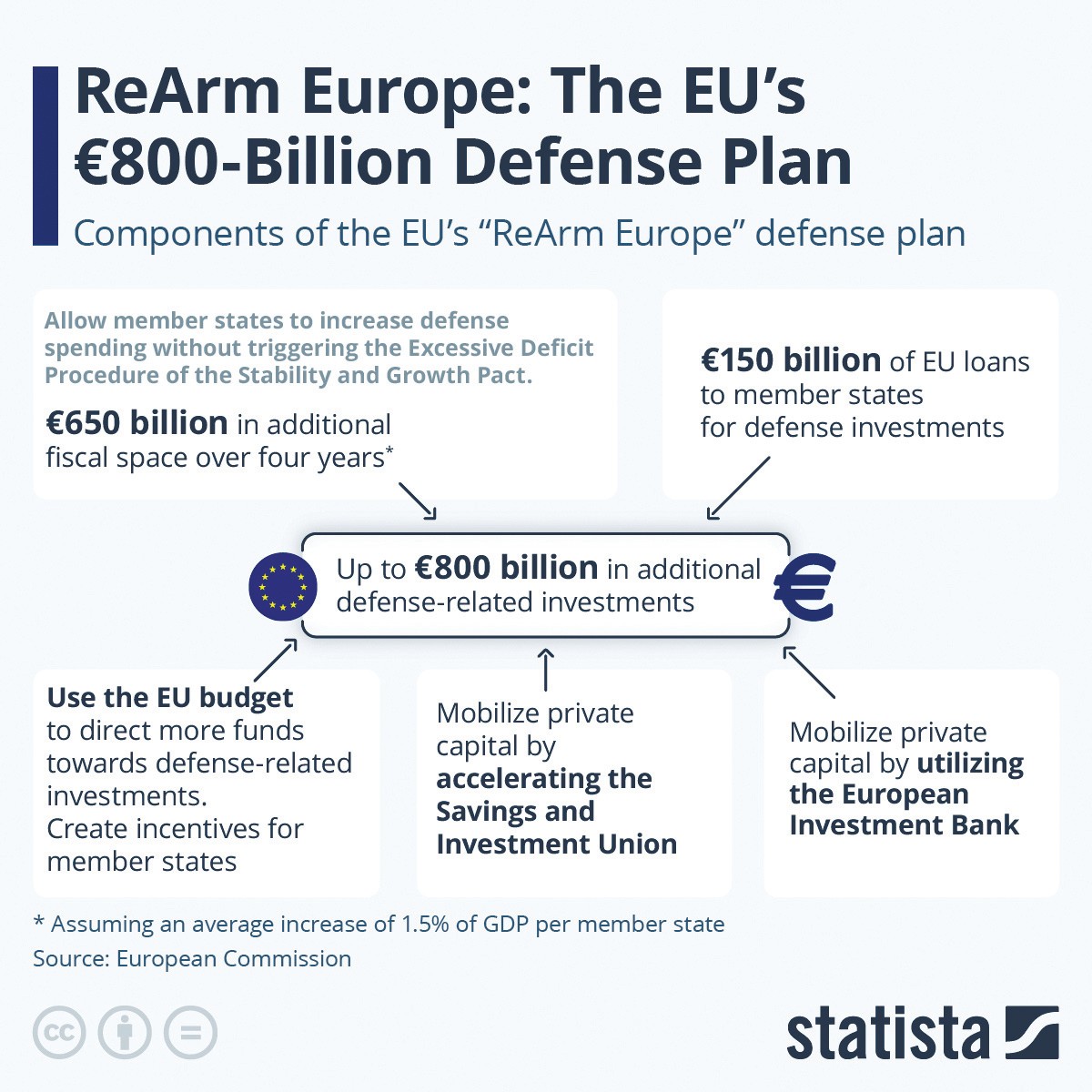
A key topic in current European political discourse is the establishment of a defence alliance among European countries. In November of last year, European Commission President Ursula von der Leyen proposed that the EU consider the formation of a security and defence union, complementing NATO. By early March, she unveiled the 'ReArm Europe' initiative, which aims to enhance EU defence spending and mobilise approximately €800 billion for this purpose.
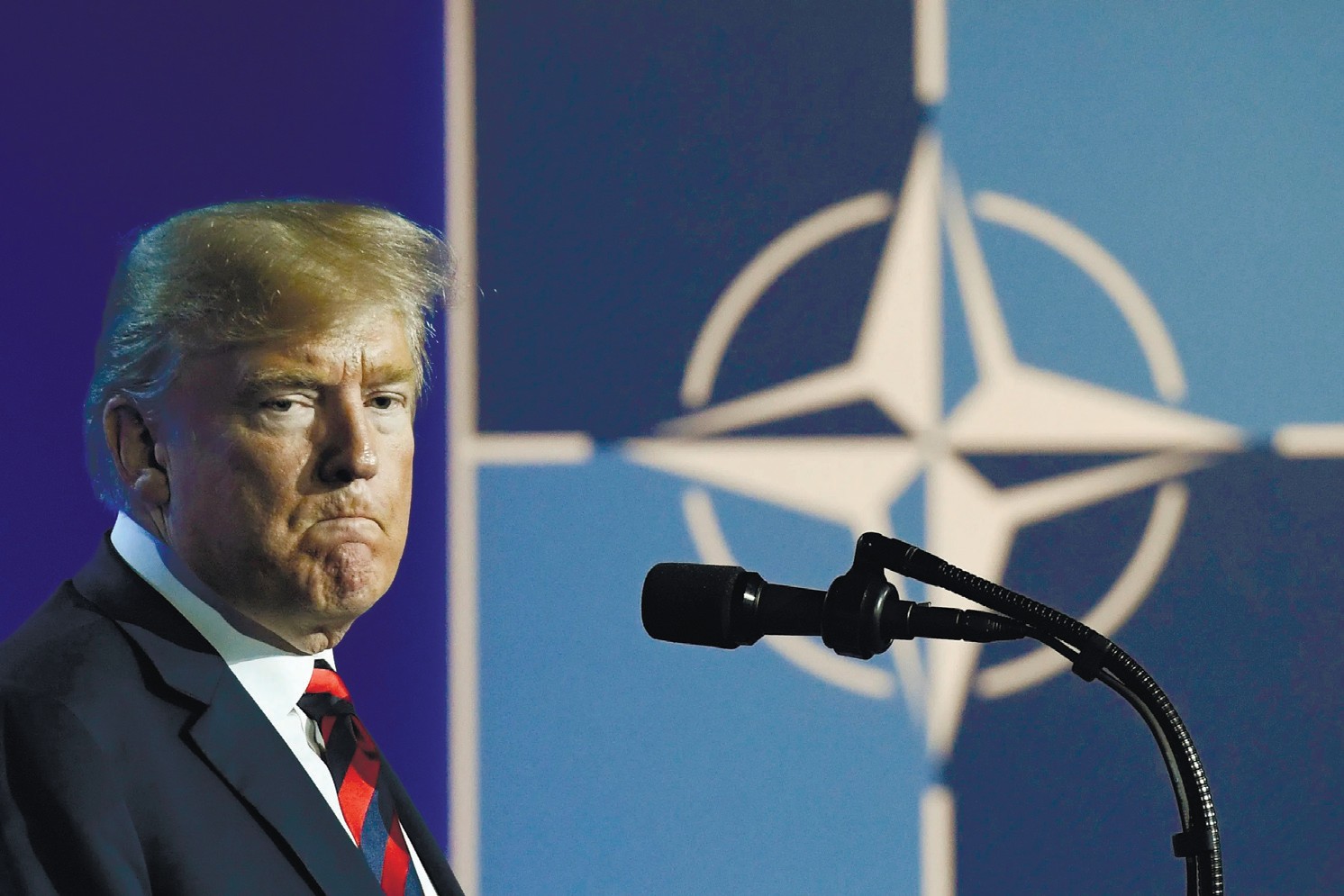
This strategic move by the European nations is a significant step towards the establishment of a comprehensive military alliance, a goal that previously seemed challenging to achieve. Recent events, including the unsuccessful Zelensky-Trump summit in early March and Trump's decision to suspend military aid to Ukraine, have further intensified discussions on this matter.
Background of the Issue
The concept of a unified European army has been a subject of debate since the project's inception, even dating back to the early days of the Cold War. During this period, the Eisenhower administration urged European leaders to agree to the establishment of a unified European army. However, the French Parliament ultimately derailed the implementation of this idea.
In 1948, the 'Brussels Pact' (Western European Union) was signed by five Western European countries – Belgium, the United Kingdom, Luxembourg, the Netherlands, and France – with the aim of establishing 'collective self-defence' against a potential aggressor (primarily the USSR). Many regard the Brussels Pact as a precursor to NATO. With the establishment of NATO, the necessity for another bloc—essentially an alliance within an alliance—was rendered obsolete. The Western European Union operated solely in a formal capacity until its eventual dissolution in 2011. The concept of a unified European army resurfaced in the 1990s with the formation of the European Union, however, the notion faced challenges due to opposition from the US and the prevailing commitment of member states to collaborate within NATO. However, with the advent of the Trump administration in the US, which placed stringent demands on allies to increase their defence budgets, a shift in the prevailing sentiment began to take shape. The war in Ukraine has prompted a re-evaluation of Europe's defence concepts.
A New Complex Reality
The United States has made it clear that it no longer wishes to act as a guarantor of European security, urging European countries to take responsibility for their own security. The EU's main task at present is to consolidate a fragmented defence landscape consisting of at least 25 separate armies, none of which are adequately equipped to defend Europe. Brussels is striving, albeit with difficulty, to act in close coordination with member states regarding the creation of a unified defence budget. However, it is also crucial to implement reforms and integrate European armies under new objectives. In the short term, Europe's primary objective should be to establish an effective security system capable of deterring any significant external threats. While some argue that, given Washington's cessation of military support for Kyiv, Europe must ensure that Ukraine can continue its military actions to weaken and drain Russia as much as possible, it is essential to focus on consolidating a unified and effective defence budget. Experts believe that this will give Europe time to prepare for potential military confrontation with Moscow in the future, and that Europe needs to focus on addressing gaps in its military-technical capabilities. Specifically, it requires more ammunition and must produce it at an accelerated pace. Europe also needs to take urgent and effective steps to make its armed forces relatively compatible. In the long term, however, the EU must seriously engage in creating unified European forces that can prove their viability and replace the United States. This will likely involve the formation of hybrid forces, and the European Union is expected to establish permanent common armed forces that will not fall under central command in Brussels—a command structure that also needs to be created.
A prototype for these pan-European forces could be the 60,000-strong rapid reaction forces agreed upon by Tony Blair and Jacques Chirac in Saint-Malo in 1998. At that time, the focus was on participation in conflicts abroad rather than in Europe. Instead of a traditional army, this new unified military grouping may resemble more of a marine corps.
It is claimed that these should be permanent EU forces created through rotating units from national forces. However, the practical challenges of implementing such a concept are significant. The establishment of these forces would necessitate the creation of an EU-wide conscription office to recruit contract soldiers from across Europe, a process that is yet to be formalised. It is crucial that contractors are offered competitive salaries, particularly for those residing in economically disadvantaged regions. Officers for these forces could be drawn from existing European armies, following a model similar to the recruitment approach of the European External Action Service.
The issue of language has been resolved, with new recruits required to speak English, which has effectively become the language of communication within the EU and is now being taught to Europeans almost from birth.
A New Army and NATO's Division
However, these plans remain speculative, indicating the complexity and challenges of establishing a European army. Several European countries still believe that there is no need for this and rely on NATO's support and assistance as the most effective mechanism for ensuring their members' security. There is an opinion that establishing a European army could undermine NATO's unity, fracture the bloc, and encourage withdrawal from it by the United States—the main military-technical partner for Poland, Romania, the Baltic states, and several other European nations. The creation of a European army would require the approval of national referendums in each of the involved European countries, and it is uncertain whether this idea would be universally supported. Discussions about creating a unified EU command have been ongoing for several years, and the bloc even has a nascent command structure for managing its peacekeeping missions. However, concerns about duplicating NATO's efforts and opposition from the US have blocked implementation of this idea.
Critics argue that such large-scale reforms, leading to the transformation of the European Union from an economic entity into a quasi-military bloc, require amendments to the EU Treaty. Meanwhile, three EU states – Ireland, Austria and Malta – are not NATO members and avoid participation in military blocs while adhering to a traditional policy of neutrality. Would these states agree to transform the EU from an economic entity into a quasi-military bloc? If a consensus cannot be reached on this issue, could Brussels consider establishing its own army?It is believed that there are loopholes in the EU Treaty that allow circumventing such contentious issues. For example, EU armed forces could be created under the same legal authorities that established the European border and coast guard agency known as Frontex. Frontex's mission is to 'support member states on-site in their efforts to protect external borders.' This mission is equipped with artillery pieces, drones, and vessels. Notably, these forces are not referred to as 'EU marines'; they are designated as 'reinforced service for ensuring security and integrity of borders' of the EU. However, the fundamental nature of the mission remains unaltered.
Navigating Legal Loopholes
Article 42.7 of the Treaty on European Union (TEU) could be a useful starting point for formalising the process of creating its own armed forces. It states that member states must use 'all available means' to assist any member state that has become a victim of armed aggression. Since member states created the EU and have rights over its governance, establishing and using EU forces could align with the phrasing 'to use all available means' for assisting an aggressed country.
The creation of EU forces could potentially lead to a reorganisation of NATO, though the implications of this are as yet unclear. Optimists assert that combined EU forces could become part of NATO forces, with the head of European military command serving as deputy secretary-general of the Alliance. However, this would require a significant degree of reorganisation of the organisation itself, a task which would be challenging to achieve given the current composition of NATO. It remains to be seen whether a consensus will be reached under these circumstances.
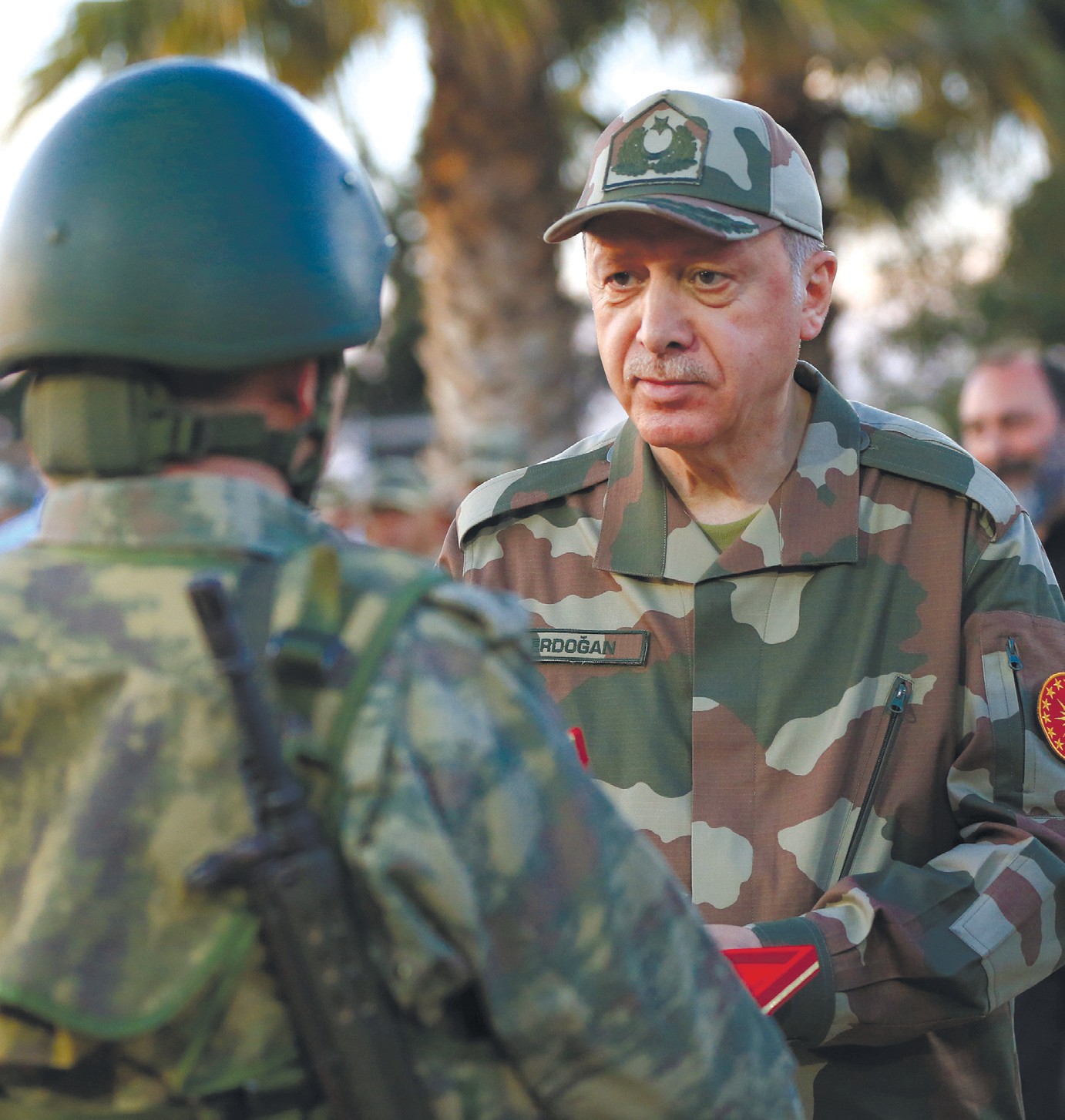
Türkiye has long been a candidate for EU membership, and its President Recep Tayyip Erdogan has repeatedly stated that joining the EU is a strategic goal for Ankara. Erdogan declared that it is impossible to ensure Europe's security without Türkiye's involvement, and that the existence of the EU as a global actor without Türkiye becomes increasingly untenable. In doing so, he indicated that creating a pan-European security system without Türkiye would also be incomplete.
Today, Türkiye possesses one of the largest ground forces after the United States, a developed military-industrial complex, and combat-ready military personnel who have gained combat experience in operations in Syria and Iraq. If Ankara continues to remain outside of the EU as well as outside processes aimed at creating a pan-European army, it is unlikely that it would agree to implement this idea without its participation while being a NATO member.
RECOMMEND:
 273
273

