

THE BATTLE FOR SECURITY
The EU Summit Revealed Discrepancies in Security Issues and Macron’s Ambitions to Become a Leader
Author: Samir VELIYEV
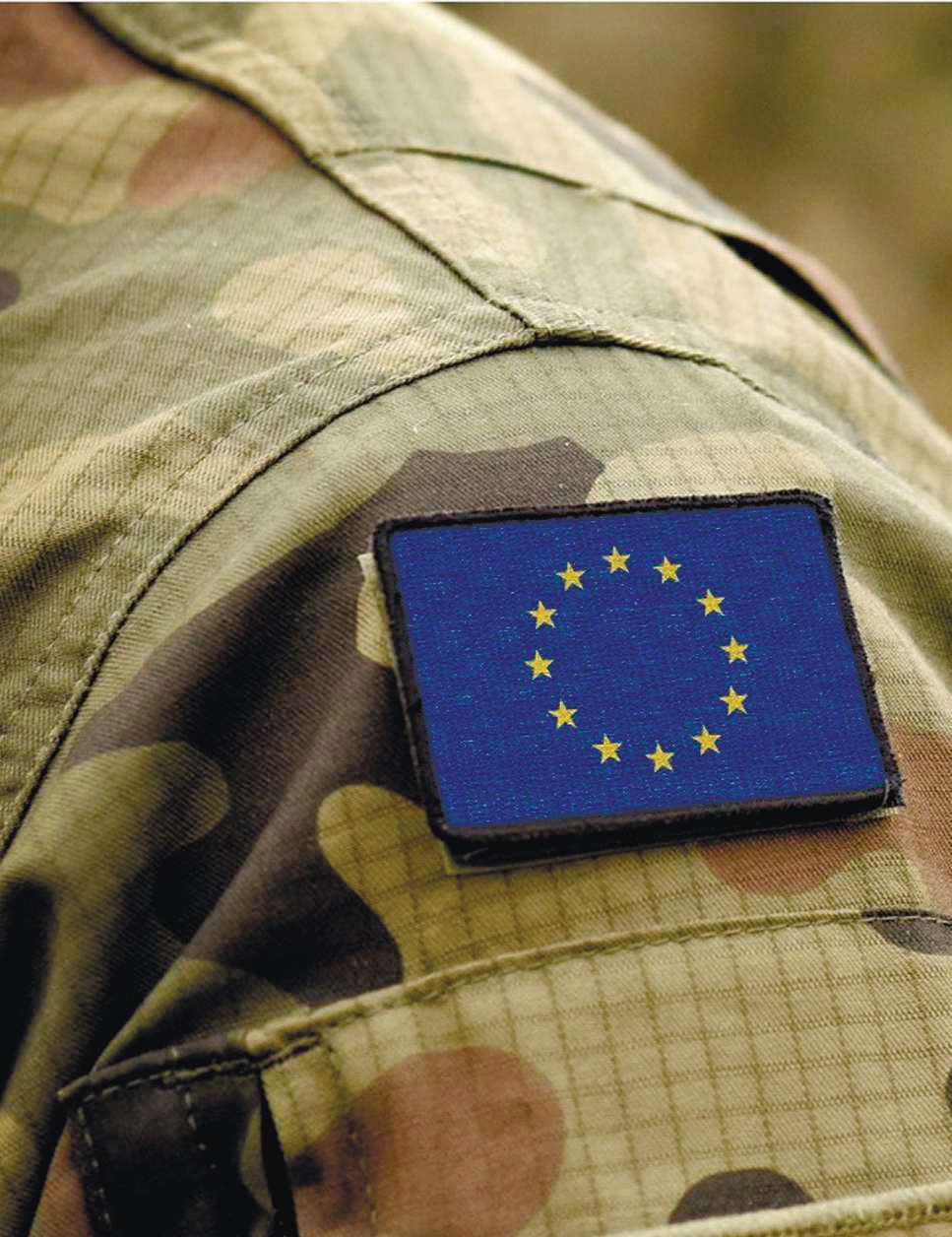
The European Union summit centred on security issues and support for Ukraine, highlighting a number of challenging topics in the current political landscape of Europe. In light of the United States' announcement regarding a reduction in its military presence on the continent, European states are compelled to devise an effective security model to fill the void left by the departure of the US.
Under the French 'Umbrella'
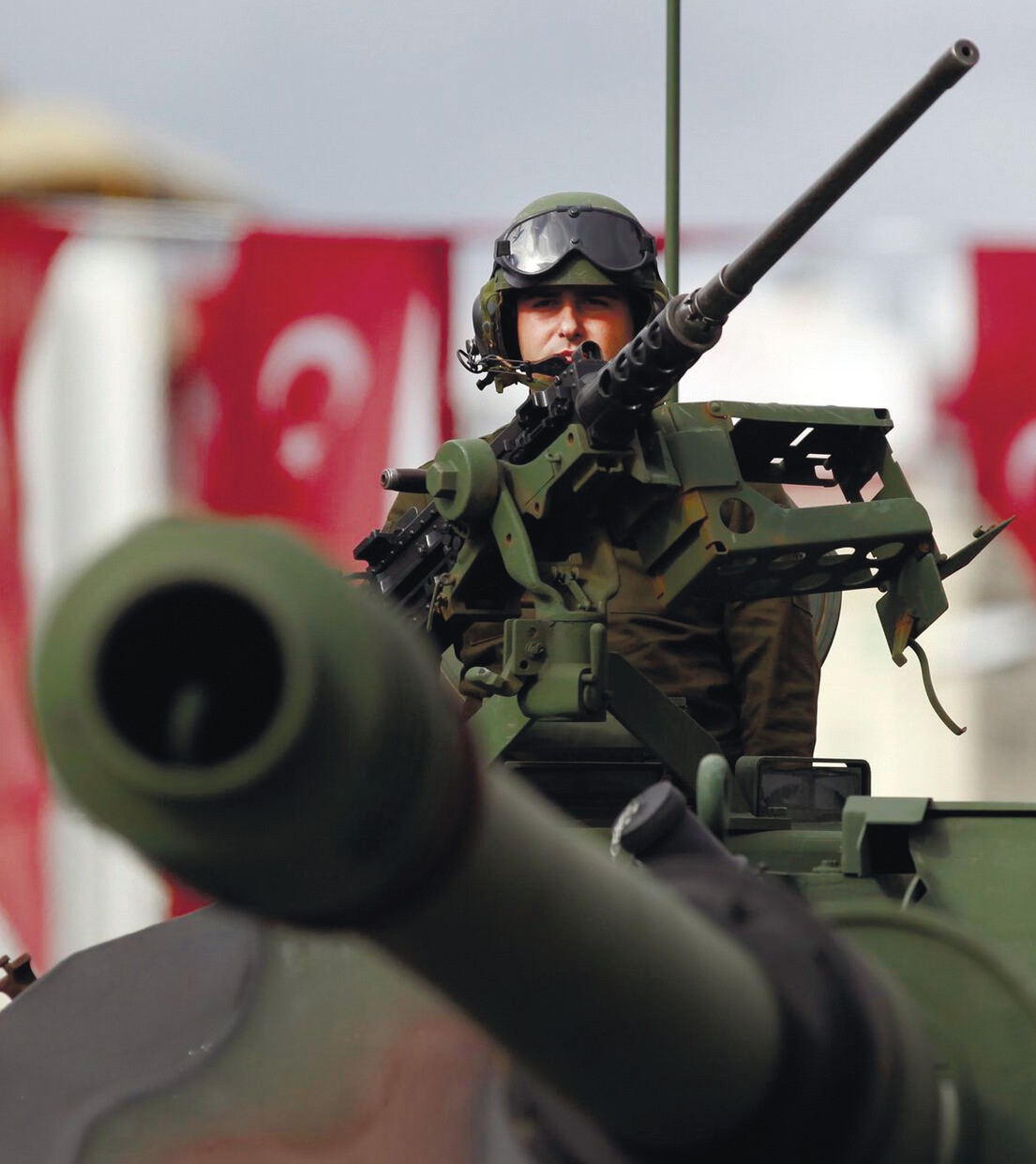
The current situation can rightly be termed a 'battle for European security'. After the summit, EU leadership held a video conference to inform leaders from the United Kingdom, Canada, Türkiye, Norway, and Iceland about its outcomes. In particular, they discussed the launch of the European Commission's plan for the militarisation of Europe (ReArm EU). The head of the European Commission, Ursula von der Leyen, stated her intent to "strengthen the EU's defence" and ensure long-term support for Ukraine. It is notable that only 27 countries participated in discussions about the future concept of European security, leaving out two of the most militarily strong European NATO member states, the United Kingdom and Türkiye.
In this context, France – the only EU member state with nuclear weapons – has seized the opportunity to assert its intentions to become the guarantor of EU security. The United Kingdom and Turkey, which also wish to play a leading role in ensuring European security, seem to have little chance of success. At least, that is how it appears at first glance. The French leader, leveraging his advantages, is attempting to 'push' London and Ankara to the background. He is working to establish a 'support group' among his allies, offering incentives such as the idea of a French 'nuclear umbrella,' which Macron introduced to the nation just before the summit. The ambitious French leader has already begun strategic debates with European partners to explore the possibility of extending France's nuclear deterrent system to encompass the entire EU.
Different Types of 'Umbrellas'
In Europe, France and the United Kingdom are the only two countries in possession of nuclear weapons. Paris's advantage lies in its strict sovereignty over nuclear deterrence matters, whereas the situation with the United Kingdom is fundamentally different. London developed its arsenal in close cooperation with the United States, and for full deployment, Britain will require infrastructure and assistance from the US. Several experts believe that if Washington opposes, the UK will not be able to utilise its warheads. This means that, in terms of its nuclear arsenal, British sovereignty is not absolute. The methods of using nuclear weapons also differ: for example, British weapons can be launched from submarines, a capability shared with France, but Paris can also employ fighter or bomber aircraft for such purposes. Extending France's nuclear deterrent would require a significant rethink of both politics and doctrine. Paris plans to utilise nuclear weapons in the event of a threat to its 'vital interests'. Expanding the geographical limits of France's nuclear deterrence would also lead to a redistribution of its functionality. In new conditions, the French 'nuclear umbrella' would become a means of concretising Macron's idea of European strategic autonomy. However, it should be noted that, in reality, the French 'nuclear umbrella' does not pertain to European but rather French strategic autonomy. Despite the lofty rhetoric and grandiose statements about European solidarity and responsibility, it is difficult to hide Paris's real ambitions to become the military-political leader of the entire EU, subjugating the interests of the entire community under its geostrategic goals. The central question regarding France's nuclear deterrent system is who will decide when and under what circumstances to use nuclear weapons. Macron insists that only the President of the French Republic should make that decision.
The Madman's Plan
This means that 26 countries of the European Union, as well as EU leadership on this issue, will depend on the will of one single person — the President of France. This is a rather dubious prospect.
To appease potential partners, Paris resorts to various tricks. For example, Polish Prime Minister Donald Tusk suddenly stated after announcing the French leader's initiative that Warsaw should seek access to nuclear and other forms of unconventional weapons, including through participation in the initiative for a 'French nuclear umbrella.' It is unlikely this statement was made without Paris's approval. Tusk's assertion that Poland is having 'serious discussions' with the French regarding their 'nuclear umbrella' plan serves as confirmation.
However, other EU countries do not seem to share Warsaw's optimism. Italian Deputy Prime Minister Matteo Salvini called Macron a 'madman' who should not lead a European army on the day after the Brussels summit, stating that 'If we need to acquire equipment and personnel for coast guard services, aviation, naval forces, army, police, and civil defence forces, then we will do so. However, the prospect of a European army under the command of Macron, who has been known to advocate for nuclear warfare, is not one that many leaders are keen to countenance. The leaders of several other European states, including Hungary and Slovakia, have also expressed reservations about the French leader's proposal. Friedrich Merz, the leader of the Christian Democratic Union and future German Chancellor, has stated in an interview that Germany does not possess the right to possess its own nuclear weapons. He added that he would prefer to utilise capabilities from the British nuclear deterrent system.
Given the difficulty of achieving consensus on such decisions within the EU framework, it is likely that Paris's plans will remain just that—plans.
London and Ankara's Trump Cards
Recent indications from London and Ankara suggest that the establishment of such a system will require their direct involvement. Additionally, Britain and Turkey each have unique strategic advantages. Britain maintains strong relationships with Northern European countries, while Turkey has connections in Southern and Southeastern Europe. It is unlikely they would want to be excluded from an updated pan-European security system. This suggests the likelihood of conflicting interests between them and Paris, with the forms and methods of conflict varying.
Over the past fifteen years, Britain has developed a dense network of bilateral and multilateral relationships in the region that are important assets for London in current discussions regarding European security. Britain leads the Joint Expeditionary Force (JEF), a format for defence cooperation that includes the Netherlands, Estonia, Latvia, Lithuania, Norway, Sweden, Finland, Denmark, and Iceland. In recent years, London has increasingly focused on the North Atlantic, Far North, and the entire Baltic region.
The UK is leveraging its military capabilities to conduct technical and combat training of national armed forces in these states, as evidenced by a significant increase in military-technical cooperation between London and the Baltic states. In January this year, following reports of damage to major underwater cables in the Baltic Sea, ten countries within JEF activated an advanced response system under British leadership to track potential threats to underwater infrastructure and monitor Russia's shadow fleet.
The Baltic states are unlikely to agree to limit their cooperation with Britain amid a budding military alliance within the EU, and serious contradictions may arise within NATO if Paris goes too far with its concept of 'strategic autonomy.'
President Recep Tayyip Erdogan has stated that European security is unattainable without Türkiye, emphasising that his country expects its European allies to recognise this and promote its full membership process from a forward-looking perspective. He stated that Türkiye is an integral part of Europe and considers its Euro-integration process a strategic priority, adding that Europe without Türkiye included as it deserves becomes increasingly difficult to maintain its status as a global player.
Turkey has one of the most advanced military-industrial complexes in the world, with close integration with NATO countries' defence industries. Over 50% of total military production in Turkey is exported to NATO countries, making it a significant player in the global defence market. Turkish ground forces are regarded as the second strongest in NATO after the US, showcasing a robust military presence. The Turkish navy is the largest NATO fleet in the Black Sea, contributing to Turkey's regional influence. Additionally, Turkey's strategic position in controlling the straits that provide access to the Black Sea makes it an essential element in ensuring European security. In this regard, Turkey has a close relationship with Bulgaria and Romania. In any future post-conflict arrangement in the region or resolution of situations in Ukraine, Turkey will evidently be crucial.
In any case, it is clear that without London and Ankara, the European security system would be incomplete—an outcome they are unlikely to accept while playing secondary roles. As for Paris's ambitions, history has repeatedly demonstrated that Macron's maximalist fervour often gives rise to significant concerns and could potentially compromise security, particularly if these initiatives result in conflicting interests among our current institutional allies.
RECOMMEND:
 319
319

