
THE PRICE OF ILLUSIONS
Russia in search of a new leader for Armenia?
Author: NURANI
Russian Foreign Minister Sergei Lavrov has held another routine meeting with foreign ambassadors at the Ministry of Foreign Affairs. According to ministry spokeswoman Maria Zakharova, who posted on her Telegram channel, “Sergei Lavrov is discussing today (7 April) the issues of Eurasian security with foreign ambassadors accredited in Moscow.” Among the attendees was the Armenian Ambassador to Russia, Gurgen Arsenyan. In total, around two dozen diplomats were present.
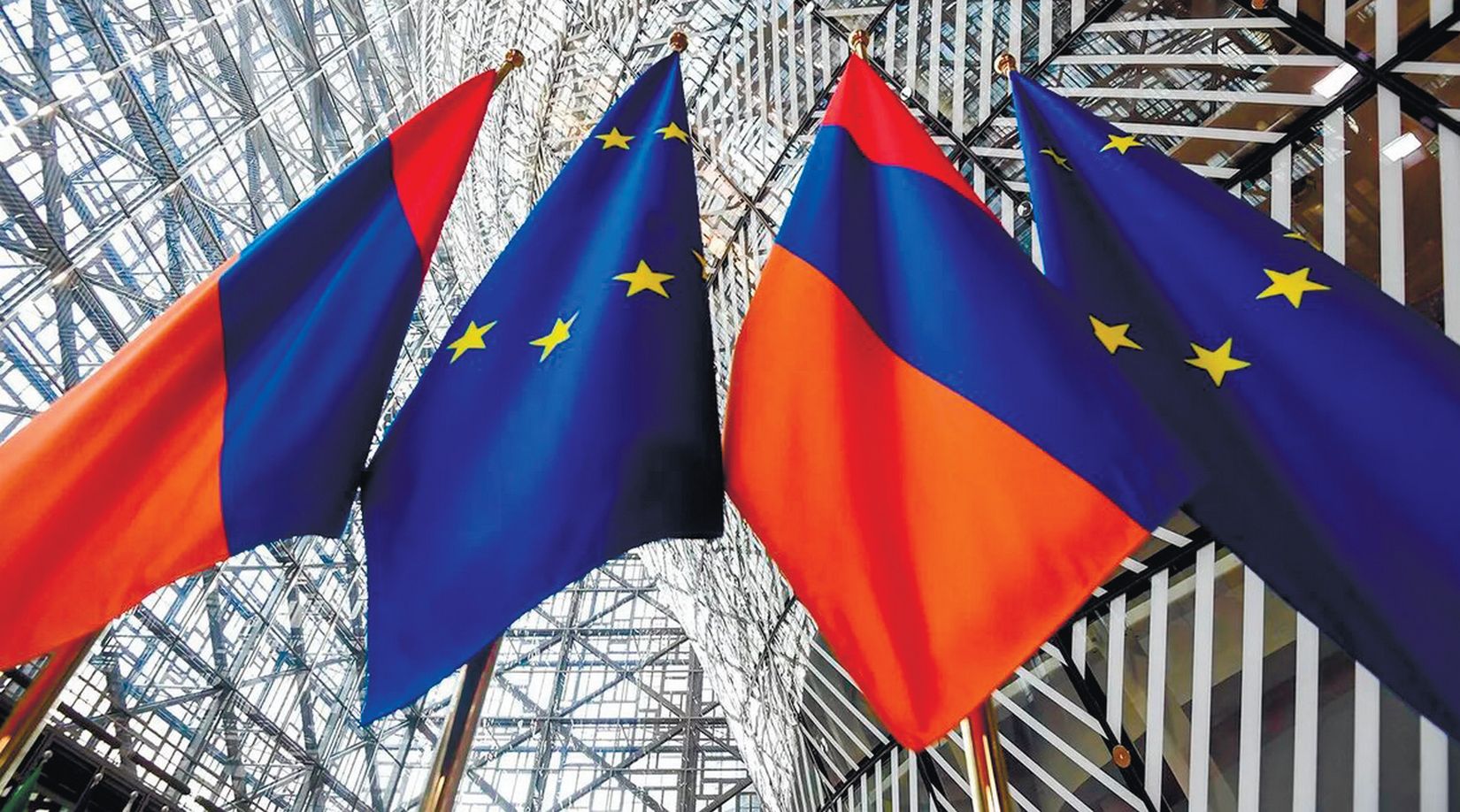
Given Armenia’s membership in the CSTO and the EAEU, as well as a bilateral treaty on military assistance with Russia, the presence of the Armenian ambassador is not surprising. However, Moscow has in recent months openly expressed its dissatisfaction with Yerevan’s behaviour and its apparent tilt toward the West. Yerevan has withheld contributions to the CSTO and ceased participation in its joint drills and activities. Moreover, the Armenian parliament has passed—and the president signed—a law signalling Armenia’s intention to seek European Union membership. In this context, Gurgen Arsenian’s participation in the meeting with Lavrov sends a clear message.
Friendly messages instead of harsh measures
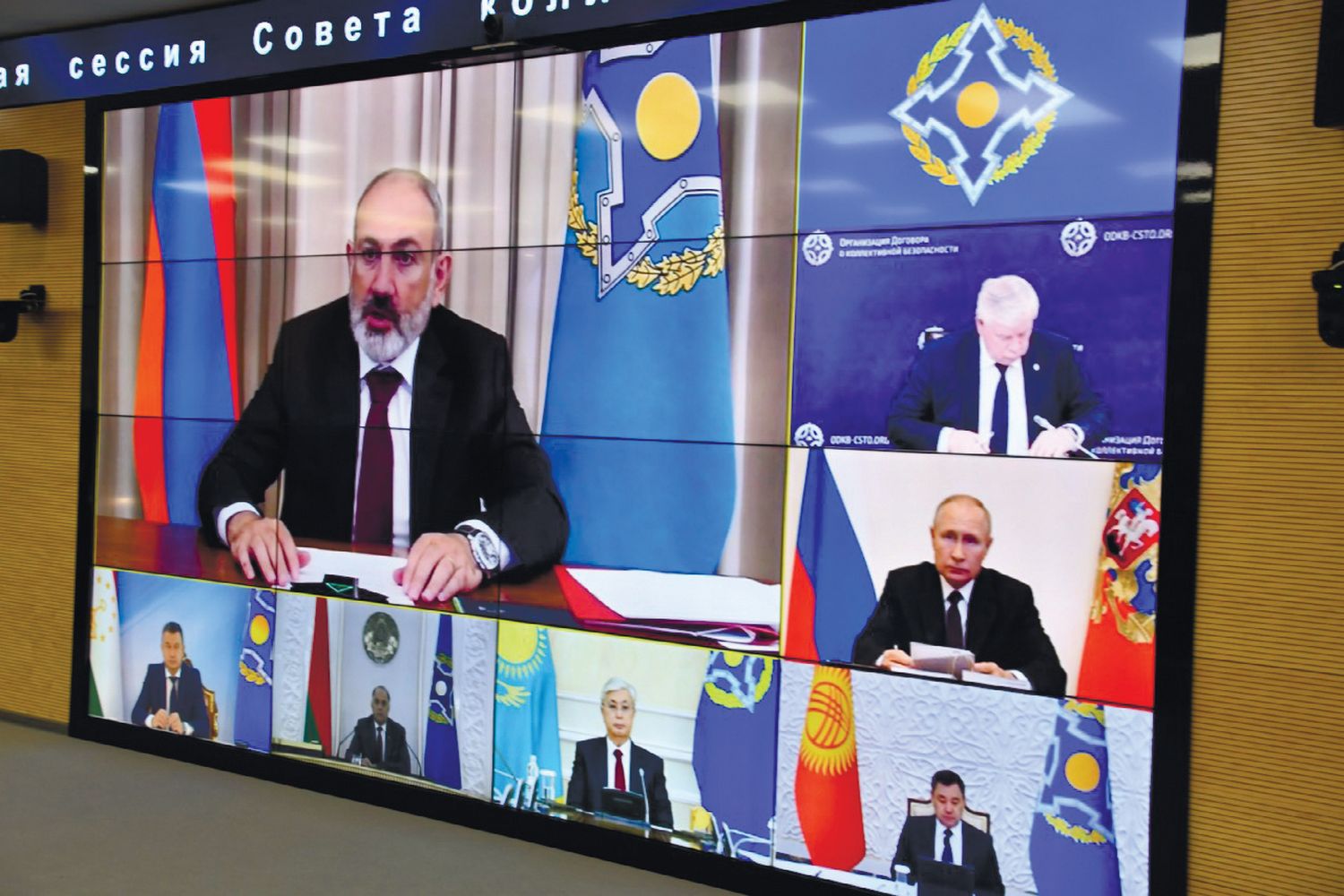
Despite Armenia’s “frozen participation” in the CSTO, the organisation continues to signal readiness to expand cooperation. Russia has also reiterated its openness to engagement with Armenia at any level. Ambassador-at-Large Rodion Miroshnik noted that Moscow would like to deepen and normalise relations within the CSTO framework.
Russia’s response to Armenia’s renewed “European aspirations” has so far been relatively measured. Deputy Foreign Minister Mikhail Galuzin stated, “We are convinced that it is impossible to simultaneously belong to two integration associations with opposite vectors – such as the EAEU and the European Union.” At the same time, he emphasised that the choice rests with Yerevan.
Although Yerevan seems eager to distance itself from the CSTO, it has not questioned its place within the Eurasian Economic Union. That is hardly surprising. Membership in the EAEU grants Armenia access to oil, gas, and uncut diamonds at Russian domestic prices—equating to budgetary gains of several billion dollars. This is not something Yerevan is eager to forgo.
In addition, virtually all of Armenia’s critical infrastructure—railways, mobile communications, electricity and gas networks, and major energy generation facilities—is owned by Moscow, Russian monopolies, or Russian oligarchs.
Following each of Yerevan’s pro-Western gestures, experts have often predicted harsh retaliation from Moscow. Yet so far, such measures have failed to materialise.
Despite the dramatic posturing, Yerevan has not taken tangible steps to reduce its dependence on Russia. The presence of Armenian border guards at two checkpoints—Zvartnots airport and the Iranian border—can hardly be called a shift, especially as Russian border troops (the iconic “green caps”) still guard the frontiers with Iran and Türkiye. Military cooperation agreements remain untouched, and joint land and air defence units with Russia have not been dissolved. This means Pashinyan must still share control of his diminished army with Moscow.
Crucially, it remains unclear whether Armenia truly intends to pivot away from Russia or is merely posturing to extract arms shipments. The ambiguity is deliberate. Armenia needs to rebuild its military after defeats in 2020 and 2023 in Garabagh, with much of the loss concentrated in equipment. But Russia, bogged down in Ukraine, can no longer support its ally as generously. Yerevan's show of indignation and westward leanings are, in part, a manoeuvre to attract Western military assistance.
A good moment to “straighten up”
This ambiguous situation allows Russia to watch and wait as Armenia’s Western flirtation exhausts itself. Given its economic realities, Armenia cannot afford to sever ties with Moscow. It will eventually have to return—cap in hand. Especially now, amid Donald Trump’s political resurgence, the ongoing war in Ukraine, and European preoccupations with tariffs and internal challenges, the West has little time for Armenia’s grievances. In the meantime, Moscow continues—at least rhetorically—to present its eventual return as a face-saving inevitability.
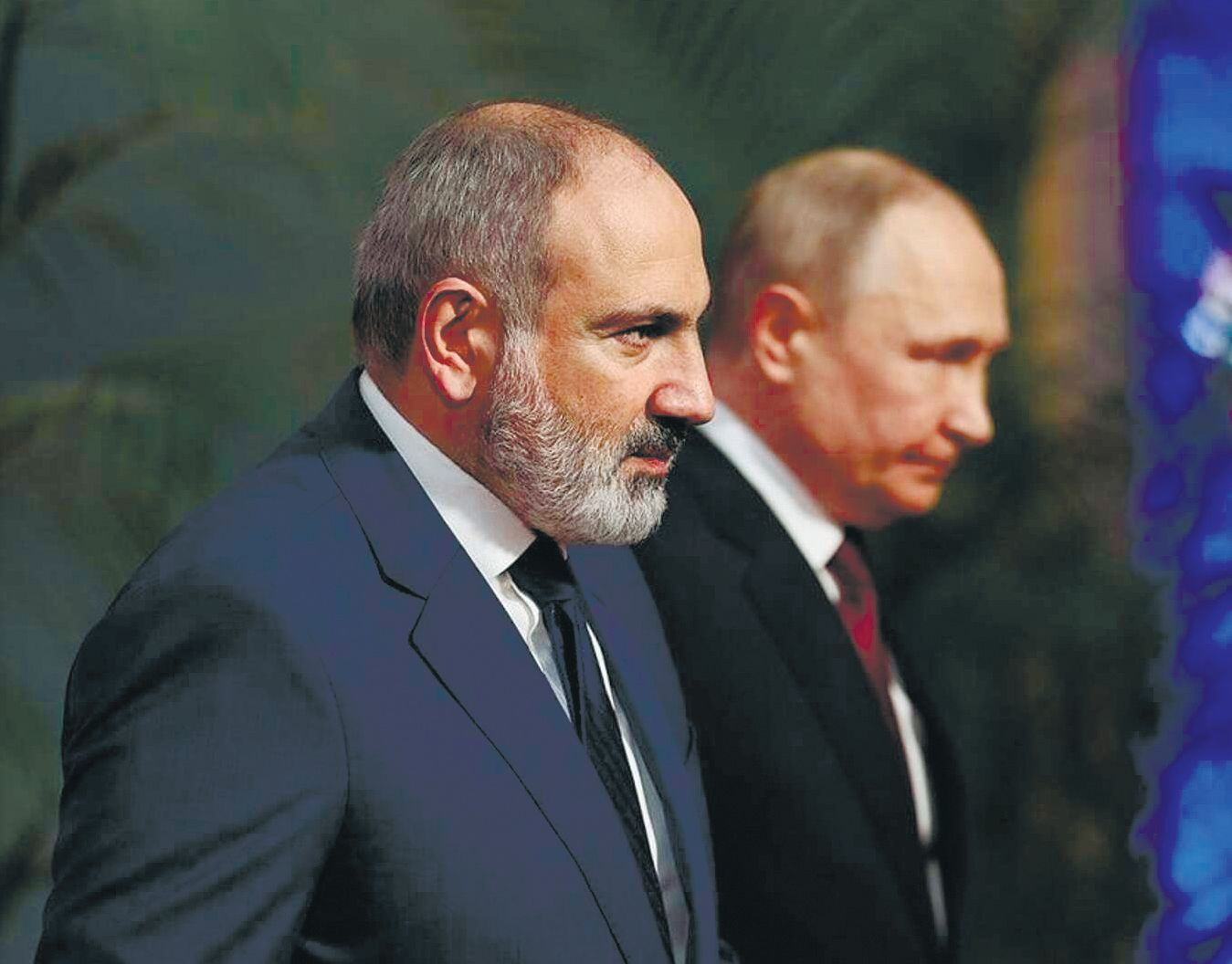
Moscow has grown weary of Pashinyan’s constant political surprises. Under his watch, all levers of Russian influence in Garabagh—including its peacekeepers—have been lost. His pro-Western outbursts are more than a nuisance; they are becoming intolerable. It would not be surprising if the Kremlin were seriously contemplating replacing him with someone more pliable and predictable.
The most surprising thing is that in such a situation, Pashinyan does not have much chance to benefit from the intercession of the West. They listen with pleasure to his stories about Armenia being the crossroads of the world, but would like to see something practical. For example, a reduction in the volume and scale of circumvention of the sanctions imposed on Russia through the territory of Armenia. Or real steps towards withdrawal from Russian integration associations, rather than something that could be won back at the first opportunity. Apparently, France, which continues to keep closer relations with Yerevan than anyone else in Europe, is openly betting on the Dashnaks. And the proximity of this party to the Kremlin does not seem to embarrass Paris.
Ironically, in this precarious moment, Pashinyan can no longer rely on his once-formidable street popularity. Two lost wars and the relinquishment of previously occupied Azerbaijani territories have sapped his political capital.
Armenia’s political scene is unique: Pashinyan—the “main Westerner”—is rapidly losing support. The pro-Western camp lacks a credible alternative. Meanwhile, the generous grant provider and patron of the NGO sector, USAID, is largely inactive. This is an opportune moment for Moscow to field its own candidate against Pashinyan. But who?
Waiting for the devil out of the snuffbox
Until recently, Moscow had pinned its hopes on the remnants of the ousted “Karabakh clan”—notably Robert Kocharian and Serzh Sargsyan. Their history as war criminals did not seem to trouble the Kremlin. But that bet is now considered obsolete. The memory of their criminal regime is still too fresh, and Armenian society clearly has no appetite for their return. Even stale promises of “revenge” have lost their effectiveness. The lessons of the 44-day war and the anti-terror operations in September 2023 are still vivid. What else could Armenia lose if it chose to pursue vengeance?
Moscow understands that calls for revenge bring short-term electoral gains, but these promises are difficult to deliver—even for a country like Russia. And to what end? For the benefit of discredited political clans?
At one point, Ruben Vardanian seemed primed to challenge Pashinyan. He was being groomed as the Armenian Ivanishvili, with Garabagh as his political springboard. But that ambition ended ignominiously in a Baku prison—a far cry from what was likely envisioned.
Arthur Vanetsian, former head of Armenia’s National Security Service and an associate of Ramzan Kadyrov, also held promise. But Vanetsian’s bloc, despite its name—“I Have Honour”—barely crossed the 5% threshold in the last parliamentary elections. Worse still, Moscow has likely not forgiven him for his involvement in the arrest of then-CSTO Secretary General Yuri Khachaturov.
In these conditions, Moscow needs a 'black swan' or, to borrow from Russian idiom, a “devil out of a snuffbox”—a figure without a controversial past or compromising political connections. This could be a Russian oligarch of Armenian origin. Alternatively, a suitable candidate might emerge from the military ranks. Pro-Russian sentiment remains strong in the Armenian army, which has not forgiven Pashinyan for his purges or his attempts to blame the generals for military defeat. While defeat does not offer ideal ground for launching a military-backed candidate, with the right public relations campaign, it is not difficult to craft the image of an “honest general” who, like everyone else, was 'robbed of victory.'
The only question is: what price will Armenia ultimately pay for these illusions?
RECOMMEND:
 265
265