

US-IRAN: INDIRECT DIALOGUE
Any chance for a peaceful solution of the “Iranian issue”?
Author: Natig NAZIMOGHLU
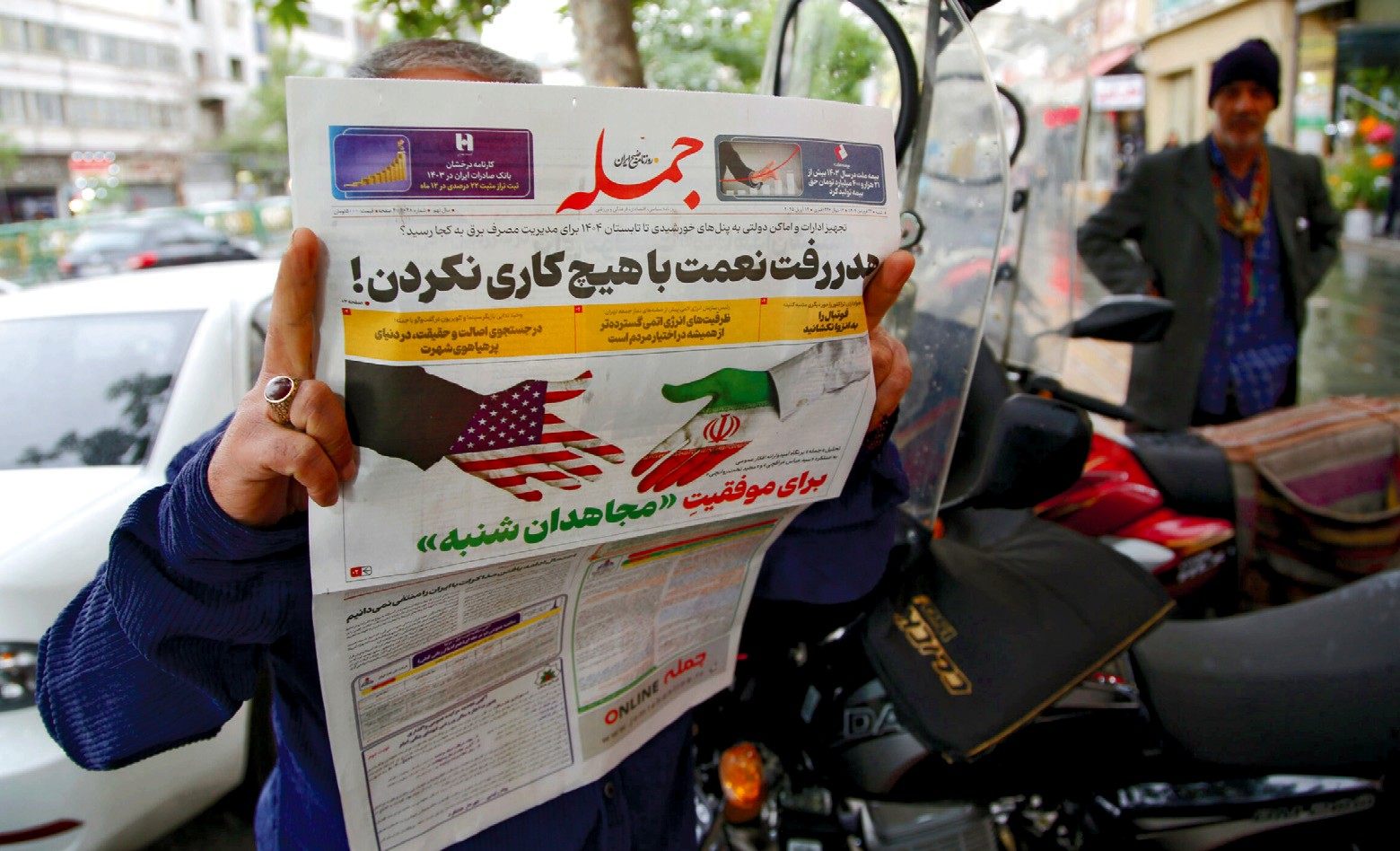
The "Iranian Issue" returns to the forefront of global politics. In Muscat, the capital of Oman, another round of US-Iranian negotiations took place, sparking cautious optimism about progress in the dialogue between Washington and Tehran. However, despite these talks, the threat of military conflict remains unresolved.
Stumbling Blocks
The US-Iran dialogue began after an exchange of messages between US President Donald Trump and Iranian Supreme Leader Ayatollah Ali Khamenei. On 12 April, the first round of indirect US-Iran talks was held in Muscat, followed by a second session on 19 April in Rome, again mediated by Oman. The third round occurred on 26 April, when Iranian Foreign Minister Abbas Araqchi met with US Special Envoy Steve Whitkoff. This round received generally positive assessments. For instance, Omani Foreign Minister Badr al-Busaidi, representing the mediating party, stated that the negotiation process was gaining momentum, enabling "even the unlikely." Meanwhile, Iranian Foreign Ministry spokesman Esmail Baghaei emphasised that the talks were conducted in a "serious atmosphere."
Despite this moderate optimism, no concrete agreements have been reached after three rounds of negotiations. Two major stumbling blocks indicate why compromise remains elusive.
The main goal of the talks is to resolve the issue of Tehran's nuclear programme — the key sticking point. Prior to the third meeting of lead negotiators, expert consultations took place in Muscat. US experts were led by Michael Anton, Director of Political Planning at the State Department; Iran was represented by Deputy Foreign Ministers Majid Takht-Ravanchi and Kazem Gharibabadi. The immediate purpose of these technical consultations was to develop a framework for a potential new "deal" regarding Iran’s nuclear activities.
Back in 2018, during Trump’s first term, the United States withdrew from the Joint Comprehensive Plan of Action (JCPOA), which Iran had concluded with six international negotiators: the US, Russia, the United Kingdom, France, China, and Germany. In response, Iran has taken liberties such as enriching uranium up to 60 percent purity. Although nuclear weapons-grade uranium requires enrichment to around 90 percent, this move has heightened fears about Iran's true intentions. Rafael Grossi, Director of the International Atomic Energy Agency (IAEA), who recently visited Tehran, assessed that Iran is approaching the "nuclear threshold." He stressed that "we are at a very important stage of negotiations" and warned that "time is running out."
With Trump’s return to the White House, reaching a new "nuclear deal" with Iran has become a US foreign policy priority. The administration seeks guarantees that Iran will not produce nuclear weapons. The Iranian side has consistently maintained — and reiterates now — that its nuclear programme is solely aimed at fuel production for civilian nuclear power plants and not weapons development. Consequently, amid ongoing talks, Tehran has declared that “if the only demand of the US is for Iran to renounce possession of nuclear weapons, then this demand is feasible.” However, Foreign Minister Araqchi cautioned that if the US presents “impractical or illogical demands,” problems will ensue.
Tehran expects that if it refuses to abandon its nuclear programme entirely, all international sanctions — especially those imposed by the United States — will be lifted. Yet Iran does not agree to completely halt uranium enrichment, calling this a "red line." According to US Senator Marco Rubio, the United States demands that Iran stop uranium enrichment altogether under any new deal and instead import fuel for its Bushehr nuclear power plant — Iran’s only operational nuclear plant.
Meanwhile, Israel strongly influences developments surrounding Iran’s nuclear programme by insisting on Iran’s total nuclear disarmament. Israeli strategists view Iran’s enrichment of uranium to 60 percent as evidence of its non-peaceful intentions since civilian nuclear energy requires enrichment levels of just about 3.5 percent. Consequently, both Israeli and American hawks have devised plans for military strikes against Iranian nuclear facilities aimed at destroying Tehran’s stockpiles of highly enriched uranium.
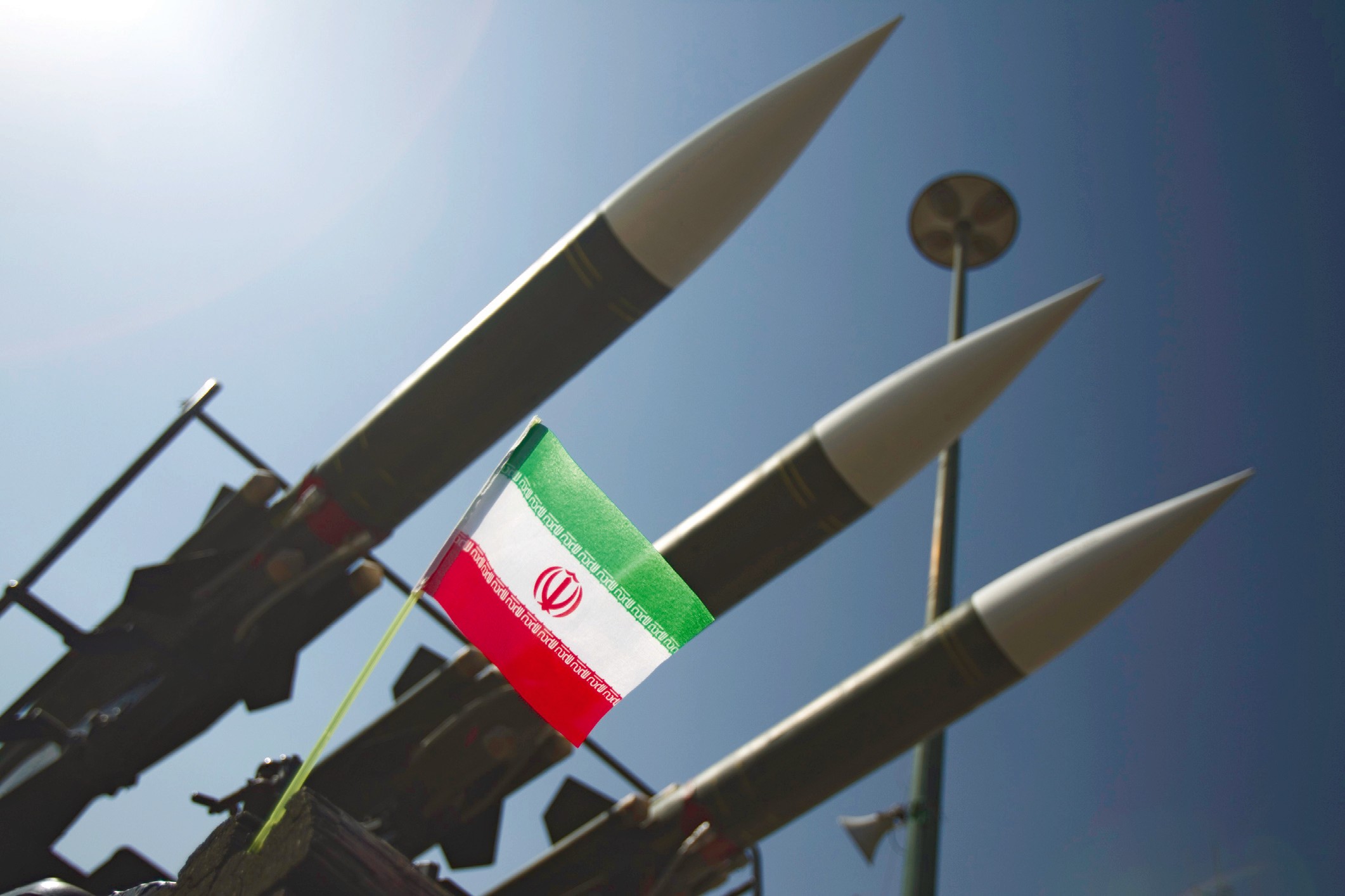
In addition to these core issues lies a second stumbling block: Western and Israeli demands for curbing Iran’s missile programme. The US administration wants any new deal to prevent Iran from developing ballistic missiles capable of carrying nuclear warheads. Serious disagreements over this point reportedly marked the third round of talks between Washington and Tehran.
War or a New Deal?
The pivotal question in resolving the "Iranian problem" is whether these obstacles can be overcome through dialogue — even if indirect.
President Trump appears inclined toward optimism: “The Iran deal is going very well. We’re dealing with Iran at the highest level. I think they want to make a deal and we want to make a deal,” he asserts. He describes it as a “very simple deal” where “the Iranians just can’t have nuclear weapons.”
Simultaneously, Trump issues stark warnings: “If they don’t make an agreement, there will be a bombing.” He also pledges readiness to support Israel militarily “if the situation escalates into an open conflict.”
World media have widely reported the likelihood of an Israeli attack on Iran’s nuclear facilities within the coming months, possibly even weeks. The goal would be to set back Tehran’s nuclear programme “by several months and possibly a year or more.” According to sources cited in these reports, over the past three months—since the start of President Trump’s second term—the Israeli government has presented the US administration with multiple proposals to strike Iranian strategic sites, primarily nuclear, targeted for late spring or summer. These plans reportedly involve a combination of airstrikes and commando ground operations.
Regarding the US stance, The Washington Post reports that military action “to destroy Iran’s potential nuclear capability and prevent it from developing nuclear weapons” enjoys support from National Security Adviser Michael Waltz and Secretary of State Marco Rubio. Conversely, Vice President J.D. Vance and Director of National Intelligence Tulsi Gabbard advocate a more cautious approach, warning of the risk of a large-scale regional war without clear evidence that Iran is actively pursuing nuclear weapons.
President Trump appears to seek a middle ground between these views. His position, as inferred from his statements, supports the negotiation process but maintains the threat of “bombing” should talks fail to produce tangible concessions from Iran. This results in an ambivalent approach to possible Israeli strikes on Iranian nuclear sites. On one hand, Trump denies media allegations that he has previously blocked Israeli strikes; on the other, he admits: “I didn’t stop them. But I didn’t make it convenient for them, because I think we can make a deal without attacking.”
Nevertheless, Trump affirms the United States’ firm readiness to back its key Middle Eastern ally if tensions escalate into open conflict.
While talk of “bombing” currently serves mainly as a threat, many Western and Israeli experts wonder whether it will remain so if US-Iranian negotiations collapse. What will unfold if Washington concludes that Tehran is deliberately dragging out talks, thus undermining any meaningful progress?
These critical questions will be answered in the near future. For now, US tactical calculations appear clear: Iran faces serious geopolitical setbacks—in Syria, Lebanon, and Yemen—and is grappling with difficult socio-economic challenges that risk domestic destabilisation. This context may provide an opportunity to secure significant concessions from Tehran’s ruling “mullahs’ regime” — concessions ensuring transparency over Iran’s nuclear programme for Western and Israeli scrutiny, even if that means framing any new deal so the Iranian authorities do not perceive it as defeat.
Therefore, there is reason to believe that ongoing US-Iranian dialogue could prevent a military resolution of the "Iranian issue" — a scenario that would trigger massive upheaval throughout the Middle East and neighbouring regions.
RECOMMEND:
 219
219

