
THE EVOLUTION OF COMPLEX RELATIONS
Real reasons behind the diplomatic crisis between PACE and Azerbaijan
Author: Namig H. ALIYEV
The relationship between the Parliamentary Assembly of the Council of Europe (PACE) and Azerbaijan has been tense and ambiguous for over two decades. It reflects not only the political and humanitarian situation in the South Caucasus region but also broader geopolitical interests, value orientations, and internal contradictions within the Council of Europe. From the period of the Armenian-Azerbaijani conflict and the occupation of Azerbaijani territories to recent crises linked to the refusal to ratify the Azerbaijani delegation’s mandate, PACE has played a contentious and occasionally biased role in shaping the international agenda concerning Azerbaijan.
The Silence of the Lambs
From the late 1980s to early 1990s, a significant portion of Azerbaijan’s internationally recognised territories remained under the control of Armenian armed groups. Despite this, for nearly two decades after Azerbaijan’s accession to the Council of Europe in 2001, PACE failed to adequately address the consequences of Armenia’s occupation of Azerbaijani lands or adopt consistent resolutions condemning territorial expansion. The Azerbaijani delegation repeatedly raised issues of human rights violations, ethnic cleansing, and discrimination against refugees and internally displaced persons. However, these topics were often dismissed under the pretext of falling outside the Assembly’s jurisdiction. PACE neither demanded Armenia, as the aggressor, fulfil its obligations nor suspended its delegation’s mandate.
As a result, matters related to occupation and the rights of Azerbaijani refugees received insufficient attention and debate on PACE’s platform. Azerbaijan’s attempts to secure international support faced institutional inertia and political resistance from certain delegations, which preferred to avoid engagement with the conflict agenda despite confirmed aggression and blatant violations of international law. This significantly eroded Baku’s trust in European institutions, including PACE.
New Challenges and Diplomatic Confrontation
Following the conclusion of the Second Garabagh War in 2020 and the restoration of Azerbaijan’s territorial integrity, the country anticipated a revision of PACE’s previous approach. Instead, relations deteriorated sharply. In January 2024, the Assembly refused to ratify the credentials of the Azerbaijani delegation, citing the absence of an invitation for PACE observers during presidential elections, allegations of opposition persecution, and the situation concerning Garabagh’s Armenian population.
Azerbaijan suspended its participation in the Assembly in response, accusing PACE of double standards, bias, and interference in domestic affairs. This marked the culmination of accumulated mutual distrust and political divergence.
The current phase of relations is characterised by both a worsening diplomatic climate and efforts by individual states to repair it. In October 2024, Georgia opposed discussing Azerbaijan-related issues in the absence of its delegation. Meanwhile, Türkiye, represented by Parliamentary Speaker Numan Kurtulmus, urged PACE to reconsider its decision to reject Baku’s credentials.
Azerbaijani President Ilham Aliyev stated at the Towards a New World Order international forum that if no progress is made in restoring the delegation’s rights within a year, the country may withdraw from the Council of Europe and the European Court of Human Rights (EctHR): "We have been part of this organisation since 2001, and never before have the credentials of the Azerbaijani delegation been questioned. Precisely because we restored our sovereignty and territorial integrity, PACE stripped us of voting rights months later. At that point, we decided it was better to return home under such conditions. Since then, we have not participated in their sessions."
President Aliyev further emphasised: "Given that we did not participate in the election of ECtHR judges, all rulings by this court are invalid for us. This is our established position, and I take this opportunity to declare: no ECtHR decision holds legal force for Azerbaijan, as we have been deprived of voting rights."
These statements underscore the gravity of the crisis and signal potential further complications in relations with Europe.
The Irresponsibility of Theodorus Rousopoulos and Its Consequences
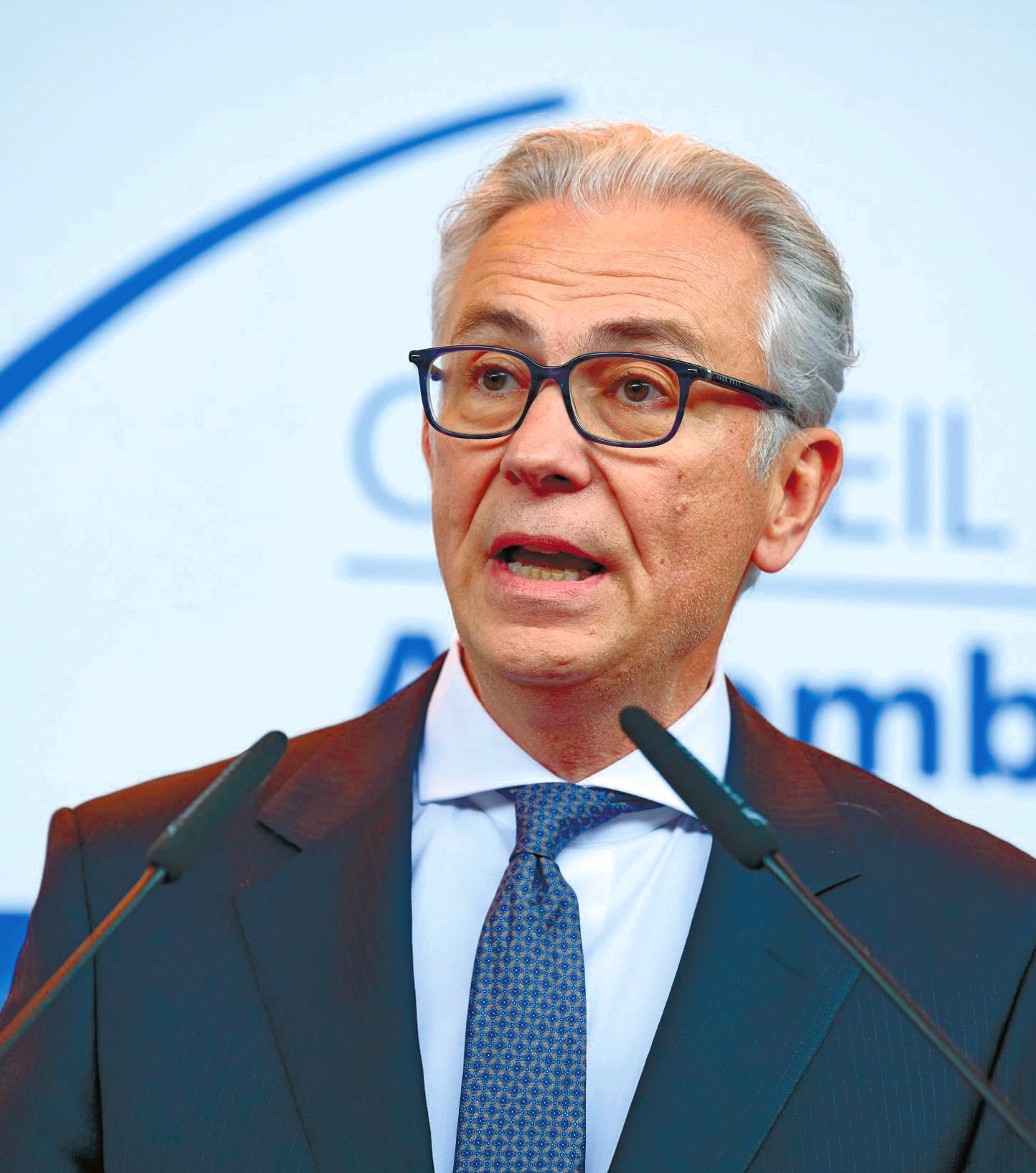
The undiplomatic and inflammatory remarks by PACE President Theodorus Rousopoulos at the recent Antalya Diplomatic Forum provoked a sharp rebuke from Baku. A Foreign Ministry spokesperson condemned Rousopoulos’s statements as "anti-Azerbaijani and politically motivated," noting that his name—alongside 76 PACE members who supported the "unjust and legally contentious" suspension of Azerbaijan’s delegation—had been added to a "blacklist." Perceived as one-sided and accusatory, these comments deepened the trust deficit and cast doubt on PACE’s capacity to act as an impartial mediator in European affairs. Notably, Rousopoulos’s speech occurred immediately before President Aliyev’s meeting with PACE Secretary General Alain Berset, who heads the Council of Europe’s executive structures.
Power Dynamics in PACE and Rapporteurs’ Positions
During PACE’s January 2024 session, 76 of 90 delegates voted to suspend the Azerbaijani delegation’s mandate, while 10 opposed (including nine from Türkiye) and four abstained. These figures reveal both clear opposition and a core group of allies for Azerbaijan.
Restoring the delegation’s credentials remains highly challenging. Despite support from Türkiye, Georgia, and states pursuing pragmatic ties with Baku, resistance from Western European delegations—particularly Scandinavia and Benelux countries—remains strong. Criticisms cited include concerns over Azerbaijan’s domestic policies, human rights record, and humanitarian consequences of military actions.
PACE rapporteurs on Azerbaijan exhibit divergent approaches, ranging from support to criticism. Delegations from states with historical ties to Azerbaijan tend to align with its positions, while those from countries with strained relations often voice disapproval. Some rapporteurs, including Lise Christoffersen, PACE co-rapporteur on Azerbaijan, have faced criticism for one-sidedness and disregarding Baku’s stance. Azerbaijani officials, in turn, accuse the Assembly of promoting biased narratives, fostering racism, and perpetuating "Azerbaijanophobia."
Final stances on reinstating Azerbaijan’s representation will hinge on internal political calculations and foreign policy interests. Reinstatement will likely require protracted negotiations and diplomatic pressure.
Conclusions
PACE-Azerbaijan relations have reached a critical juncture. From silent neglect of occupation issues to direct diplomatic conflict, their evolution exposes profound contradictions in how state rights and interests are perceived within the Council of Europe.
Future developments will depend on multiple factors: PACE’s willingness to reform internally and embrace diverse viewpoints, Azerbaijan’s ability to forge new dialogue formats with European institutions, and broader shifts in the geopolitical landscape of Europe and the South Caucasus.
The central question remains: Will this crisis lead to Azerbaijan’s exit from the Council of Europe, or will it catalyse a reimagining of East-West cooperation within European structures?
RECOMMEND:
 229
229