

STOP THE FIRE!
Is a significant diplomatic breakthrough between Ukraine and Russia possible?
Author: Natig NAZIMOGHLU
The prospect of long-awaited peace is becoming a tangible possibility in Ukraine. The war-torn country now has an opportunity for a swift ceasefire. This opportunity arose from direct negotiations between Ukraine and Russia in Istanbul on 15-16 May, an idea supported by major interested parties, namely the Western power centres—the US and the EU. However, the warring sides, each defending diametrically opposed positions and viewing the conflict as existential, must be able to open a path to peace.
Prior to the scheduled Russo-Ukrainian talks in Ankara, the presidents of Türkiye and Ukraine, Recep Tayyip Erdogan and Vladimir Zelensky, respectively, met for approximately three hours. Following the meeting, Zelensky announced that Ukraine's delegation to Istanbul would be led by Defence Minister Rustem Umerov. He indicated that Ukraine is awaiting "clear signals from colleagues in the US and Türkiye regarding the timing and date of the negotiations."
Meanwhile, the anticipated arrival of Russian President Vladimir Putin in Istanbul did not materialise. A delegation from Moscow, led by Kremlin aide Vladimir Medinsky, was dispatched to Dolmabahçe Palace for the talks. US President Donald Trump stated that he had not been disappointed by the level of the Russian delegation at the Ukraine talks in Turkey. He has stated that he will not engage in discussions on resolving the Ukrainian conflict until he has met with Putin. Meanwhile, President Erdogan's administration has declared its readiness to host both Ukrainian and Russian presidents for talks, should they wish to do so.
Bloody April and a three-day truce
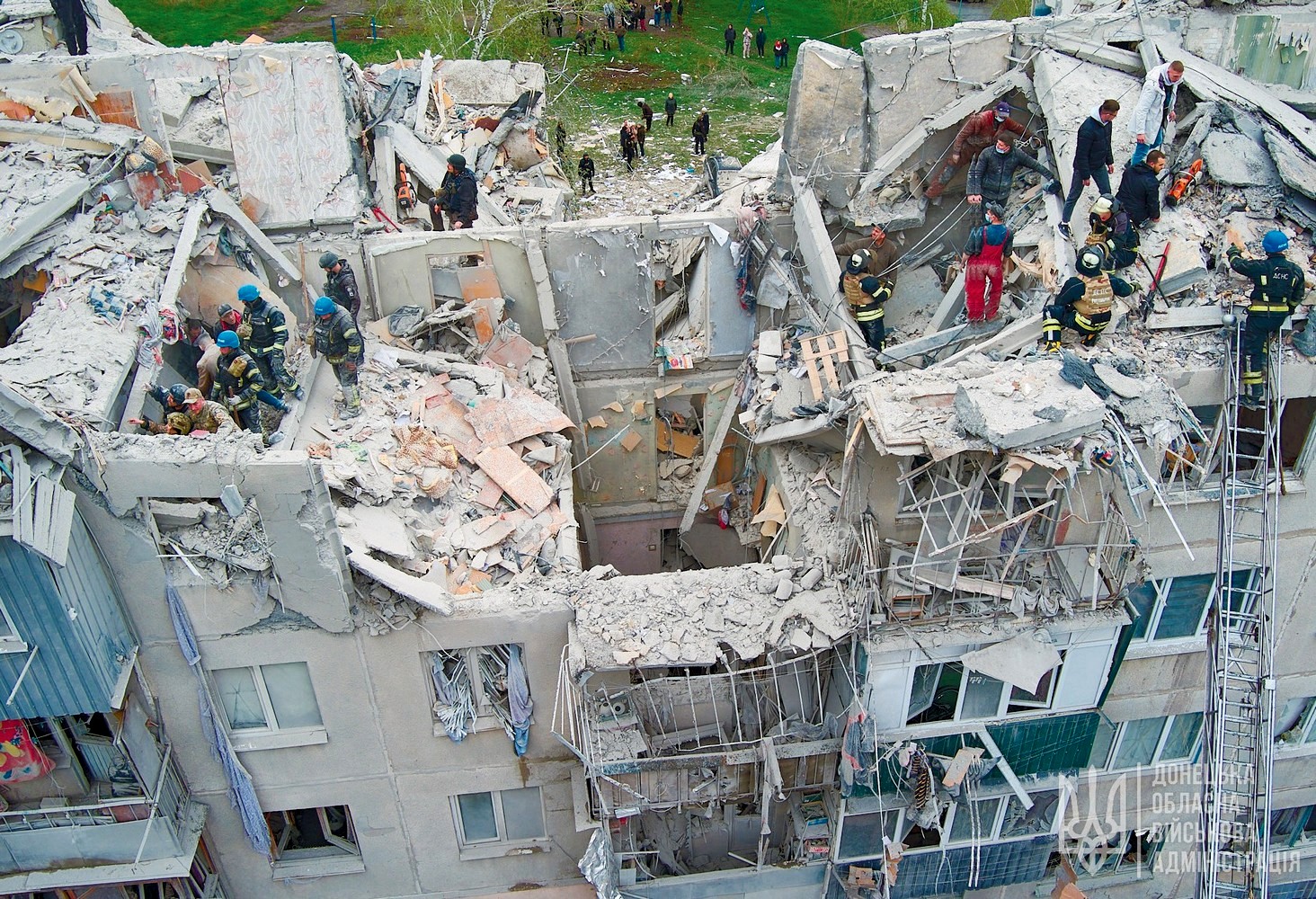
Since April 2025, the war, which has now lasted more than three years, has intensified, resulting in civilian casualties. Several Ukrainian cities, including Krivoy Rog, Sumy, Dnepr, Zaporozhye, Kharkov, and the capital Kiev, have been subjected to devastating ballistic missile strikes by Russia. According to the UN Monitoring Mission's latest report on human rights in Ukraine, at least 209 people were killed and 1,146 injured in these attacks. The incident resulted in significant casualties, including many children: at least 19 fatalities and 78 injuries, representing the highest confirmed monthly toll of child casualties since June 2022. Such patterns of Russian attacks on major Ukrainian cities continued into early May.
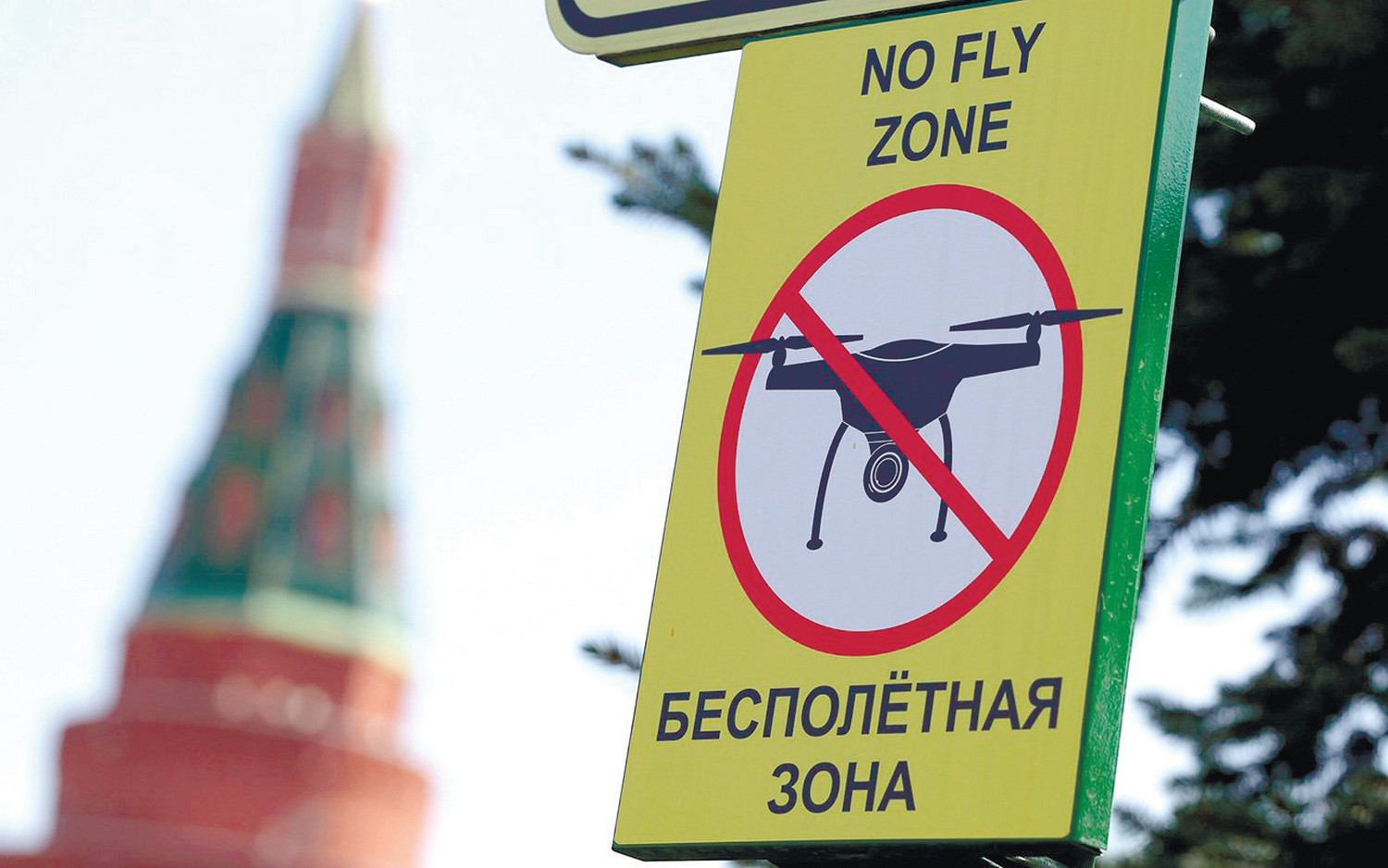
In response, Ukraine has increased its use of drones to target strategic locations within Russia. The most significant drone attack on Russian cities, including Moscow, took place on 6-7 May. It is estimated that over 500 drones were used, which resulted in a significant decrease in civilian air traffic in Russia's European region.
As hostilities increased, there were growing doubts about the chances of success for mediation efforts by the new US administration under President Donald Trump. The White House has made it clear that it is not satisfied with the lack of willingness shown by both sides to make the necessary concessions for peace. Moscow demands the recognition of all Ukrainian territories "constitutionally" incorporated into Russia, including not only occupied Crimea and parts of Donetsk, Luhansk, Zaporozhye, and Kherson regions, but also Ukrainian territories not controlled by the Russian army. Kiev has accepted de facto recognition of current frontline realities, but has rejected several US proposals that challenge Ukraine's territorial integrity or could have irreparable consequences.
The key issues include Ukraine's renunciation of Crimea and the creation of a demilitarised zone, requiring both Ukrainian and Russian forces to withdraw 15 km from the current contact line. President Zelensky emphasised the potential risks involved, citing the example of Kherson: "From which line should we proceed with the count – from the border or from the contact line? If we consider a radius of 15 km, the issue of Kherson becomes pertinent. This suggests that there will be no military presence from our side in Kherson. The absence of military personnel in Kherson precludes our ability to assert our authority in that region."
Meanwhile, a significant development in US-Ukrainian cooperation with regard to conflict resolution is an agreement granting the US access to Ukraine's natural resources. While the Trump administration previously linked this agreement to Ukraine repaying military and financial aid from the US, the agreement text makes no mention of repayment. This may be due to ongoing disagreements between Washington and Kiev: Kiev has expressed concerns that Trump may have exaggerated the value of American aid at $350 billion, and that the Biden administration's assistance was provided on a grant basis. The document does acknowledge "significant financial and material support that the American people provided Ukraine in defending itself from full-scale Russian invasion." This is a noteworthy development, as it represents a shift in the Trump administration's previous stance of refraining from characterising Russian actions as "aggression". Washington views this agreement as a demonstration of the US's commitment to its partnership with Ukraine, and as a clear indication to Russia that the US has its own interests and is committed to supporting Ukraine's successful development.
The event that directly led to the possibility of a ceasefire was Putin's announcement of a three-day truce (May 8-10) to commemorate the 80th anniversary of victory over Nazi Germany. This decision was primarily to ensure safety during the celebrations, including the military parade in Moscow attended by leaders from several countries. Consequently, Ukraine's rejection of Russia's proposal was to be expected.
"It appears to lack seriousness. The objective is to create a soft atmosphere for Putin's exit from isolation on 9 May, so that all those leaders and friends who will come to Red Square feel comfortable. The point is they attack us until May 7, then create two or three comfortable days for themselves on May 7, then attack us again with missiles on May 11," said President Zelensky.
However, Ukraine responded with a counterproposal for an immediate and comprehensive ceasefire. Russia's refusal has led to concerns about the potential for escalation on Victory Day, including the possibility of Ukrainian strikes on Moscow's parade and Russian retaliation in Kiev.
Notwithstanding, the holiday period passed relatively peacefully. There was a marked decrease in the intensity of hostilities, despite mutual accusations of widespread ceasefire violations during the truce. On 10 May, there was a notable increase in the likelihood of a longer ceasefire and, ultimately, the cessation of hostilities.
After May 9
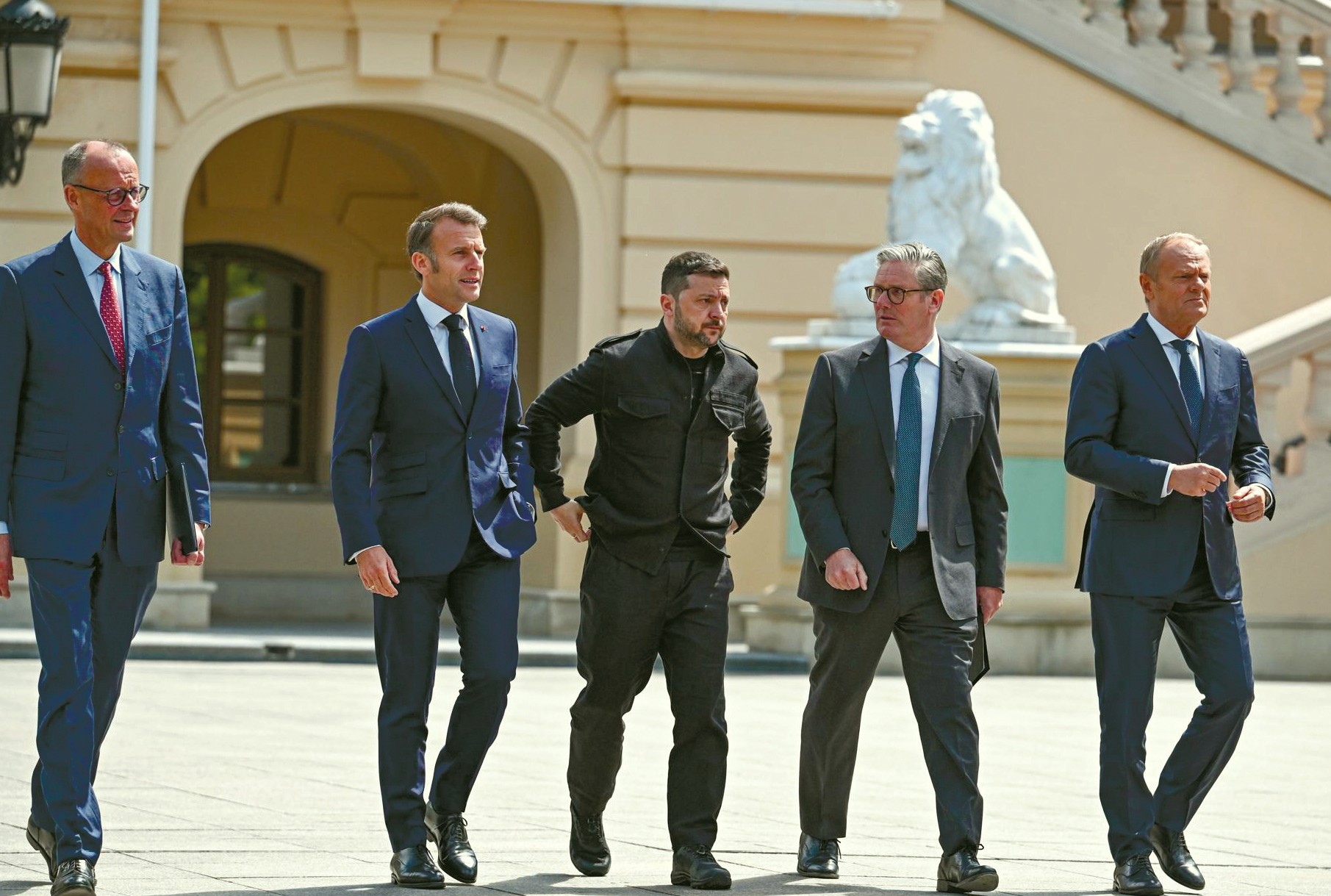
On 10 May, UK Prime Minister Keir Starmer, French President Emmanuel Macron, German Chancellor Friedrich Merz, and Polish Prime Minister Donald Tusk visited Kiev and issued a joint statement in support of a 30-day ceasefire, to be implemented from 12 May, with the aim of creating space for diplomacy. The statement read as follows: During this period, diplomatic efforts should concentrate on establishing the security, political and humanitarian foundations of peace.
The four European leaders, who are collectively known as "the coalition of the willing", have urged Russia "to cease hindering efforts aimed at securing lasting peace". They emphasised that "an unconditional ceasefire cannot be constrained by any stipulations. If Russia were to propose such conditions, it should be viewed as an attempt to prolong the war and hinder diplomatic efforts." They noted that a comprehensive ceasefire "requires effective monitoring that can be successfully implemented in close coordination with the United States." The statement emphasised "the critical importance of strengthening Ukraine's defence and security forces as the main guarantee of its sovereignty and security." Security guarantee forces should also be included in this framework. Should Moscow refuse a full unconditional ceasefire, it is threatened with harsher sanctions on its banking and energy sectors.
Following this meeting, President Zelensky participated in a telephone conversation with US President Trump and European leaders. Following this, the Ukrainian Foreign Minister Andriy Sibiga stated that "Ukraine and all allies are ready for a full unconditional ceasefire on land, air and sea for a minimum of 30 days, to commence on Monday, 12 May." This confirmed US support for the truce.
It is worth noting that at the same time as the press conference of the European leaders in Kyiv, the US Special Representative for Ukraine, Keith Kellogg, made the following declaration: A comprehensive ceasefire, including all aspects of warfare, will be initiated. This will last for 30 days and will be the first step in ending the war in Europe, which is the largest and longest war since World War II.
Simultaneously, it was announced that Washington has approved the transfer of 100 Patriot air defence missiles and 125 long-range rockets to Ukraine. The New York Times has reminded its readers that these weapons are manufactured in the US and cannot be exported without the approval of the American government, even if they are owned by another state. Consequently, Trump – who had previously criticised US arms supplies to Ukraine – is now leveraging this leverage as pressure on Russia. This is particularly relevant at this crucial moment, which demands Moscow's agreement to a comprehensive ceasefire.
On that evening, Dmitry Peskov, the Kremlin's official representative, stated that Russia would "give consideration" to Ukraine's and its Western allies' 30-day ceasefire proposal, characterising it as "a new development".
On the night of May 11, Putin made an appearance before the press, during which he proposed the resumption of direct negotiations with Kiev on May 15 in Istanbul — the same location where talks were halted at the end of 2022. However, Putin did not explicitly state that he was in favour of an immediate ceasefire; he merely stated: "There is a possibility that a new truce could be agreed upon during the course of the negotiations."
Russia has agreed to talks without preconditions. However, it remains unwilling to accept a ceasefire until it has met certain conditions. Putin has characterised Moscow's position as necessitating the 'elimination of the root cause of the conflict'. In Kremlin terms, this refers to Ukraine's pro-Western orientation and its aspirations to join NATO and the EU, and it demands that Ukraine maintain a neutral status.
It is evident that, in addition to geopolitical considerations, territorial issues play a pivotal role in maintaining peace. Moscow has rejected the suggestion made by Washington that recognition should be limited to Crimea and the parts of Ukraine that it currently controls. Furthermore, it is in direct opposition to Kiev's demand for full territorial integrity.
Moscow's refusal to relinquish its claims over five Ukrainian regions (Crimea, Donetsk, Luhansk, Zaporozhye, Kherson) has caused discontent not only with Ukraine and its European allies, but also with the US, which is willing to compromise with Russia. US Vice President J.D. Vance has described Moscow's demands as "too large", adding that "Russia cannot expect territories it has not even captured yet".
Western powers have expressed concerns that Russia may be using negotiations as a means to conceal ongoing offensive operations and to avoid immediate cessation of hostilities. These concerns stem from the perception that Russia seeks to assert control over regions of Ukraine that have not yet been occupied. However, President Trump took the decision to "hold Russia to its word" and urged Ukraine to accept President Putin's offer to resume Istanbul talks on May 15. Following this, Zelensky made the following declaration: "I will be in Türkiye this Thursday, May 15, expecting Putin to be there in person. It is to be hoped that Putin will not seek to justify the non-occurrence of events by finding reasons for them. We are prepared to initiate dialogue to bring an end to the current state of hostilities. Thursday, Türkiye." Trump's position was further elaborated upon, with his explicit support for the Zelensky-Putin meeting, and his personal involvement in the Istanbul talks.
However, Putin's agreement for direct talks with Kiev did not imply a meeting with Zelensky. This confirms that although Ukraine has agreed to direct negotiations, even without Russia agreeing to halt hostilities, real concessions must come from Russia—not just hypothetical ones—and regardless of whether these happen at heads-of-state or lower official levels.
It is only through such concessions that the path to peace can be forged, and thus an answer can be found as to whether Russian-Ukrainian peace is possible.
At this time, the most optimistic indication is from Turkish President Recep Tayyip Erdogan, who, following discussions with both Russian and Ukrainian leaders, has expressed hope for long-term peace from the negotiations taking place in Istanbul.
RECOMMEND:
 261
261

