

NO PEACE, NO WAR
The international response revealed that India had underestimated both its adversaries and their allies in its confrontation with Pakistan
Author: NURANI
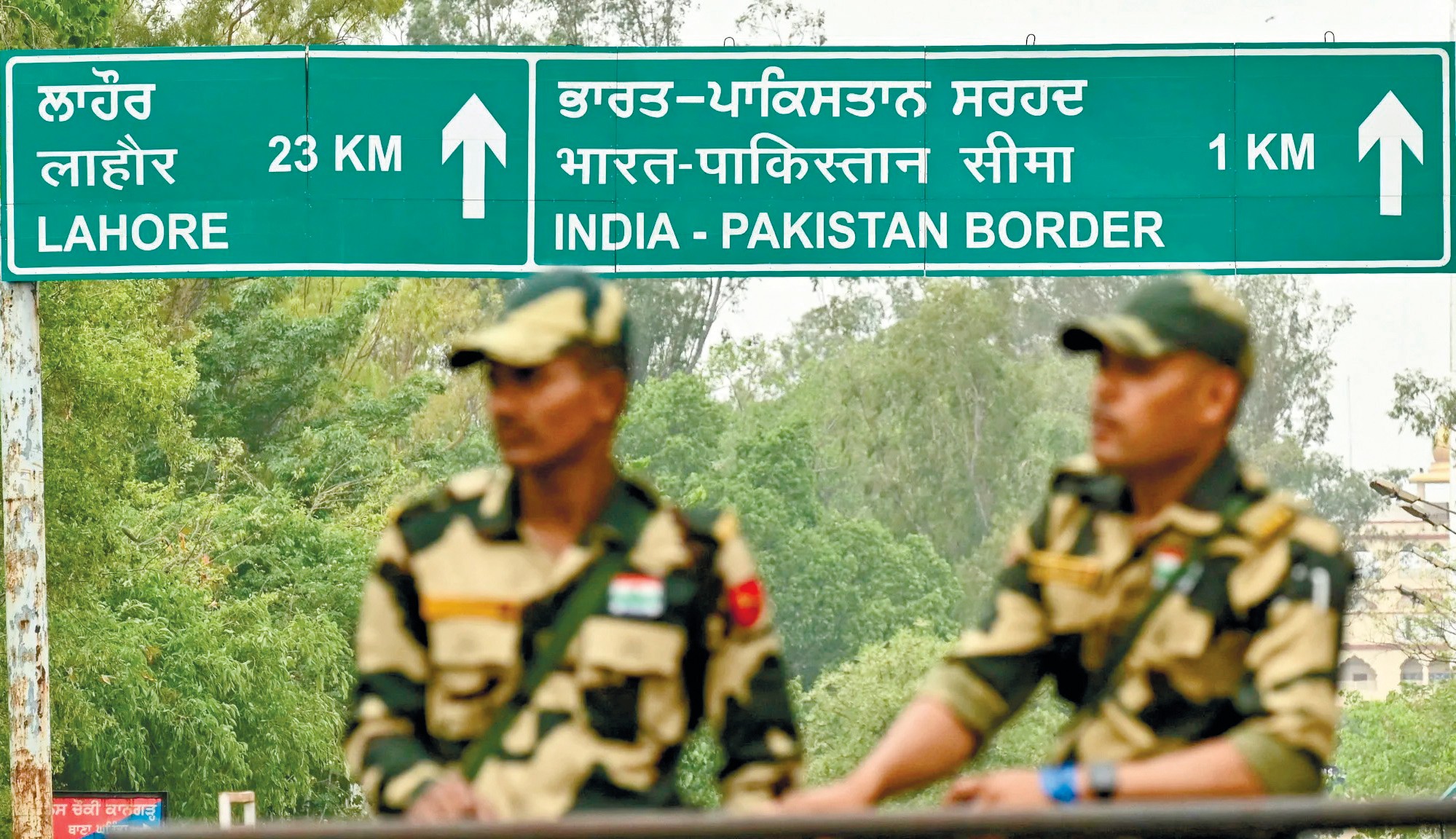
The term "hot spot" entered political vocabulary in the second half of the twentieth century, denoting simmering regional conflicts that periodically "flared up". For decades, one such hot spot has been the border between India and Pakistan in Kashmir. This region has once again drawn the anxious attention not only of regional players but also of the global elite. The irony is stark: two nuclear powers stood on the brink of full-scale war. Neither Islamabad nor New Delhi was willing to back down.
But now, it seems, there is some reason for cautious relief. US President Donald Trump reaffirmed his image as a negotiator and peacemaker by securing a reduction in tensions between India and Pakistan. Following a period of heightened strain—marked by missile exchanges, air battles, and inflammatory rhetoric—on May 10, 2025, the US President announced via social media: "After a long night of talks mediated by the United States, I am pleased to announce that India and Pakistan have agreed to a full and immediate ceasefire. Congratulations to both countries on using common sense and great intelligence. Thank you for your attention to this matter!"
US Secretary of State Marco Rubio added: "Over the past 48 hours, Vice President Vance and I have engaged with senior Indian and Pakistani officials, including Prime Ministers Narendra Modi and Shehbaz Sharif, External Affairs Minister Subrahmanyam Jaishankar, Chief of Army Staff Asim Munir, and National Security Advisors Ajit Doval and Asim Malik. I am pleased to announce the Governments of India and Pakistan have agreed to an immediate ceasefire and to start talks on a broad set of issues at a neutral site." In short, the feared large-scale war did not materialise. But for how long?
"A little victorious war"
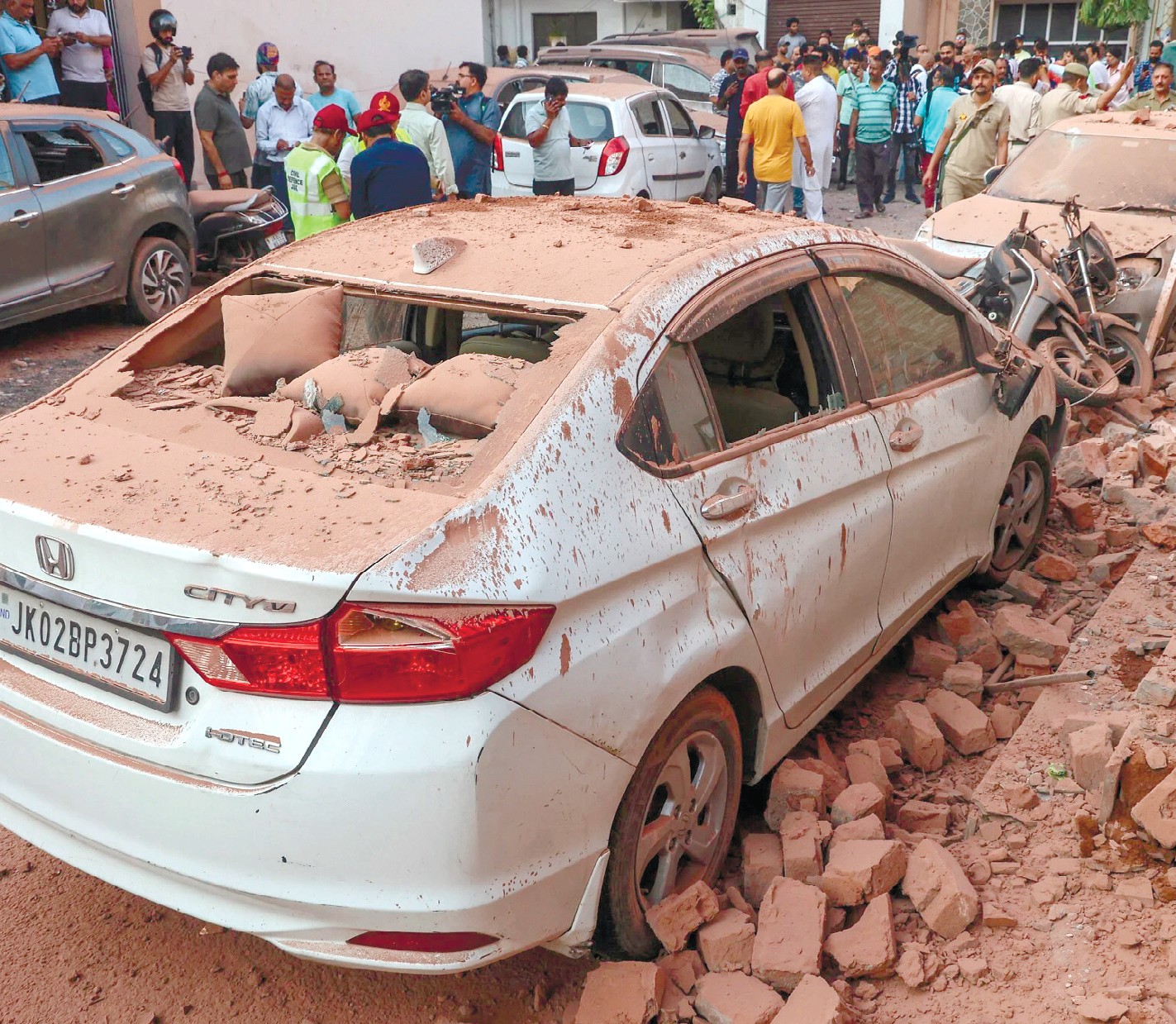
Perhaps the answer lies in the events that marked the outset of this confrontation. Even the most superficial reading of the news left little doubt: India was pursuing a policy of calculated escalation. It was New Delhi that transformed the investigation of a terrorist attack on tourists in Kashmir into a direct conflict with Pakistan. From there, India began amassing troops at the border, issuing threats, placing its army on high alert, and ultimately launching a missile strike on Pakistani territory. According to Pakistani authorities, the targets included mosques—structures that in no way constitute legitimate military objectives. Lieutenant General Ahmad Sharif of the Pakistan Armed Forces stated that India's strikes targeted civilians, resulting in more than 30 deaths.
Pakistan retaliated by striking Indian military installations in Kashmir and Punjab. While both sides have remained tight-lipped about the full extent of the damage, there is little doubt that the Indian army, massed along the border, suffered significant losses. India also sustained what can only be described as a severe blow to its image.
The next phase saw the Indian Air Force suffer a major defeat. Military analysts, including those at CNN, reported that the aerial battle along the India-Pakistan border involved a record number of aircraft—125 in total. Pakistan succeeded in downing five Indian fighter jets, including a French-made Rafale. This marked a historic first, and while a humiliating outcome for New Delhi, it was arguably even more troubling for Paris. The French authorities, already grappling with challenges in marketing their fighter jets globally, now face intensified scrutiny. Meanwhile, the share prices of Chinese missile manufacturers—whose technology enabled Pakistan to down the Rafale—have soared.
India's escalation was too aggressive, too overt—reminiscent of regimes seeking a "small victorious war", with only a pretext required to justify it. Whether a terrorist incident, a television programme broadcast from Pakistan, or even a foiled attack, any excuse would suffice. India likely assessed its population of over a billion, compared it with Pakistan's mobilisation potential, counted tanks and fighter jets, and assumed that victory in a brief, decisive war was assured. Modi’s government sought to consolidate its position through military triumph. In recent years, India has made substantial strides in boosting its military-industrial complex and expanding its armed forces. It seemed determined to put this machinery to the test—above all, against its long-standing adversary, Pakistan.
Another factor must be considered. Until the mid-twentieth century, the territories now comprising India, Pakistan and Bangladesh formed "British India". The fact that decolonisation led to Pakistan's independence not only from London but from New Delhi has remained a bitter pill for many in India.
Pakistan, for its part, has always stressed that it sought independence not only from Britain but also from India. The same sentiments can be seen in Moscow’s attitude towards Ukraine or in Tehran’s stance on Azerbaijan. While the Indian National Congress previously exercised a measure of restraint, the current ruling party under Hindu nationalist Narendra Modi takes a markedly harder line, treating Muslims with open disregard—both within and beyond India’s borders. Analysts have noted that the ruling party built much of its electoral success on anti-Muslim rhetoric and policies.
Evidently, New Delhi was forced to reconsider as events unfolded. Pakistan, rashly perceived as a "soft target", turned out to be anything but. Real war did not resemble the Bollywood fantasies where a lone hero dispatches hundreds of foes. The international reaction, too, must have been sobering.
What Narendra Modi didn’t consider
From the outset of the crisis, Azerbaijan firmly sided with Pakistan. Baku and Islamabad enjoy long-standing, fraternal relations rooted in genuine alliance. Pakistan was among the first states to recognise Azerbaijan’s independence and has refused to establish diplomatic relations with Armenia in response to its aggression against Azerbaijan. Pakistan also offered unwavering support to Baku during the Second Garabagh War.
Azerbaijan, at the highest levels, has reiterated its support for Pakistan’s position on the status of Jammu and Kashmir. Unsurprisingly, Azerbaijani authorities and public opinion are firmly aligned with Islamabad. India, in retaliation, has declared a boycott of Azerbaijani goods and threatened to bar its tourists from visiting the country.
Türkiye has also thrown its support behind Pakistan. Meetings and discussions are already underway between the defence ministers and chiefs of general staff of both countries, and Turkish warships have reportedly been deployed to Pakistani shores. Türkiye, with NATO’s second largest army, is not a nation whose stance can be ignored lightly.
Bangladesh’s position has also proved unexpectedly discomfiting for Modi. Historically, India maintained close ties with Dhaka, and the two capitals cooperated closely in opposing Islamabad. This continued until the departure of former Bangladeshi Prime Minister Sheikh Hasina. Under her successor, Nobel laureate Muhammad Yunus, Bangladesh has adopted an ostensibly neutral stance on Jammu and Kashmir. However, in practice, Dhaka has begun gravitating towards Islamabad—much to New Delhi’s dismay. Experts attribute this shift largely to the Modi cabinet’s anti-Muslim agenda.
Adding to India’s troubles, Pakistan secured support from Beijing. Within days of the crisis, Chinese Foreign Minister Wang Yi spoke with his Pakistani counterpart Ishaq Dar. As China’s Foreign Ministry quoted him: "As an ironclad friend and an all-weather strategic cooperative partner, China fully understands Pakistan’s legitimate security concerns and supports Pakistan in safeguarding its sovereignty and security interests."
Sino-Indian relations are already tense. China has not forgotten that India granted asylum to the leader of the Tibetan separatist movement, the Dalai Lama. His current base is in the Indian city of Dharamshala—dismissed by Jawaharlal Nehru as a "spy's nest".
Beijing has additional stakes in the Kashmir dispute. A portion of Kashmir—Aksai Chin—is under Chinese control but claimed by India. Pakistan’s Azad Kashmir is similarly contested. Through this region runs a vital road linking Tibet to Xinjiang. The China-Pakistan Economic Corridor—a critical element of Beijing’s Belt and Road Initiative—passes through Gilgit-Baltistan, the Pakistani-administered part of Kashmir. China’s support for Pakistan is, therefore, both strategic and economic.
Regional rivalry plays a further role. India aspires to elevate its global standing, secure a permanent seat on the UN Security Council, and act as a major international player. But China seems determined to remind New Delhi who the true superpower is. Collectively, these dynamics appear to have forced Narendra Modi to seize upon Trump’s initiative and de-escalate the conflict—a conflict that turned out to be anything but a "small victorious war".
RECOMMEND:
 244
244

