
THE RETURN OF THE PRODIGAL OUTPOST
The Russian Foreign Minister's visit to Yerevan was marked by "interesting" statements
Author: NURANI
Throughout the history of world painting, several works have acquired ironic, double-edged interpretations over time. Repin’s Burlaki on the Volga, Lev Solovyov’s Wrong Road, even Leonardo da Vinci’s Mona Lisa — the list is long. Rembrandt’s The Return of the Prodigal Son is undoubtedly among them.
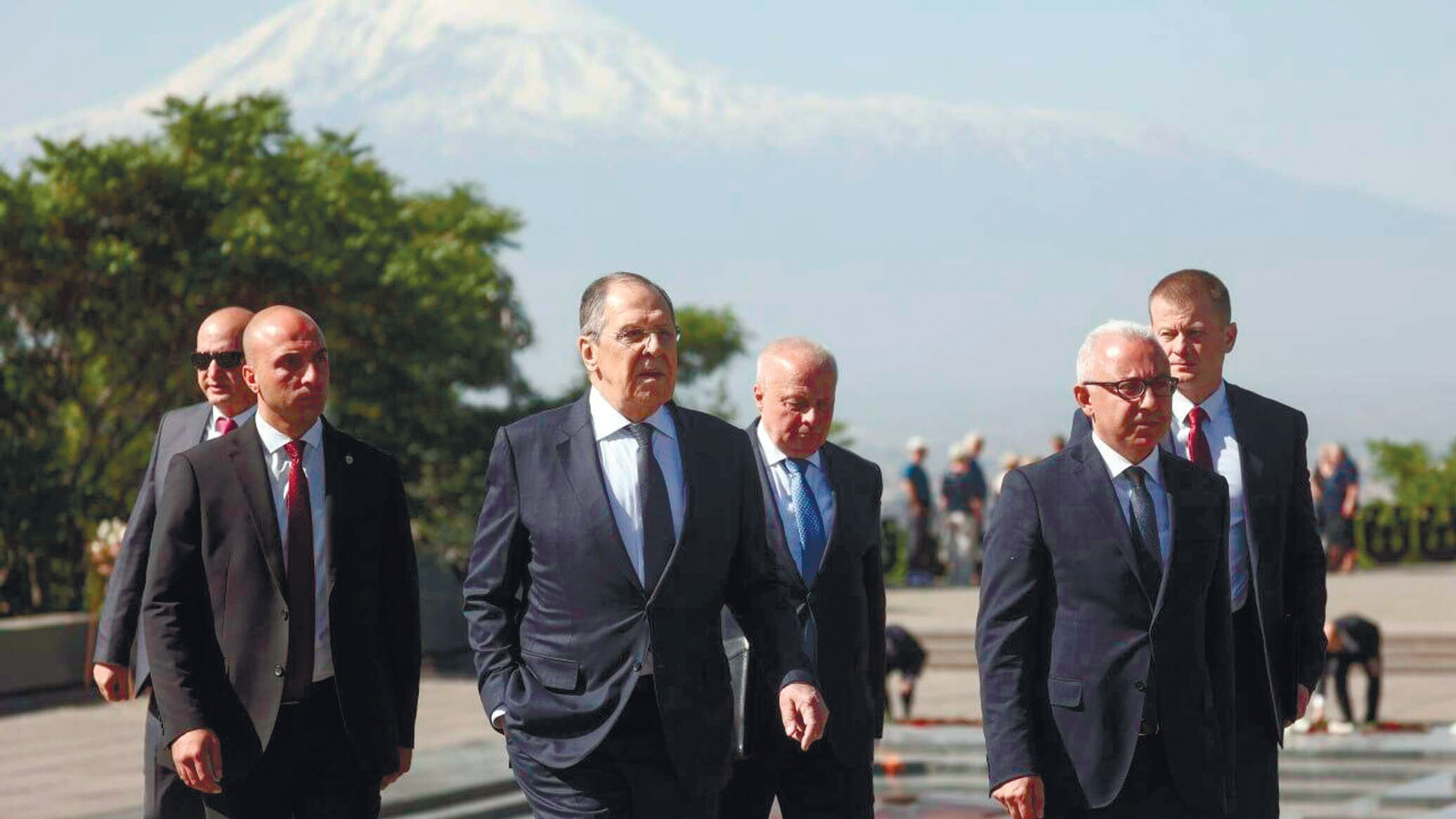
The biblical theme of that canvas now appears to be playing out in the theatre of geopolitics. The recent visit of Russian Foreign Minister Sergei Lavrov to Armenia signalled Yerevan’s return to Moscow’s political orbit.
Armenia walks back on EU membership aspirations
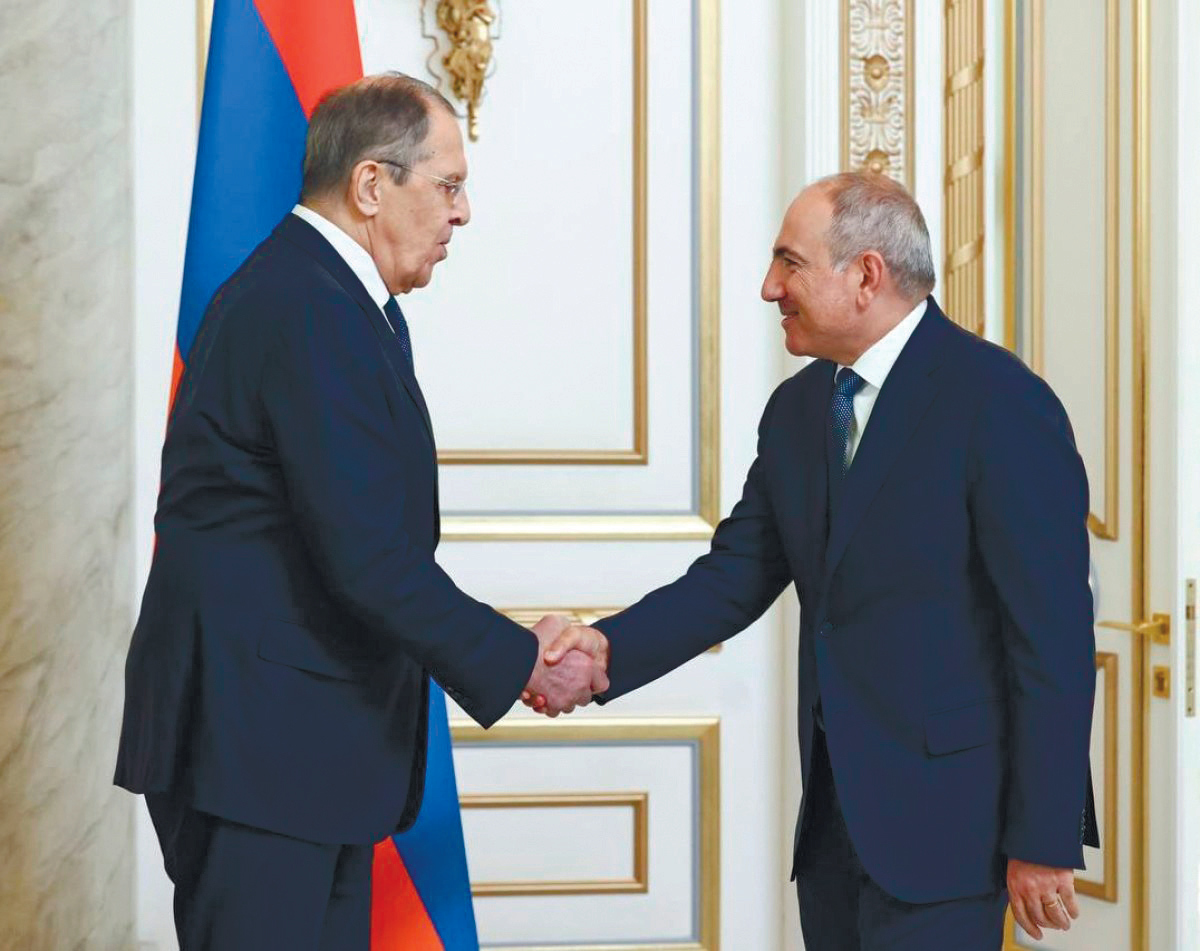
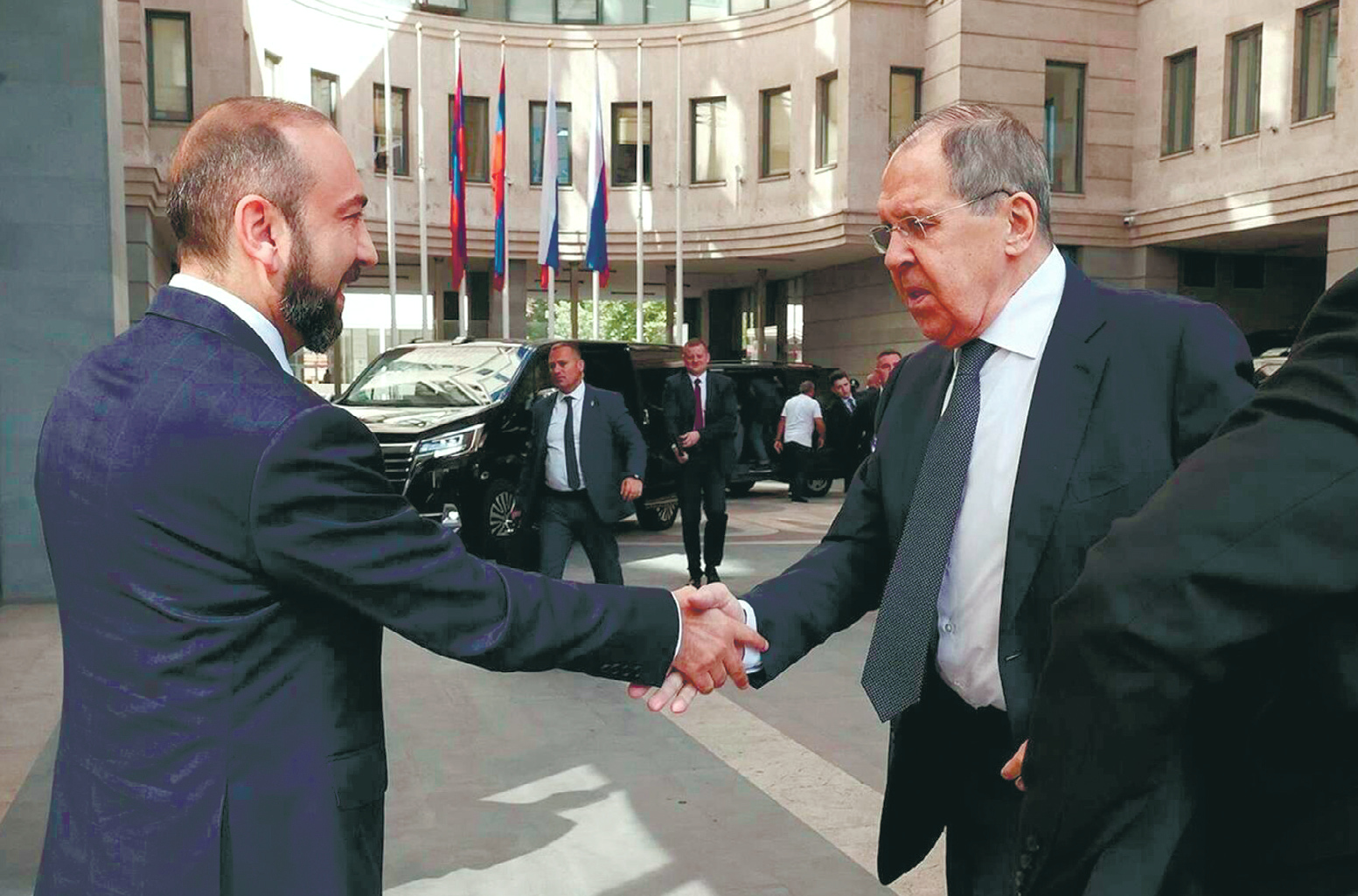
From a protocol standpoint, the visit proceeded calmly and with restraint. Sergei Lavrov met with his Armenian counterpart Ararat Mirzoyan, after which he was received by Armenian Prime Minister Nikol Pashinyan.
At the joint press conference, Lavrov and Mirzoyan addressed what was likely the central purpose of the visit. In a dispirited tone, Mirzoyan declared before the cameras: "The Republic of Armenia has not applied to join the European Union, there are no negotiations in this direction, and, accordingly, the issue that could arise in this direction is not relevant."
On the surface, this is accurate. No formal application has been submitted by Yerevan to Brussels declaring its intent to join the European Union. However, both Yerevan and Brussels have been busy crafting a series of resolutions and decisions in which the words "Armenia" and "European integration" are carefully inserted into the same sentence. For instance, in late March 2024, the European Parliament adopted a resolution supporting Armenia’s European aspirations — even without a formal request from Yerevan. It even proposed assistance through the European Peace Facility. By early April 2025, Armenia had passed a law initiating the process of accession to the European Union.
And yet, following such "diplomatic scene-setting", Mirzoyan stood at the podium and claimed that Armenia had been misunderstood, and that no application to join the European Union was in the works. It would be an overstatement to describe this as a full-fledged foreign policy reversal. Rather, European integration appears to have been a political performance from the outset, not a deliberate national choice.
The expected "Euro capitulation"
In any functioning state, the process of European integration begins not with speeches or legislative gestures, but with meticulous economic preparation. For Armenia, this would have required a systematic effort to reduce its dependence on Russia, exit the Eurasian Economic Union and the CSTO, and only then purchase a "ticket to Brussels". Notably, the European Parliament’s controversial resolution supporting Armenia’s European path includes a detailed roadmap. Brussels expected Yerevan to curtail Moscow’s influence over its economy, cease helping Russia evade sanctions, and so on.
Currently, however, virtually all of Armenia’s critical infrastructure — railways, electricity and gas grids, mobile communications, major power generation facilities—is under Russian control in one form or another. Armenia also enjoys domestic Russian prices for oil, gas, and uncut diamonds. Deprived of this "oxygen cushion", its economy would not survive. Under these conditions, speaking of "European integration" borders on the suicidal.
Experts are convinced that Armenia failed to receive the expected dividends from the West. Furthermore, Donald Trump’s victory in the US presidential election in November marked the end of the Biden administration, arguably the most pro-Armenian White House in recent memory. Although Macron remains in office, his attention is clearly elsewhere. First, Ukraine takes precedence. Second, the European Union’s growing engagement in Central Asia necessitates cooperation with Azerbaijan. Third, Pashinyan cannot have failed to notice how Macron approached Ilham Aliyev at the recent ENP summit in Tirana and extended visible cordiality.
Most significantly, the West did not deliver what Armenia sought most — military aid. The supply of fifty French Bastion armoured personnel carriers and €10 million for medical tents from European funds was enough to damage relations with Azerbaijan, but it paled in comparison with Russia’s billion-dollar arms tranches. Now Moscow must reckon with the political blowback of its "arms diplomacy"—particularly on the Azerbaijani front.
Lavrov's perilous disclosures
While in Yerevan, the Russian Foreign Minister made at least two statements with serious implications. Sergei Lavrov confirmed that Armenia had used Russian weaponry to occupy seven Azerbaijani districts: "Russian weapons were used to, as I have already said, seize seven uncontested Azerbaijani districts and to build fortification and battle lines, which showed that the calculation was for a very long retention of these territories. And some analysts said that the nature of these fortifications shows that there were no plans to transfer them back to Azerbaijan at all." He further revealed that the issue of the region's "status" had been deliberately postponed through Moscow's mediation due to "internal political circumstances".
Indeed, Lavrov said nothing especially new. To determine whose weapons Armenia employed against Azerbaijan, one need only visit Baku’s Park of Military Trophies. Military transport aircraft carried arms from Russia to Armenia even during the 44-day Patriotic War. Offensive systems amassed in Garabagh far exceeded Armenia’s CFE Treaty quota, and all were of Russian origin.
Nor is it news that Moscow repeatedly deferred any final resolution on Garabagh’s "status". Russia proposed settlement frameworks that effectively turned Garabagh into a second Armenian state within Azerbaijani territory. One such plan, actively promoted between 2016 and 2019, was outlined in Rossiyskaya Gazeta by Rashid Nurgaliyev, Deputy Secretary of Russia’s Security Council. According to him, "the phased plan envisaged the continuity of the principles laid down in the Madrid and Kazan documents. Its main steps envisaged the return of five occupied districts to Azerbaijan at the first stage after the deployment of international peacekeeping forces. At the same time, it was envisaged to grant Nagorno-Karabakh the rights to form its own authorities and self-defence forces. The blockade of Nagorno-Karabakh by Azerbaijan was to be ended and trade and economic relations were to be restored. At the second stage, it was planned to transfer the remaining two districts in conjunction with the determination of the legal status of Nagorno-Karabakh through a referendum in accordance with international norms. At the same time, it was assumed that, with the agreement of the parties, a corridor would be left in the Lachin district for transport communication between Nagorno-Karabakh and Armenia."
The plan failed. Following Armenia’s defeat in the 44-day Patriotic War, Moscow attempted once again to advance the concept of Garabagh’s "deferred status" during the Sochi talks — an approach corroborated by Russian Ambassador to Armenia Sergei Kopyrkin.
Even if Lavrov was "revealing" a well-known truth, Moscow had until recently avoided publicly stressing such elements of its policy. One interpretation is that Lavrov’s remarks were a response to Armenian accusations that Russia had "betrayed Armenia" by allowing Azerbaijan to reclaim control over Garabagh. Another possibility is that his comments were aimed at Azerbaijan.
We fly to Yerevan, but do we mean Baku?
Current relations between Baku and Moscow are tense—and this is largely due to Moscow's actions. The situation worsened after a Russian air defence unit, in what was described as an act of criminal negligence, shot down an Azerbaijani civilian aircraft near Grozny. Moscow has shown little urgency either in offering a formal apology or in bringing the culprits to justice.
What followed was an information campaign against Azerbaijan in Russian state-aligned media, on YouTube, and across Telegram channels. Tensions escalated further with the deportation from Moscow of Azerbaijani MP Azer Badamov, who was en route via the Russian capital to Astrakhan as part of an official delegation. Baku made its position clear: any state has the sovereign right to deem a foreign national inadmissible, but the composition of official delegations is typically coordinated in advance through diplomatic channels, and any objections are conveyed beforehand. Why was this protocol not followed?
Naturally, retaliatory steps were taken. The activities of the "Russian House" in Azerbaijan were suspended. President Ilham Aliyev also declined to attend the 9 May celebrations in Moscow — a decision that continues to unsettle many in Russia.
It is possible, therefore, that Lavrov’s disclosures were a veiled signal directed at Azerbaijan.
However, the effectiveness of this signal may be far less than intended. In the autumn of 2020, Russian arms failed to save Armenia from military collapse, and Moscow’s efforts to delay the resolution of Garabagh’s status brought about diplomatic failure. Given the ongoing war in Ukraine, which shows no signs of abating, Russia is unlikely to possess the resources to supply Armenia with $5 billion worth of military hardware—the estimated value of weapons Azerbaijan either destroyed or captured during the liberation of Garabagh. And even if it did, Armenia would merely be rearming an army that Azerbaijan has already defeated.
Under these circumstances, Lavrov’s message may well have the opposite effect in Baku than originally intended.
RECOMMEND:
 224
224