

INHALE OXYGEN – EXHALE THEATRE
Konstantin SOLDATOV: "I would like there to be more air, so that people are exhilarated by what we do and, perhaps, benefit from it."
Author: Valentina REZNIKOVA
It is said that those born during the spring holiday of Novruz are among the happiest people in the world. This is because the Almighty is said to bestow upon them the gift of Love: a love for people, family, their profession, the endeavours they serve throughout their lives, and for the country and its people, whose diverse cultural and ethnic environment has moulded an individual's personality, granting them the right to call themselves a Baku citizen.
The creative and personal destiny of Baku resident Konstantin Soldatov affirms this. A singular yet fiery passion, which captured his heart in early childhood, found its creative embodiment in his diverse talents – manifested as a man, husband, father, actor, director, pedagogue, composer, and a Baku resident so enamoured with the land of his ancestors that he one day chose to return. Perhaps forever.
Theatre and cinema director, producer, teacher, and composer. Soldatov has directed over 50 productions and is a nominee for the Golden Mask award. He graduated from GITIS (Russia), completing degrees in acting (2001) and directing (2008). He also studied at the School of Theatre Leaders (Russia). He participated in workshops ("labs") with Theatre.doc, theatre director Lev Dodin, playwright and director Mikhail Ugarov, and director Pavel Rudnev. He served as the Artistic Director of New People, a Russian theatre festival dedicated to contemporary theatre. He has written music for four plays. Soldatov currently heads ArtBəndə (ART-BANDA), a creative association for Russian-language theatre in Baku.
"My passion for theatre began back in Baku. My sister took me to the Opera and Ballet Theatre. I recall the ballet "Nutcracker" and the performance of "Cinderella". In those moments, sitting in the auditorium, there was a palpable sense of magic. I loved the actors' movements, the stage design, and the way the lights came on. The excitement in the audience while waiting for the performance to begin – that thrilled me. Afterwards, I enjoyed discussing it at school, recounting the experience.
"When I found myself in Russia, I entered GITIS, graduated from the acting faculty, and became a performing artist. After a while, I realised I wanted to direct plays, so I enrolled in the directing department, in the workshop of Iosif Leonidovich Reichelgauz, graduating in 2008. By then, I had already participated in productions both as an actor and as a director. I undertook various projects and took part in British Council workshops, initiatives with Theatre.doc, and projects at the School of Modern Play. After graduating, I worked at the Moscow Theatre of the School of Modern Play, where I had the opportunity to know wonderful artists like Sergei Yursky and Irina Alferova. Our acting master, Albert Leonidovich Filozov, generously shared his experience. Subsequently, I began staging productions all over Russia – in Krasnodar, Chelyabinsk, Tyumen, Kirov, Kaluga – as well as in Transnistria, Switzerland, the US, and Germany. I have also attended festivals in Germany, Italy, and France."
"So, Baku is the city of your happy childhood?"
"Thank you for that question. I love to talk about my childhood – how I was born and grew up in the Sabunchi settlement. I actually have a storytelling project on this topic. I describe the yard I grew up in, who our neighbours were, how we used to play there, run around, climb on roofs, play on the railway tracks, and dash off to the stadium for a game of football. We would spend hours in the garden, eating berries and fruits. I recall our Novruz adventures – how we would throw hats over the neighbours' fences for sweets. There were also difficult times in the early nineties, when we would gather with neighbours for warmth, sit by candlelight, and support one another. Generally, we experienced all sorts of things."
"How much has the city of your childhood changed?"
"The city has changed considerably. Interesting buildings and architectural structures have appeared, but the most important thing has remained unchanged: its warmth, cordiality, and hospitality. People dress differently now, and houses look different – these things alter the city's appearance, but the inner warmth, the atmosphere – all that has remained. And it can be felt everywhere."
"In the four years of your adult life back in Baku, you have managed to accomplish a great deal..."
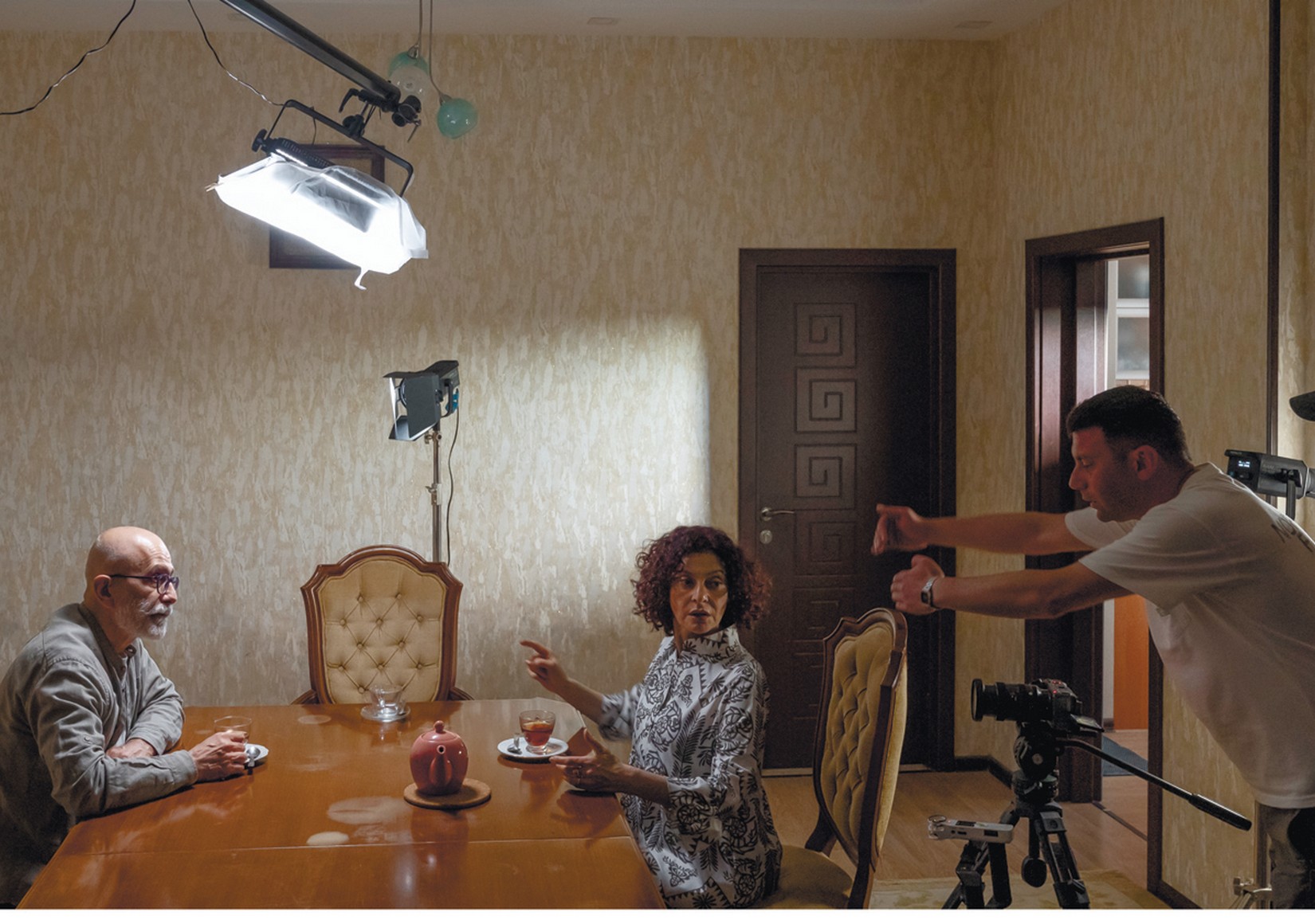
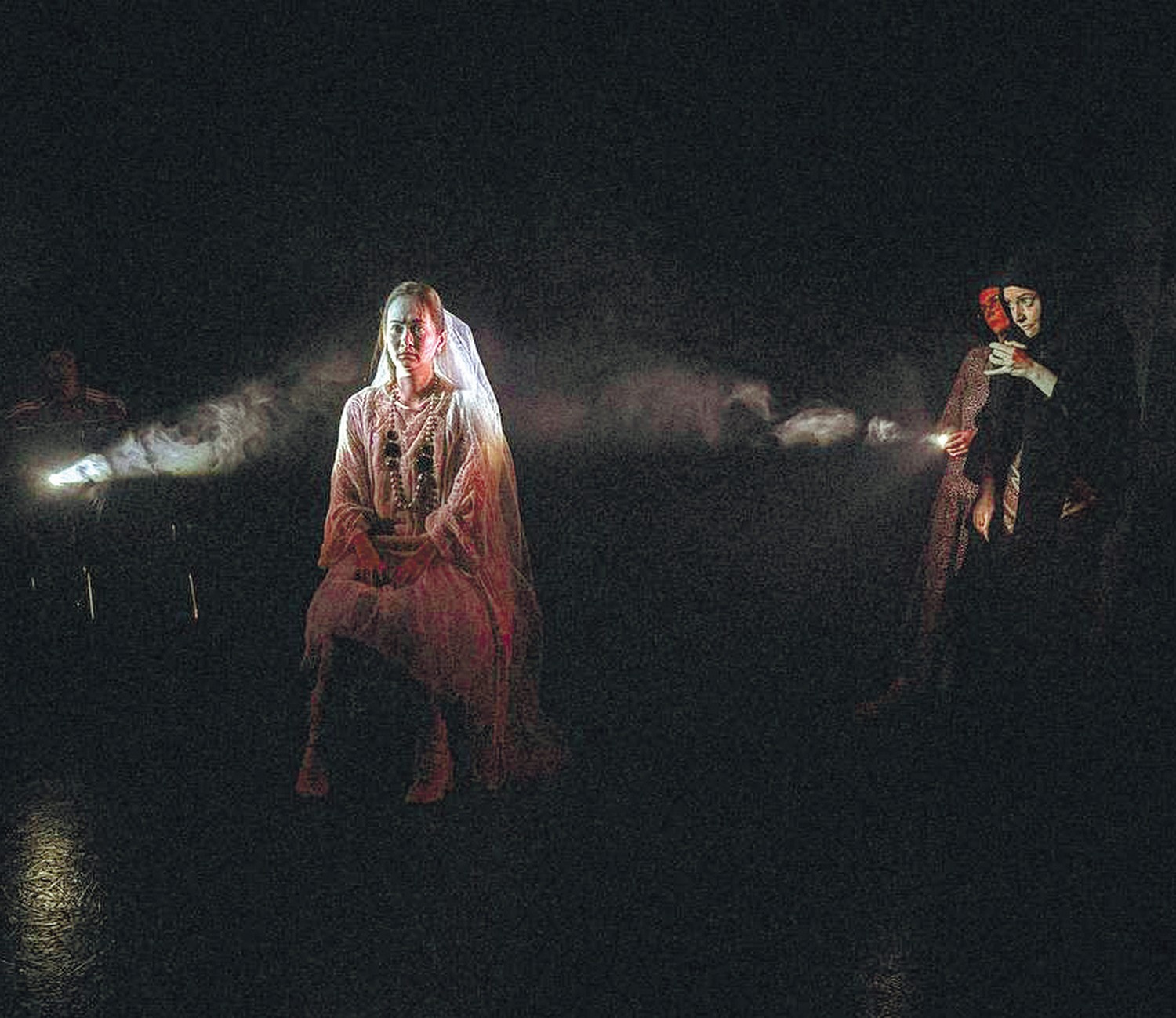
"As soon as I returned to Baku, I began looking for opportunities to realise my ideas. One of the first projects, which my friend, actor Leonid Klotz, and I adapted, was an interactive children's format based on the cartoon "Bag of Apples." The second project was the play "The Stone Guest," which I staged with my son, a musician, and my wife, actress Irina Yakubenko. Then came the performances "The Vow Maidens" and "The Raven" with Chingiz Babayev, several children's plays, and performances in contemporary art spaces like Artım and YARAT. We are currently co-operating with Salam Sinema and plan to perform a play with them. I also had an interesting experience working for a YouTube company as a creative director for channels with millions of subscribers. I made a documentary film with a wonderful group of artists, including Chingiz Babayev and Elnur Babayev. Additionally, I've conducted training sessions, organised readings, and acted in several films, including a small role in the film "Taghiyev." And, of course, the main project in Baku is Theatre O2, with its fantastic team of actors, artists, and directors."
"You organise a discussion after every performance. What are your impressions of the Baku audiences who visit your theatre?"
"I genuinely enjoy the discussions in the theatre and the way Baku residents and visitors engage with the plays. Our audiences are diverse: locals, visitors, friends of the theatre, and tourists. It's gratifying to hear people from other countries say, 'We were advised to go to Theatre O2.' That's wonderful! It means they know about us and recommend us. The discussions vary; the topics can be challenging and pertinent, and the audience is eager to understand and share their opinions. Even if not everyone can immediately articulate their thoughts, they often find the right words after listening to others. Baku residents are very sincere and creative, and they strive to connect emotionally with what they have seen. Most importantly, no one remains indifferent."
"How ready and open is the audience for a dialogue that bridges the divide between stage and spectator?"
"Some audience members come prepared – they know what they want to say and readily share their impressions and personal stories. Others initially prefer to listen, gradually becoming more involved. Is the audience ready for such a dialogue? Yes, they are. And they eagerly anticipate these discussions. The audience is varied: some are fulfilled, some are disheartened, some are disappointed – but all of them are in love with the theatre."
"How receptive are they to the 'language' of your directorial interpretations?"
"The audience is engaged. Even if certain aspects remain beyond their immediate grasp, they demonstrate interest, a desire to comprehend, and they ask questions. They stay for the discussions, endeavouring to understand the proceedings, the imagery, and the symbolism. It's excellent when the audience genuinely wants to understand and join us in the process."
"For instance, you have a play in what you term the 'franchise' genre, titled 'Questioning.' Could you explain to our readers what this name and genre signify, and how it functions on stage?"
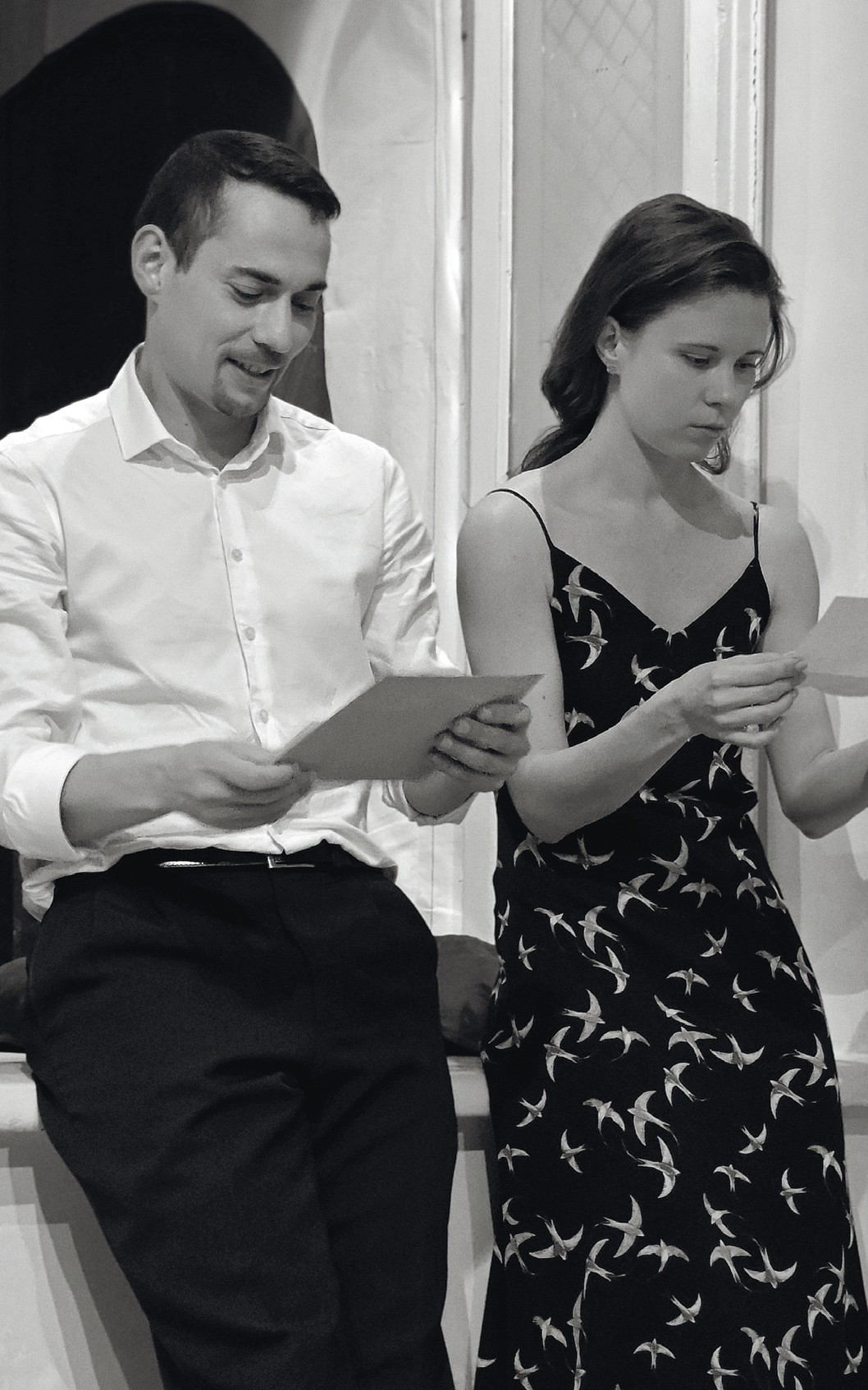
"'Questioning' is an interactive performance. I first encountered it at the Access Point festival in St Petersburg – the impression was astounding. When Theatre O2 was established, we began negotiations with the Swiss company Magic Garden to adapt the format for Baku. We perform it using Evgeny Kazachkov's translation, with modifications to suit our local context. The format is unique: there are no performers on stage. The audience members sit facing each other, receive questionnaires, answer questions, and collectively follow the narrative. It is unquestionably theatre, albeit in an unconventional format. There is a distinct atmosphere and a sense of catharsis – in the finale, people eagerly discuss what they have experienced during that hour. It's a powerful experience."
"What does the genre of storytelling entail, and how did you realise it in 'Breaking Boundaries'?"
"Storytelling is, quite simply, about telling stories. We are all familiar with it from when we share experiences that have happened to us. Last year, I launched a storytelling workshop. We gathered many interesting stories: Leonid Klotz recounted amusing anecdotes from his life; Sayali Bahar spoke about her passion for horoscopes; Evgeny Maximov discussed his work as a DJ; I shared memories of my childhood in Sabunchu; Iskra Tarant composed an interactive storytelling piece about sex; and Pavel Savchuk presented 'How to Learn English.' We regularly perform Tatiana Selivirstova's storytelling piece, 'Breaking Boundaries.' This format helps to captivate the viewer's attention and draw them into the narrative. In the near future, I plan to launch a new storytelling project with a very interesting heroine."
"In terms of on-stage action, what defines an immersive performance?"
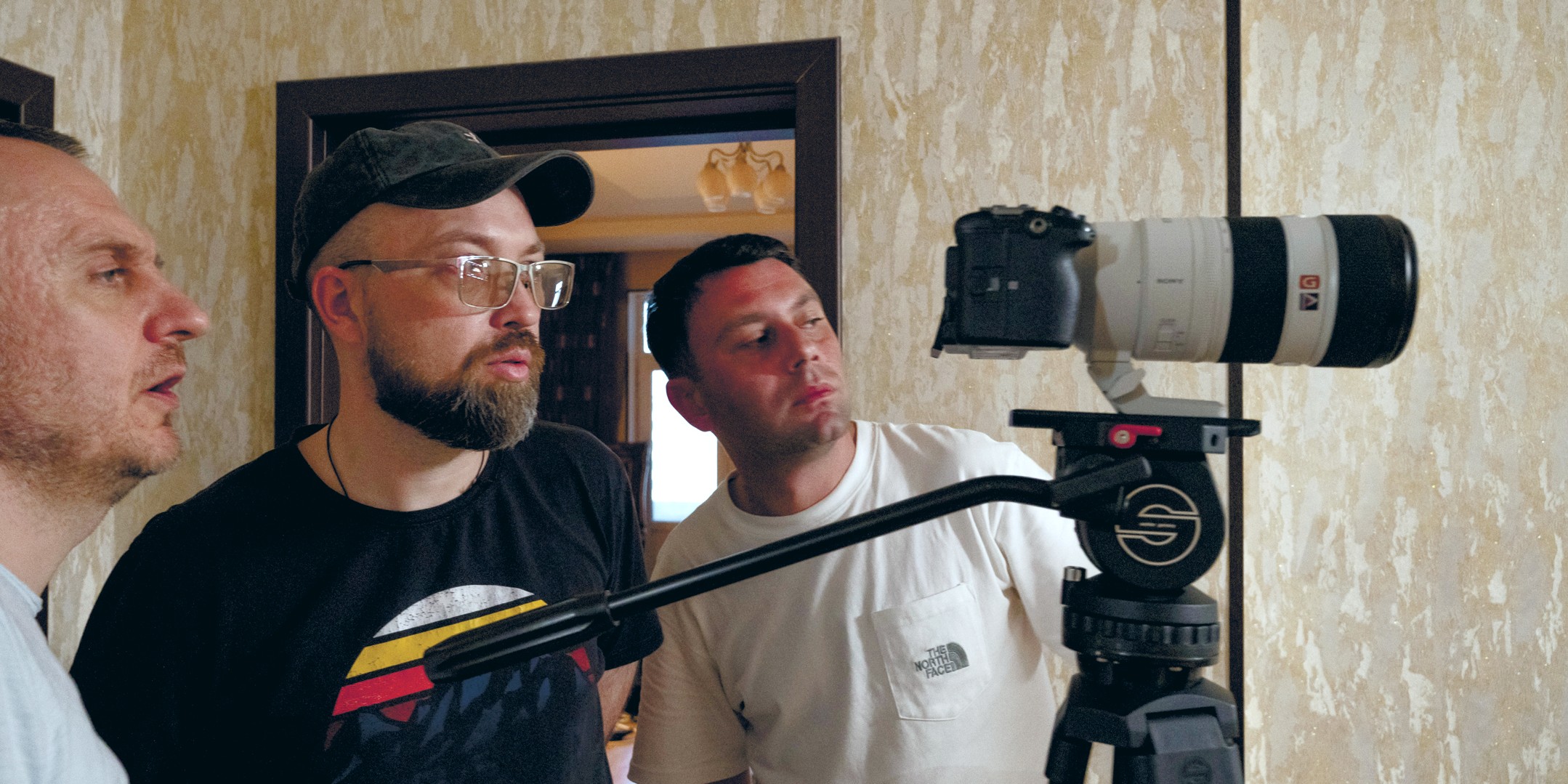
"An immersive performance involves complete immersion, drawing the spectator directly into the process. We had such an experience in our theatre: the spectator enters a real flat, where the action unfolds first in the kitchen, then in the hallway and living room. Irina Yakubenko's play 'Fools We Are Fools' fitted perfectly into the space at Rashid Behbudov's theatre – it was a genuine flat. The audience could examine details, costumes, and props. For me, immersiveness is akin to being the cameraman of a film, able to change your angle at will and observe events from different perspectives. Each viewer selects their own vantage point on the action: deciding what to see and what to focus on."
"You have established a school or masterclasses for actors and directors. Could you tell us more about that?"
"Since last year, we have been running an acting course for adults – for those who wish to learn the craft of acting. I adapted the first-year programme from the acting faculty, reworking it to suit individuals looking to become more expressive. People join us with various aims: to overcome inhibitions, to speak more freely, to improve their diction, or to find stimulating company. Those who continue often become part of the theatre, participating in readings and performing at events. For instance, Tatiana and Heidi, two of our graduates, are already performing in the play 'The Vow Maidens.' I lead the course with Irina Yakubenko; she imparts her experience as an actress and works on speech training. In March, I launched a director's course where we examined contemporary trends in theatre and immediately put them into practice. We studied site-specificity within the theatre's own spaces – its corridors, foyer, and small auxiliary rooms. Theatre can exist anywhere, in any space. Currently, participants in the director's workshop are developing their sketches, and we are preparing for showcases."
"At Theatre O2, it appears you are the sole director listed so far. Are there plans to expand the theatre's directing staff?"
"Actually, there are quite a few directors at Theatre O2. Irina Yakubenko directed 'Fools We Are Fools,' and co-directed 'Two' with me. Leonid Klotz directed 'The Fruit Argument,' 'Love is...,' and 'Panic.' Evgeny Maximov directs children's plays. Iskra Tarrant has directed 'London' and 'Alcoholics Anonymous Club.' Recently, Natalia Trubnikova from Moscow staged a play for the entire family, and currently, a young director is rehearsing Ismayil Iman's play, 'No Light Falls on My Owls.' We anticipate a premiere in June. We offer a platform for young people, helping them to realise their ideas. For this purpose, we have an experimental small stage in our theatre."
"Why is the theatre named 'O2', or Oxygen?"
"The theatre is called O2 because it is all about air, about breathing. For us, the theatre and the opportunity to create it in Baku represent a breath of fresh air. We want there to be more 'air,' so that people are exhilarated by what we do and, perhaps, derive benefit from it. Our slogan is 'Breathe Theatre.' Pyotr Naumovich Fomenko once said, 'The most reliable substance of a performance is air.' I have nothing more to add."
"What are your creative plans, looking ahead from Baku?"
"The coming year promises to be a rich one. In theatre, we are planning a musical project for teenagers in a hip-hop format, and a performance based on Petrushevskaya's play 'Andante.' We also aim to continue our collaborative work with Chingiz Babayev; our next performance will be dedicated to eroticism. We are keen to work with theatre practitioners from Europe and are currently seeking funding for a joint project. Furthermore, we dream of embarking on a foreign tour, as we already have productions that would resonate with audiences in other countries. Outside of the theatre, we plan to make a short film – hopefully, by the time this article is published, it will already be completed. I also want to finish a significant documentary project with Roza Amanova, People's Artist of Kyrgyzstan, a film I began in 2023. The editing and sound work need to be finalised. We are collaborating with a well-known producer on a historical documentary film. And I very much hope to produce an original musical within the next year. By the way, this June, in the Old Town, Icherisheher – a favourite spot for both locals and visitors – there will be an amazing event called 'The Hour of Mugham.' I am directing that project. And you are welcome!"
RECOMMEND:
 273
273

