

TIES TURNED TOXIC
Trump and Musk at odds causing an irresistible political show
Author: Irina KHALTURINA
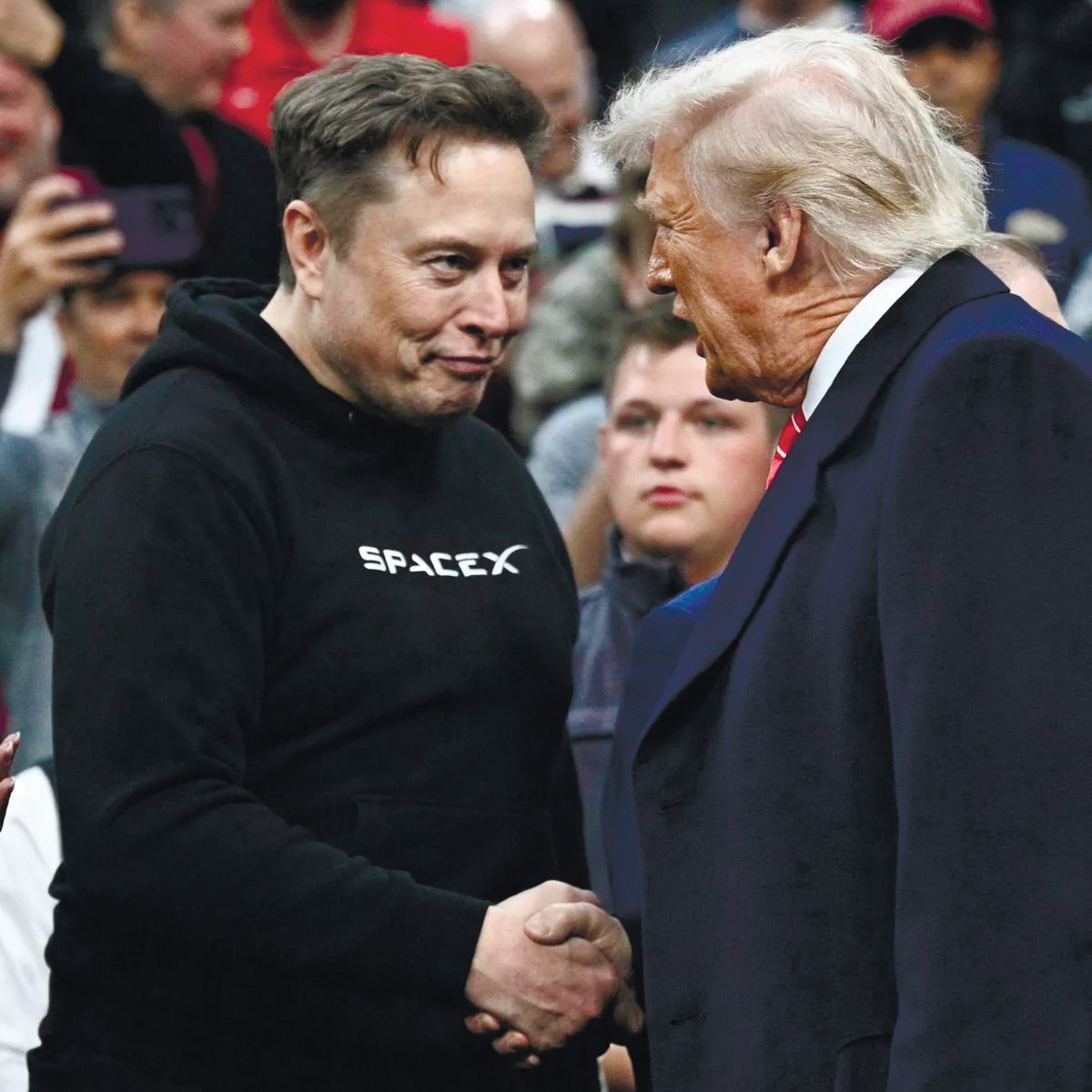
The public dispute between Donald Trump and Elon Musk quickly became the world’s top news story, sparking numerous memes and dominating media coverage. This was notable as it was the first time such a confrontation happened live on air.
The global audience watched with fascination as two powerful figures—the former U.S. president and the world’s richest man—exchanged insults on their social media platforms, Truth Social and X (formerly Twitter). Despite losing money (Tesla shares dropped by at least 14%), supporters, and, most importantly, their public images during the feud, neither seemed concerned.
Just a week earlier, Musk’s last official day in civil service ended on a friendly note with Trump, who even presented him with a symbolic key to the White House.
Experts suggest Musk chose this moment to criticize Trump because the president was politically vulnerable: his foreign policy record was weak, the MAGA movement was divided, and large protests had erupted in California. Meanwhile, Trump had already faced election defeats, impeachments, assassination attempts, and serious accusations, making it unlikely that a quarrel with Musk would harm him significantly.
One Big Beautiful Bill
The conflict mainly revolved around Trump’s bill to cut government spending—dubbed by him as the One Big Beautiful Bill Act. The bill proposed tax cuts for individuals and corporations but also cut funding for important social programs like Medicaid. The Congressional Budget Office criticized the bill, forecasting it would increase the federal deficit by $2.4 trillion over ten years.
Musk opposed the bill because it increased government spending overall and eliminated benefits for green initiatives, including subsidies for electric vehicle purchases. He called the bill a “disgusting abomination.”
Trump expressed disappointment over Musk’s criticism on Truth Social, claiming Musk was “just freaking out” about losing tax subsidies for electric cars. Trump then highlighted NASA contracts worth at least $38 billion awarded to Musk’s companies over time. Some SpaceX and Starlink projects remain classified, but Musk has been delivering cargo and astronauts to the International Space Station since 2020.
This situation raises a number of questions that still remain unanswered: Can a businessman—no matter how wealthy—gain access to national security? Is the US government truly dependent on Musk’s companies? Are SpaceX and Starlink fully Musk’s companies? Who exactly is fighting whom in this dispute?
After Trump threatened to cancel government contracts, Musk initially said SpaceX would start decommissioning Dragon spacecraft but later retracted this threat.
Another vulnerability for Musk is his business ties to China. The fate of Tesla's Shanghai plants depends heavily on US-China trade relations, which could worsen under Trump’s policies.
During the quarrel, both made sharp accusations. Musk claimed Trump could not win the 2024 election without his support and even called for Trump’s impeachment. He also suggested Trump might be implicated in undisclosed documents related to Jeffrey Epstein’s 2019 case but provided no evidence.
Trump responded by accusing Musk of neglecting his responsibilities and questioned his sanity. Additionally, Steve Bannon, a former Trump strategist, questioned Musk's legal status in the US due to his South African origin and suggested deportation.
Trump told CNN he had no plans to speak with Musk soon and wanted to sell or get rid of his red Tesla car. However, by June 9, reports indicated relations were improving after representatives spoke by phone. Musk even reposted some of Trump’s messages about California protests.
Consequences of the feud
Many observers believe Musk’s withdrawal from the political alliance with Trump could significantly weaken the White House administration’s ability to promote initiatives in Congress. For instance, the “big and beautiful bill” barely passed the House of Representatives, supported by only a one-vote margin.
The public spat also revealed a split within the Republican Party. According to Economist/YouGov data, the number of Republicans identifying as MAGA dropped from 60% in March to about 49%. Experts think Musk could publicly and financially support Trump’s opponents in both parties if needed. Democrats are likely to exploit this by recruiting dissatisfied Republicans or even trying to sway Musk himself—one of the Republican Party’s key donors—to their side.
The midterm elections coming up in 2026 may shift political power significantly in Washington. Republicans face a real risk of losing their Senate majority. After efforts to improve government efficiency—including those led by Musk—it is surprising that attitudes toward Trump remain largely unchanged among government officials who have often been excluded from decision-making.
Musk has hinted at creating a third political party that would unite voters disillusioned with both Democrats and Republicans. He polled his followers and received 1.3 million responses within two hours; 83.2% supported this idea. However, experts doubt its practical implementation unless neoconservative factions from both parties join. This highlights ongoing divisions in American society and confusion over unusual behaviour from political elites frequently in public view.
Trump’s public quarrel with Musk added fuel to critics who point out his impulsiveness and unpredictability. Analysts note that Trump often makes decisions based on emotion without thoroughly separating facts from feelings and frequently reverses or retracts statements—whether threats or praise. Consequently, agreements within the US and abroad appear unreliable. Geopolitically, Trump’s only somewhat successful foreign effort is a Middle East tour viewed ambivalently by many.
Most notably, Trump seems to have lost his global trade war as originally conceived and promoted. Tariff battles have so far harmed America more than its trade partners.
In early June, protests erupted in California and Texas over ICE raids targeting illegal immigrants as part of Trump’s large-scale immigration campaign. National Guard troops were deployed in California due to local authorities’ inability to control unrest. Governor Gavin Newsom sued the federal government, calling it a “power grab,” and opposed funding cuts for California. Experts believe these rallies are organized by Trump’s opponents and may incorporate racial elements that could reawaken tensions similar to those seen in 2020. The White House quickly labelled the events as a “rebellion.”
Vance: The Ace Winner?
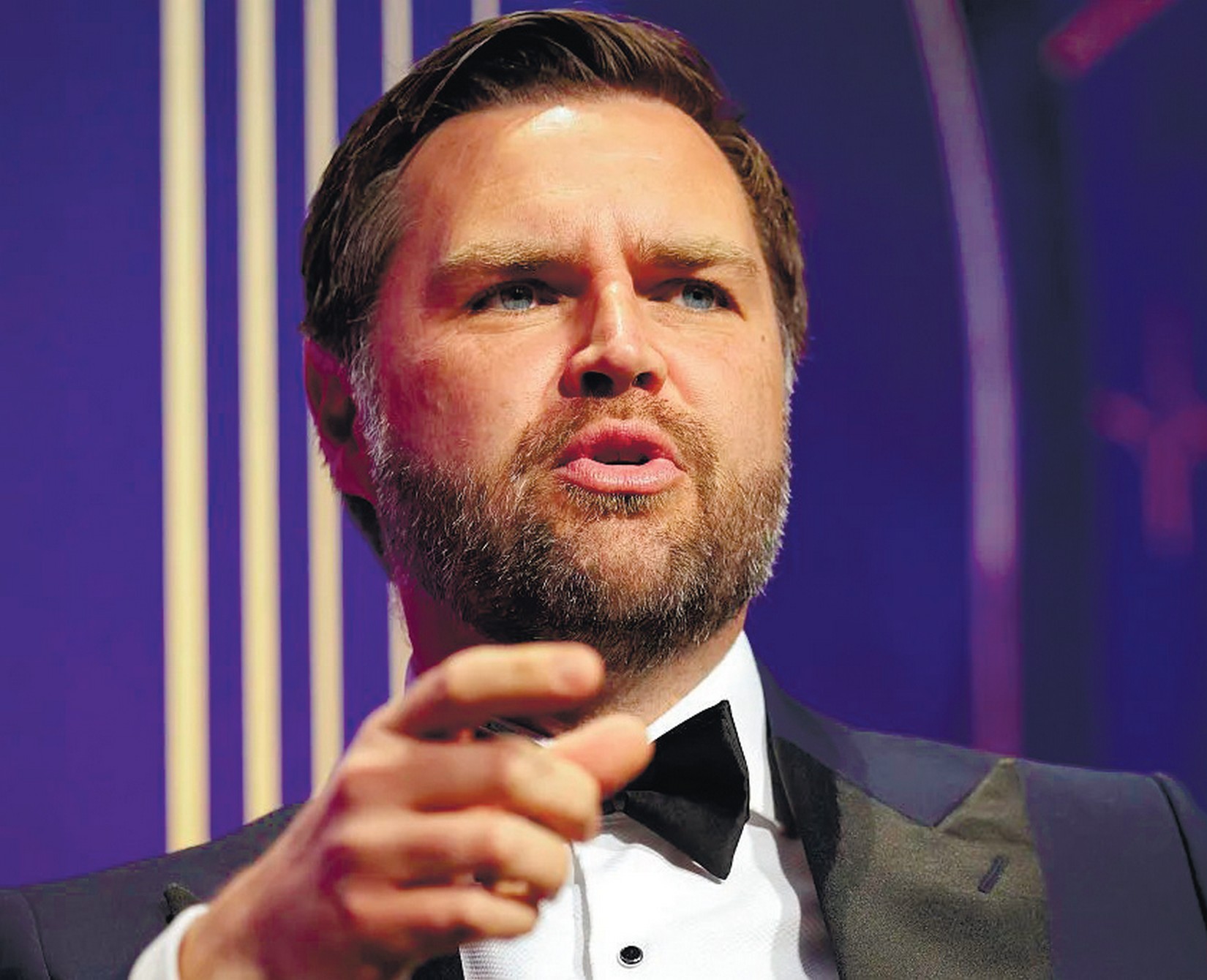
Another key figure is Vice President J.D. Vance, linked to Peter Thiel—a right-wing Silicon Valley technocrat who co-founded PayPal and has consistently supported Trump. According to some political analysts, Musk’s possible goal is to render Trump a “lame duck” by leaving Vice President J. D. Vance at the helm. Vance is connected to Peter Thiel—also one of the few in the tech industry who has consistently supported Trump. Thiel is a prominent representative of Silicon Valley’s far-right wing with its techno-libertarian ideology.
Besides, Musk, who is also linked to Thiel and legally barred from running for president because he was born outside the United States, may be planning to realise his ambitions in power by some means. It is well known that Musk is capable of unconventional moves and thinks far beyond typical frameworks. In this scenario, Musk is playing not only against Trump but also against Vance for the White House in 2028.
The billionaire himself states that his influence will be long-term: “Trump will be president for another 3.5 years, and I’ll be here for 40+ years…” Initially, Musk openly tried to win Vance over to his side. However, the vice president supported Trump, though he could hardly have acted otherwise. And why would he? There is also another version—that in the battle between Trump and Musk, the only real winner may be Vance: young, sensible, enjoying support from very influential people such as technologists, investors, scientists, and writers. He has kept himself out of the conflict and is now regarded as a figure capable of preserving the political movement. Moreover, Vance has long been considered a potential presidential successor.
At the same time, there is a strong possibility that Musk and Trump never truly quarrelled but simply staged an impressive public spectacle. It is striking how suddenly it occurred, with such intensity and public display. Even the epithets used were fitting—“stunning scandal,” “stormy divorce,” “big beautiful fight” over the “big beautiful bill” As noted earlier, this immediately dominated the entire news agenda. Perhaps the two friends were trying to divert attention from something else? If so, this will not be widely discussed in mainstream media but rather remain within conspiracy theory circles.
The first theory appeared almost immediately: “US President Donald Trump and billionaire Elon Musk may have pretended to quarrel to disconnect Ukraine from the Starlink satellite system.” However, if the scandal was genuine, an equally tumultuous continuation would eventually follow. Throughout Trump’s presidency, he and Musk will resemble characters from Nikolai Gogol’s story about the quarrel between Ivan Ivanovich and Ivan Nikiforovich…
RECOMMEND:
 259
259

