

THE WARPATH
Railways as part of India's geopolitical strategy

Author: Samir VELIYEV
Earlier this month, Indian Prime Minister Narendra Modi was present at the inauguration of a strategically important facility in Indian Kashmir. The Chenab railway bridge is a project of significant importance, as it will provide a direct rail link between the Kashmir Valley and the extensive Indian plains.
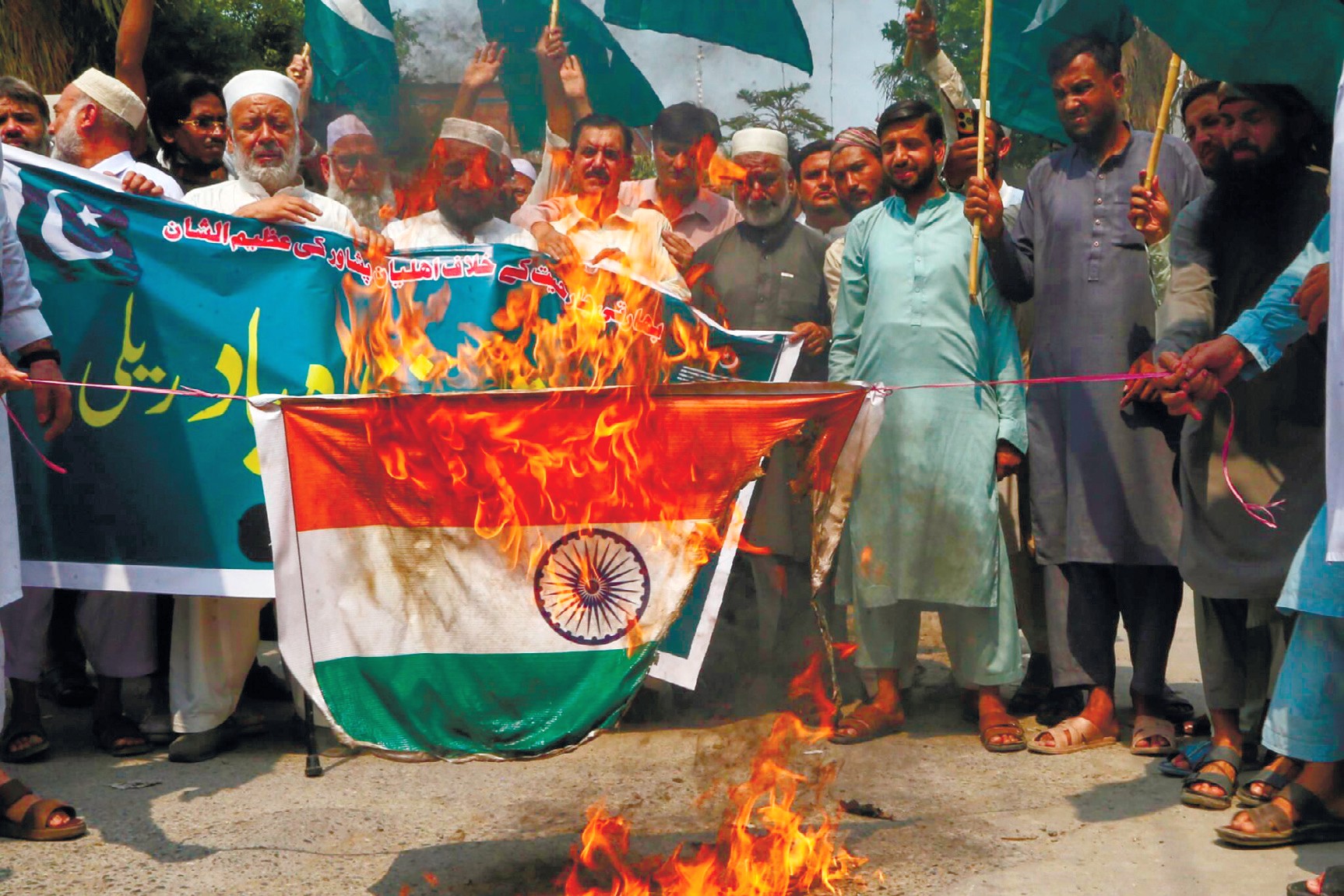
In the context of the ongoing military and political tensions with Pakistan, this event is of particular relevance. India is looking to increase its military presence in Kashmir, creating a strong base from which to launch operations against Pakistan. It is possible that this is not only the case in Pakistan, but also in China.
New Delhi's official position on the disputed northern lands is that the entire territory of the former principality of Jammu and Kashmir—including those under the control of Pakistan and China—is considered an integral part of India.
The goal of the Indian leadership, particularly the current ultra-nationalist Modi government, is to exercise both legal and de facto control over Pakistani Kashmir. While this may appear improbable in the near term, this position is employed for the purpose of internal consensus and foreign policy statements. For some time, India has also taken concrete actions in this direction, which has led to military and political tensions with Pakistan.
New Delhi's geopolitical plans
Following the revocation of Article 370 of its constitution in 2019, which led to the dissolution of the state of Jammu and Kashmir, India has strengthened its hold over the region, portraying this as a step towards "integration".
For India, the territories controlled by Pakistan are not only a matter of sovereignty, but also an element of national security. The issue of Chinese presence in the Gilgit-Baltistan region, where a large-scale infrastructure project (CPEC - China-Pakistan Economic Corridor) is being implemented, is particularly acute. New Delhi considers CPEC to be a direct threat to its territorial integrity, as the route traverses areas that are disputed. In this context, India's strategic objective is to limit the economic and military influence of China and Pakistan in the region.
In terms of foreign policy, India has a strong stance on what it sees as "human rights violations in Azad Kashmir and Gilgit-Baltistan" and the illegitimacy of Pakistani control over these territories. In international forums, New Delhi seeks to prevent Pakistan's Kashmir from being recognised as a separate or legitimate administrative unit.
Furthermore, India is increasing its military presence along the Line of Control, developing intelligence infrastructure and conducting diplomatic campaigns against CPEC. Concurrently, it is developing a legal and political discourse, supported by parliamentary resolutions and official maps designating Azad Kashmir and Gilgit-Baltistan as Indian territories.
It is imperative to consider Modi's visit to the region and the implementation of the railway project exclusively through the lens of the aforementioned processes.
An ambitious project for ambitious goals
The railway connecting Kashmir with southern India is operated by Indian Railways, a government entity. The railway itself is one of the most challenging routes in the world. The railway is 272 kilometres long and begins at the garrison town of Udhampur in the Jammu region, traversing Srinagar, the capital of Indian Kashmir. The final point is Baramulla, a town close to the heavily militarised Line of Control that divides the Himalayan region between India and Pakistan.
The Government of India has estimated the total cost of the project to be approximately $5 billion. This high cost is not an accident.
The railway, which runs through 36 tunnels and 943 bridges, is located in a challenging mountainous terrain. It will facilitate the movement of people, goods and military units, which was previously only possible by dangerous mountain roads and air.
One of the key elements of the project is the construction of a 1,315-metre-long steel and concrete bridge over the Chenab River. This will provide a vital connection between two mountains, with an arch measuring 359 metres in height. Indian Railways has drawn a comparison with the Eiffel Tower in Paris, which stands at 330 metres high. The bridge has been engineered to last for 120 years and to withstand extreme weather conditions, including wind speeds of up to 260 kilometres per hour.
During the inauguration of traffic on the bridge, the Indian Prime Minister also launched a pair of new trains called Vande Bharat, which will reduce the journey time between Srinagar and Katra town in Jammu to about three hours from the usual six to seven.
Modi's visit to Indian-controlled Kashmir was his first since the military conflict between India and Pakistan, which saw the nuclear rivals come close to engaging in widespread warfare. The standoff was initiated following the shooting of a group of Indian tourists by radical groups operating within the territory, resulting in the deaths of 26 individuals.
It is acknowledged that the Indian side suffered significant losses in its strike aircraft during the conflict, a fact that was subsequently acknowledged by the Indian authorities. Pakistan's actions have prompted New Delhi to consider entering into a truce. It appears that the Indian authorities have decided to take this matter seriously. They have accelerated work on improving the system of fortification positions, which also includes the creation of related infrastructural facilities. The railway is of particular significance.
Religion as an excuse
Since 1989, armed groups in the Indian-administered region of Kashmir have been fighting against the government of India, more commonly referred to as New Delhi. Following the dissolution of the state of Jammu and Kashmir and its subsequent reorganisation under direct rule from New Delhi in 2019, there has been an escalation in the levels of violence. Many Muslims in Kashmir are opposed to the policies of Narendra Modi and support the insurgency to unify the territory either under Pakistan or as an independent state.
While India insists that the armed groups in Kashmir are supported by Pakistan, no evidence has been presented to substantiate this claim. Islamabad has denied the allegation, considering it to be unfounded and intended to provoke "Pakistani aggression" against India and Islamabad's support for "Kashmiri separatists" regardless of the circumstances. This provides New Delhi with an opportunity to exert military and political pressure on Pakistan. In order to achieve the desired outcome, it may be necessary to take advantage of external factors.
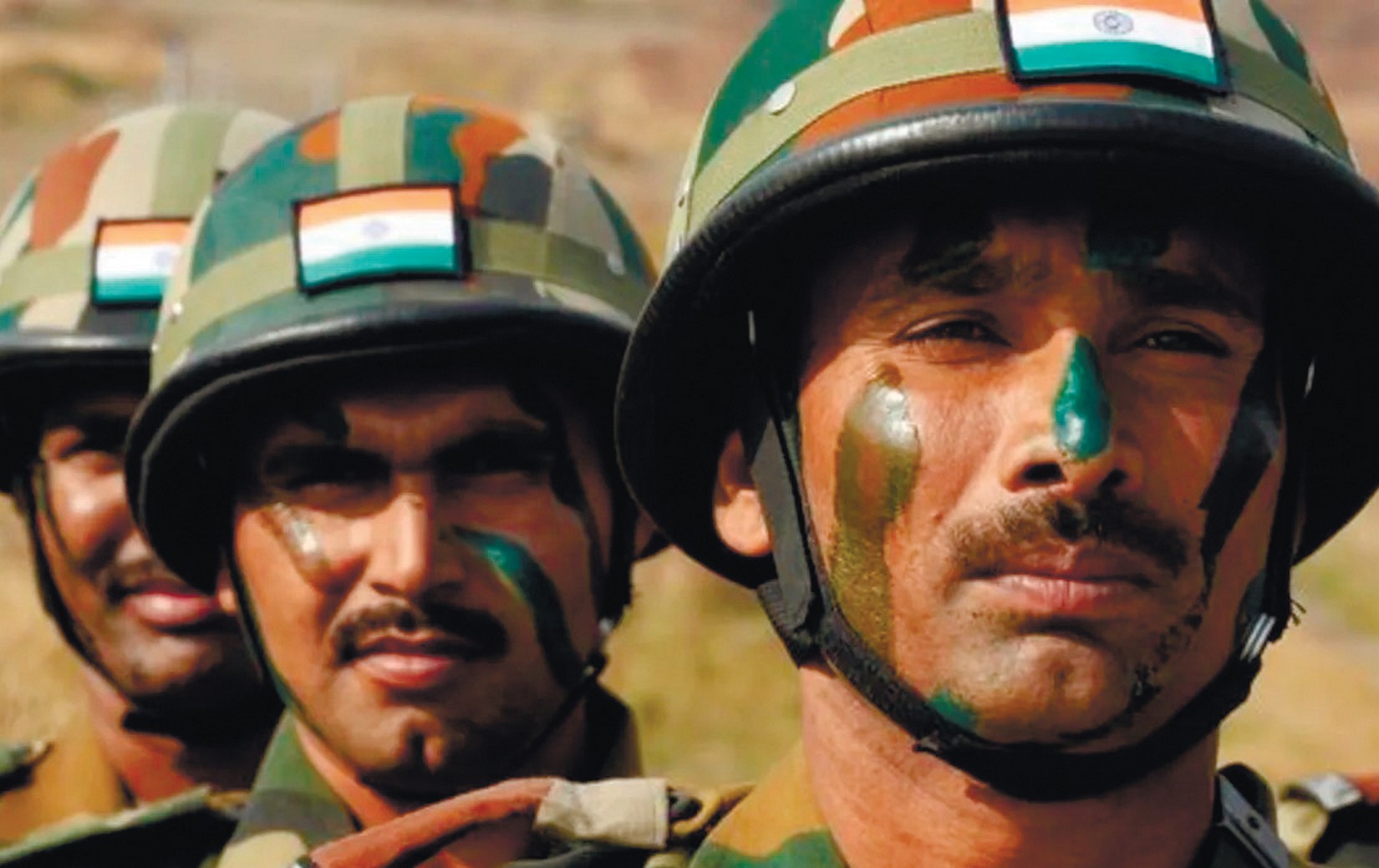
Recent events have led to a marked increase in India's military presence in Kashmir, following the Pahalgam terrorist attack on 22 April 2025. This escalation is part of Operation Sindur, which involves the deployment of major T-72 battle tanks and air defence assets, as well as artillery and infantry, primarily in the Akhnoor sector of the Jammu and Kashmir zone. In the lead-up to the Amarnath yarta pilgrimage, a number of Central Armed Forces (CAPF) units have been deployed in the area, utilising radio and signal jammers, drones and cinematologists.
The Hindu pilgrimage to the Amarnath shrine, located in a cave in the mountains of Jammu and Kashmir, runs from late June to August, attracting hundreds of thousands of devotees from all over India. The temple is dedicated to the god Shiva, and its icy stalagmite is considered a sacred lingam, i.e. a symbol of Shiva. In the context of heightened Indo-Pakistani tensions and ethno-religious conflict, exacerbated by the Indian government's actions, this pilgrimage is perceived as a challenge to the local population.
Access to the cave is via a challenging mountain route at an altitude of over 3,800 metres. It passes through a dense network of settlements inhabited by the Muslim majority of the region.
Any careless utterance or action by any of the parties, be it pilgrims or the local population, could lead to serious aggravation and another conflict. The Indian authorities view the pilgrimage not only as a religious event, but also as a symbol of India's regional presence, which has the potential to contribute to existing tensions.
India has introduced CAPF units as a measure to ensure the safety of pilgrims at religious events. For the first time, 4,000 former soldiers have been deployed to implement security measures to protect critical infrastructure. A military force has been deployed on the Line of Control with Pakistan as part of Operation Sindhur.
What if war is tomorrow
Observers generally consider the Indian side's actions to be a general preparation for another and possibly larger armed confrontation with Pakistan. Media reports suggest that New Delhi plans to finalise the creation of its long-range air defence system, having received all the necessary equipment as early as next year. The subject under discussion is the finalisation of the $5.5 billion deal signed with Russia in 2018, and the acquisition of the final two batteries of five S-400 Triumf air defence systems.
India will therefore significantly strengthen its zonal air defence shield with the ability to track and engage air threats at ranges of up to 400 km, including aircraft, drones, missiles and UAVs.
The railway to Kashmir is just one part of India's overall military preparations. The local media has been effusive in its praise for the government's large-scale initiatives, however, a crucial detail has been overlooked. I can confirm that they are being prepared not only in India, but also in Pakistan. It is evident that they are not being adequately prepared. New Delhi's latest attempt to demonstrate its strength is perhaps the most evident to date.
Roads should serve people first and foremost, improving their lives and ensuring the development of regions is inclusive. Should there be any confusion, the practical application of this principle is a reliable source of guidance.
RECOMMEND:
 242
242