

BETWEEN EUROPE AND EURASIA
New challenges and integration trajectories for Georgia and Armenia
Author: Namig ALIYEV
Following the expansion of the EU and NATO in the early 2000s, the post-Soviet countries of the South Caucasus faced a strategic choice between European integration and maintaining ties with Russia and the Eurasian Union. Since 2004, Georgia and Armenia have followed different, yet occasionally similar, paths: from pro-European enthusiasm to attempts to preserve sovereignty amid external pressures.
In the current geopolitical climate, characterised by profound shifts in global politics and the ongoing conflict between Russia and the West, this choice has become particularly salient.
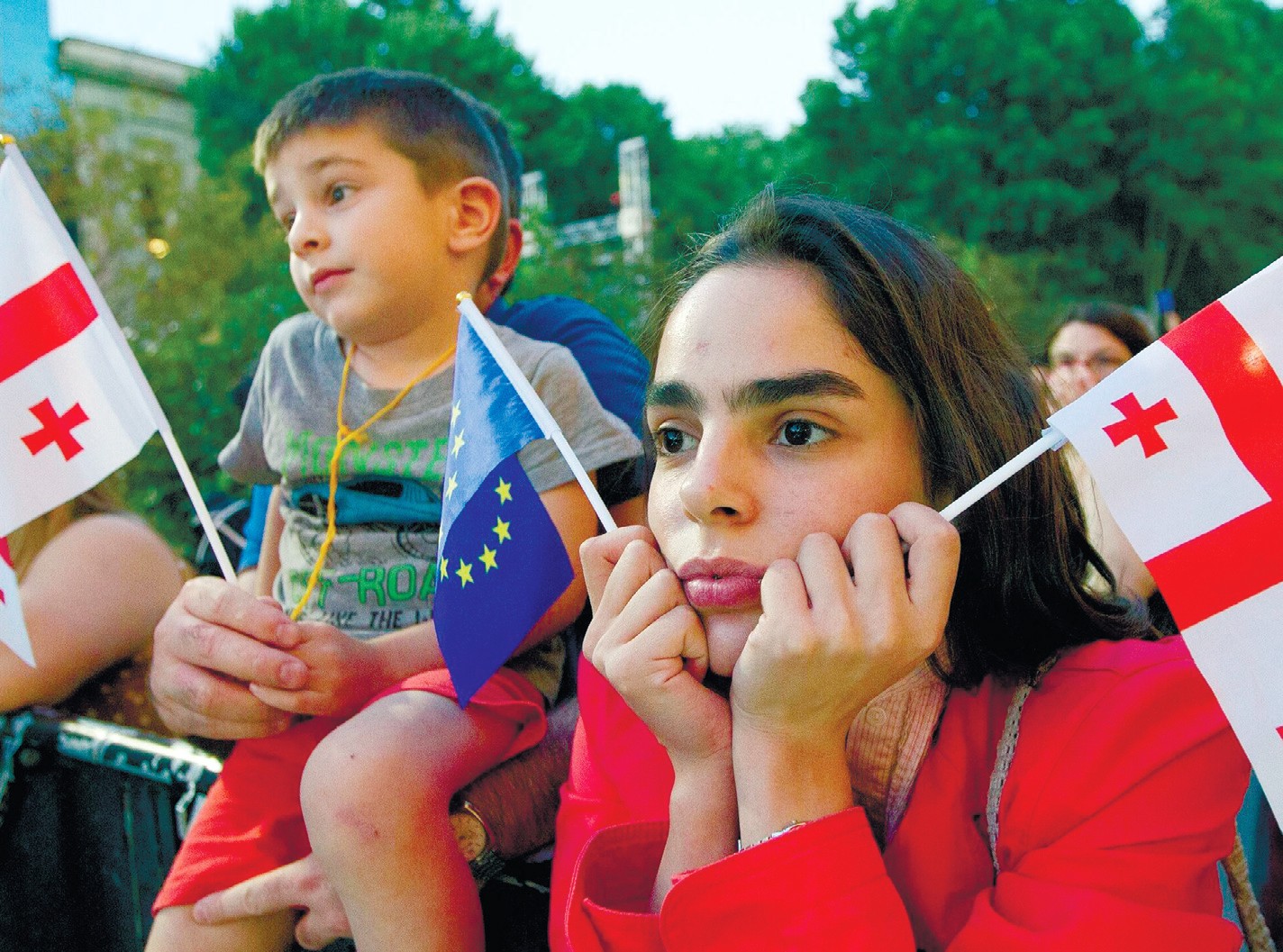
The situation in Georgia has undergone a significant shift, with the country transitioning from a period of Euro-optimism to a geopolitical turnaround.
The period from 2004 to 2014 was characterised by Euro-Atlantic enthusiasm and institutional reforms. Following the Rose Revolution in 2003, Georgia made a confident advance towards Euro-Atlantic integration. In 2004, it submitted an application for NATO membership, and in 2005 a NATO-EU Information Centre was opened in Tbilisi. The development of relations with the West resulted in the signing of an Association Agreement with the EU in 2014, encompassing the Deep and Comprehensive Free Trade Area (DCFTA). In 2017, Georgia introduced a visa-free regime with the EU.
During this period, the country experienced significant institutional modernisation, a concerted effort to combat corruption, and reforms in the education and public administration sectors. However, external challenges from Russia remained constant, including the consequences of the 2008 war, the separatist regions of South Ossetia and Abkhazia, and hybrid pressure through economic and political means.
Concurrently, Armenia, under Russian influence, occupied Azerbaijani territories.
2014-2024: rapprochement with the EU, despite internal contradictions
Despite significant progress towards European integration, relations between Tbilisi and Brussels deteriorated from 2018 onwards. The primary reasons for this are political polarisation within Georgia and the country's increasing assertion of subjectivity. The ruling Georgian Dream party has been accused of concentrating power and pressuring the opposition and media as part of a policy to limit the influence of foreign actors on domestic affairs. The Law on Transparency of Foreign Influence (2024), which was essentially based on international practice, provoked mass protests and criticism from the EU. In its subsequently amended form, it reflected a long-standing US law.
Another reason is Georgia's recent tendency to pursue a more independent policy during European integration efforts, resisting foreign interference in internal affairs. Consequently, the 2024 elections were declared rigged by the opposition and deemed undemocratic by the EU and US.
Additionally, a new pro-European force emerged in the South Caucasus with Nikol Pashinyan's rise to power following Armenia's "velvet revolution."
The EU has frozen €121 million in grants following the 2024 elections, with the opposition describing the move as "rigged with Russian involvement." The European Parliament and the United States have imposed sanctions on key figures in the Georgian Dream party, including billionaire Bidzina Ivanishvili and Prime Minister Irakli Kobakhidze, accusing them of undermining democracy and aligning with Russia.
In November 2024, Kobakhidze stated that due to attempts to interfere in internal affairs and calling European funds "a lever of pressure" on domestic politics, Georgia would not initiate EU accession talks until after 2028 nor accept European grants. He emphasised that Georgia would continue its European Union path but would not allow blackmail or manipulation in its relations with the West.
This announcement sparked protests in Tbilisi and other cities, as well as criticism from both the EU and the US. EU Ambassador to Georgia Pavel Gerchinsky expressed regret over the decision, noting its inconsistency with previous government policies and the will of the majority of Georgians. He also emphasised that Georgia is an independent state that determines its own path towards European integration.
In response, Georgian President Mikhail Kavelashvili reaffirmed Georgia's commitment to its European integration process, highlighting it as a fundamental civilisational choice enshrined in the nation's Constitution. He observed that debate on this subject tends to create division in society and emphasised Georgia's readiness to initiate negotiations on EU accession.
Despite the government's initial announcement that it would be suspending talks, which led to protests and criticism, subsequent actions indicate that there is still a commitment to the path of European integration.
2025: getting used to Georgia's new identity
The closure of the EU and NATO Information Centre in June 2025 was indicative of a cooling of relations with the West. While authorities maintain that European integration remains a strategic goal, the need for political pragmatism necessitates the limitation of foreign influence. Georgia is therefore moving away from the sharp antagonism with Russia that characterised Saakashvili's rule and is instead pursuing pragmatic neutrality.
The political atmosphere remains polarised: while the opposition advocates a return to the European path on a smaller scale and less aggressively (with funding cuts), the government retains its pro-European orientation but emphasises "sovereign democracy."
It is interesting to note that President Kavelashvili, despite his affiliation with the moderate wing of government, states: "European integration is a civilisational choice that is enshrined in the Constitution."
Armenia: from a "post-Soviet balance" to a European orientation
In this South Caucasian country, multi-vectorism was subject to pressure from Moscow from 2004 to 2013.
Since the early 2000s, Armenia has been seeking to strengthen its relationship with the European Union by participating in the European Neighbourhood Policy framework and signing the EU-Armenia Individual Action Plan in 2006. These steps included attempts to reform public administration and justice; the development of cooperation in education and science (notably through the Tempus programme); and engagement in cross-border cooperation.
However, Armenia remained heavily reliant on Russia from a military, economic and energy perspective. Russian military bases are stationed in Gyumri. Armenia participates in the CSTO under a collective security "umbrella". Russian investments dominate key sectors such as energy, transport, and telecommunications, guaranteeing an inviolable "Russia-Forpost" relationship.
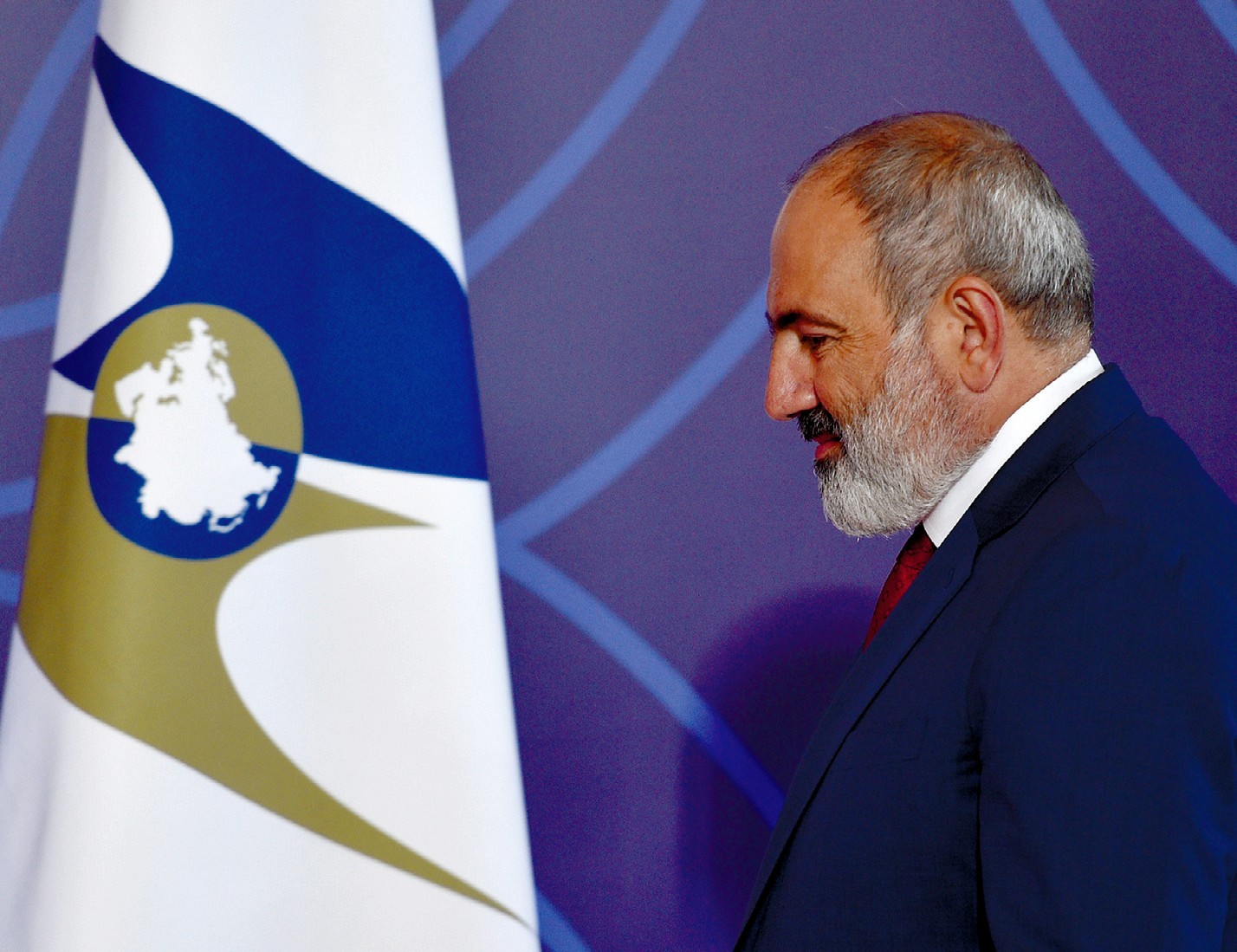
This conflict of interests reached a head in September 2013 when President Serzh Sargsyan unexpectedly announced Armenia's decision to join the Customs Union under Russian auspices after being summoned to Moscow. This reversal followed negotiations there and marked a turning point towards a more rigid multi-vector policy constrained by Russian influence. Armenia's accession to the Eurasian Economic Union (EAEU) in 2015 followed its joining Russia's Customs Union.
2014-2021: a "double integration" attempt, with CEPA serving as a compromise
Despite having joined the EAEU in 2015, Armenia has sought to maintain and develop its relations with the EU. The result was a compromise: the Comprehensive and Enhanced Partnership Agreement (CEPA), signed in 2017 and entering into force in 2021. CEPA was a distinctive feature of EU-Armenian relations, given that it did not constitute a free trade area (unlike the accords established with Georgia, Moldova and Ukraine). This was due to Armenia's commitments within the EAEU. Instead, it covered approximately 80% of EU law (the acquis communautaire), including public procurement, consumer protection, environmental protection, and anti-corruption policies. CEPA has provided Armenia with a mechanism for adapting to EU standards in a gradual and peaceful manner, without the need for geopolitical confrontation with Russia.
During this period, Armenia successfully balanced receiving investments and access to European development projects while deepening economic integration with the EAEU. Despite declarations of sovereignty, Russian influence remained strong in the areas of energy and security.
2022–2025: European drift amid disillusionment with Russia
Following the 2018 "velvet revolution" led by Nikol Pashinyan, Armenia's foreign policy began shifting cautiously while prioritising domestic stability. A major change followed the Second Garabagh War (2020), Azerbaijan's counter-terrorism operation, and Armenia's subsequent capitulation on the Garabagh conflict (2023–2024), which caused widespread public disillusionment with Russian support.
Key signs of this turn towards Europe include:
- Armenia's participation in the European Political Community since 2022, thereby demonstrating its desire for closer political and strategic coordination with the EU.
- Visa liberalisation talks officially initiated in 2024. A transition to a visa-free regime is possible by 2026–2027, provided certain conditions are met.
- The application for EU membership. In May 2025, Parliament approved a bill aimed at submitting a formal application — an act with significant symbolic and political value. This has not prevented Prime Minister Pashinyan from denying Armenia's European aspirations during meetings with Minister Lavrov.
Additionally, Armenia gained access to numerous cross-border initiatives focused on the environment, sustainable development, innovation, and digitalisation through the Black Sea Basin Interreg Programme, which was launched in February 2025.
Nevertheless, long-standing Russian-Armenian ties continue to limit Armenia's sovereignty and hinder full European integration. Economic vulnerability is a key concern, with up to 25% of Armenia's GDP depending on transfers from Russia (labour migration, remittances). Furthermore, Gazprom's control over critical gas transmission infrastructure is indisputable, underscoring its significant energy dependency. The military base in Gyumri remains active alongside military-political commitments within CSTO despite Armenia's effective suspension of participation in CSTO missions after 2023.
The Russian Security Council estimates that withdrawing from the EAEU could cost Armenia up to 40% of GDP, making an abrupt rupture unlikely for now. However, there has already been a gradual erosion of integration commitments at levels of standards, technical regulations, and rhetoric.
The political-social science dimension: consensus and risks
In contrast to Georgia, where there is a strong divide between the authorities and the opposition on the question of European integration, in Armenia the pro-European orientation is evolving into an inter-party consensus, at least within the political centre. It is important to note that this process will not be without its challenges, as there are two main issues that still need to be addressed:
1. There is a risk of internal radicalisation, which is exacerbated by worsening attitudes towards Russia and rising nationalism following the war with Azerbaijan.
2. The absence of a cohesive strategy for exiting or renegotiating terms with the EAEU is a matter of concern, particularly in light of Moscow's ongoing role as a significant security and economic actor.
2025: a pivotal moment for strategic decision-making
Armenia is facing a critical juncture in 2025. On one side, there are concrete measures indicating a deepening of the relationship with the EU, including the establishment of standards, political dialogue and participation in regional programmes. In contrast, the country's ongoing connections with Russia and the EAEU are susceptible to economic pressures.
In spring 2025, Russian Foreign Minister Sergey Lavrov visited Yerevan, where he held a press conference. This was shortly followed by a controversial meeting between Prime Minister Pashinyan and Vladimir Putin on 9 May. These events demonstrate Moscow's attempts to reassert control through the use of sanctions and export restrictions.
From these developments, it is clear that Armenia is pursuing a "soft integration" approach towards Europe, without overt confrontation with Russia, but with a gradual reduction in dependence. Its primary achievements — the implementation of CEPA, the formal application for EU membership, and participation in EU initiatives — lay an institutional foundation for rapprochement. The primary threat does not stem from external pressure; rather, it is rooted in inherent economic vulnerabilities, compounded by the absence of a definitive strategy for either exiting or reforming EAEU relations.
In contrast to the political polarisation surrounding European integration in Georgia, Armenia has adopted a different approach. Here, the process has become a means of establishing a new national identity and garnering support during challenging times.
The South Caucasus is likely to remain an arena of geopolitical competition in 2025. Despite initial progress in the process of European integration, Georgia is currently experiencing political stagnation in this area. Conversely, Armenia – which is strategically dependent on Russia – is cautiously moving towards Europe, seeking independence from Moscow, but risking serious economic consequences.
The future of both countries is contingent on three factors: their commitment to implementing internal reforms and modernisation; their ability to pursue balanced foreign policies without compromising national sovereignty; and sustaining stable relations with key external partners, namely the EU, Russia, China, and the US. Ultimately, it is likely that flexibility, rather than a single decisive choice, will determine how they safeguard national interests amid global shifts.
RECOMMEND:
 254
254

