

ARMENIAN CRUSADE
Pashinyan vs. the Armenian Church: a struggle against revanchism or for power?
Author: NURANI
"Bread and spectacle!" — this slogan of the urban poor has been known since Ancient Rome. The situation with "bread" in Armenia remains ambiguous. Armenian economists have long been skilled at presenting attractive figures. Additionally, the large-scale circumvention of sanctions imposed on Russia through Armenia has allowed these figures to be inflated. Yet the real sector of the economy remains stagnant. Furthermore, Yerevan has lost access to—and consequently the opportunity to exploit—natural resources in the occupied Azerbaijani territories, where gold deposits alone once provided a significant boost to the Armenian budget. However, the public in Yerevan certainly does not lack "spectacles." Recent weeks have once again confirmed this. Nikol Pashinyan, Prime Minister of Armenia, has declared war on the Armenian Apostolic Church.
"Love your uncle's wife!"
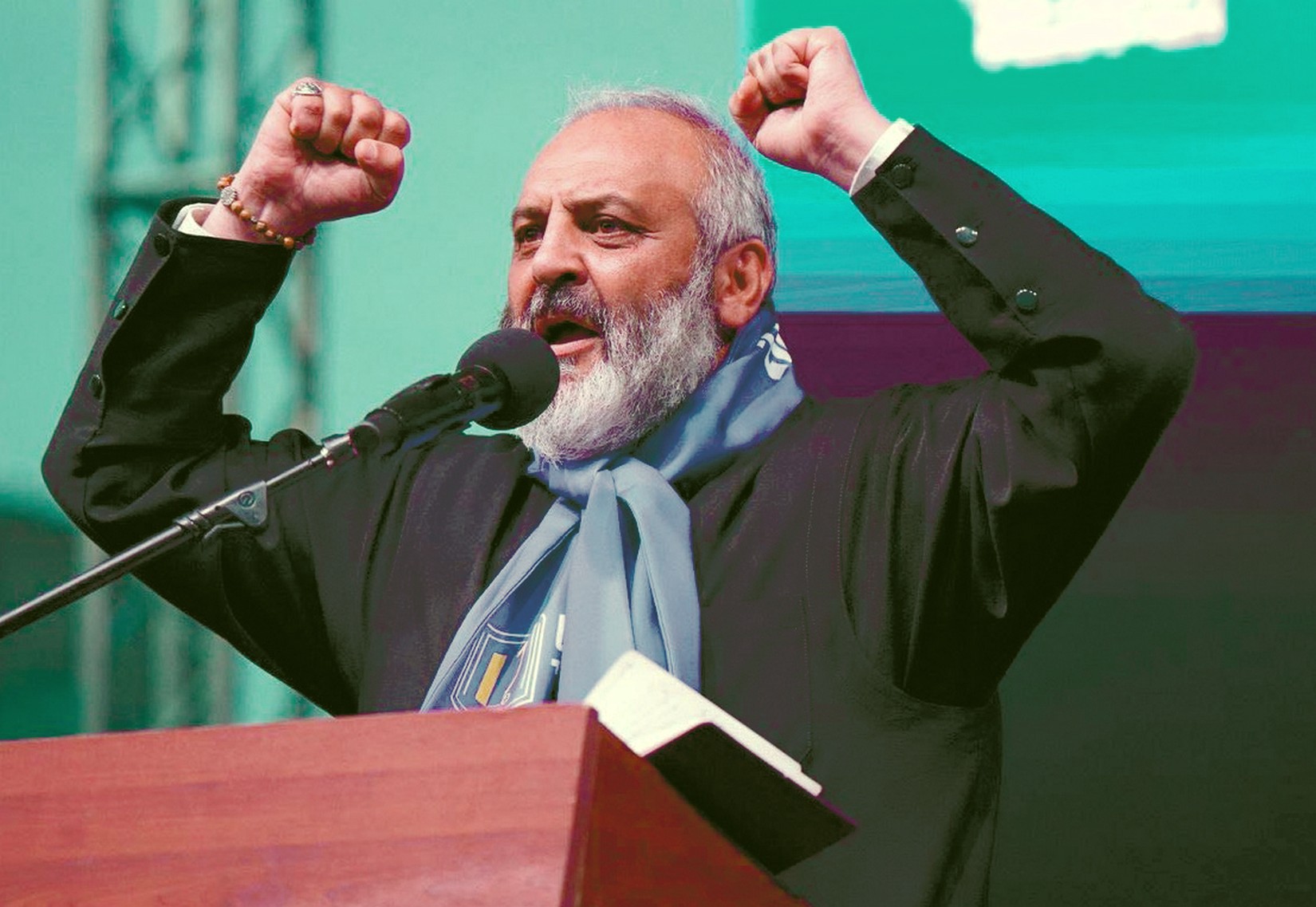
Nikol Pashinyan’s relations with the Church were already strained. The conflict remained "chronic, sluggish, with flare-ups" for a long time, but recently tensions have intensified again. It even reached the point where Archbishop Baghrat Srbazan led the latest wave of protests in Armenia. However, he failed to gather enough protesters under his banner, and the protests did not achieve any real success. Pashinyan has not forgotten the attack on himself and seizes every opportunity to criticise the Church hierarchy.
In this context, the Armenian Prime Minister might have recalled how in 1996, in occupied Lachin, a church was built on the site of the destroyed home of the Azerbaijani Ibrahimov family. Yet Pashinyan did not have the courage to mention that. Instead, he chose to speak out about the "clutterisation" of Armenian churches. He posted on social media: "All the most unnecessary things are stored in churches—unnecessary marble slabs, bags of cement, pieces of old rusty fittings. Why does a person enter a church? To connect with something spiritual. But suddenly you enter and see rubbish scattered in one place, somewhere someone’s clothes or shoes, someone has placed a bed."
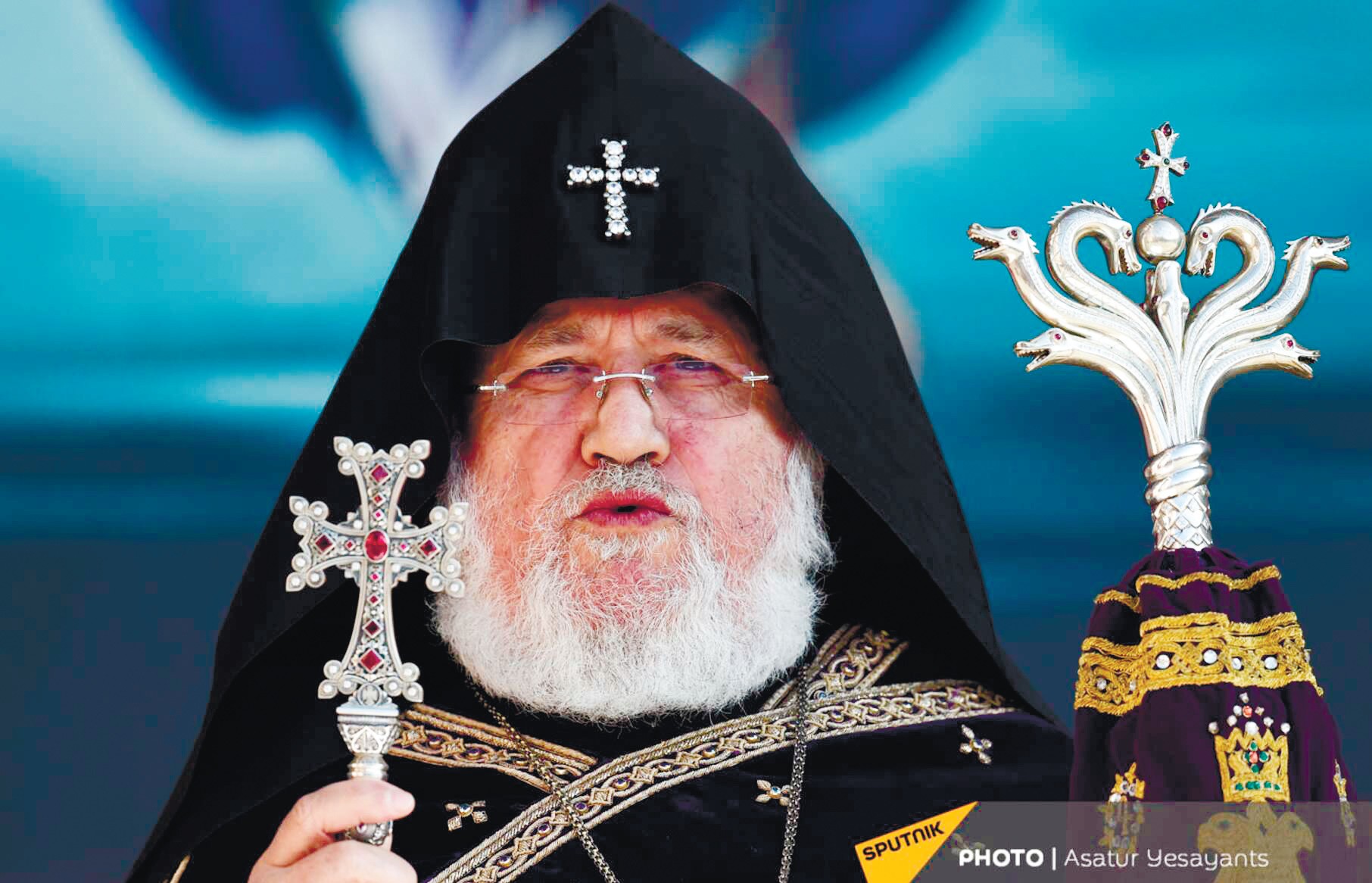
In response, the Chancellery of Echmiadzin published an open letter. Arshak Khachatryan, head of the Chancellery, expressed hope that the prime minister would turn his attention to Azerbaijan's growing claims on Armenian churches, including the preservation of spiritual heritage monuments in "Azerbaijani-occupied Artsakh." Pashinyan ignored this advice and responded to Archbishop Bagrat Srbazan on Facebook with harsh profanity. The Prime Minister’s reply resembled an insult advising him to "make love to his uncle’s wife." The clergy immediately reminded Pashinyan that he lives with Anna Hakobyan in what amounts to a "civil partnership," effectively meaning "sin." In response, Pashinyan accused Catholicos Garegin II of breaking his vow of celibacy and claimed that the head of the church has a child. The climax came when Pashinyan stated that the Armenian authorities should have a decisive voice in electing the Echmiadzin Catholicos.
A decisive voice
The relationship between religion and state is a very delicate area, especially in mono-national Armenia with its "national" church. Even the constitution states clearly: "The Republic of Armenia recognises the exclusive mission of the Armenian Apostolic Holy Church as the national church in the spiritual life of the Armenian people, in developing its national culture and preserving national identity." In practice, the Church in Armenia acts almost as a "guiding and directing" force—similar to how the Soviet Constitution described the Communist Party of the Soviet Union. Therefore, it will be much harder for Pashinyan to confront the churchmen than it was with the Constitutional Court.
Moreover, this "church war" was initiated by Pashinyan against a "living grandfather"—the current Catholicos himself. A person holding such a high church position cannot be removed from outside influence, especially not by civil authorities or by demands from participants in regular rallies. It would require waiting for Garegin II to resign voluntarily; however, he clearly shows no intention to do so.
It is true that issues within the Armenian church are often handled very radically. For example, Catholicos Khoren Muradbekyan was strangled in 1938. In February 2009, Archbishop Nerses Pozapalyan was found unconscious in his flat after being severely beaten by unknown assailants; he died in May that year. Pozapalyan had allegedly also claimed the Catholicos throne. Would Pashinyan take such a step? It is unlikely, especially given how heated passions have become amid accusations of betrayal; this is exactly what he needs least.
Giving civil authorities a "decisive vote" in choosing the Catholicos would require a complete restructuring of relations between government and Church in Armenia. In such a scenario, priests would essentially become civil servants. Understandably, clergy would resist such changes with all their power and methods.
Priest or agent?
The actual authority of the Church in Armenian society remains an open question. Numerous openly scandalous stories are linked to it. For instance, Archbishop Navasard Kchoyan was involved in a well-known "offshore scandal" during which one Armenian oligarch’s property was seized. Father Vache, rector of the Armenian church in Nice, France, was linked to local "Russian mafia" groups. The rector of the Armenian church in Strasbourg faced accusations of counterfeiting money... The small rallies led by Archbishop Bagrat Srbazan say much to those familiar with the situation.
At the same time, the Church has substantial financial leverage and support. Even during Soviet times, it received material aid from abroad quite generously—not mostly money but "charity parcels," which turned Echmiadzin into one of the leading centres for smuggling consumer goods.
This is not openly discussed in Armenia, but church hierarchies maintain close ties with terrorist groups. In many countries, churches collect so-called "national tribute," which can involve links to racketeers.
What troubles Pashinyan most is that the Church can receive significant external backing—primarily from Moscow—which has its own tools and opportunities to influence Armenia’s internal affairs. Yerevan remains heavily dependent on Russia. Pashinyan’s pro-Western posturing, which often resembles mere theatrics, has not changed this dependency. As Armenia prepares for next year’s elections, Moscow is signalling its frustration with Pashinyan's geopolitical manoeuvres by openly waging an information war against him.
Given this internal situation, church leaders will likely form a united front with political opposition groups against Pashinyan. This includes the "Garabagh clan," Dashnaks, and many other parties and factions that do not hesitate to use forceful means. Opposing Pashinyan will be difficult today because he has lost much of his former popularity—especially since he lacks both a clear plan and sufficient supporters within the Church itself, without whom such a programme cannot succeed.
Strengthening the peace agenda or a power struggle?
It is tempting to think that Nikol Pashinyan intends to strike at one of revanchism’s strongholds in Armenia. Catholicos Garegin II regularly makes openly revanchist statements in his sermons. The Armenian Church did not dissolve the "Artsakh Diocese," created after occupation of Azerbaijani territories. The Church's support for radical political groups speaks volumes. However, Armenian churchmen are unaccustomed to such confrontations.
No matter how much one may wish to see Pashinyan’s attack on the Church as a struggle against revanchists, his actions reflect much more than that—a straightforward fight for power. His supporters began attacking Garegin II even after the "kebab revolution," holding rallies demanding the Catholicos’s resignation on grounds that he was too close to previous authorities.
At that time, Pashinyan made statements like "Garabagh is Armenia, period," recruiting known hawks such as David Tonoyan and Vagharshak Harutyunyan into his team and hinting at questioning the Kars Treaty while preparing for a "new war for new territories," implying renewed aggression against Azerbaijan.
Simultaneously, this "inveterate democrat" sought to control almost all institutions in Armenia and build a regime of personal dictatorship. Shortly after taking power, Pashinyan easily brought Armenia’s Constitutional Court under his control; his supporters organised attacks on unwanted media offices; and he announced purges within an army full of "Garabagh clan" members.
To be fair, aside from controlling the Constitutional Court, his efforts largely failed elsewhere. His current conflict with the Church occurs amid rapidly declining popularity and looks more like a last resort.
Whoever wins this conflict, Armenia has already lost.
RECOMMEND:
 281
281

