

AGHABABA BUNYADZADE: THE GREAT VOICE OF HASAN-KHAN
It has been exactly 110 years since the birth of an extraordinary artist — a man both strict and open, relentlessly demanding of himself

Author: Nigar VELIYEVA
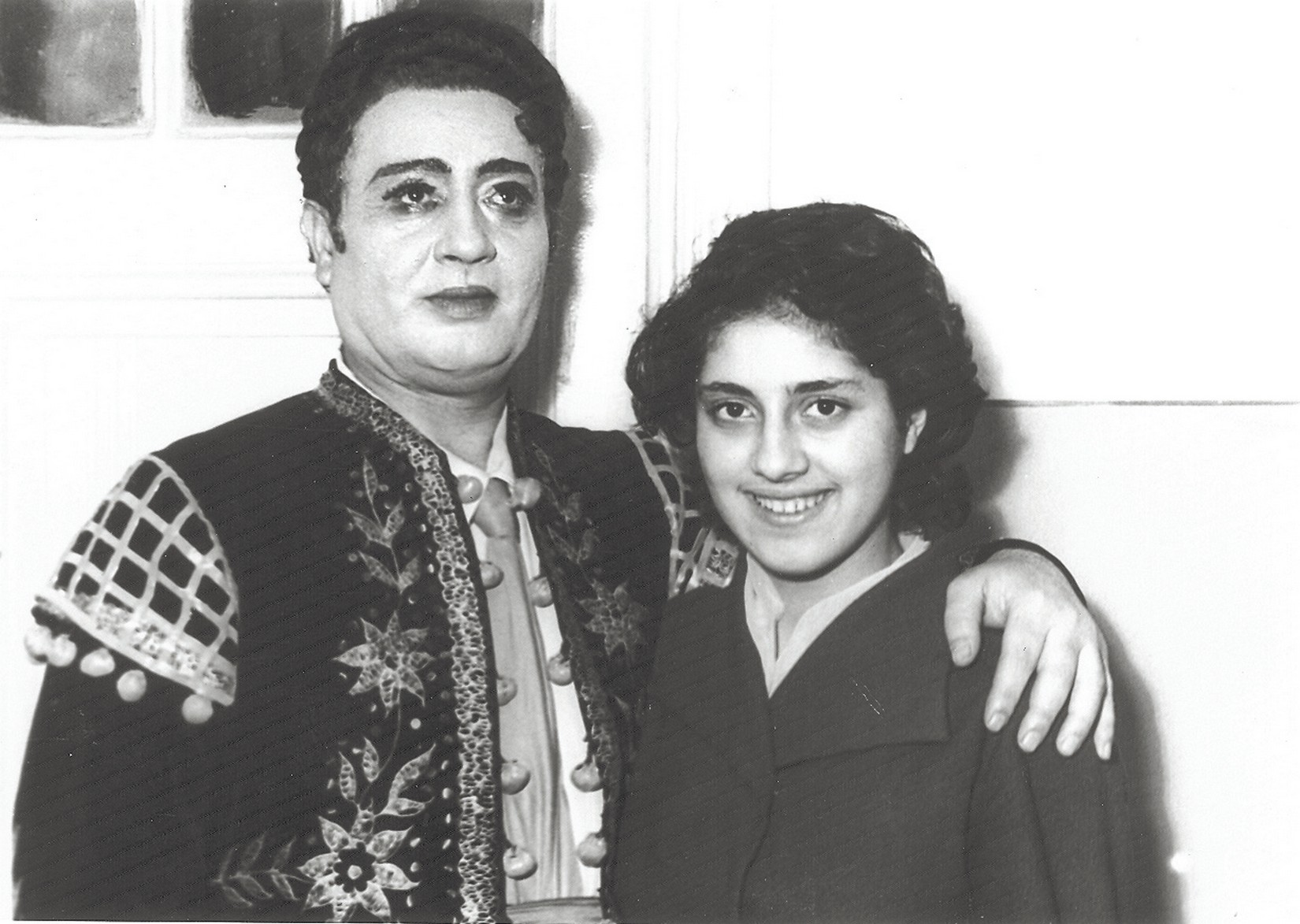
Some singers are remembered simply for their beautiful voices. Others are known for the vivid characters they portray. But very few become the voice of an entire era. Aghababa Bunyadzade, People's Artist of Azerbaijan, belonged to this rare category: a man both exacting and sincere, whose warmth radiated to everyone around him. His voice—one that "opened" hearts—still echoes today.
Many imagine an opera singer as a tall figure with a proud bearing who politely praises colleagues but rarely notices ordinary people behind the scenes. Aghababa Bunyadzade was nothing like that. An exceptional baritone with a broad, powerful, yet tender voice, he left an unforgettable impression on all who heard him. He did not merely sing; he lived every role he performed. This year marks the 110th anniversary of his birth.
"Not to lose"
Aghababa Balagha oghlu Bunyadzade was born in the summer of 1915 in the oil-rich part of Baku where the scent of petroleum mingled with that of the sea. As a boy, he never dreamed of the stage, but his clear and resonant voice drew listeners from the neighbourhood.
Following the path expected of a worker’s son, he trained as a turner after school. Graduating from factory school in 1934, he began working at the 1 May Mechanical Plant. His days were spent among machines and parts; his evenings filled with rehearsals for the factory ensemble. At the time, every workplace had its own song culture — both in workshops and theatres. Soon everyone recognised him: this tall young man with gentle eyes sang so compellingly that everything else faded away.
In 1936, a brief newspaper notice changed his life forever. A choir was being formed for the Decade of Azerbaijani Literature and Art in Moscow, and hundreds applied to audition — among them, this factory turner. Uzeyir Hajibeyov himself served on the jury. When he heard Bunyadzade’s voice, he reportedly declared: "Not to lose!" Thus, the turner was invited to join the opera theatre chorus.
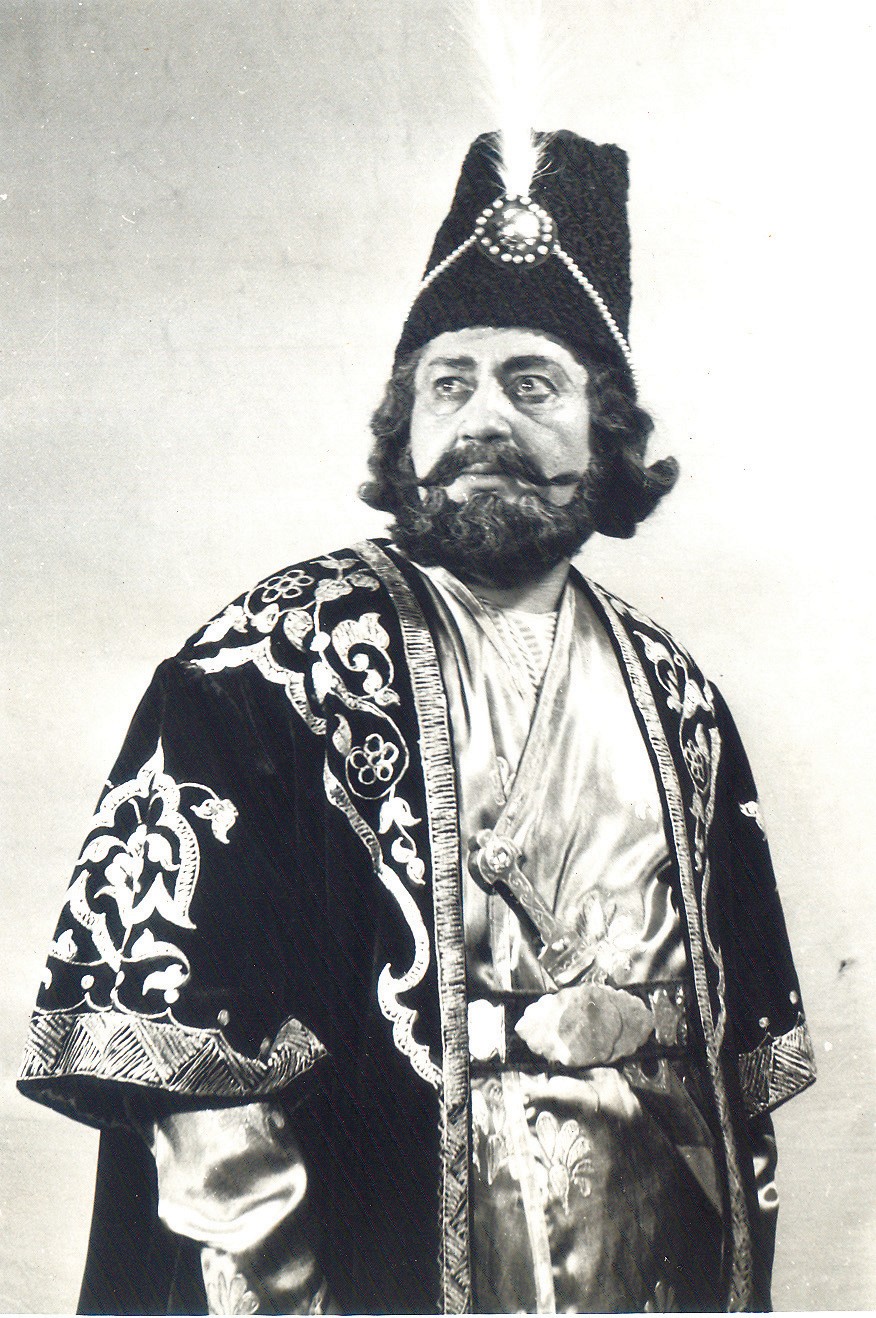
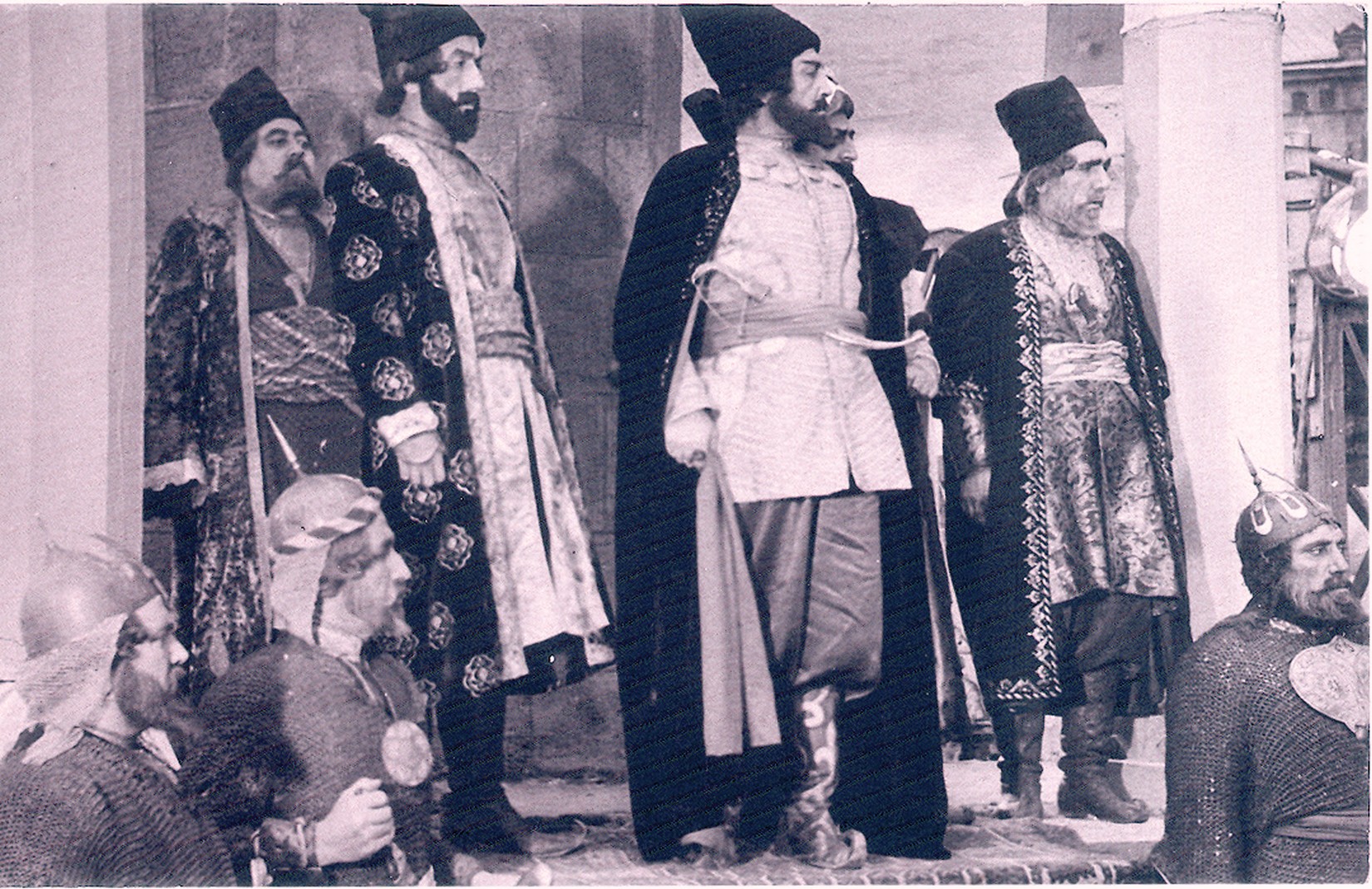
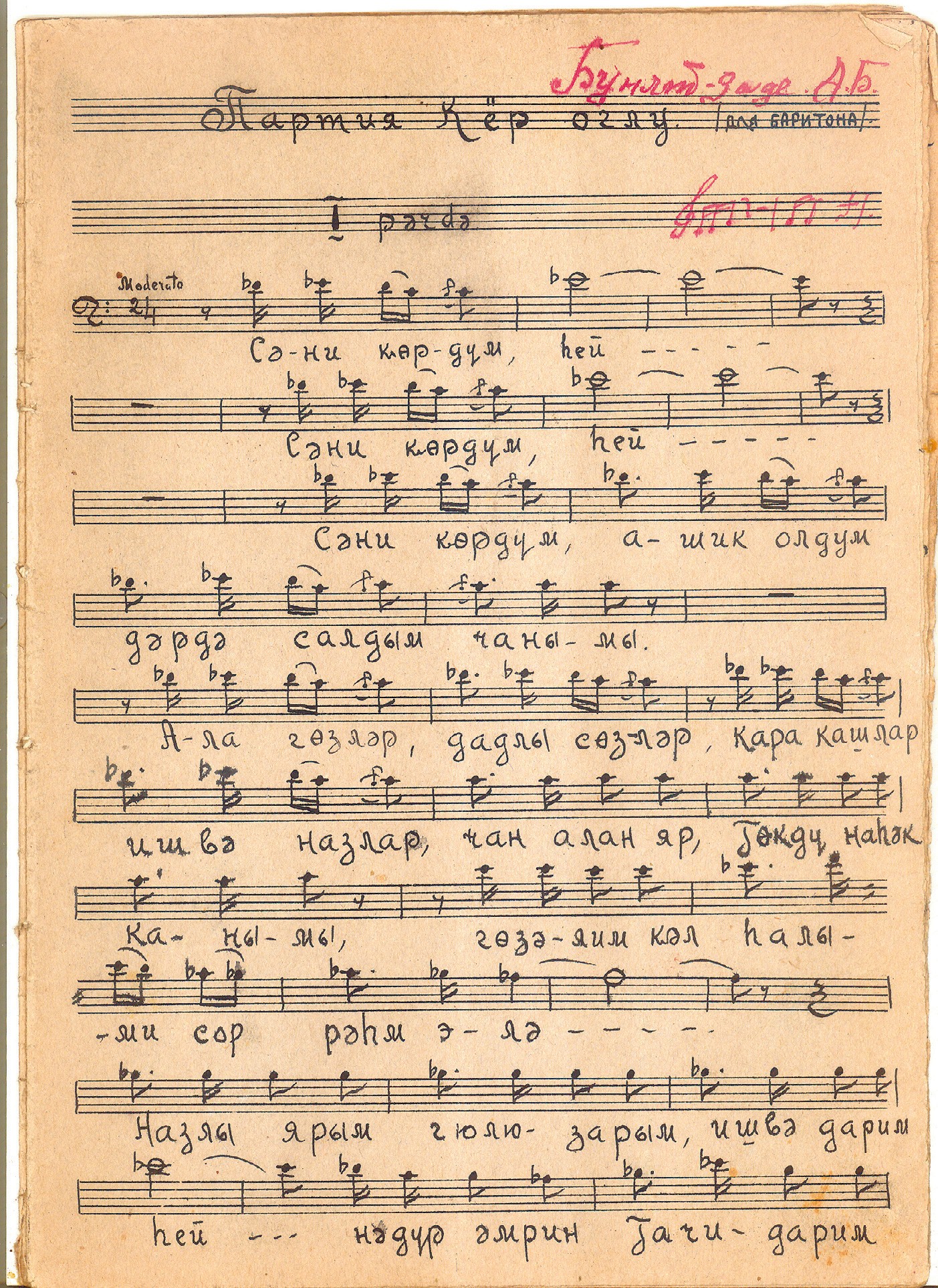
Initially singing in the chorus and common scenes, he absorbed every detail carefully. The stage captivated him like nowhere else. Soon he was entrusted with the role of the Herald in Köroğlu. Backstage, he hummed other roles repeatedly until he memorised Hasan Khan’s part by heart — though he dared not dream of performing it solo.
Those working backstage then remember a quiet, intensely focused young man who never boasted but whose voice silenced the entire theatre when he sang.
Ismayil Hidayatzade, the production’s director — a man known for his creativity and ability to inspire — took notice. One rehearsal he said to Hajibeyov: "I have a surprise for you — we have found a new Hasan-khan." And so in March 1937 Bunyadzade moved from chorus member to soloist.
"...it is always possible to do even better"
He understood that natural talent alone would not suffice; the stage demands rigorous training. In 1938 he enrolled at Moscow’s prestigious Gnessin School, later recalling those years as an ordeal marked by strict teachers, daily vocal exercises, breath control work and attention to nuance. Upon returning to Baku, he studied at the opera studio of Azerbaijan State Conservatoire under Konstantin Knizhnikov. These years freed his voice and made it flexible — capable of booming dramatically or whispering delicate lyrical phrases.
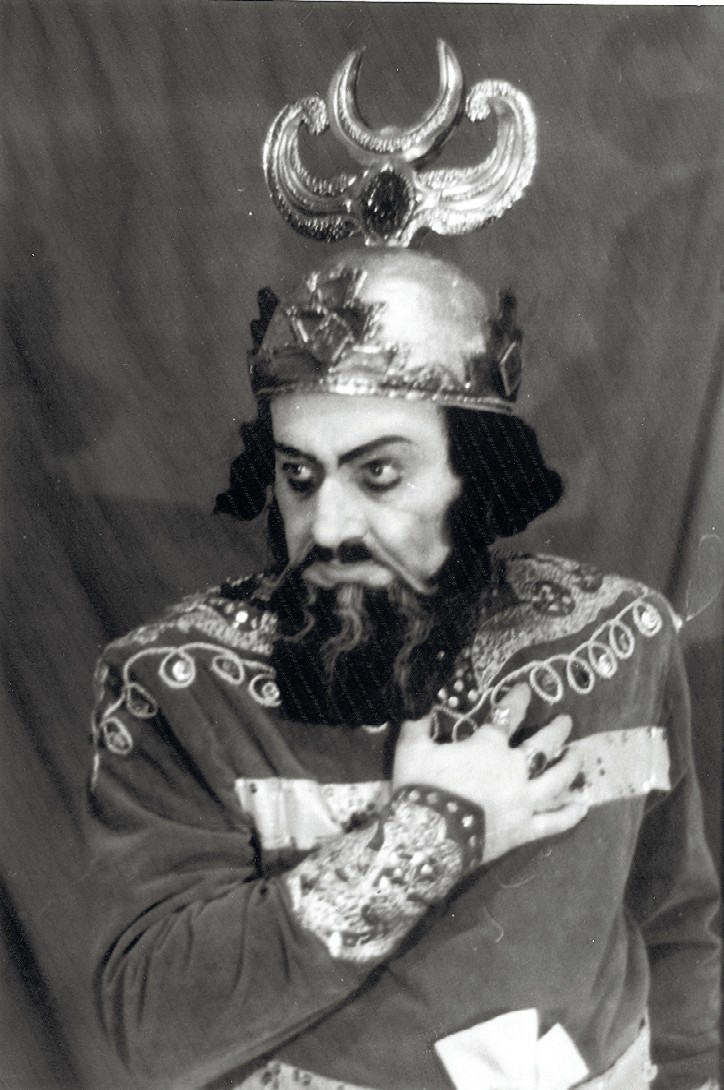
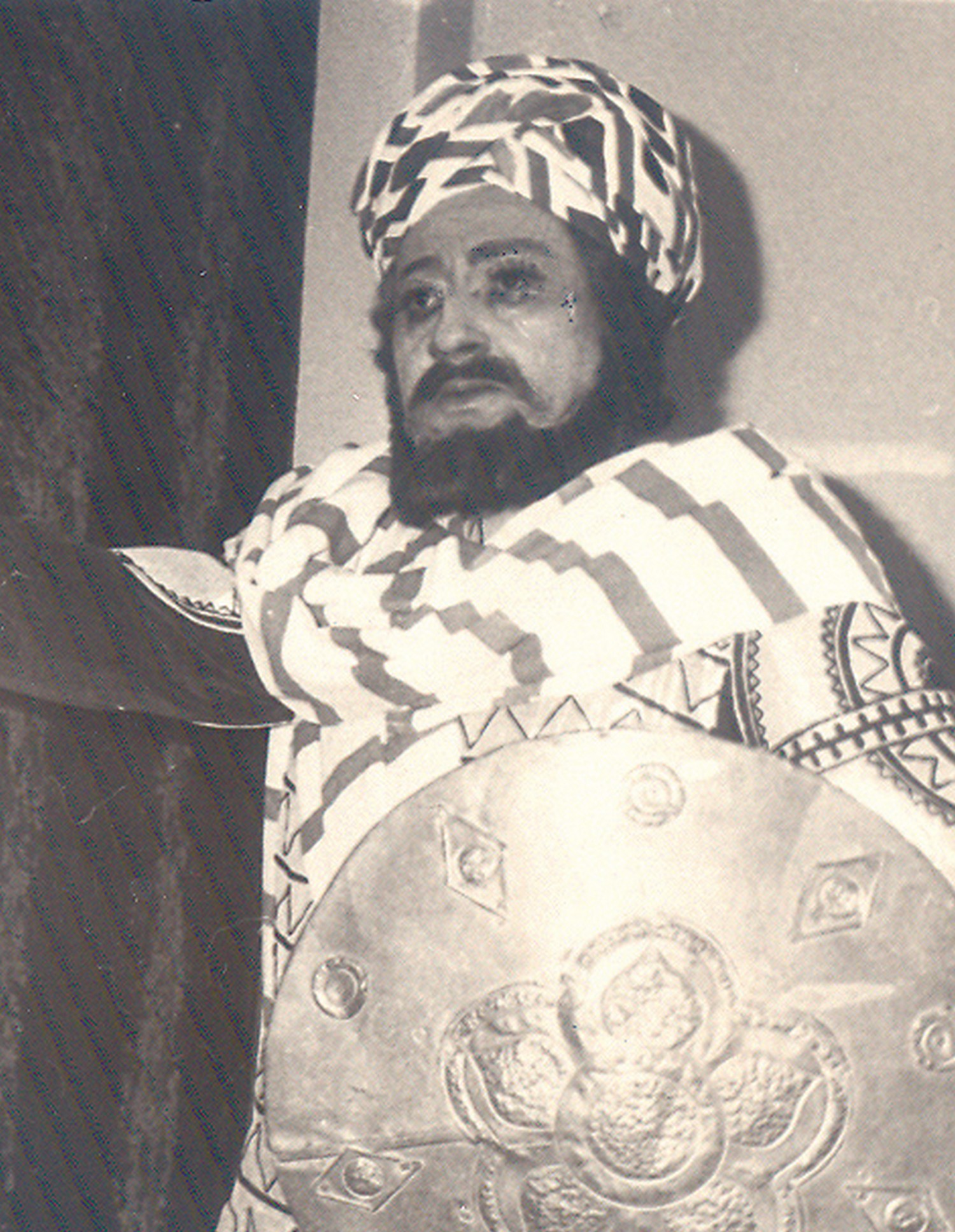
His first major roles included Khan in Glier’s Shahsenem and Gazar in Muslim Magomayev’s Nargiz. Critics quickly hailed him as one of Baku’s most promising new talents. He took on Aslan Shah in Shah Ismayil, constantly seeking subtler and sharper interpretations during rehearsals. Yet his defining role remained Hasan Khan.
In 1941 he debuted as Hasan Khan in Köroğlu. Backstage applause was rare then, but after his aria everyone was silent in admiration. He recalled: "Uzeyir-bey approached me saying: ‘Well done. But remember this — you can always do even better.’ Those words stayed with me my whole life."
He inhabited that role for three decades—not simply repeating it but reinventing it each time with new looks, intonations and gestures. Those who heard him perform Hasan Khan both in youth and twenty years later said it felt like two different men—both authentic.
During the Second World War, Hajibeyov composed the cantata Motherland and the Front specifically for him. Bunyadzade performed it at Philharmonic Halls as well as on front lines, in clubs and factories. The cantata was a solemn vow: his powerful baritone inspired people everywhere to persist and advance without surrendering.
Legend has it that Hajibeyov planned a new version of Köroğlu tailored for his voice—a baritone lead instead of tenor—but eventually said: "You are Hasan-khan; that is how you will be remembered." The singer later admitted candidly: "Köroğlu belongs to Bülbül; I would never dare take that on." Throughout his career he sang alongside greats such as Bülbül, Rzayev and Imanov—always discovering new facets of his character.
"It's not a voice — it's a cello."
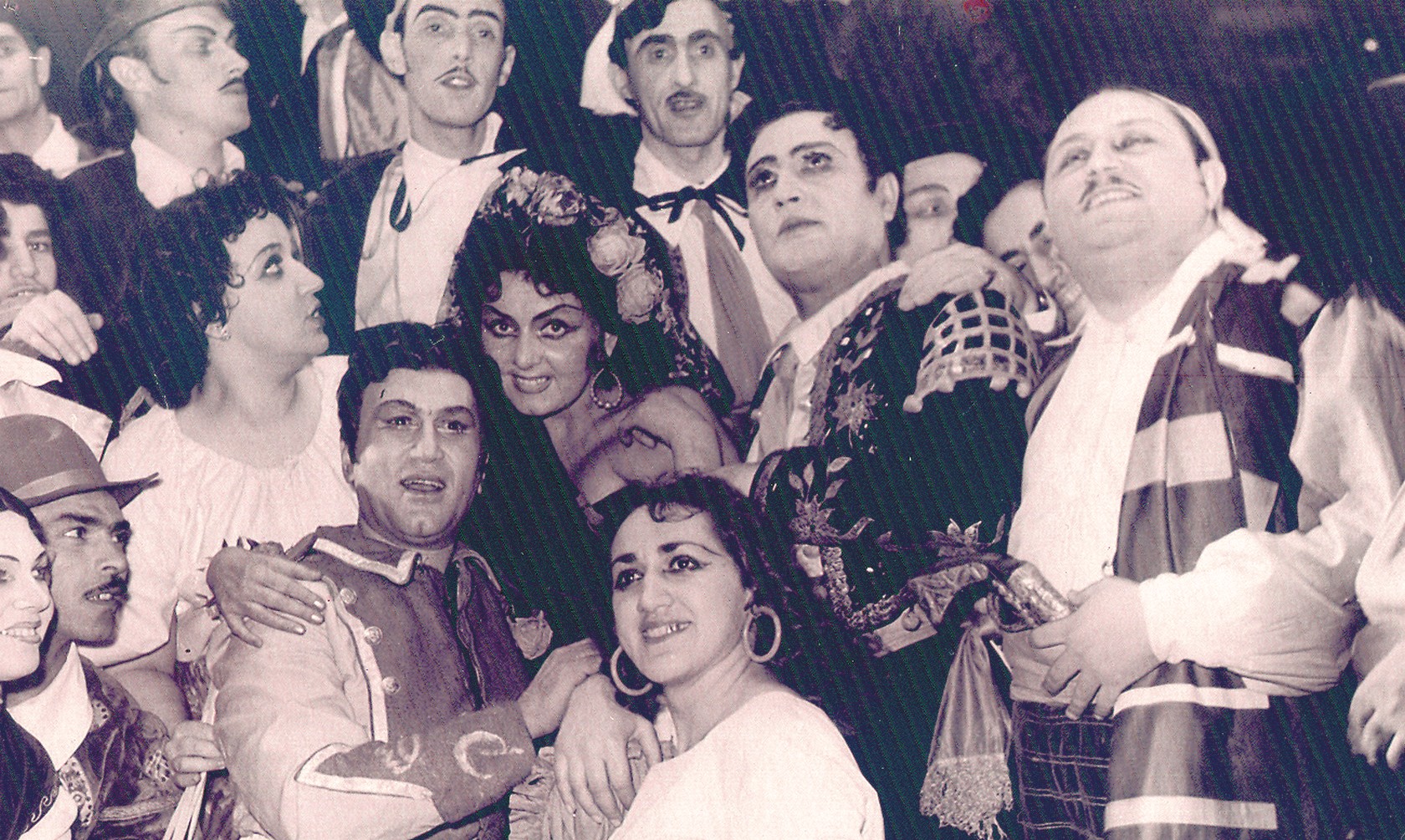
The Bolshoi Theatre invited him multiple times—a dream opportunity for any singer then—but he declined with a smile: "Moscow is cold, and I must protect my voice." His loyalty remained with Baku and its theatre. However, he loved touring; his Escamillo in Carmen caused a sensation in Sofia.
Once during a family holiday in Kislovodsk, when a local baritone fell ill and performances were cancelled, theatre management sent word asking for Bunyadzade’s help. He went without hesitation, sang brilliantly and saved the show—then quietly returned to relax on the terrace with his wife without accepting any fee.
His repertoire was enormous. Figaro in Rossini's Barber of Seville was thought by many to be ill-suited for his "heavy" baritone voice. But Afrasiyab Badalbeyli insisted: "He will sing it," and indeed he did. Audiences said of his Figaro trills: "It is not a voice—it is a cello." He also portrayed Iago in Verdi's Otello, Amonasro in Aida, Valentin in Gounod's Faust, Shapur in Khosrow and Shirin, Chiazo in Daisy, Demon—and every role was alive with unique emotion and depth.
Gara Garayev wrote: "His voice never deceived; if the character was cruel, his singing was harsh; if noble, his timbre reflected nobility." He adored chamber music—mughams, romances and European classics alike—and played piano so delicately at concerts that audiences held their breath fearing to disturb a single note.
A rare man
In 1967, Aghababa Bunyadzade took on a new role as director when he staged Muslim Magomayev’s opera Shah Ismayil. Colleagues recalled: "He understood the stage so instinctively that he could build a production without any notes."
He disliked self-praise or fanfare. Everyone at the theatre knew him—wardrobe ladies, fitters, ticket takers—and if anyone fell ill he brought medicine; if quarrels broke out he would wave his hands saying: "Why? Everything on stage matters more." Years later when his granddaughter visited on business, old theatre workers told her: "He was a rare man—strict but kind; few words yet everyone knew he would never harm anyone."
He became an Honoured Artist in 1943 and was named People’s Artist in 1955. His modesty extended even to prestigious awards like the Order of Lenin and Order of the Red Banner of Labour which he wore quietly. For him, the greatest honour was always the stage where he performed for over thirty years.
Tragically, on December 17, 1974, his heart stopped beating.
Köroğlu continues its run at the Azerbaijan Opera and Ballet Theatre today. And if someone in the audience suddenly feels a chill while Hasan Khan’s aria fills the air—perhaps it is him: the same voice once heard by Hajibeyov who said: "Don't lose it."
RECOMMEND:
 284
284

