

THE DRAGON'S ‘SOFT POWER’
The Second China-Central Asia Summit reveals Beijing's push to formalise its leadership in the region
Author: Ilgar VELIZADE
Amid ongoing geopolitical crises—from the war in Ukraine and the escalating conflict in the Middle East to the rise of trade wars between global powers—the relationship between China and Central Asia is taking on ever-greater strategic importance. On the one hand, these ties are becoming a cornerstone of regional stability; on the other, they are a key element in adapting to a changing global landscape.
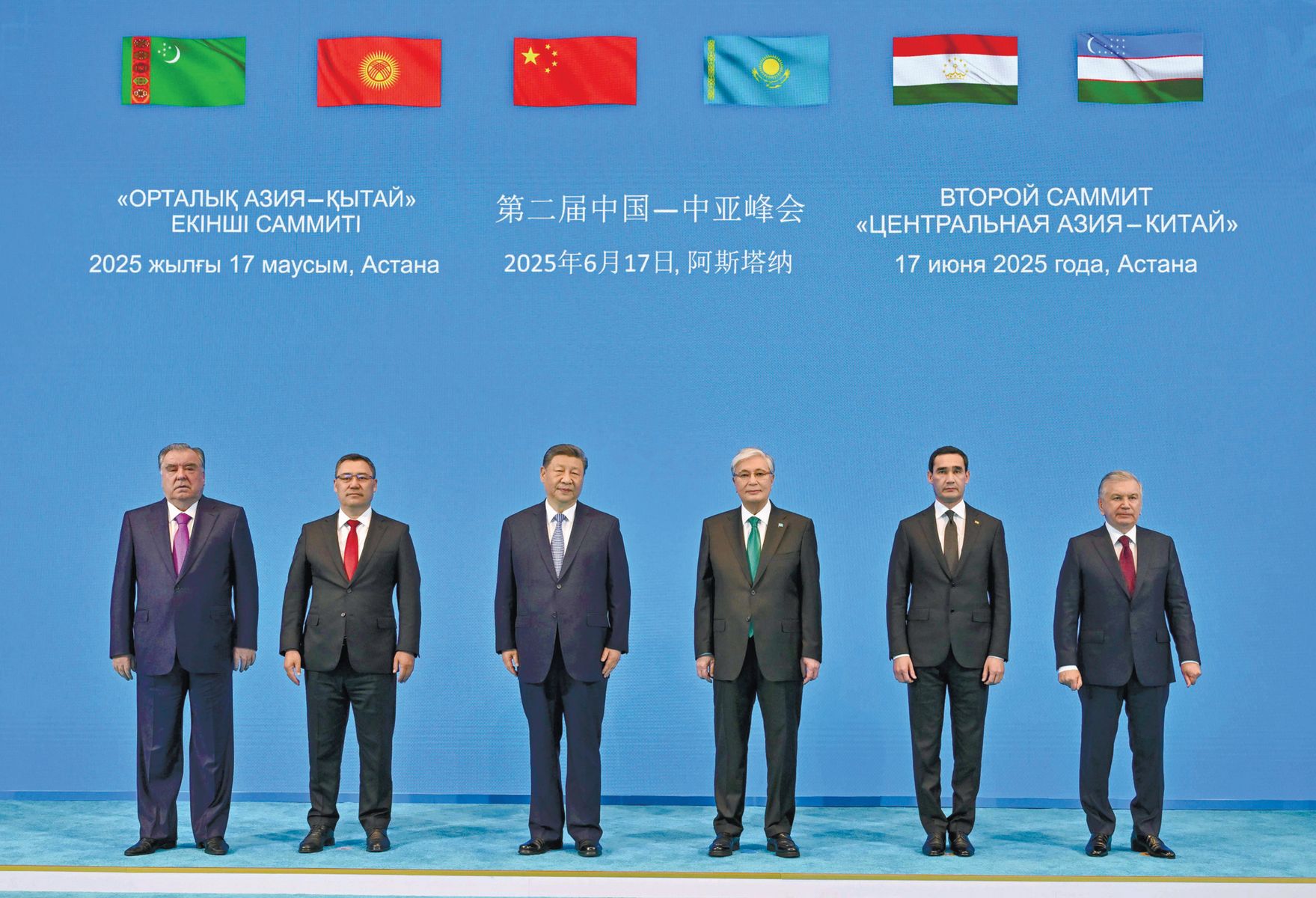
This was powerfully demonstrated by the second China-Central Asia summit, which marked a major milestone in strengthening cooperation between Beijing and the nations of the region.
Kazakhstan: a cornerstone of Beijing's Central Asian policy
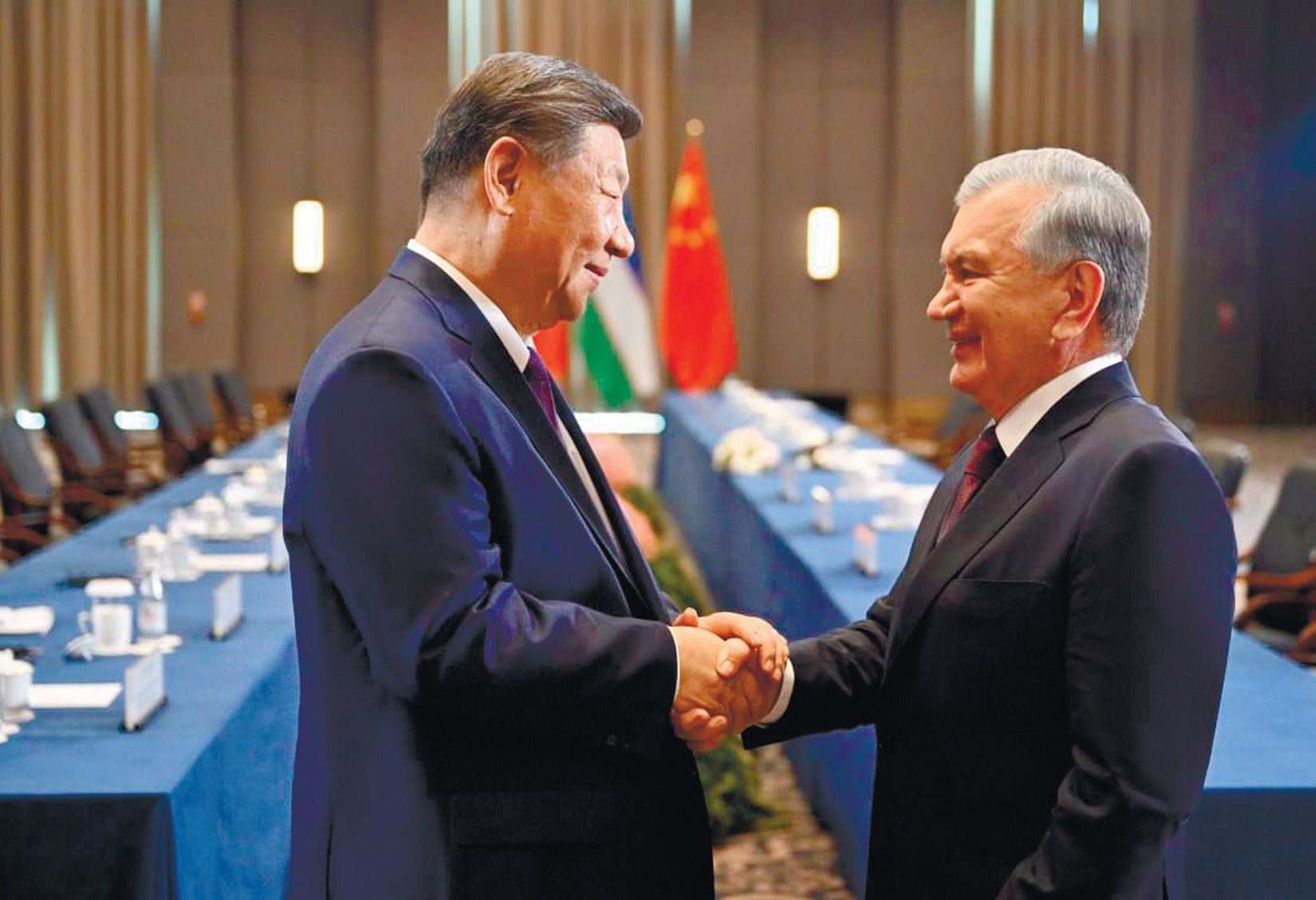
Notably, the summit was preceded by a working visit to Kazakhstan by Chinese President Xi Jinping. Following their talks, the leaders of the two nations made a series of fundamental decisions that will shape not only the future of their bilateral relations but also the political and economic dynamics across all of Central Asia.
This is no coincidence. For many years, Kazakhstan has been China's leading trade partner in the region, a fact reflected in the nature of their political dialogue. Critics contend that China uses economic leverage to solidify its growing dominance in the region, with Kazakhstan serving as a "springboard" for its presence. Some observers even claim that Beijing blatantly imposes its terms on its neighbours, fostering an artificial dependency. This perspective, however, overlooks the crucial fact that cooperation with China is largely driven by the interests of the Central Asian states themselves. No one can compel Astana, Tashkent, or Dushanbe to build close ties with Beijing if its actions were to undermine their interests or subordinate them to its influence.
Of course, Beijing is acting assertively, creating a sophisticated infrastructure of multi-layered ties that spans various fields of interaction. Yet, without the will and active participation of the regional actors themselves, this would be virtually impossible.
The nature and number of documents signed during President Xi's working visit to Kazakhstan confirm this. The 24 agreements and memoranda cover a vast range of sectors: energy, transportation, aerospace, investment, agriculture, e-commerce, tourism, intellectual property, medicine, media, culture, and science. This time, however, what drew the most attention were the agreements on the joint development of rare earth metal resources and cooperation in the peaceful use of atomic energy.
New priorities for Beijing and Astana
In a departure from previous years, when China was primarily interested in the extraction and initial processing of rare earth elements in Kazakhstan, the two sides are now agreeing to establish a complete production cycle localized within Kazakhstan. To this end, Kazakhstan's First Deputy Prime Minister, Roman Sklyar, announced Astana's intent to develop the production of heat-resistant nickel alloys and battery materials based on a formula of "investment and technology in exchange for raw materials." He expressed expectations for an exchange of expertise and joint projects with Chinese companies in the rare earth metals sector.
It is worth recalling that at the EU-Central Asia summit this past spring, European leaders declared their intention to forge agreements with their Central Asian partners that would be qualitatively different from similar deals with China and the U.S. regarding rare earth metal development. The European Union promised the region's nations not just support for extraction but, crucially, the transfer of technology for processing and enriching these raw materials. In this context, the new Sino-Kazakh agreements could signify Beijing's desire to demonstrate that it has its own answers to the challenges posed by its competitors.
Regarding the nuclear energy agreements, Kazakhstan has acted with considerable prudence. To avoid politicizing the issue and provoking open displeasure from Moscow, the first investment project to build a small nuclear power plant in the country will be a proposal from Russia's Rosatom, while the second will be awarded to the China National Nuclear Corporation. In this manner, Astana plans to maintain parity in its cooperation within this highly sensitive sphere.
Describing the current state of bilateral relations, Kazakh President Kassym-Jomart Tokayev called this period a "golden era." This is vividly illustrated by the steady growth in commerce and the latest figures: trade turnover exceeded $44 billion by the end of 2024. To put this in perspective, that amount is slightly more than Russia's total trade with all Central Asian countries combined over the same period.
When examining China's relations with the Central Asian states, it is clear that Kazakhstan is the undisputed leader in trade with the PRC among the region's countries. And China, in turn, is the undisputed leader among all external powers in trade with Central Asia.
Leading the "battle" for the region
China's trade with the Central Asian region, valued at $95 billion, is over a third larger than the EU's ($60 billion) and more than double Russia's ($44 billion). The EU holds second place, despite its greater geographical distance, thanks to significant investments and active cooperation in the energy sector. Russia rounds out the top three at $44 billion, with its trade showing signs of stagnation, partly due to economic restrictions and sanctions. According to Ekonomist.kz, China's share of the region's total foreign trade turnover was approximately 40% in 2024.
After Kazakhstan, Uzbekistan is China's second-largest trading partner, with a volume of $13.7 billion. Although this is tens of billions of dollars less than Kazakhstan's figure, China still accounts for 18.9% of Uzbekistan's total trade, 26.8% of its imports, and 7.6% of its exports. Overall, Beijing's relationship with Tashkent demonstrates considerable stability. Despite a minor dip last year, a portfolio of signed investment agreements worth $60 billion points toward future growth in both the absolute and relative figures of their trade and economic relations. Promising areas for collaboration include green energy, pharmaceuticals, the agro-industrial complex, digitalization, and logistics.
A distinct but related topic is the construction of the China-Kyrgyzstan-Uzbekistan railway. This project aligns perfectly with an initiative Tashkent proposed in December 2019 to create a major China-Kyrgyzstan-Uzbekistan-Turkmenistan transit and logistics rail artery.
It's noteworthy that China enjoys a significant trade surplus with the region, accounting for about 70% of the total trade volume. The only country to post a positive trade balance with China is Turkmenistan, because the bulk of its exports to the "Celestial Empire" consists of natural gas delivered in massive quantities via pipeline. China is the primary consumer of Turkmen gas, purchasing over 70% of the country's total "blue fuel" exports. A recent slight decrease in Turkmenistan's gas production is prompting both sides to seek joint solutions to maintain and increase export volumes in the near future.
Allies in all but name
The signing of the "Treaty on Eternal Good-Neighbourliness, Friendship and Cooperation" by China and the five Central Asian republics marks a pivotal moment in the institutional development of their relationship. This document effectively elevates their relations to a near-alliance. It specifically emphasizes "resolute support for independence, state sovereignty, territorial integrity, and the principles of sovereign equality and the inviolability of borders." This is critically important for both China and its Central Asian partners, who face threats of foreign interference in their internal affairs and challenges to their territorial integrity. Considering the significant difference in the "weight class" of the signatories, China is, in essence, positioning itself as a guarantor of its regional neighbors' territorial integrity and sovereignty.
Against the backdrop of conflicts unfolding nearby, coupled with ongoing debates about the legitimacy of the Soviet Union's dissolution, fears are growing within the region about the potential for instability to spread into Central Asia. The text of the treaty suggests that Beijing shares these concerns and is prepared to take steps to mitigate potential risks for the region.
Crucially, a separate article in the treaty commits the signatories to advancing cooperation in defence, military-technical matters, and security. It also states that "to implement the provisions of this Treaty, the parties shall, where necessary, conclude separate international treaties in specific areas of cooperation of mutual interest." This opens the door to signing separate agreements and deepening the multilateral partnership on security and defence.
The summit, along with the adoption of this new treaty, serves as clear evidence that despite all the complexities and points of friction, there is a firm understanding on all sides: the potential for cooperation objectively outweighs the sources of conflict, and at present, there is no alternative to its continued development.
RECOMMEND:
 240
240

