

THE DEAFENING SILENCE OF KANANASKIS
Ignoring the Global South, the G7 drifts further from real geopolitics and closer to symbolic existence
Author: Irina KHALTURINA
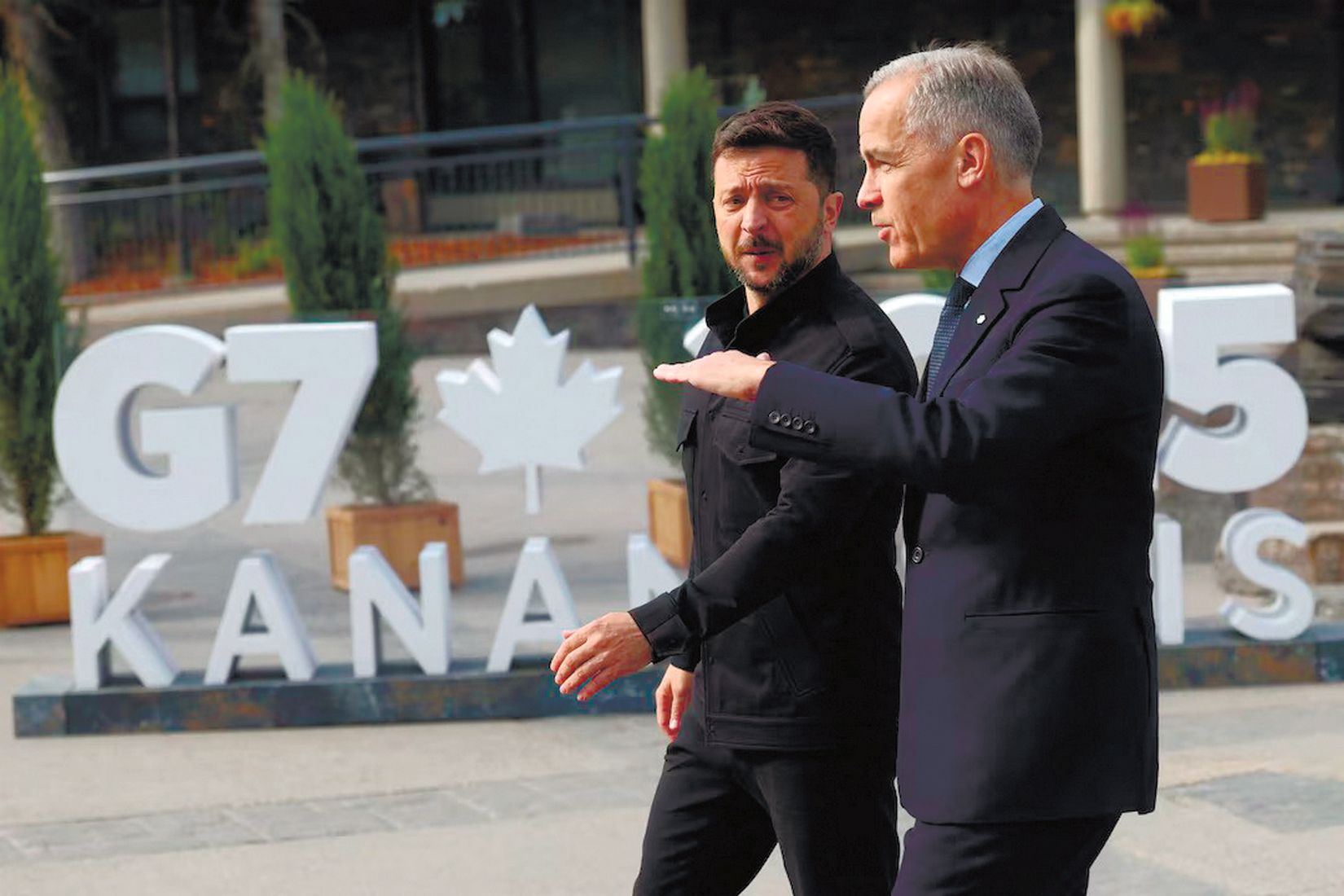
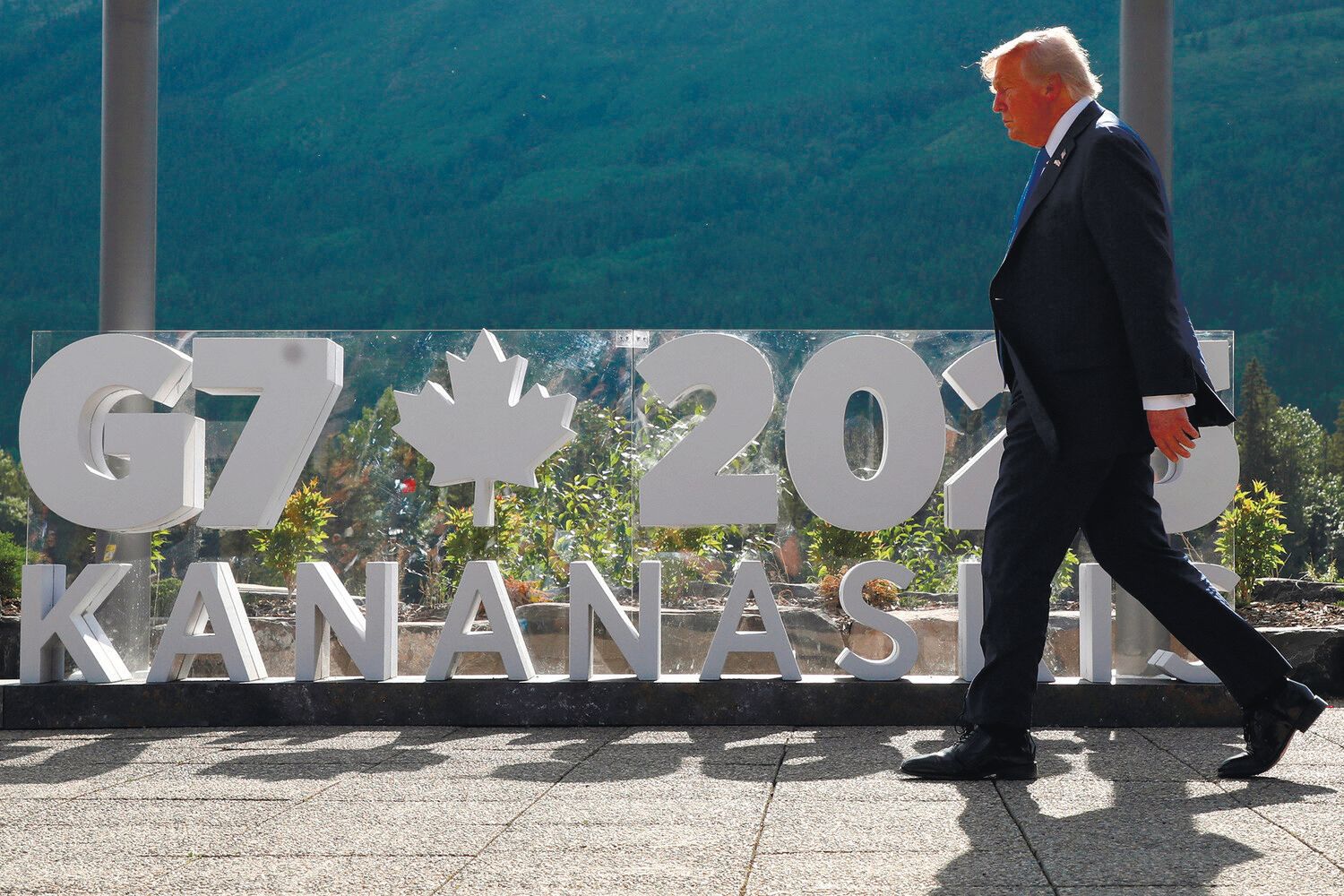
The latest G7 summit, held on June 16–17 in Kananaskis, Alberta, Canada, has drawn mixed—and largely critical—assessments from observers. Some have even gone so far as to declare the decline of this international platform. While the gathering boasted a traditionally impressive line-up—the seven permanent members, alongside the heads of the European Commission and European Council, the NATO and UN secretaries-general, and the leaders of Brazil, Mexico, and Ukraine—the broader international context undermined its significance. The escalating crisis in the Middle East and the ongoing conflict in Ukraine dominated discussions, exposing deepening rifts within the "developed world." The divisions were so stark that US President Donald Trump left the meeting early, resulting in the unprecedented absence of a final communiqué—a stark contrast to the 30-page document produced in 2024.
Ukraine sidelined
Ukraine suffered the most from this lack of coordination among global leaders. In recent years, the G7 had served as a critical platform for expressing Western support for Kiev. Last year, for instance, the group agreed to use frozen Russian assets to secure Ukraine approximately $50 billion in loans. This time, however, the war between Israel and Iran hijacked the attention of summit participants.
Moreover, disagreements among G7 members over Ukraine itself have multiplied, particularly concerning the timing and forms of assistance to Kiev, as well as potential pathways to end the conflict. In the end, Ukraine was promised additional support—but without a clear or forceful joint statement. A new loan of C$4.3 billion ($3.16 billion), funded by interest from frozen Russian assets in Europe, was announced.
Canada and the UK unveiled stricter sanctions targeting Russia’s "shadow fleet." Canadian Prime Minister Mark Carney, the summit’s host, also emphasised during discussions the need to apply "maximum pressure on Russia" to compel it to engage in serious peace negotiations. Other leaders expressed hope that the US would impose further sanctions on Moscow. Western media report that Washington currently opposes harsh statements against Russia.
The early departure of Donald Trump—with whom Vladimir Zelensky had hoped to meet—poured fuel on the fire. The Ukrainian president himself left Canada ahead of schedule. After Zelensky’s visit to Washington in late February, which included a controversial Oval Office conversation with Trump, the two leaders briefly crossed paths again at the Vatican during the funeral of Pope Francis. Kiev had hoped to build on this progress in Kananaskis, but the opportunity evaporated.
Further controversy erupted when Trump declared that expelling Russia from the G8 format had been a "major mistake." "Had Russia remained in the group, there would be no war today," the US president stated. "And if I had been president four years ago, we would not be witnessing these conflicts." He argued that direct dialogue with the world’s major powers is essential, regardless of political differences, and that Moscow’s presence at the negotiating table would foster more open discussions on key global crises—including security, energy, and strategic stability.
Trump also hinted at China’s potential inclusion—a move that would erode the exclusivity and purpose of the G7. But this prospect, it seems, does not trouble him in the least.
A summit marked by contradictions
Summit host Prime Minister Mark Carney denied the existence of disagreements and attempted to put a brave face on the proceedings. He claimed, for example, that the meeting "could herald a new era of cooperation focused on long-term resilience rather than short-term efficiency."
Yet the summit’s success depended entirely on what each participant hoped to achieve for their own country. Most leaders were eager to discuss the trade wars Trump has ignited with nearly the entire world—a priority shared by the US president himself. The US and Canada agreed to finalise a bilateral trade and security deal within 30 days. Earlier, Carney had accused Washington of "monetising its hegemony" by imposing tariffs for market access while reducing contributions to collective security.
Neither Japan nor Canada secured major breakthroughs, though discussions will continue. European Commission President Ursula von der Leyen described ongoing US-EU trade talks as "challenging" but "progressing," with a potential compromise possible by July. Meanwhile, the US sealed a trade agreement with the UK.
What conclusions can be drawn? Divisions within the G7 are likely to deepen—at least as long as Trump remains in the White House. His early departure left a bitter aftertaste and a palpable sense of disunity. On social media and in the press, commentators wryly noted that the "G7" had effectively become the "G6."
It is evident that the remaining six leaders are attempting to resist the US president—but so far, they have failed to "catch the wave." French President Emmanuel Macron, en route to Canada, made a stop in Greenland to declare that the island "is not for sale"—a clear message aimed at Trump, who pointedly ignored it. Later, Macron speculated publicly that Trump left early to broker a ceasefire between Israel and Iran. The US president retaliated on Truth Social, dismissing Macron as "clueless" and accusing him of self-promotion. Such exchanges laid bare the group’s internal tensions.
Other contradictions abound. Trump asserted that Ottawa seeks to join the US "Golden Dome" missile defence programme, but Canadian officials declined to comment. Carney, however, has previously suggested aligning with EU rearmament plans to reduce dependence on the US.
The G7’s existential crisis
The leaders of the world’s largest Western economies began holding annual meetings in the 1970s, amid a severe energy crisis. Over time, this format became known as the "Group of Seven," and by the 1980s, it had expanded to address political issues. Yet today, the G7’s discussions merely underscore global problems without offering viable solutions. The formulation of concrete, actionable agreements—rather than empty declarations—has effectively stalled.
Even aboard Air Force One, Trump remarked: "We did what we had to do at the summit. It was a good summit." Tellingly, this was no dissimulation: the US president is solely interested in tangible outcomes—what he famously calls "deals." Grand declarations and multilateral debates hold no appeal unless he is the central figure. One might even speculate that the very essence of the G7—collective decision-making—irritates and exhausts him.
The issue, however, runs deeper than Trump’s personality or that of other leaders. It reflects the spirit of the times: the digital age and social media have revolutionised not only how information is disseminated and consumed but also the traditional mechanics of diplomacy and interstate relations. The world is changing, with new geopolitical poles emerging, and the G7 is steadily losing relevance. Conflicts and obstacles will only intensify if the West continues to deliberate without China, India, Russia, Türkiye, the Arab states of the Middle East, the Global South, or so-called "middle powers."
Where the G7 once functioned as a synchronised and imposing club of the "most developed" nations, it now appears increasingly out of step. Other international formats and multilateral organisations—such as the G20, BRICS, and regional alliances—are gaining prominence precisely because they offer more inclusive platforms for dialogue and cooperation. In 1975, the original six G7 members accounted for 63% of global GDP; by 2024, the group’s share had dwindled to under 29%.
Yet the world is more interconnected—or rather, interdependent—than ever. Economics and global security are now inextricably linked, far more so than in the past. In such a context, there can be no outright "winners"—a truth brutally underscored by the recent Middle East crisis.
The same applies to climate challenges, global health (viruses do not respect borders or distinctions between "developed" and "developing" economies), digitalisation, and AI development. It is clear that the G7 can no longer serve as a compass or guide for the rest of the world. From this perspective, the Kananaskis summit may well be remembered as historic—a turning point in the group’s decline.
RECOMMEND:
 227
227

