
CRISIS OR COUP?
On internal divisions and external pressure shaping Armenia's future
Author: Namig ALIYEV
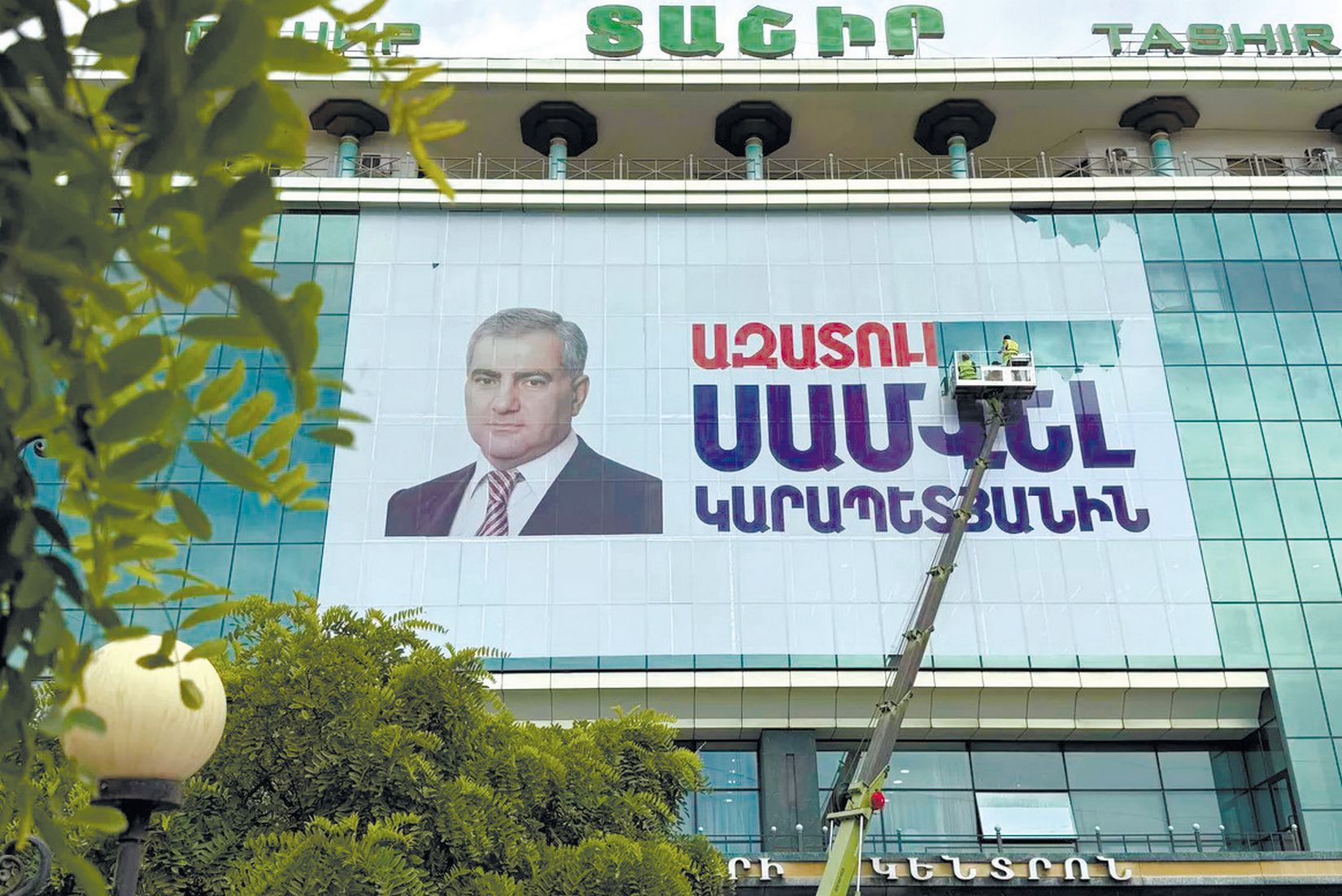
On June 17 in Yerevan, Russian-Armenian businessman Samvel Karapetyan—co-owner of Tashir Group and Electric Networks of Armenia (ENA)—was detained and subsequently arrested for two months. He faces charges of "public calls for the illegal seizure of power" after stating his readiness to "intervene in the campaign against the Church" if politicians failed to act. During a search of his home, dozens of his supporters were detained for resisting police, with two sustaining injuries.
The Overthrow Plan
Karapetyan arrived in Yerevan with a threatening statement in support of the Armenian Church: "If politicians don’t succeed, we’ll participate in this our way." This came in response to Prime Minister Nikol Pashinyan’s June 8 call for the resignation of Catholicos Garegin II, accused of violating his vow of celibacy and fathering a child out of wedlock—canonical grounds for disqualification as Catholicos of All Armenians. Karapetyan defended the Church, accusing the government of undermining the "millennium-old spiritual foundation of the nation." Effectively, he leveraged his status and resources to oppose presidential initiatives against the Catholicos, positioning himself as a "defender of the people." His rhetoric about intervention was perceived as an attempt to cast himself as a patriot rallying supporters around traditional values.
The saga escalated when Armenian outlet Civic published a document—allegedly leaked from opposition circles—outlining a plan to overthrow Armenia’s government. Listed under "human resources" were Karapetyan, former presidents Robert Kocharyan and Serzh Sargsyan, as well as companies like Gazprom Armenia and the Russian-owned South Caucasus Railway. Pashinyan himself later shared the document.
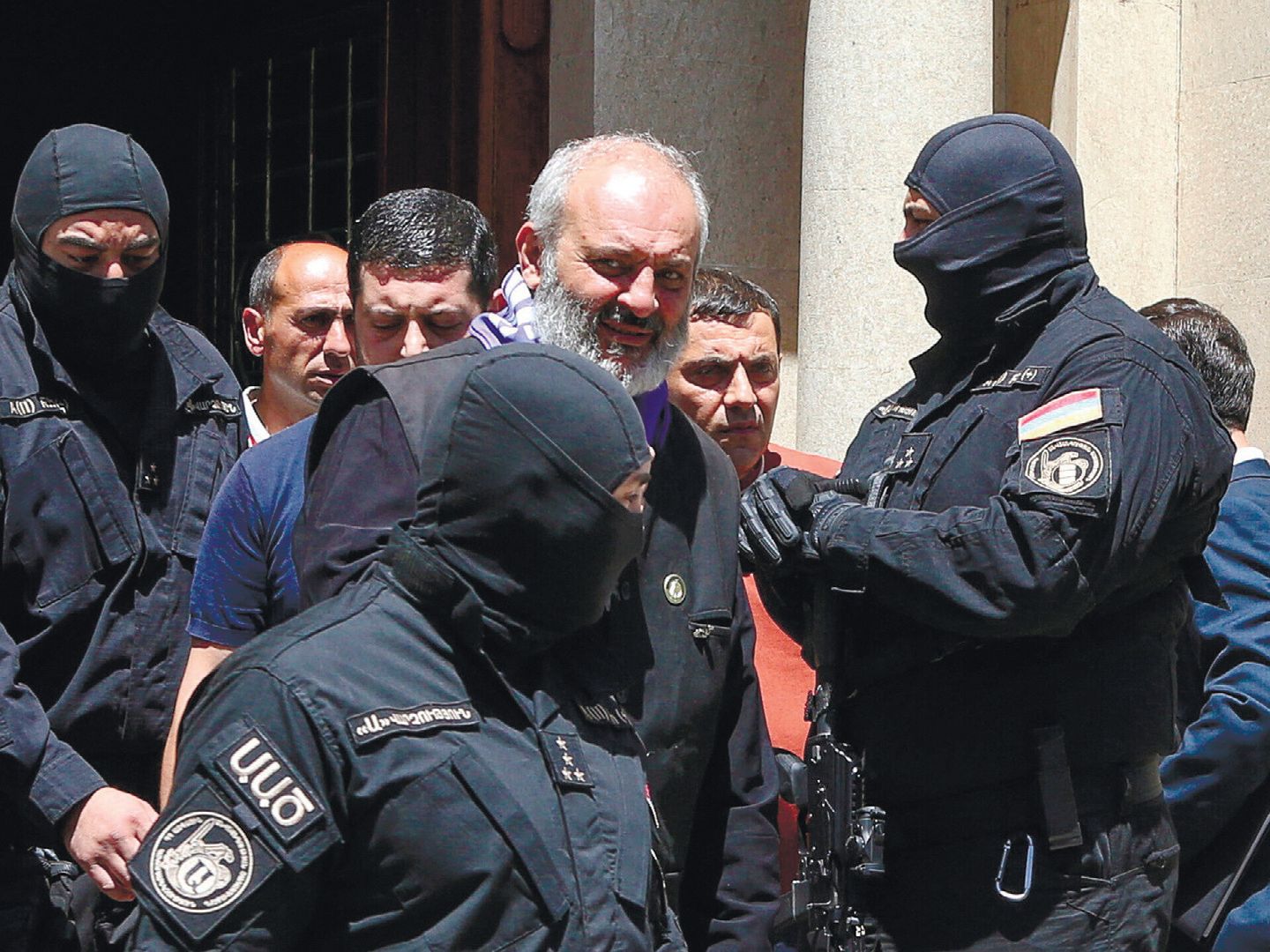
Following the Investigative Committee’s announcement of a foiled coup attempt, 16 members of the Sacred Struggle movement—allegedly plotting terrorist acts and a power grab—were detained. Fourteen (or 15, by some accounts) were arrested, including Archbishop Baghrat (Vazgen) Galstanyan, former separatist representative David Galstyan, retired Colonel Migran Makhsudyan, ARF-Dashnaktsutyun leader Igor Sargsyan, businessman Tigran Galstyan, deacons Grair and Movses, and ParaTV director Elizabet Petrosyan.
The Real Reason for Karapetyan’s Arrival
Observers view Karapetyan’s return as another attempt to unseat Pashinyan, reflecting a persistent pattern of political confrontation where oligarchs and ex-officials seek power through financial clout, ideology, or symbolic influence.
Let's recall previous key failed attempts:
-- Ex-president Robert Kocharyan's post-2020 war attempt to return to power through parliamentary struggle, creation of the "Armenia" bloc, anti-Western rhetoric, reliance on nostalgia for 2000s stability, and restoration of the old elite. Reasons for failure: perception of Kocharyan as a "past" leader without real solutions, lack of broad youth support, and political fatigue with the old elite.
-- The unexpected 2022 appearance of Russian-Armenian businessman Ruben Vardanyan in occupied Azerbaijani territories, attempting to play the 'Garabagh card.' Vardanyan aimed to legitimize himself through Garabagh by creating an alternative power center there. His tools included his position as "state minister" in the so-called Nagorno-Karabakh Republic, investment opportunities, and constant sharp criticism of Pashinyan.
However, several factors prevented this project's realization. First, Garabagh proved a weak and vulnerable platform (and was ultimately liberated from occupation). Then came the escalation in Garabagh caused by his illegal entry into Azerbaijani territory and Baku's negative reaction to increased provocations. Consequently, Azerbaijan fully restored its sovereignty over these territories in 2023. Finally, Vardanyan - perceived in Armenia as a "foreign oligarch" - failed to build a political network in Yerevan.
Samvel Karapetyan's appearance and subsequent events appear as an attempt at a "soft oligarchic coup" with another Russian-Armenian businessman in the lead role. Karapetyan's arsenal included religious rhetoric, church support, anti-government sentiment, network capital (Tashir), and covert diaspora backing. His plan was to pressure the government when Armenian society is divided.
Unlike Kocharyan and Vardanyan, Karapetyan uses a values-based agenda (defending faith and traditions). At the time of arrest, he wasn't positioning himself as a politician, potentially making him more effective. His appearance wasn't framed as a power grab but rather as a call to defend the Church and faith.
Why do all attempts to replace Pashinyan fail? Primarily due to public fatigue with elite manipulations - Pashinyan is still seen as the "lesser evil." Another factor: Russia isn't ready to openly intervene in Armenia's domestic politics, while the West supports Pashinyan. In this situation, there's no unified centre, no plan, and no mass opposition mobilization. Therefore, power-change attempts are perceived as elite "top-down" projects lacking organic "bottom-up" support. Without structural opposition having a clear program and broad public base, regime change in Armenia remains unlikely despite occasional elite-led "symbolic rebellions."
Karapetyan's arrival represents the third phase of anti-Pashinyan efforts, but unlike Kocharyan and Vardanyan's failures, he employs moral-cultural legitimization rather than direct political agenda. However, given the authorities' swift response, this too may prove unsuccessful. Pashinyan skilfully uses legal mechanisms (arrests for unconstitutional calls) to prevent conflict escalation. Meanwhile, society shows no readiness for mass protests supporting Karapetyan or the Church.
Reactions
Russia hasn't issued separate statements, but the diplomatic situation is clearly complicated: Karapetyan is a Russian citizen and major financial player in Armenia. His companies, including the electric networks, belong to a Russian citizen (the Kremlin may have facilitated ENA's purchase). Russia's indirect position was expressed through Vladimir Solovyov's unprecedented immoral "match" on his First Channel program. Margarita Simonyan also weighed in, calling Karapetyan a "true champion of all Armenians" and Pashinyan "recklessly emboldened."
Armenian Prime Minister Nikol Pashinyan reacted sharply, declaring it "time for nationalization" of Electric Networks of Armenia: "This [nationalization] will happen quickly, and I urge all Electric Networks of Armenia employees to conscientiously perform their duties. After nationalization, conscientiousness will be considered," he wrote on social media. National Security Service head Armen Abazyan was fired, though Pashinyan denies any connection to the Karapetyan case. The dismissal's rationale became clear after NSS forces raided Etchmiadzin and arrested Archbishop Mikael Ajapahyan.
The Armenian Church hasn't officially commented on the PM's statements about the "Catholicos's resignation" but called Pashinyan's criticism destructive to "spiritual unity." The clergy interpreted Karapetyan's statements as supporting religious autonomy and defending the Church as an institution.
Baku hasn't deemed it necessary to comment on these developments yet. However, the Karapetyan case already provides grounds for action. Recall that in 2021, Baku reasonably accused this Russian businessman of supplying weapons to Armenia during the 44-day war. There's even an ongoing criminal case regarding these supplies. Following Karapetyan's conviction in Yerevan, Azerbaijan may request extradition of this wanted criminal.
Broader implications
The coup preparations, subsequent arrests of the Russian-Armenian tycoon and others represent not just a legal incident but also reflect the conflict between secular authorities and the Church in Armenia - rooted in the terrorist essence of a state built on Nzhdeh's ideology.
Moscow is currently observing the crisis, which could affect its interests through Karapetyan. Baku maintains distance but hasn't dropped previous suspicions. Perhaps Azerbaijan should consider requesting extradition of this wanted criminal.
The Tashir head himself mobilised loyal citizens to pressure Pashinyan and protect spiritual symbols of national identity. Given the combination of religious rhetoric and economic struggle, the Karapetyan case and others become pivotal for Armenia's future balance of power and influence. Should events develop further, we may see arrests and criminal charges against Robert Kocharyan, Serzh Sargsyan, and Catholicos of All Armenians Garegin II (secular name Ktritch Nersisyan).
Without decisive measures, coup attempts will persist indefinitely.
RECOMMEND:
 235
235