

ONE BUT DIFFERENT
The Rio summit as a reflection of widespread geopolitical uncertainty
Author: Irina KHALTURINA
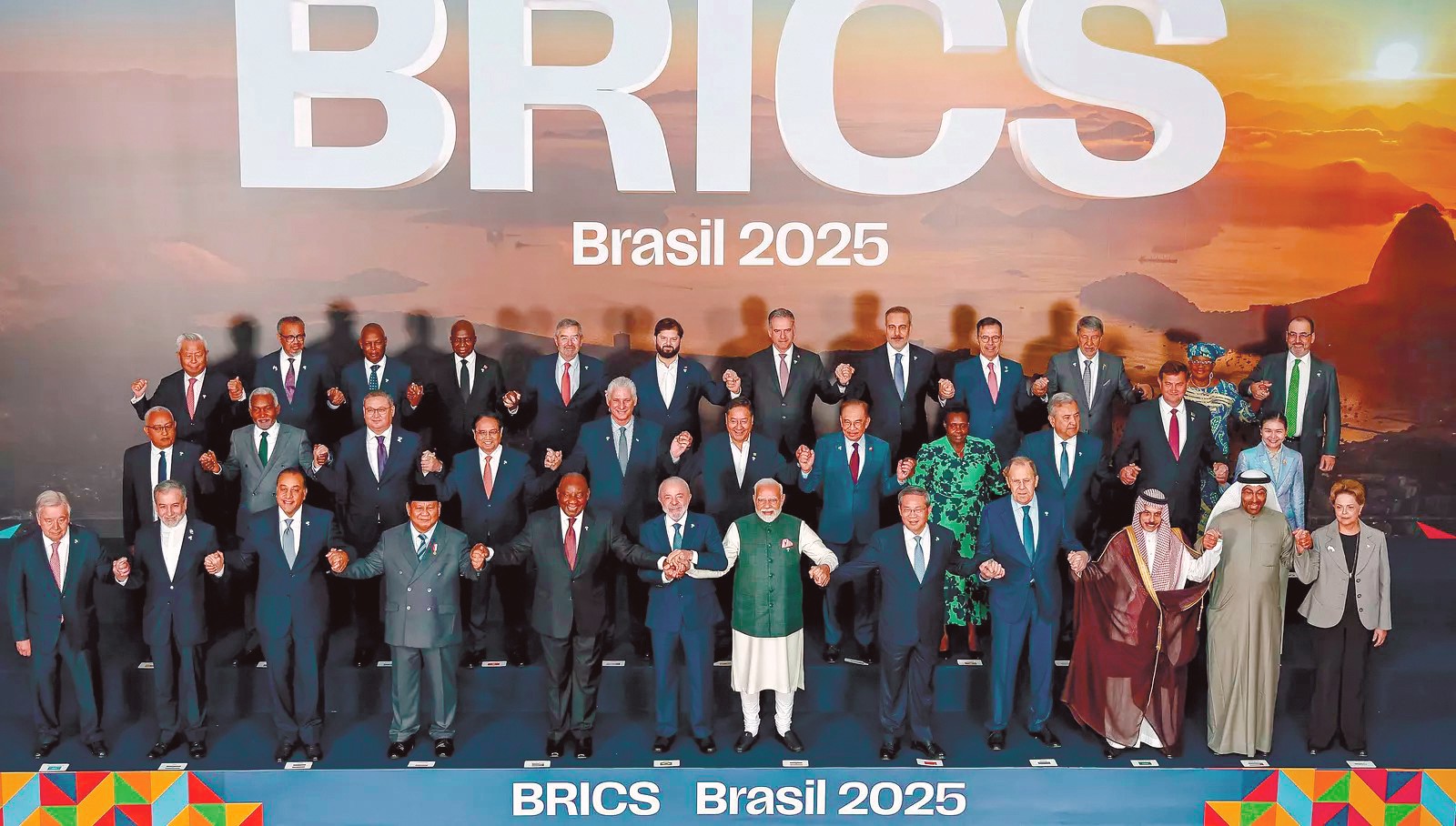
Rio de Janeiro hosted the regular BRICS summit on July 6-7, bringing together Brazil, Russia, India, China, and the originally included South Africa, alongside the more recent additions of Egypt, Iran, the UAE, Ethiopia, and Indonesia. The summit concluded with a declaration that, according to most analysts, lacked substantive impact. The participants reiterated their concerns about armed conflicts, humanitarian crises, and the ongoing consequences of climate change.
Among the few concrete points raised were calls for reforming Bretton Woods institutions such as the IMF and the World Bank, demands for the cancellation of unilateral sanctions, and proposals to transform the WTO. However, no detailed roadmap or actionable plan was presented to achieve these goals.
US tariffs were described as a threat to the global economy, generating "uncertainty in international economic and trade activities." Yet this remained a mere statement of fact without any proposed response. No radical measures, such as the introduction of a shared currency, were announced.
'Surprises' from Washington
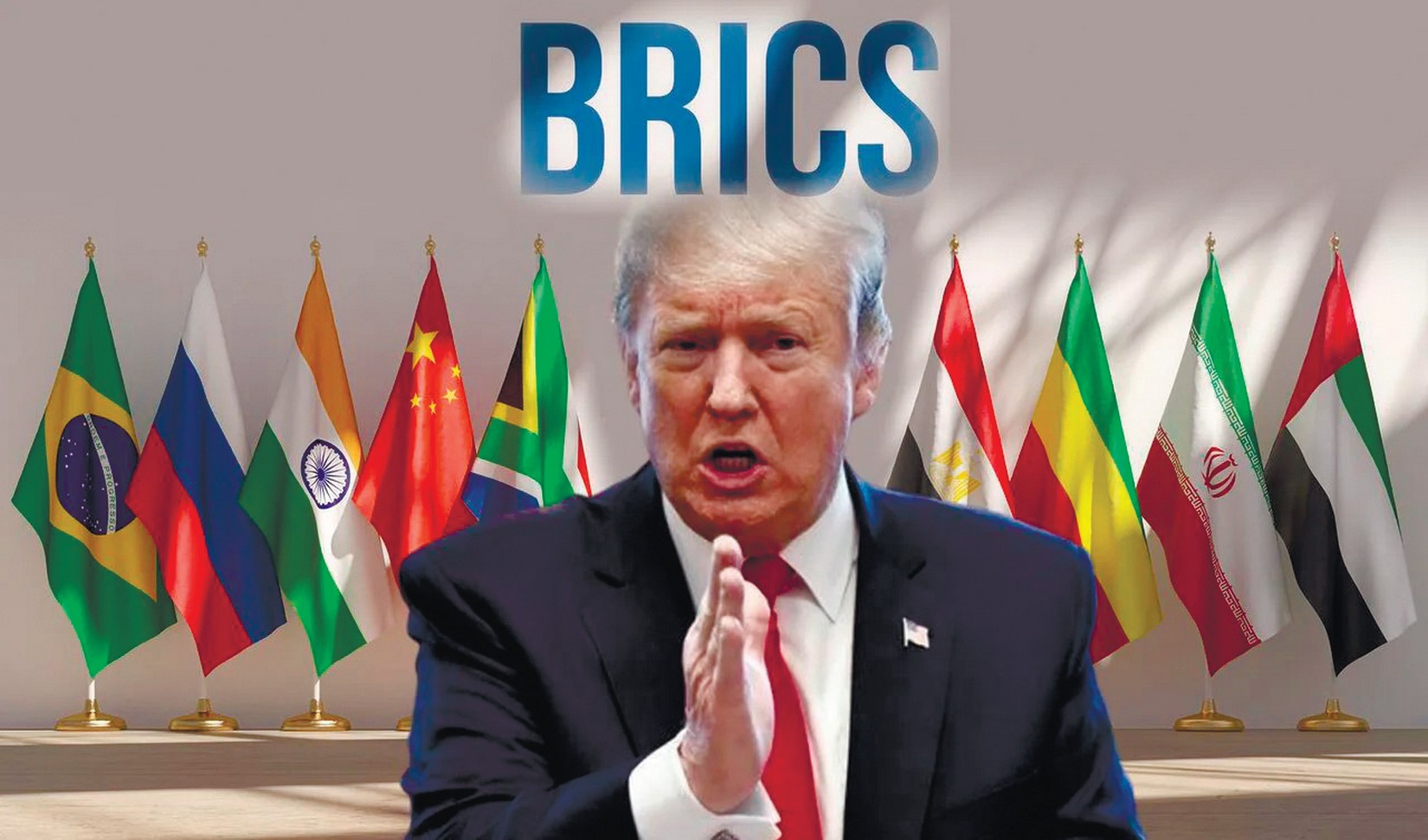
For US President Donald Trump, who has long criticised BRICS as a counterweight to the transatlantic community, even this was enough. He warned that any BRICS member undermining the dollar’s dominance would face 100 percent trade duties. Trump also added that "any country that joins the BRICS anti-American policy will be subject to an additional 10 percent tariff."
In response, both the Kremlin and the Chinese Foreign Ministry emphasised that cooperation within BRICS is not aimed against any third countries. Russian Foreign Minister Sergei Lavrov stated that members had discussed increasing the use of national currencies and establishing a new investment platform but explicitly denied plans for a single currency.
Beyond Trump’s direct threats, observers noted indirect pressure from the White House. For example, Saudi Arabia, a partner country, reportedly intended to join BRICS but has so far decided to remain only an invited member. It was also notable that Brazil, as summit host, adopted a neutral stance and refrained from criticising either the US or Israel.
Trump’s concerns about BRICS are understandable given its scope: the association represents nearly half the world’s population, accounts for 40 percent of the global economy, and controls $60 trillion in global assets—surpassing the G7 on all these counts. BRICS countries also possess vast commodity markets, freshwater reserves, forests, rare earth metals, and critical trade routes.
Close in spirit but different in essence
These capabilities could pose a significant challenge to Western countries if BRICS members managed to reach consensus. However, this remains unlikely due to their vast differences—in resources and economic strength, political systems and geopolitical objectives, ideologies and global roles. Communication is often strained and genuine trust is lacking among members. Many fear China’s dominance and openly worry about US sanctions.
A prime example of such contradictions lies in India-China relations. India accused China of supporting Pakistan during recent military clashes between New Delhi and Islamabad by supplying weapons and intelligence. Against this backdrop, BRICS’ recent expansion—which doubled its membership and was celebrated by supporters—may actually weaken rather than strengthen the bloc.
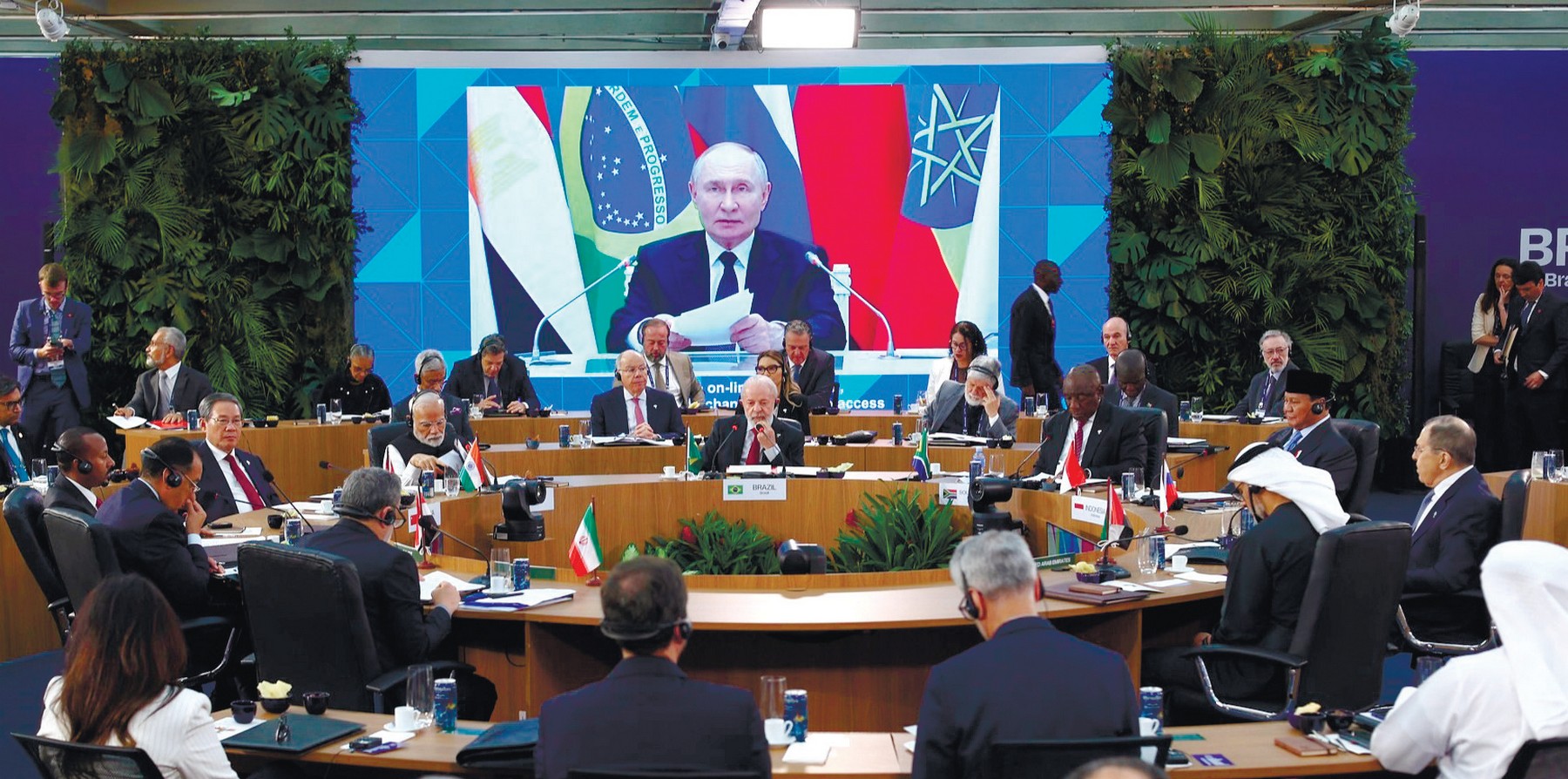
The perception that BRICS is losing influence is reinforced by the absence of Chinese President Xi Jinping and Russian President Vladimir Putin at the summit. While Xi has attended every previous BRICS meeting, this time Prime Minister Li Qiang represented China. Nevertheless, this should not be interpreted solely as declining interest in BRICS.
Chinese media themselves explained that President Xi Jinping recently engaged in communication with all the leaders of Latin America, specifically during a summit held in May under the format "China - Latin America." At this summit, China placed particular emphasis on Brazil, whose president Luiz Inácio Lula da Silva was described by Beijing as a "reliable strategic partner." Furthermore, Beijing and Brazil confirmed their mutual readiness to fully transition to settlements in national currencies by 2028. In a broader context, China plans to allocate more than $10 billion (in Chinese yuan) in loans to countries across Latin America and the Caribbean in the near future.
A similar situation applies to Russia. President Xi Jinping is scheduled to meet with Vladimir Putin as soon as late August or early September at the SCO summit in Beijing. This summit will coincide with the commemorations marking the 80th anniversary of the victory over militarist Japan and the end of World War II. The absence of the Russian president from Rio de Janeiro, as observers have noted, was largely connected to the International Criminal Court’s verdict issued in the Netherlands and Brazil’s ambiguous position on this matter.
Similarly, Egypt’s president did not attend the summit, apparently wishing to avoid complicating relations with the US. Iranian President Masoud Pezeshkian was also absent; Iran was represented by Foreign Minister Abbas Araqchi instead.
Fitting in slowly
Many regarded the Rio summit as vague and indecisive. However, this may not be a failure specific to BRICS but rather part of a broader trend—just like recent G7 and NATO summits that concluded without clear outcomes. The underlying cause is the highly unpredictable international geopolitical environment. The world stands at a crossroads; it is unrealistic to expect clear declarations from organisations created and strengthened during more stable and predictable times until some resolution emerges.
Perhaps now is an opportunity for relatively new regional organisations based on shared geography and common interests, such as the Organisation of Turkic States (OTS).
Recent events have clearly demonstrated that BRICS lacks a unifying vision. Its supporters highlight that it always maintains a non-confrontational stance. As Reuters noted, "BRICS looks like a haven for supporters of multilateral diplomacy." Indeed, member countries operate by consensus alone; they do not form alliances against others but pursue their own interests.
This is an important point, also true for other groups like the OTS. The problem is that within BRICS these “interests” are often too divergent or even directly opposed.
Some analysts believe that with the influx of new member states over the last two summits doubling its size, BRICS is currently in an adjustment period that could last through two or three summits. For now, we must wait to see how developments unfold. Time will tell whether BRICS can move from broad declarations and polished statements toward concrete decisions and establish formal structures such as a charter and headquarters befitting an international organisation.
RECOMMEND:
 209
209

