

"BASE PROBLEMS" OF MOSCOW AND YEREVAN
On reasons behind the Kremlin's reinforcement of its military base in Gyumri
Author: Tofiga GASIMOVA
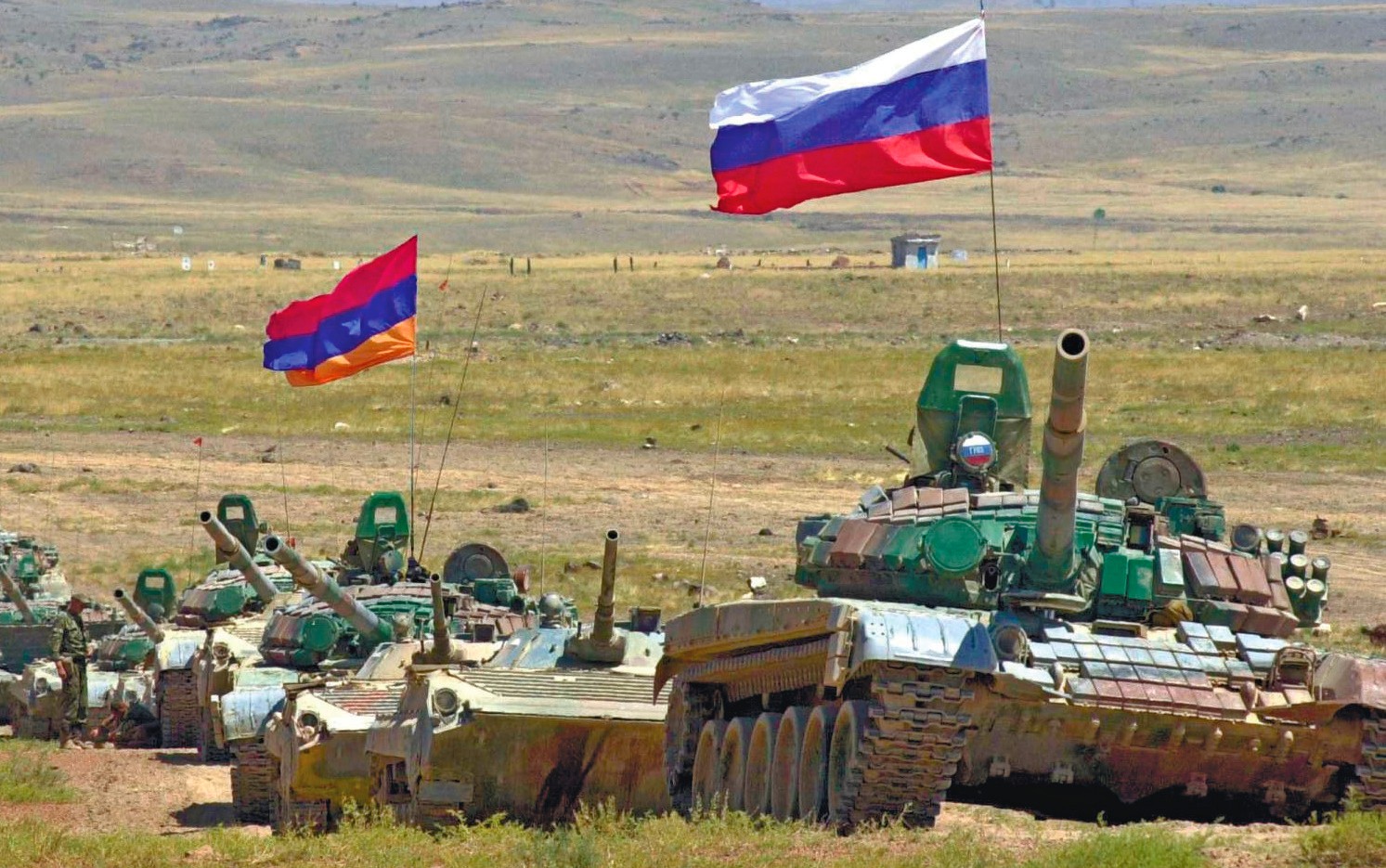
Not long ago, such headlines were in high political demand: "Russia has lost the South Caucasus!", "Moscow's influence is crumbling!", "All three regional countries are distancing themselves from the Kremlin!" Yet even then, many experts urged caution, reminding that Russia still maintains military bases in the occupied regions of Georgia, a full-scale military base in Armenia, and joint ground and air defence groupings in the region.
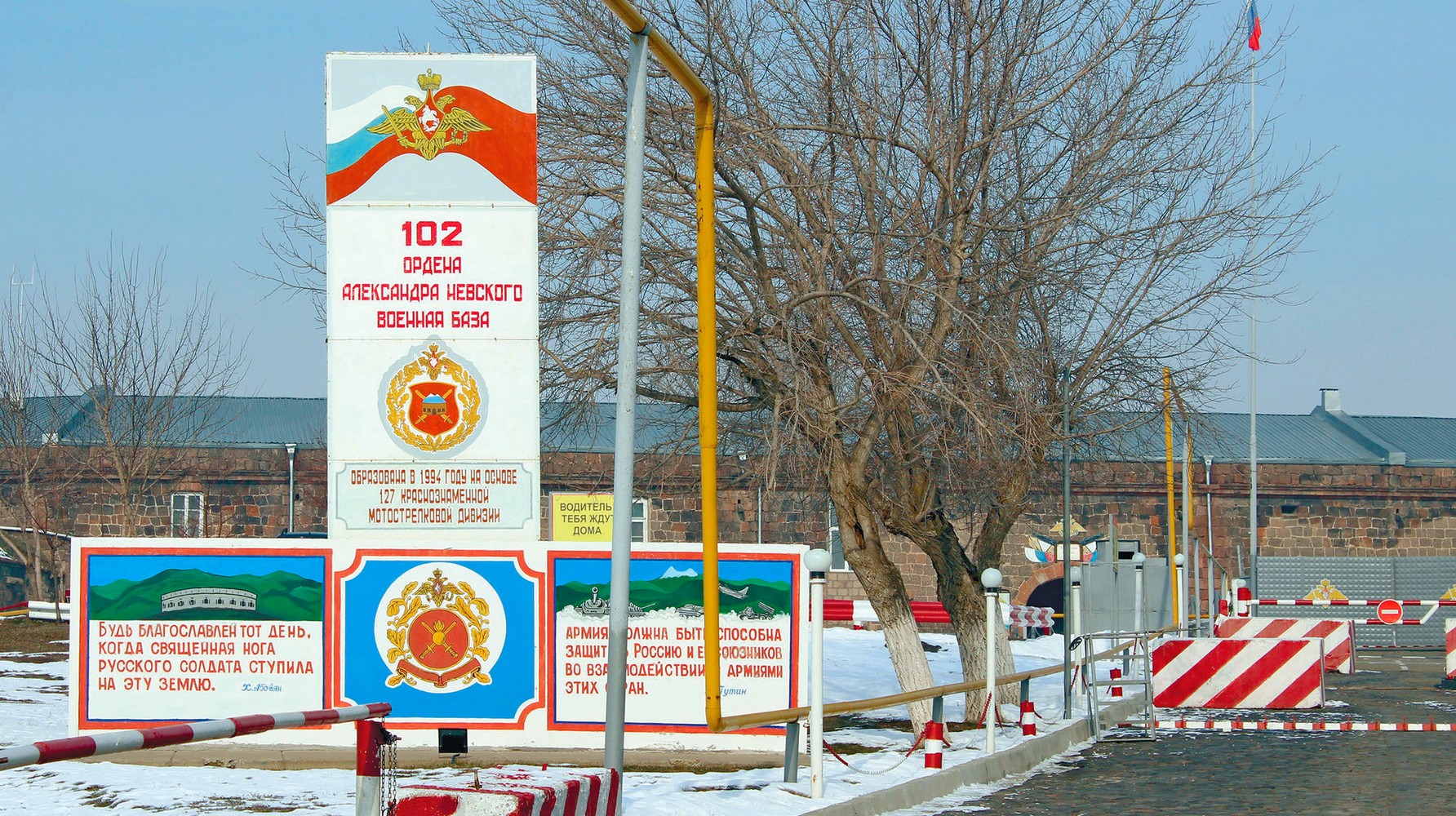
As always, the sceptics have turned out to be right. Against this backdrop, Ukraine’s Defence Intelligence Directorate reported via its official Telegram channel that the Kremlin is accelerating the staffing of its military base in Gyumri, Armenia, as part of a broader strategy to exert military and political pressure across the South Caucasus. The report stated that "personnel are being recruited from the ranks of Russian Armed Forces stationed in the Rostov and Volgograd regions, as well as in temporarily occupied Crimea. In addition, Russia is actively seeking volunteers among the subjugated peoples of the Caucasus—particularly in North Ossetia and Adygea". According to the ministry’s representative Andrei Yusov, the deployment of Russian troops in Armenia forms part of a comprehensive Kremlin strategy aimed at destabilising the global security order. "In tandem with stirring up interethnic conflict, Moscow is expanding its military footprint in the Caucasus. The deterioration of relations between Azerbaijan and Russia was likely planned in advance," many news agencies quoted the Ukrainian official as saying—including several outlets in Azerbaijan.
Armenia was quick to deny the Ukrainian intelligence report. According to a statement from the Armenian Foreign Ministry, Yerevan does not allow its territory to be used for launching strikes against neighbouring countries. The denial, however, sounded far from convincing.
The region remembers all too well how rockets were fired at Azerbaijani cities from Armenian territory—and how Armenia's military infrastructure was used by Russia during the "five-day war" against Georgia in 2008. With that history, the Foreign Ministry's insistence of "we would never do such a thing!" rings rather hollow.
Azerbaijan has not made any official comment on the Ukrainian intelligence report. Still, the country’s security institutions have repeatedly shown themselves to be both highly professional and well-informed. It is unlikely that Baku is unaware of what is unfolding around the Russian base in Armenia. And the fact that no other authority besides Armenia’s Foreign Ministry has attempted to deny the information—doing so in an awkward and unconvincing manner—speaks volumes.
So, who exactly is the target of Russia’s reinforced military presence in Armenia?
Who’s in the crosshairs?
One version suggests that this is yet another attempt to "send a message" to Azerbaijan. Indeed, just recently and without any apparent provocation, Garabagh reappeared in the rhetoric of Russian officials and semi-official figures.
Take Vladimir Medinsky, a Russian presidential aide, who referred to Garabagh as a "disputed region". It is worth clarifying: under international law, there is a fundamental difference between disputed and occupied territories. The term "disputed" applies to areas claimed by two or more states, each offering its own legal arguments—arguments far more substantial than "because we want it". Armenia has never had—and still does not have—any legal grounds for its claims to Garabagh. Unlike the Falkland Islands, for instance, Garabagh has never been marked on maps in white as a disputed territory.
Almost simultaneously, an unnamed source told TASS and RIA Novosti journalists that Azerbaijan should recognise Russia’s annexation of Ukrainian territories. In exchange, the source claimed, Moscow would refrain from disputing Azerbaijan’s sovereignty over Garabagh. Meanwhile, propagandist Vladimir Solovyov, who came to the defence of Russian oligarch Samvel Karapetyan—an Armenian by origin—used the term "Artsakh". In Baku, this was unequivocally seen as a direct challenge to Azerbaijan’s territorial integrity.
Tensions between Baku and Moscow are rising to unprecedented levels: the downing of an Azerbaijani civilian aircraft by Russian air defences, an "information war" against the Azerbaijani diaspora, the tragedy in Yekaterinburg…
Moscow has openly supported—and continues to support—those political forces within Armenia that advocate for a Garabagh revanchist agenda. It’s worth noting that these same forces are also calling for closer alignment with Moscow. Historical memory remains vivid. Without Moscow’s support, Armenia could not even theoretically have occupied 20% of Azerbaijan’s territory, nor held it under occupation for nearly three decades. Baku still remembers the arms shipments flown to Armenia on the eve of and during the 44-day war.
Today, the Garabagh conflict is a closed chapter. And no matter how much some may wish for a rematch or aim to reignite the conflict, the risks for Armenia have fundamentally changed—and so has the political cost for any power that would help facilitate it. Azerbaijan has already expelled the occupiers from its territory. The country now boasts a professional and combat-ready army, robust international backing, and any renewed aggression would carry enormous risks. Political tactics from the early 1990s will no longer work here.
What about Türkiye?
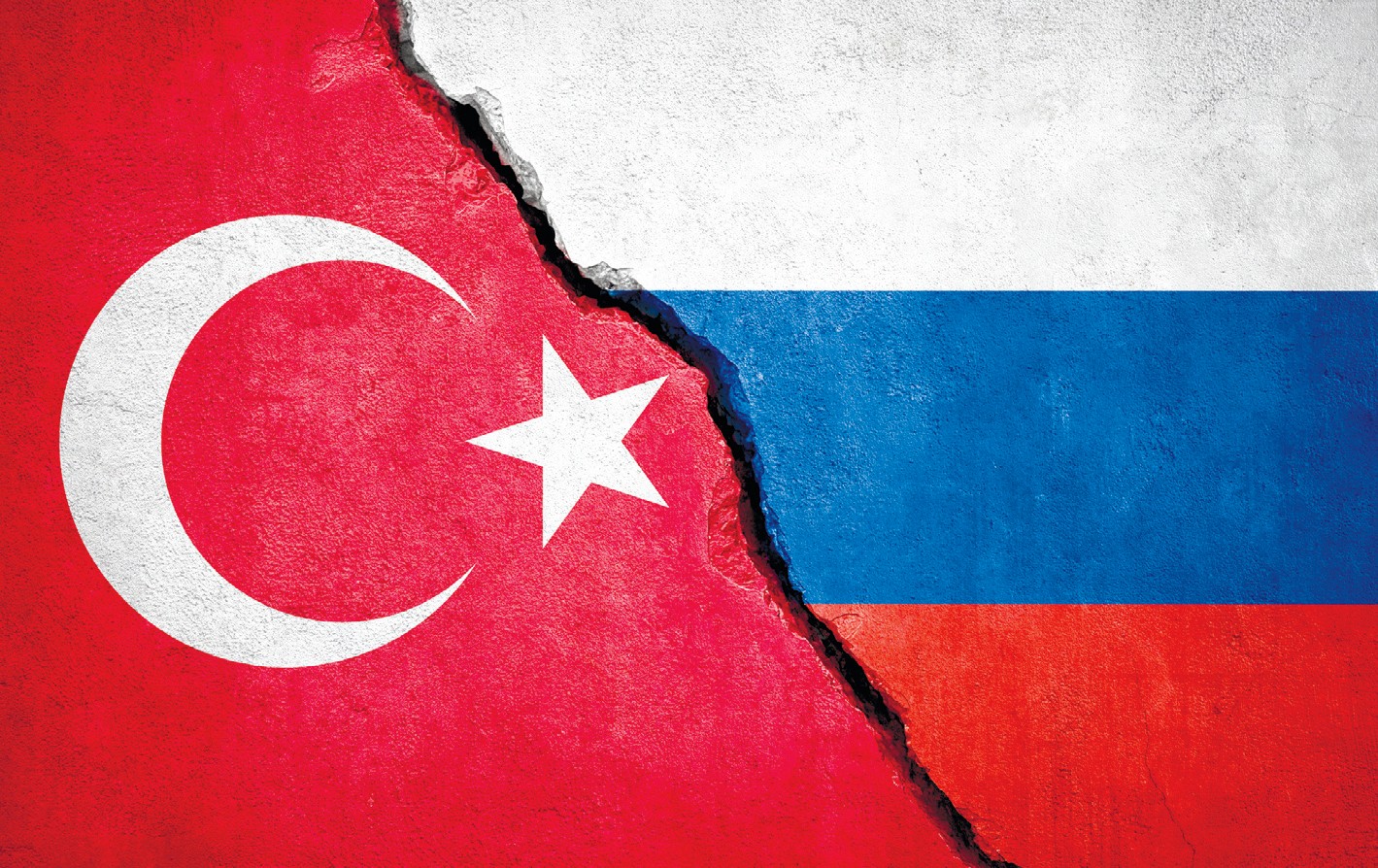
There are also strong arguments suggesting that the reinforcement of the Russian base is aimed at Türkiye. In recent years, Moscow has received several painful blows from Ankara. Most notably, Türkiye thwarted Russian efforts to bring Marshal Haftar to power in Libya—a figure Moscow had openly backed. Wagner mercenaries fought on Haftar’s side, he received arms, and was received with honour in Moscow. He even appeared aboard the cruiser Moskva—the same vessel later sunk by Ukrainians. Even before the wars in Ukraine and Garabagh, Turkish Bayraktar drones were successfully eliminating Russian Pantsir air defence systems. Since the start of the Ukraine war, Haftar’s position has deteriorated sharply. Every attempt at resistance brings the opposite of the intended result.
But Russia’s most devastating defeat came in Syria. The fall of Bashar al-Assad’s regime would mean more than the loss of a partner—it would cost Moscow its Khmeimim airbase and its naval outpost in Tartus. These bases are nearly impossible to replace elsewhere in the Mediterranean. And strategically, they sit across from the key Incirlik airbase near Adana in Türkiye—within striking distance of both Lebanon and Israel. Losing that foothold would be a military-political disaster.
Finally, Türkiye is making headway in resolving the long-standing issue of PKK terrorism. Recall that the PKK was originally formed by Soviet intelligence. While various powers have since attempted to manipulate the Kurds to their advantage, the Soviet imprint—and with it, Russian influence—never quite vanished. Take, for example, Russia’s support for the 2017 Kurdish independence referendum in Iraq. Today, however, Russian influence in Erbil is waning, while Türkiye’s is clearly rising. In this context, Russia reinforcing a base originally established to counter Türkiye is unsurprising.
A base against... Pashinyan?
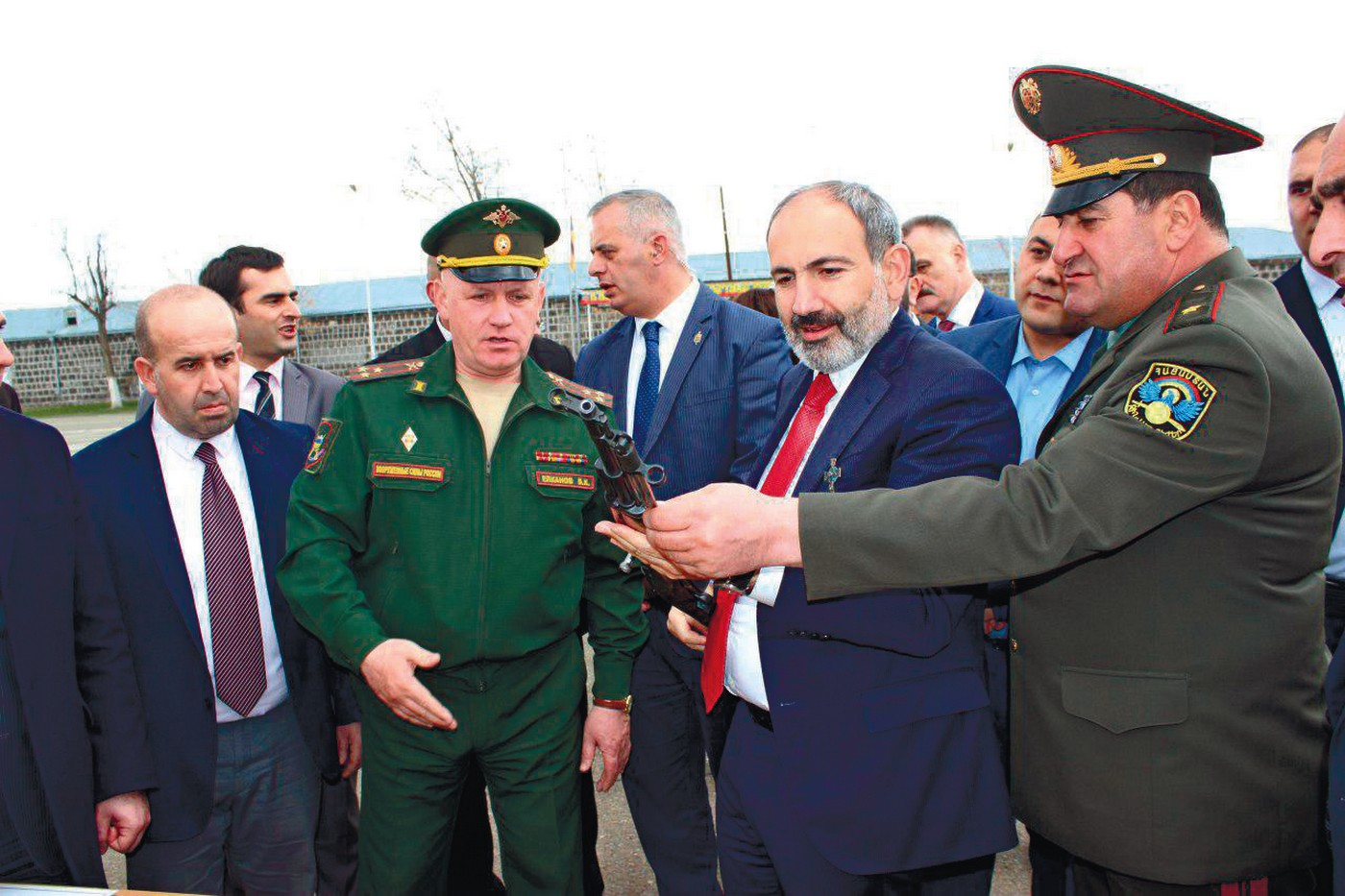
It is also possible that the redeployment of additional troops to the Gyumri base is linked to Armenia’s internal political dynamics. This theory has been aired countless times, but it bears repeating: Armenia is due to hold parliamentary elections in 2026. Aware of how weakened Prime Minister Nikol Pashinyan’s position has become, Russia appears determined to bring its own candidate to power. Who exactly that may be is a matter of speculation, but the spotlight currently falls on Samvel Karapetyan—a wealthy oligarch being groomed as 'Armenia’s Ivanishvili'.
More broadly, the risk of an internal armed confrontation in Armenia remains high. During Levon Ter-Petrosyan’s presidency, a major Dashnak terrorist plot was exposed, leading to the banning of the Dashnaktsutyun party. In 1998, the first President was forced out through a series of political assassinations and a slow-moving coup. The following year, in October 1999, several of Robert Kocharyan’s most dangerous rivals were gunned down—right in the Armenian Parliament.
Multiple plots were also uncovered under Serzh Sargsyan’s presidency—from a group studying the David of Sasun epic to the notorious Samvel Babayan’s failed attempt to shoot down the presidential helicopter with an Igla MANPADS. In July 2016, terrorists from the Sasna Tsrer group took and held hostages for an extended period—at none other than a police base in Yerevan. And following the 2020 defeat in Garabagh, the then-Chief of the General Staff, Onik Gasparyan, attempted a classic military coup—though it ultimately fizzled out.
One must also consider the existence of numerous semi-official armed groups in Armenia—such as Yerkrapah, VOMA, and others. Should a violent scenario unfold, the key question is: "Will Russia intervene?"
Experts recall how, in the early 1990s, Russian forces based in Tajikistan ended that country’s civil war and effectively redrew its political landscape. After the latest 'Maidan' in Bishkek, Russian journalists openly questioned why the Russian military base had not intervened. A similar script playing out in Armenia is now entirely plausible.
RECOMMEND:
 259
259