

KHANKENDI: A SYMBOL OF BREAKTHROUGH
No mediators, no drama: ECO participants show unity and course towards sovereign decisions

Author: Ilgar VELIZADE
The Economic Cooperation Organisation (ECO) summit in Khankendi demonstrated a new level of cooperation between the countries in the region, marking a significant development in the political landscape of the central Eurasian continent. Concurrently, the ECO can serve as an effective dialogue platform, influencing the establishment of the rules of the game for countries that no longer wish to act as a testing ground for geopolitical experiments by influential actors.
It is important to note that the summit addressed all the issues related to bilateral and multilateral relations between the member countries. It clarified the situation regarding the "split of the Turkic world" on the issue of Northern Cyprus, refuted claims of a "new crisis" in relations between Azerbaijan and Iran, and showcased a consensus on regional security concerns. Most importantly, it demonstrated that the ECO is not a mere formality, but an effective regional platform.
Messages from Khankendi
The outcomes of the 17th ECO Summit are indicative of the current state of affairs. Firstly, it should be noted that the choice of Khankendi as the venue of the summit symbolises not just a new page in the history of Azerbaijan, but also an important turning point for the entire region. As is known, this city was founded on the initiative of Panah Ali Khan, the founder of the Garabagh Khanate, and subsequently became a stronghold of Armenian separatism. Furthermore, external forces have repeatedly attempted to implement border redrawing projects in this region, posing a significant threat to regional stability. The first international forum to be held in Khankendi, with the participation of heads of state, clearly demonstrated recognition and acceptance of the changes that had taken place, both by the countries of the region and the international community. The summit confirmed that the centre of decision-making concerning the future of the region has now moved directly to the region. It is now possible for regional players to resolve complex issues directly, without the need for external mediation.
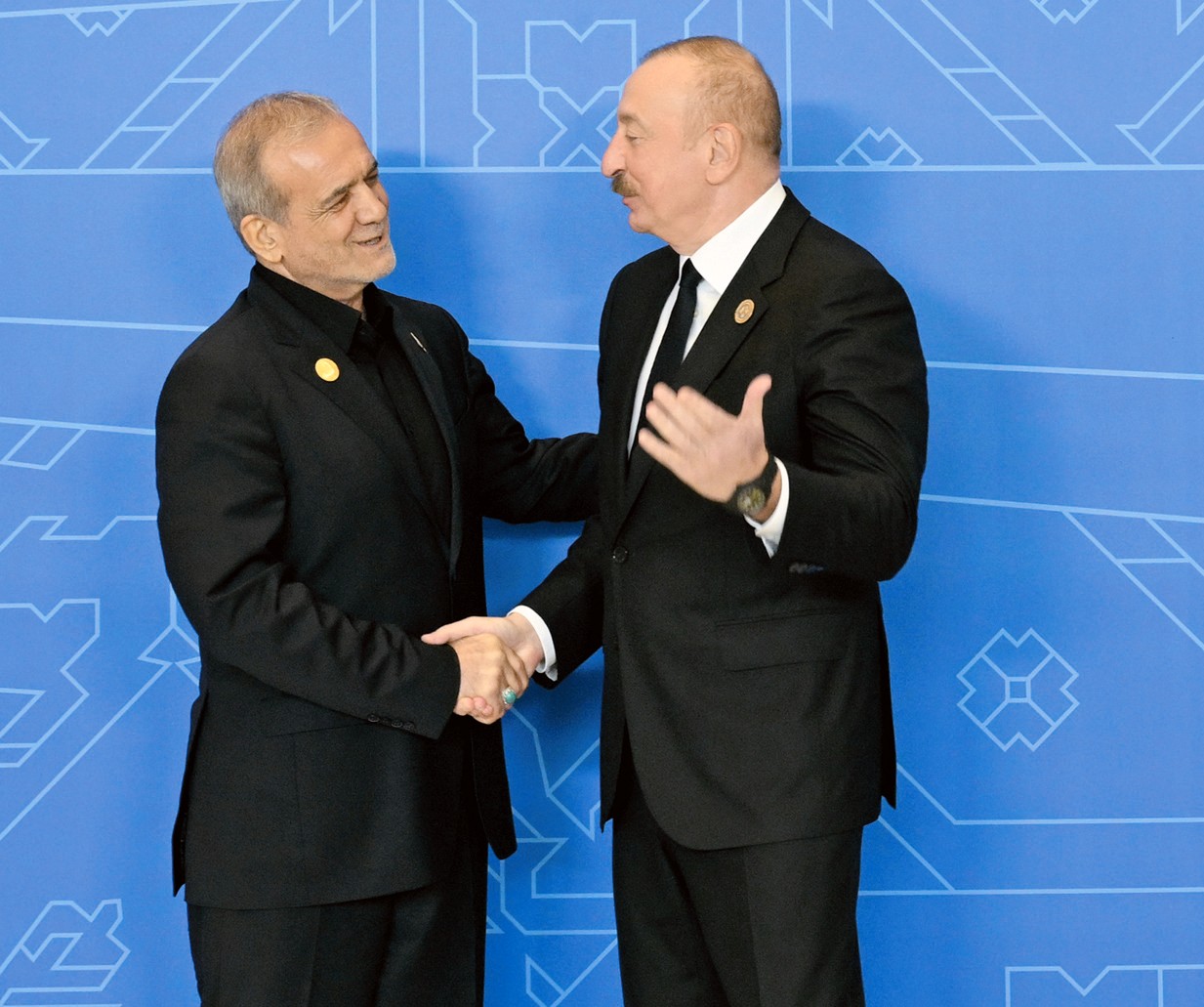
The participation of Iranian President Masoud Pezeshkian in the summit is a prime example of this. In light of statements made by certain Iranian politicians, who have accused Azerbaijan of providing support to Israel in its ongoing conflict with Iran, it was anticipated that the President of Azerbaijan might decline the proposed visit. However, Pezeshkian's arrival dispelled these fears and was an important signal of readiness to continue the bilateral dialogue. The warmth with which the leaders of Iran and Azerbaijan greeted each other was a visual expression of the atmosphere of mutual understanding and rapprochement.
On the eve of the summit, Pezeshkian articulated key concepts that reflect the new Iranian government's commitment to addressing the pressing issue of the lack of mother-tongue education for the Azerbaijani population in Iran. This position fosters mutual understanding and paves the way for constructive dialogue with both Baku and Ankara. The fact that these meetings took place in this spirit is no coincidence. Upon returning from Khankendi, the Iranian president made the following statement: "I have been informed that this trip could potentially be hazardous. As you can see, I completed the journey without encountering any issues. I am pleased to inform you that my conversation with Azerbaijani President Ilham Aliyev was held in a friendly atmosphere. I am pleased to inform you that I recently had a very productive meeting with the President of Türkiye. We discussed bilateral relations with the Prime Minister of Pakistan".
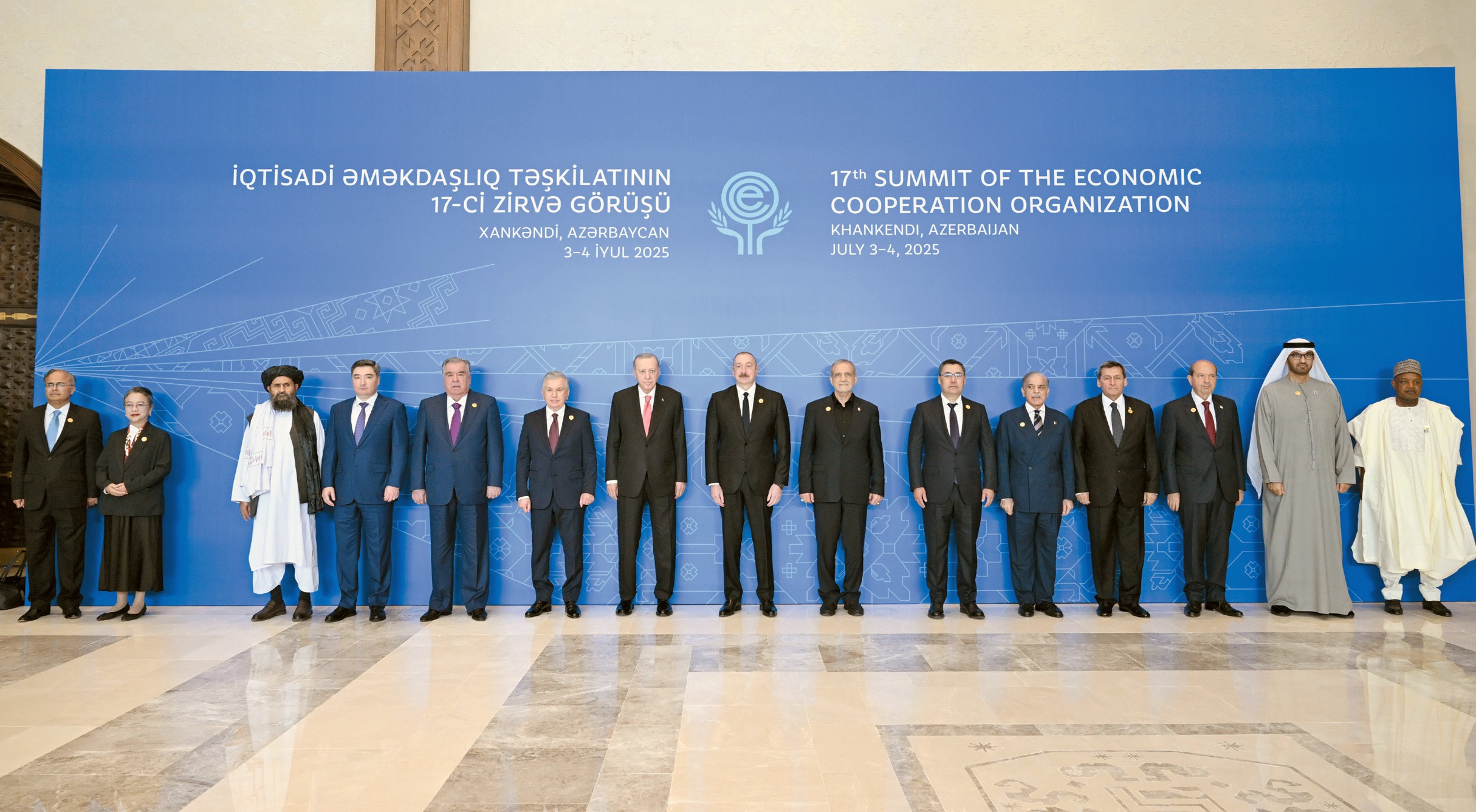
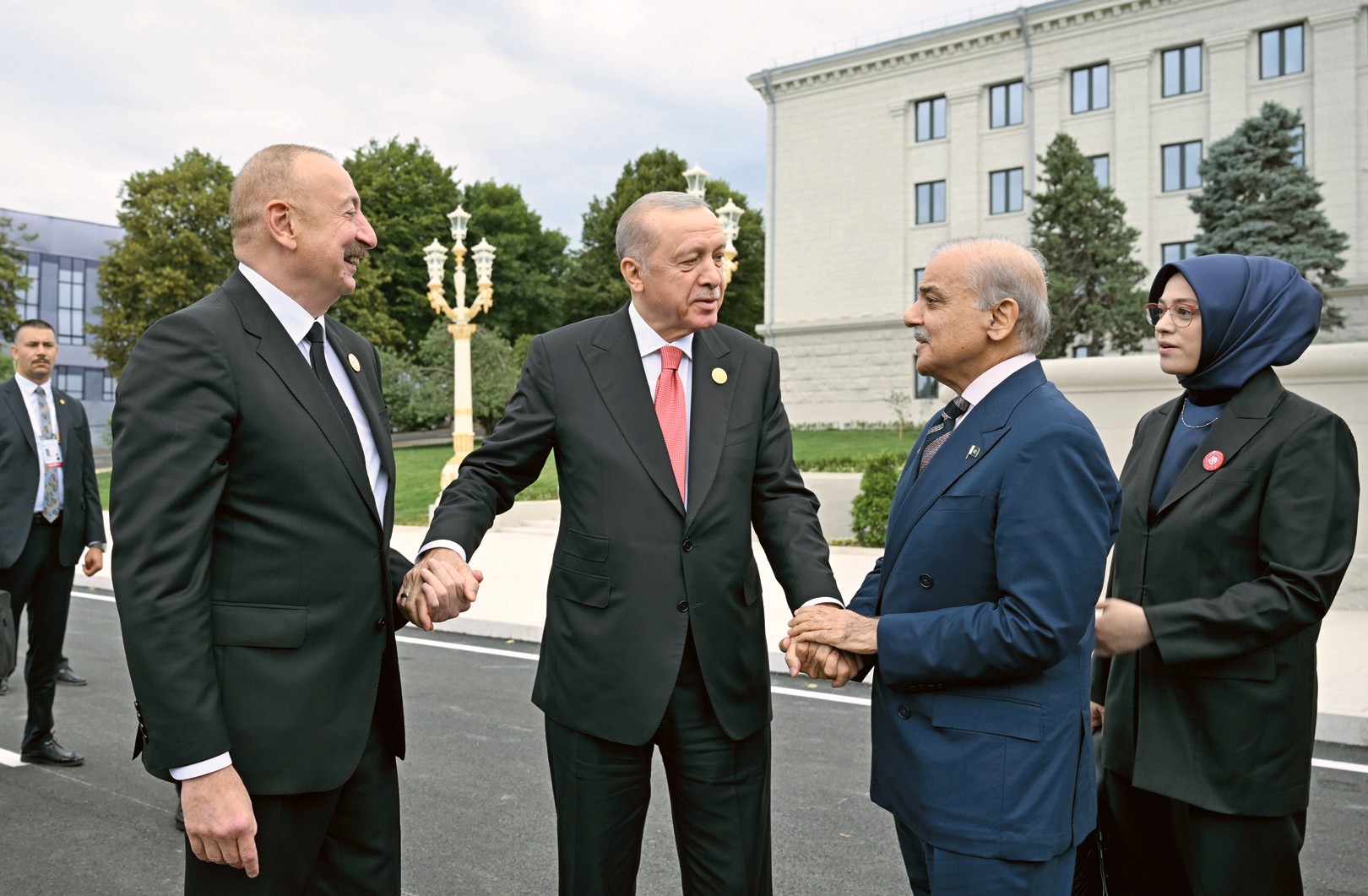
The summit photos conveyed the positive mood of the participants with regard to the frank and meaningful dialogue. As was stated on numerous occasions in the speeches of the Heads of State, the success of a new stage in the development of the ECO will be determined by the implementation of practical joint initiatives promoting multilateral cooperation.
In his opening speech, Ilham Aliyev stressed the significance of the summit being held in Khankendi and the need to address a key humanitarian issue arising from the Armenian-Azerbaijani conflict: the return of the Azerbaijani population to their historical lands of residence in Western Azerbaijan (present-day Armenia). In addition, he emphasised the subjects of transport connectivity, ecology and investment cooperation.
In general, many speakers underlined the importance of developing existing, as well as planned, transport corridors, as a basis for deepening economic cooperation. It was noted that there is an opportunity to increase mutual trade turnover, which is currently at 8 per cent. The collective GDP of ECO countries is currently valued at $2.7 trillion, with Türkiye accounting for approximately 50% of this total. Türkiye is the primary trading partner of most of the states in the region.
By the way, Turkish President Recep Tayyip Erdogan has focused on political issues, calling for the recognition of the Turkish Republic of Northern Cyprus, condemning Israel's policies and encouraging consideration of environmental changes in public policy.
Security as a driver of co-operation
Security was a key theme of the summit. In the context of geopolitical upheavals and regional turbulence, security is being recognised as a prerequisite for sustainable development. Participants addressed the protection of transport and energy corridors, including the North-South, East-West, and Trans-Caspian routes.
In the context of ongoing bilateral tensions and competition, the potential of ECO as a soft power and diplomacy platform was discussed. The subjects of information security, digital sovereignty, and the combatting of cross-border threats – ranging from extremism to drug trafficking and migration – were also discussed.
The ECO agenda's expansion into security issues is indicative of the organisation's evolution into a more sophisticated form of regional cooperation. This shift is characterised by its commitment to economic and collective political sustainability.
The geopolitical context was a key consideration for the summit, with the conclusion of the armed conflict between Iran and Israel, the deterioration of relations with global players, the escalation of tariffs and political tensions prompting the countries of the region to seek new, sustainable forms of interaction aimed at safeguarding national interests.
Solving the puzzle of regional cooperation together
It is of great significance that, for the first time in recent years, the summit was attended by a representative of the Afghan leadership. Afghan Deputy Prime Minister Abdul Ghani Baradar met with President Ilham Aliyev and delivered a lengthy speech at the summit. According to the Taliban government representative, radical steps have been taken in recent years to strengthen internal security in the country. This creates favourable conditions for investment. He even proposed that the next ECO summit should be held in Kabul. It is noteworthy that the day before, Russia became the first country to officially recognise the Taliban regime after their rise to power in August 2021. On 3 July 2025, the Russian Foreign Ministry formally recognised the credentials of the new ambassador of the Islamic Emirate of Afghanistan, Gul Hassan Hassan, in a move that was widely reported as a "historic step."
Nevertheless, it is widely acknowledged that without constructive engagement with neighbouring regions, Kabul will face significant challenges in establishing productive relations with extra-regional actors. In this sense, the ECO acts as a conduit between Afghanistan and the outside world.
It is interesting to note that the long period of silence in the dialogue between Baku and Ashgabat was broken during the ECO summit. The participation of Rashid Meredov, Deputy Prime Minister of the Turkmen government and Foreign Minister of Turkmenistan, as well as his meeting with President Ilham Aliyev, may indicate the intention of the parties to intensify bilateral interaction.
Meredov himself also addressed the necessity for concerted action in the energy sector. He emphasised the significant potential of the Economic Cooperation Organisation in strengthening the energy partnership between member states and proposed the creation of a mechanism to coordinate their energy policies.
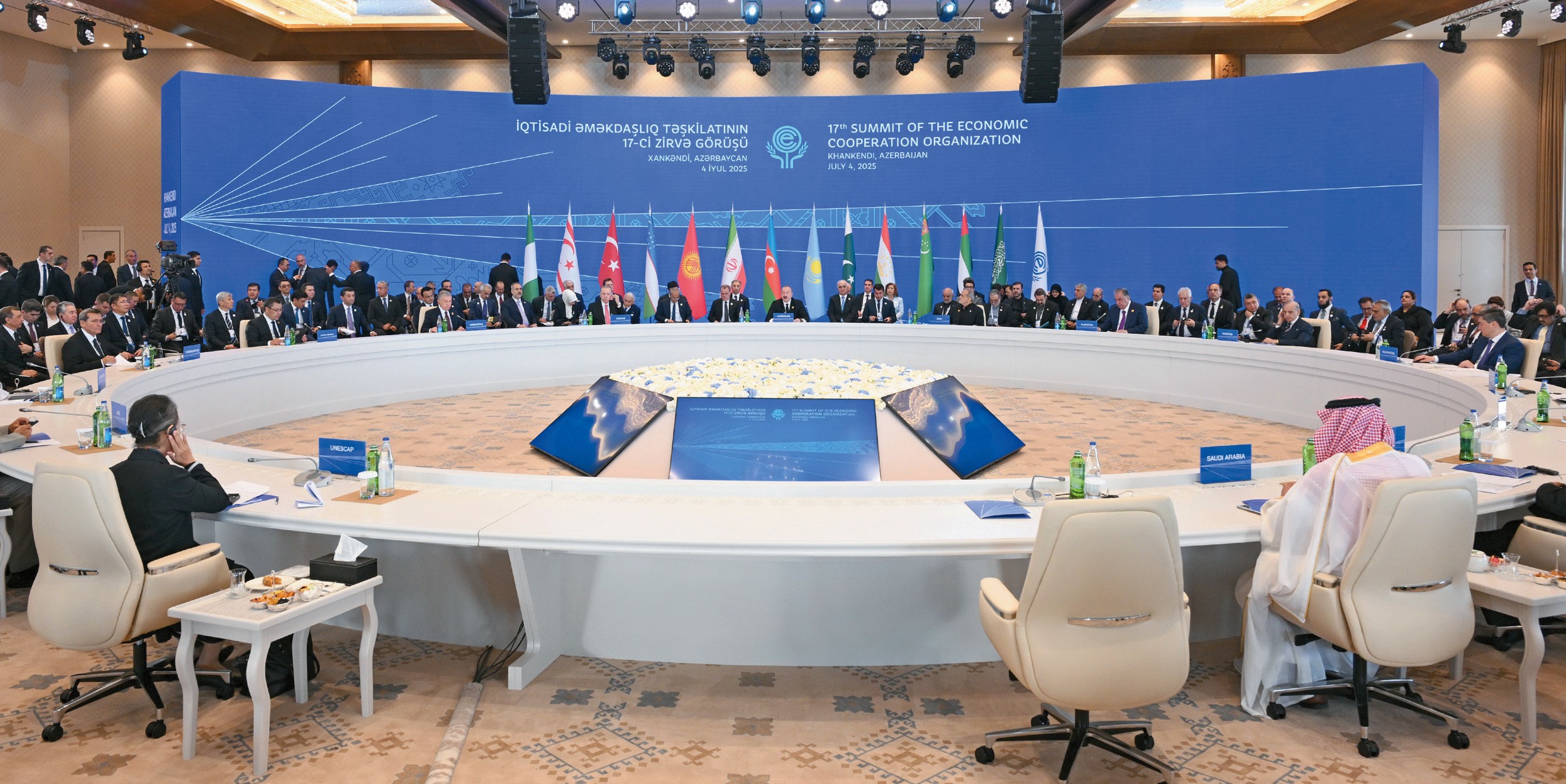
The ECO summit made history by bringing together the leaders and representatives of all regional countries. This event demonstrates a commitment to cooperation and underlines the significance of the organisation.
Evolution of ECO
Speaking about the ECO itself, it is important to note that for several decades it has remained a key platform for dialogue between countries with different political systems, economic potential and foreign policy orientations.
In light of the current regional political landscape, which is undergoing significant transformation due to global geopolitical shifts, the organisation is well-positioned to transition into a new phase of excellence. Its potential lies less in its current mechanisms and more in its ability to serve as a platform for pragmatic and flexible cooperation between countries that are not inclined towards deeper integration. This is particularly relevant at a time when international sanctions, regional instability in the Middle East and competition between global powers are making regional solutions increasingly in demand.
In light of the ongoing tensions surrounding sanctions, shifts in logistics routes, and the mounting significance of Eurasian transport corridors, the ECO has the potential to serve as a regulatory body for intricate processes within its geographical area. By facilitating dialogue among diverse stakeholders, the ECO can play a crucial role in mitigating conflict and fostering a harmonious alignment of regional interests. The summit in Khankendi was a clear confirmation of this.
RECOMMEND:
 346
346

