

NEW HOPES
The Abu Dhabi Talks: will this historic opportunity be seized?
Author: NURANI
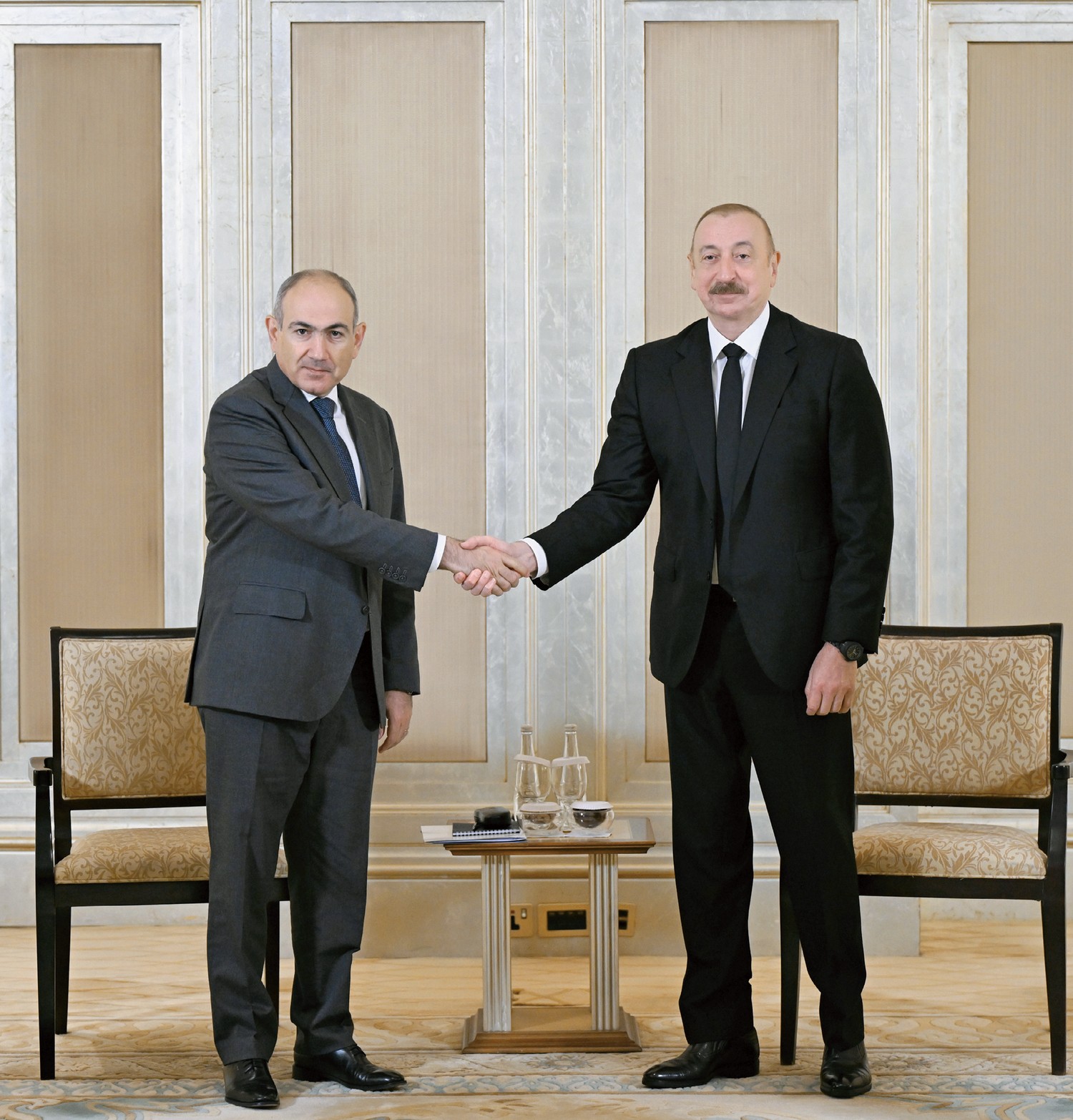
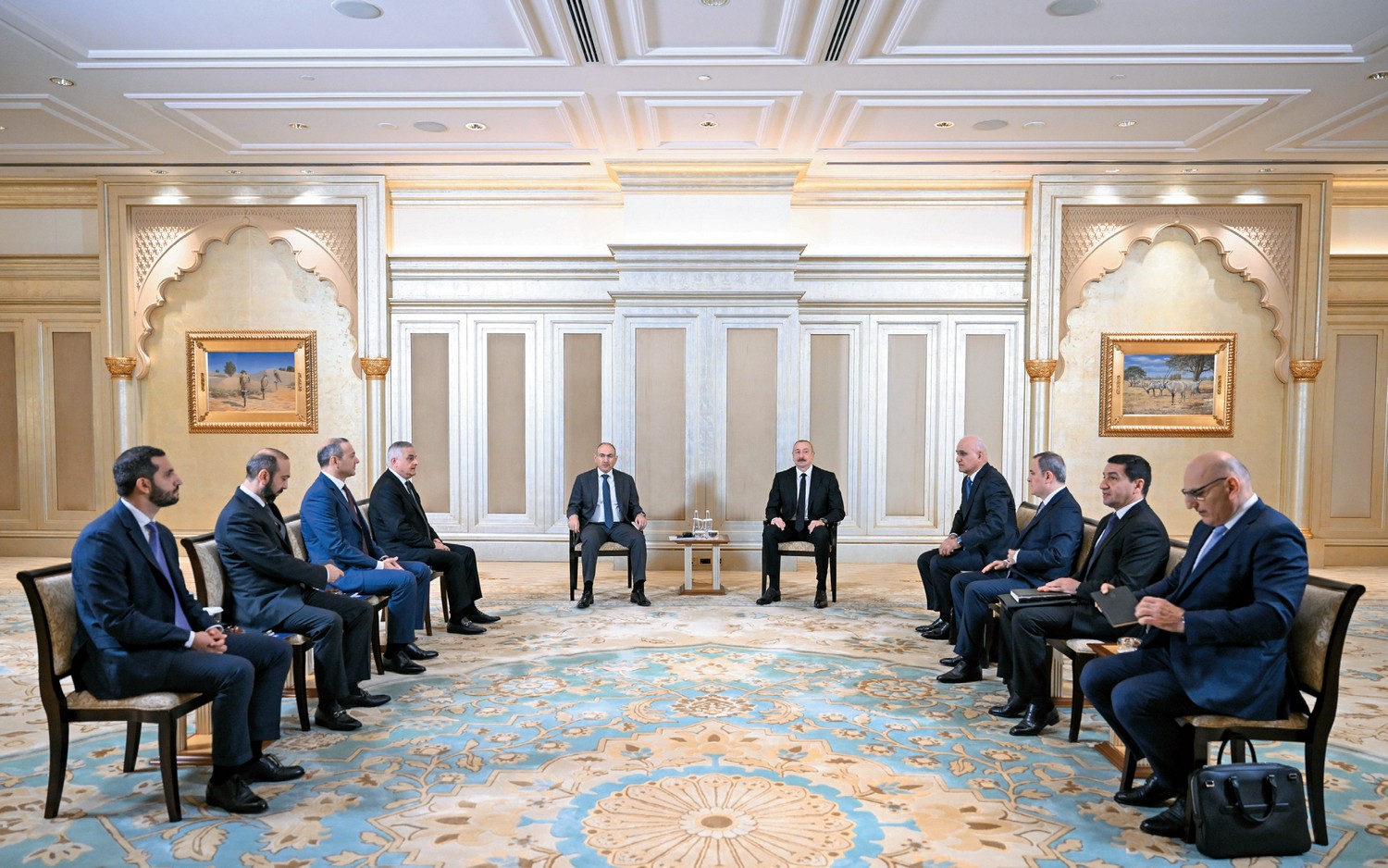
It has been a long time since the South Caucasus watched Azerbaijani-Armenian negotiations with such intense anticipation. Azerbaijani President Ilham Aliyev and Armenian Prime Minister Nikol Pashinyan returned to the negotiating table after a considerable pause. This time, it was a one-on-one meeting — without intermediaries and, it must be said, without those very intermediaries attempting to steer the talks in favour of their own interests. The meeting lasted five hours and covered the most critical and difficult issues, from border delimitation and drafting a peace treaty to the Zangezur corridor. The press releases from both sides were notably aligned — a sign that agreements were indeed reached, though, for now, they remain confidential.
"A forward-thrusting impulse"
The negotiation process between Baku and Yerevan is perhaps best characterised by a rather blunt remark from Kazakh poet and Turkologist Olzhas Suleimenov, made at the Congress of People's Deputies after the failed August 1991 coup: "Many say we've gained a forward-thrusting impulse, but sometimes that impulse only comes after a mighty kick in the arse."
That, in many ways, describes the trajectory of the negotiations over Garabagh, where numerous mediation efforts repeatedly collapsed. Hopes for diplomacy were high in the mid-1990s, following the establishment of a relatively stable ceasefire in 1994 that shifted the focus from combat to talks. At the time, public opinion and expert circles — especially in Azerbaijan — still held onto faith in international law, pressure, UN Security Council resolutions, and the like.
Over time, however, it became clear that faith in diplomacy, international law, and UN resolutions was grossly overstated. Armenia flatly refused to withdraw its forces from occupied Azerbaijani territories, firmly convinced that Baku would, sooner or later, have no choice but to accept the situation. It was Armenia’s intransigence that led to the failure of negotiations under the notorious Minsk Group, as well as high-level diplomatic efforts between Baku and Yerevan. The international community, quite simply, lacked the political will to exert real pressure on Yerevan. And in Baku, disillusioned with diplomacy, preparations began for a military solution. No one in Azerbaijan ever intended to gift away its land. Meanwhile, the international community clung to the mantra that “there is no military solution to the conflict” and that “the issue must be resolved at the negotiating table.” Yet, by April 2016, it had become evident that a military solution was indeed possible. And in the autumn of 2020, it became a reality.
The Armenian side received a brief reprieve, but lacked the political foresight to make use of it. As a result, following the 2023 anti-terrorist operation, a decisive full stop was placed on the matter.
In the post-war period, Russia’s mediation mission in Garabagh failed — largely due to efforts to push for a “deferred status for Garabagh” and attempts to reboot “miatsum” under the protection of Russian peacekeepers.
Then the European Union stepped into the mediation arena — at Armenia’s own invitation. Initially, the EU saw some success. In 2022, agreements signed in Prague marked the first time Armenia recognised Azerbaijan’s territorial integrity and the Alma-Ata Declaration, which stipulated that former administrative borders of Soviet republics would become international ones.
But just a year later, in October 2023, the EU itself buried its mediation efforts — during the summit in Granada. At that meeting, the EU negotiators decided to include Emmanuel Macron, President of France, a country that openly patronised Armenia. Baku was unwilling to accept such an arrangement. President Aliyev declined to attend the Granada summit. Nonetheless, the meeting went ahead, and Azerbaijani-related matters were discussed without Azerbaijan’s participation — a move that Baku understandably deemed wholly unacceptable. After that, the EU's mediation efforts collapsed. Pretending the Granada meeting never happened would have violated “Euro-pride,” yet continuing the talks on that basis was unacceptable to Azerbaijan.
There were a few more attempts to bring the Azerbaijani and Armenian leaders together on various platforms, but the most productive format turned out to be the one with no intermediaries at all. It was in this format that both sides managed to agree on a particularly difficult and sensitive issue: border delimitation.
And now — the Abu Dhabi talks. These have ushered in a clear, albeit cautious, sense of optimism. Meetings held merely for show do not last five hours. That suggests the negotiations have regained momentum.
Optimism and realities
Following the restoration of its territorial integrity, Azerbaijan proposed that Armenia begin negotiations to conclude a comprehensive peace treaty based on the principle of the inviolability of borders. Today, the terms of the peace treaty have already been agreed upon. In theory, nothing stands in the way of signing it tomorrow. But...
Now that the occupation of Azerbaijani lands is over, the peace treaty is more important for Armenia than it is for Baku. Azerbaijan primarily relies on its armed forces for national security — not on the signatures of Armenian leaders. Still, a peace treaty offers a greater sense of stability. Yet it is Yerevan that continues to stall the process. And however optimistic the outcome of the Abu Dhabi meeting may appear, it is wise not to overlook the underlying obstacles.
The principal stumbling block remains Armenia’s constitution, which references the Declaration of Independence — which, in turn, refers to "miatsum". Yerevan claims these references are merely a "tribute to history". However, Azerbaijan, quite rightly, views this clause as a "window for revanchism" and made it clear from the outset that retaining such language precludes the signing of a peace treaty.
Experts therefore advise against succumbing to excessive optimism. They warn that no matter how the Abu Dhabi meeting concluded, the peace treaty is unlikely to be signed next week. Baku has firmly outlined its conditions: the Armenian constitution must remove all references to the Declaration of Independence that mention the "miatsum" — i.e., the "reunification" of Garabagh with Armenia. Even under the most favourable scenario, this cannot happen before 2026, when Nikol Pashinyan has promised to hold elections in Armenia, along with a referendum on constitutional amendments. He appears to have made such a promise — but will he keep his word?
A test of good faith
The new constitution must be approved via referendum. But can Pashinyan muster the required public support? That is a serious question, especially amid a growing wave of revanchist sentiment in Armenia today. One might hope that Pashinyan’s street-level popularity will come to his aid. However, observers note that the former leader of the “barbecue revolution” has lost much of his grassroots appeal. The victory of an opposition candidate in the mayoral elections in Gyumri rang alarm bells. Moreover, Pashinyan has systematically alienated external players with influence in Armenia, as well as the army, the police, and even the church... Under such conditions, his prospects for re-election appear shaky at best.
Nor is there any guarantee that the revised constitution will omit the very clause that has become the main stumbling block. Armenia’s Constitutional Court — now completely brought under Pashinyan’s control — has ruled that the clause in question does not obstruct the signing of a peace treaty.
Yet backtracking on previously agreed commitments is nothing new for Pashinyan. The first such incident occurred during the CIS summit in Dushanbe, after which the Armenian prime minister turned the results of the meeting on their head in his social media posts. One might have assumed that, after the crushing defeat in the 44-day war, Yerevan had learnt its lesson. But alas! Despite signing the trilateral Statement on the night of 10 November, which committed Armenia to withdraw its forces from Garabagh, Pashinyan — who at the time held the position of supreme commander-in-chief — maintained a military presence in the zone under Russian peacekeeping responsibility, including a 15,000-strong force with hundreds of tanks, other armoured vehicles, artillery systems, and electronic warfare equipment.
After signing documents in Prague that ostensibly recognised Azerbaijan’s territorial integrity, Pashinyan congratulated the occupation junta in Khankendi on its “independence day” and staged a farcical event dubbed the “presidential election”. And, after all, would those in Khankendi have launched a terrorist war against Azerbaijan without a green light from Yerevan?
In this context, a legitimate question arises: will the agreements reached in Abu Dhabi actually be honoured?
Azerbaijan has never played a double game in negotiations — nor will it allow anyone to play such games with it. The sooner this is understood, the better.
RECOMMEND:
 331
331

