

NOT RHYTHM, BUT SOUL
Eldar MANSUROV: «We all must defend Azerbaijan's honour and dignity in all fields»
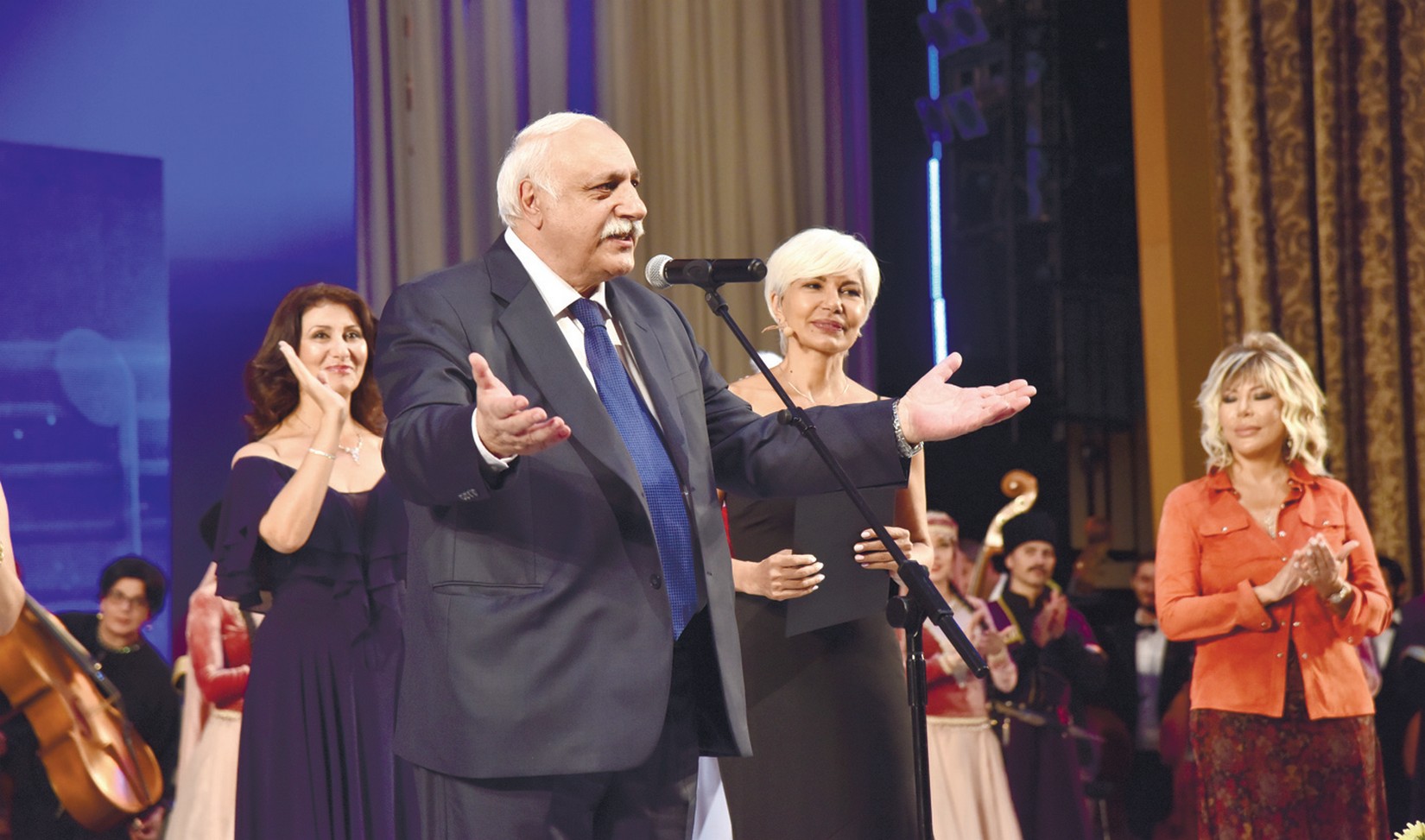
Author: Tatiana IVANAEVA
"I think music has an additional role—it can simply be considered an art of diplomacy. From this perspective, how do you see the possibilities for Azerbaijani composers, conductors, musicians, and yourself included?"
"I very much wish to give more concerts abroad. I believe it is essential to introduce audiences on different continents to contemporary Azerbaijani music. Mostly, foreign listeners hear works by established Azerbaijani classical composers: Uzeyir Hajibeyli, Fikret Amirov, Gara Garayev. But music is always about development, reflecting and reproducing what is happening 'in the moment' through notes. It rejects stagnation! Therefore, I will admit I am glad to have opportunities to present my symphonic works in various countries. How things will develop further remains to be seen. For now, I have a clear goal—to give more concerts abroad and demonstrate contemporary Azerbaijani symphonic music."
"Breaking the common perception of yourself as just a composer?"
"For some reason, I am firmly categorized exclusively as a songwriter. This is far from true. A songwriter is someone who writes only songs. I compose music across all genres—from operas, ballets, and musicals to numerous pieces for film and theatre. My songs have undoubtedly gained wide popularity. However, for me as a composer, that is far from the limit of my aspirations. Take, for example, my own symphonic compositions. It may sound somewhat immodest to say this, but I see how audiences abroad perceive and accept them, how sincerely they applaud. This gives me the right to confidently say: I am far from just a songwriter; I am a composer who does his work conscientiously. I recall last year's concert in Hungary held in the splendid hall of the Ferenc Liszt Academy of Music, completely sold out. The audience responded with a storm of unique applause, standing for about ten minutes. It was overwhelming! In 2022, I celebrated my 70th anniversary in Baku with a concert at the Heydar Aliyev Palace, presenting different facets of my creativity. Including those so-called infamous songs, followed by two dance pieces and then symphonic works. Knowing that our audience sometimes leaves during concerts, I was pleasantly surprised when, after the performance ended and I came on stage, almost no seats were empty. It seemed people sat waiting for more… In this regard, I do not hide my joy that our listeners are gradually developing a certain elitism and respectful attitude towards concert programmes."
"How well does contemporary music correlate with our national and classical traditions?"
"Contemporary music itself is diverse. On one hand, there is a persistent opinion that it tends more toward musical effects. On the other hand, there is contemporary music built on melody. Perhaps I will surprise you, but today melodic music is practically absent. Looking deeper, such music yields its place to rhythm and deliberate noise effects. As a composer, it is difficult for me to understand what lies behind these 'refinements' that only demonstrate certain emotions but are hard to define as music. However, this is a global trend—a kind of pseudo-musical posing. I have always been an advocate of melodic 'fullness.' After all, the essence of vocal music is the reproduction of note phrases through harmonic singing; otherwise, it would be just simple speech. Therefore, all my symphonic works are built upon a combination of melodic principles."
"Can musical taste be taught?"
"Alas… One can teach how to play an instrument. But transmitting feelings—that is another matter… Many play instruments; only a few become outstanding performers. Surely you agree that some pieces we associate with specific performers by name. For instance, Tchaikovsky's Piano Concerto No. 1 is Van Cliburn’s piece—he toured in Baku, by the way. Arthur Rubinstein, Sviatoslav Richter, Glenn Gould, Vladimir Horowitz… These are just pianists… But great musicians like them put such feeling into their performances that they breathed fresh life into the pieces and increased listeners' love for music. So I confidently answer: not everyone is gifted with taste. My father used to say: 'For me to make you cry, I must cry myself.' Only by immersing oneself deeply and feeling something can one create something that leaves no shadow of indifference or superficial perception. Taste can be cultivated, but a foundation is necessary! This applies to all aspects of life; in art, innate taste plays a leading role. Today the world is hooked on artificial intelligence. But where AI is present, feelings are absent! It has zero empathy. It’s a surrogate of 'set rules and recipes.' Reflection is not for AI."
"In that case, one cannot help but notice: to compose music requires the ability to 'hear and convey'…"
"Which again not everyone can do, although there are many composers! Music is not only seven notes and seven basic scales; intervals play an enormous role. Sometimes musicians do not give them much thought. All world music—regardless of genre: song-based or academic—is written within certain intervals recognised worldwide as the most brilliant. It is impossible to convey this in words. Trust me as a composer when I say that idle talk about creative searches through 'sweat and blood' is far from reality. Yes, composition exists, but true music is born differently. You just have to catch the moment when a musical phrase comes that, if captured in time, can grow into a whole piece. Even something from the author’s mood or something that happens during work can turn into an addition within a particular note phrase."
"Do you return to your already composed works?"
"When I compose, I do not think about anything specific. Writing music involves an element of spontaneity to some extent. I have good memory and collect authorial 'fragments,' which at certain times I connect and shape organically, then start distributing the 'accumulated material' within it. I will openly admit that I already allow myself to revisit my early works written for films and reinterpret them in a larger format."
"Are approaches different between small and large forms?"
"They are completely different in form and purpose. Symphonic works, which are large-scale by nature, usually target a smaller circle of listeners. Whereas songs aim for mass appeal. So one must consider the audience the composer addresses. When creating songs, simplicity of melody is essential—it must be memorable from the very first musical phrases. Serious music requires a different approach built on classical rules. What does a song consist of? Only three parts: verse, chorus, intro—an introduction or interlude. The symphonic genre—for example: simple or ternary form—exposition, development, recapitulation… It is very multidirectional. Usually a large symphonic work contains a certain theme that is developed throughout based on small parameters using professional skills gained in conservatory studies and listening to much classical music. Sometimes the theme loses some resemblance and disappears somewhere but returns after some time… A song should be simple and memorable at first hearing. Although classical music from past centuries was somewhat composed similarly—for example Mozart’s Symphony No. 40, his 'Eine kleine Nachtmusik,' or 'Turkish March.' Beethoven has works familiar ‘by ear.’ Their themes are so melodic they are memorised immediately. Time divided periods into classical, romantic… Today we live in an era of rhythm rather than melody. Melody has been practically 'killed.' What stars and starlets sing today are far from songs. Famous comedians Rafael and Joshgun aptly noted: Mahnı oxuyan insanlar var, amma müğənnilər yoxdur ('There are people who sing songs but no singers'). That is why I avoided TikTok for a long time—it was filled with low-quality content. Only when someone pointed out there was incredible classical content there did I realise I had to join it as part of promoting Azerbaijani musical culture through my works. The reaction was quick—videos gained over three thousand views with serious feedback and messages. This response shows which melodies audiences react to most."
"Shostakovich used to say that 'melody is thought, movement, the soul of a musical work'…"
"I believe our last defenders of melody were Uzeyir Hajibeyli, Fikret Amirov, Gara Garayev, Sultan Hajibeyov, Arif Melikov, Agshin Alizade, Vasif Adigozalov, Khayyam Mirzazade. Sometimes I am astonished encountering 20th-21st century contemporary music where often only some 'visualisation attempts' or effects pretending to be musical exist. This is just a set of sounds through which the author seems to want to express personal impressions with claims akin to Malevich’s 'Black Square'—only in music form. Yet one can take even a small melodic phrase and create a beautiful piece easily perceived without straining one’s brain. Some may label me a conservative; however, I do not consider this art. Art must ennoble human minds, souls, and hearts. One cannot place absurd or nonsensical ephemeral works beside the genius whose greatness history and time confirm. In my view, unjustified claims seeking recognition alongside them under the guise of 'modern art' are precisely attempts at trends where 'the author calls on us to think and understand what occupied him at creation.' Instead you get cacophony in music or absurd ‘linear-round-angles’ in visual art. I remain an advocate of classical education and heritage presented properly.
"I personally face how it has become acceptable to do anything with classical works—which should never happen! Recently online I saw criticism from a cultural figure outraged about distorting original material. I am not against new modern interpretations but everything requires measure and taste! What is done today with Uzeyir Hajibeyli’s music honestly baffles me since he left no direct heirs after him. We Azerbaijani composers as his successors must protect his works from those who try to twist them for personal ambitions. The same happens with my songs too; fortunately some come for ‘blessing.’ Yet often I do not recognise my own music trying to find anything close to the original version. I am always ready to advise how an old song can sound fresh and modernized. My professional activity involves tracking today’s trends; if I don’t write or do what others do it doesn’t mean I cannot—I simply refuse to produce surrogates. I have my own style and reject changing it according to fashionable trends driven by fleeting whimsies. If you dislike my music—no problem; don’t listen. I am as I am; accept me as such. I am not a retrograde; I side with those who listen properly and understand rather than chase chart-topping hits.
"In fact, I never divide music into genres—symphonic, jazz, pop or folk… For me there are only two criteria: good music or not. I do not like listening to bad music but sometimes have to understand why it exists and what for—to grasp its reason and difference from real art. Without it how could listeners appreciate true musical works? In some way its presence forces us to value genuine art—it’s like ‘day and night’ or ‘black and white’ in music."
"You are an example of an active social media user managing your accounts personally."
"My YouTube channel is quite a living organism—I want to feel connected with diverse people and value their comments. Of course some individuals use any opportunity for hype by dumping bile in nasty remarks—probably they cannot do otherwise or would choke on it themselves. Honestly, I delete all such comments and block those lacking adequacy and objectivity right away; their style reveals their authors clearly.
"It’s sad when people without any knowledge or education but armed with self-importance try judging my creativity or me personally; for them it’s all about ‘elephant and mosquito.’ But for me it’s beneath my level and dignity to pay attention to their ‘likes.’ Still you cannot be so aggressive towards representatives of Azerbaijani culture without giving anything back except venom from armchair experts.
"I sadly observe how much effort goes into monitoring intellectual property theft against Azerbaijan by our unfortunate neighbours—which is commendable—but we must also acknowledge many ill-wishers within our society who speak disparagingly about their own cultural representatives indiscriminately handing advantage to those neighbours—I consider such people ‘enemies of the people.’
"I believe: if you live in Azerbaijan according to its laws and accept its essence, then you must defend its honour and dignity in all spheres! Freedom of thought isn’t given for criticising everyone relentlessly; you must try offering something useful to society instead of flaunting ‘I exist’ just to hurt well-known figures."
"Do you think digital platforms are the next step?"
"Presently, digital platforms like Instagram, Facebook, YouTube allow maintaining contact with society comprising diverse people: both those who love your music and your opponents too. The latter have the right to healthy and well-argued criticism which also plays its role in my creative process.
"Digital platforms offer almost limitless opportunities. TikTok surprised me when I discovered it hosts serious symphony groups and well-known figures in classical music. So it would have been unprofessional not to notice this fact. Hence my TikTok account appeared where I post symphonic music, film scores, instrumental pieces, songs… Though focus remains on attracting attention mainly from those far from formats where music serves entertainment. For me it’s important to use this platform so listeners living far from our country know Azerbaijan produces not only light genre content but also much serious material. The correctness and timeliness of my ‘arrival’ on TikTok are confirmed by many comments and likes.
"It’s pleasing to see ‘Bravo conductor!’ or ‘Bravo orchestra!’ These express appreciation by people who respect serious music noticing all its elements. Such nuances make feedback especially valuable.
"I believe today my age, profession and knowledge give me the right to encourage fellow classicists to join digital platforms too—to enlighten people. This should be done not indulging in gossip or airing dirty laundry. All that will pass away; history will not keep it. Our hour will come; we will leave this world. But what gets uploaded online will live on attracting attention and educating people. This should be what we leave behind—I think so."
RECOMMEND:
 351
351

