

THE FISH WE WISH
Azerbaijan's new export vector: expansion of industrial production of seafood
Author: Aghasaf NAJAFOV
The decline of fish populations in the rapidly silting Caspian basin, observed in the last decade, has prompted Azerbaijan to transition from fishing to commercial reproduction in artificial reservoirs and industrial-scale fish breeding enterprises.
Today, we are pleased to announce that we have made some progress in this area. Azerbaijani producers are targeting the EU and other world markets, increasing exports of black caviar, as well as sturgeon, salmon and other valuable fish species cultivated in aquaculture.
From natural to artificial
The fishing industry in the Caspian Sea has been facing serious difficulties for decades due to the steady decline in the population of commercial fish species. According to studies by Azerbaijani environmental scientists and specialists of relevant international organisations, global warming and other climatic problems in the last decade have significantly accelerated the depletion of the Caspian basin ichthyofauna. The over-regulation of all rivers flowing into the shoaling Caspian, the consequences of many decades of oil production and the discharge of untreated industrial effluents, changes in the ecological balance and a sharp decline in the fodder base, as well as poaching, have all had a significant impact on the population of valuable fish species.
This negative impact is felt by all five Caspian littoral states. In this regard, anti-poaching measures are being implemented, and environmental control measures and country quotas for fish catch are being agreed upon. In September 2014, these states signed an agreement on the establishment of the Commission for the Conservation and Rational Use of Aquatic Bioresources and Management of Joint Stocks of the Caspian Sea, imposing a moratorium on commercial sturgeon fishing, except for research purposes.
However, marine fishing in the Caspian Sea is becoming an increasingly complex and unprofitable sector of the economy, which makes a consistent transition to aquaculture development inevitable.
As demonstrated by global trends, it currently accounts for more than half of the total global seafood production.
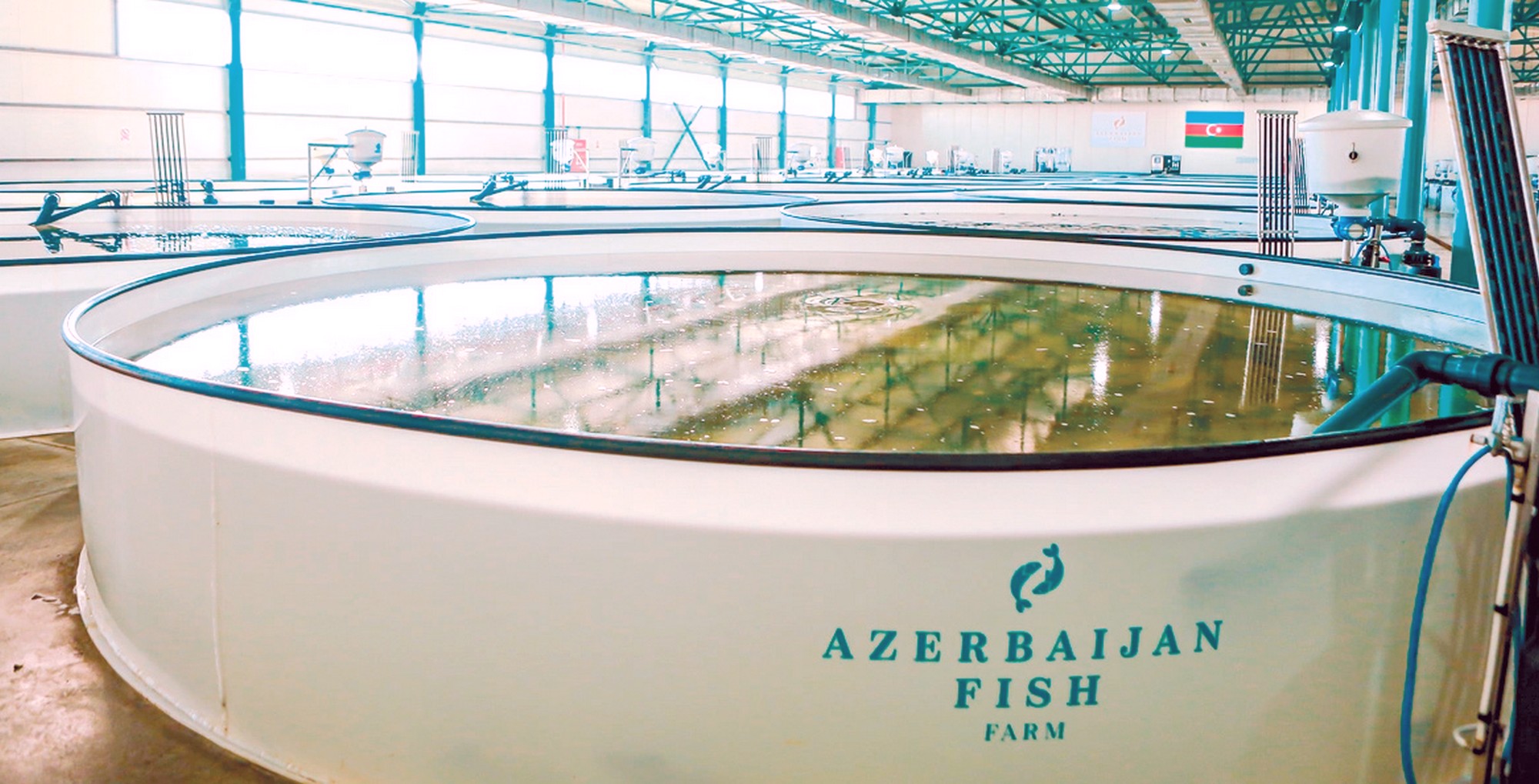
Azerbaijan is also developing commercial fish reproduction in artificial reservoirs, cages and fish-breeding enterprises of various types. There are almost 15 large fish breeding farms in the country, located in Sheki, Zagatala, Gabala, Gusar and Mingachevir, among other places. The main volume of affordable commercial fish is cultivated in these farms, including fathead carp, white amur, carp, bream, and kutum, as well as more expensive trout and other salmon breeds.
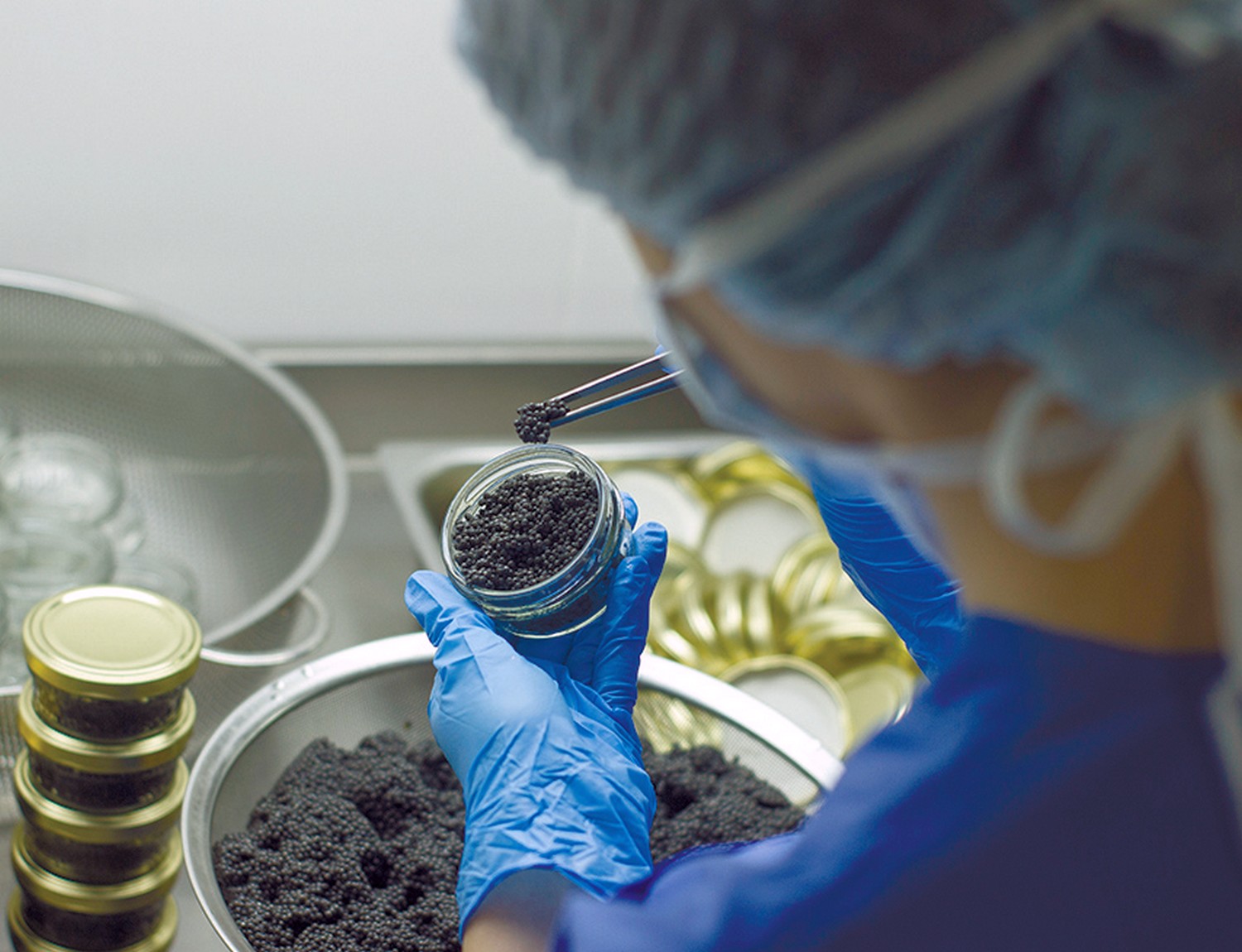
The country has seen significant progress in aquaculture development in recent years, with notable advances being made in the last 6-7 years. The development of substantial industrial-type facilities in the Neftchala, Pirallahi, Ismayilli districts, as well as at the Mingachevir reservoir, has enabled the cultivation of sturgeon, spike, beluga, and salmon, with a focus on the production of premium caviar. Another significant aquaculture enterprise is being established in the Garabagh region. Production of colour trout and Kurin sturgeon is to be set up in the Khakara fishery in the Lachin district.
We estimate that there are approximately 500 small private pond farms in operation throughout the country. However, it has been observed that some of these establishments operate without the necessary registration, fiscal, sanitary and other controls. However, there are frequent violations of the regulations that govern the establishment of pond farms on agricultural land.
In order to regulate the activity of aquaculture farms, President Ilham Aliyev approved the Law on Amendments to the Land Code and Law "On Fishing" adopted by Milli Mejlis on 14 July this year. According to the amendments, the regulations governing the legal status and categories of lands on which aquaculture farms are located are specified.
Good fish
"The global aquaculture and fisheries sector is expanding rapidly, but the key issue is the cultivation of quality products: if aquaculture is carried out in clean waters, the ichthyofauna farmed in these waters will be healthy. Just as much attention should be paid to respecting the processing of fish products," said Thomas Ashley Shipton, the UN Food and Agriculture Organisation's (FAO) international adviser on fisheries and aquaculture, at the conference "World Food Security Day: Science in Action".
According to the expert, the keeping and raising of commercial fish in a small area or in a small volume of water in large numbers can lead to the emergence and spread of various diseases. In such cases, producers often resort to the use of chemicals and antibiotics, which can significantly increase the risk of contamination of the final product during processing.
A key challenge for aquaculture farms at present is to minimise the use of chemicals, especially antibiotics, with the introduction of biological water treatment mechanisms. The FAO's primary objective is to encourage the growth of the number of biosafe fish farms that produce environmentally friendly products.
Azerbaijan is a committed partner of the FAO and other international bodies, collaborating closely to implement effective aquaculture practices. For instance, several years ago our country participated in a regional project on sustainable fisheries and aquaculture management together with Central Asian countries and Turkey. The project, which is funded by the government, aims to build capacity in fisheries development, safety and environmental standards in the artificial farming of ichthyofauna. In accordance with the FAO programme, the platform facilitates the exchange of best practices, technologies and innovations in fisheries and aquaculture.
In general, commercial fish farming projects are of interest for further cooperation with members of the Organisation of Turkic States. In this regard, it is appropriate to cite the plans for co-operation between Azerbaijan and Kyrgyzstan to establish a joint plant for the production of quality fodder for fish farms.
Under the state programme
The State Programme for the Development of Aquaculture in Azerbaijan for 2023-2027 has been developed for the following purposes:
· the development of industrial-level fish farms
· the application of the latest technologies and international environmental standards
· the introduction of other promising trends in the sector
A significant development in this area was the Decree of President Ilham Aliyev "On additional measures to develop fisheries and aquaculture in Azerbaijan", signed on 19 December 2024. The document is intended to promote the development of fisheries and aquaculture in the country. Its key objectives are to increase productivity, improve management and control systems in this field, and to manage fish resources in a way that considers their impact on the environment. It also aims to organise and regulate fisheries and aquaculture farms in accordance with modern requirements.
To that end, a legal entity of public law was established under the auspices of the Ministry of Agriculture: the Fisheries and Aquaculture Centre. The new body is responsible for the organisation and management of fisheries, including aquaculture, and the increase, use, protection and control of fish and other aquatic bioresources. In accordance with the decree of the head of state, the Ministry of Agriculture of the Republic of Azerbaijan is developing the State Programme for the development of production and processing of agricultural, fish products and aquaculture in Azerbaijan for 2025-2030.
At the II International Agrarian Innovation Forum in Baku, Zaur Salmanli, chairman of the board of the Azerbaijan Fish Producers and Processors Association, made the following statement: "President Aliyev's initiative will ensure more systematic and sustainable development of the fisheries and aquaculture sectors in our country, as well as open new opportunities for the private sector. Azerbaijan faces challenges in terms of its water resources, therefore effective collaboration between the public and private sectors is essential to address this issue. The effective management of water resources, the protection of water bodies from pollution and their preservation for future generations are priorities for our country."
The leading fish farming enterprises of Azerbaijan are actively implementing best international practices in the field of aquaculture and ensuring compliance with the quality standards of products at the level of the European Union requirements. This has led to a significant breakthrough in the export sector, with nearly 600 kg of sturgeon caviar being delivered to foreign countries in 2023. This represents a substantial increase compared to the previous year, with the majority of deliveries going to Singapore, the UAE, the USA and Russia.
Following the development and submission of the National Monitoring Plan to the relevant EU structures by the Food Safety Agency of Azerbaijan (FSAA), the country was granted permission to export sturgeon and salmon caviar cultivated under aquaculture conditions to EU countries two years ago.
According to FSAA, the agency prepared the Monitoring Plan to ensure access of fish products to EU markets and submitted it to the European Commission's Directorate General for Health and Food Safety. Following a technical assessment by the relevant European body, the Monitoring Plan was approved and adopted. As a result, the permission to export aquaculture sturgeon caviar from Azerbaijan to the EU was extended for the 2025-2026 period.
RECOMMEND:
 282
282

