

THE FORMULA OF DEPENDENCE
Control over New Caledonia under the guise of reforms

Author: Ilgar VELIZADE
In July, after ten days of negotiations between supporters and opponents of New Caledonia's independence, an agreement was signed—an event hailed in France as historic.
The 13-page agreement outlines the creation of a State of New Caledonia with a special status within France. This status grants Caledonians dual citizenship—French and New Caledonian—recognising their identity while maintaining ties to Paris. According to the document, other states may also recognise the State of New Caledonia.
However, the agreement is not limited to institutional matters. It includes a package of economic and financial reforms, featuring a strategic plan for the development of the nickel industry—one of the pillars of New Caledonia's economy. Thus, the agreement is framed as a victory for the Kanak people in their struggle to defend their rights.
For the agreement to take effect, it must be approved in a referendum scheduled for February 2026 in New Caledonia.
President Ilham Aliyev, speaking at the 3rd Shusha Global Media Forum, addressed this issue directly, stating that the incident between France and New Caledonia is a historic precedent, though not the end of the story but merely its beginning. "I hope this first step will be followed by others. And all territories currently under French colonial rule will establish the same interstate relations with France as New Caledonia is doing now," emphasised the head of state.
Paris's deceptive plans
Yet discussions about the "new agreement" between France and local authorities effectively mask the same colonial logic, adapted to the 21st century. Despite Paris's assurances of a "democratic process" and "consideration of all parties' interests," recent months have revealed attempts to forcibly impose a political solution beneficial solely to the former colonial power. The proposed idea of "creating a state" is, in reality, an effort to maintain a system of dependence where France retains control over key levers—from security to economic flows—replacing the right to self-determination with slogans about "stability and progress."
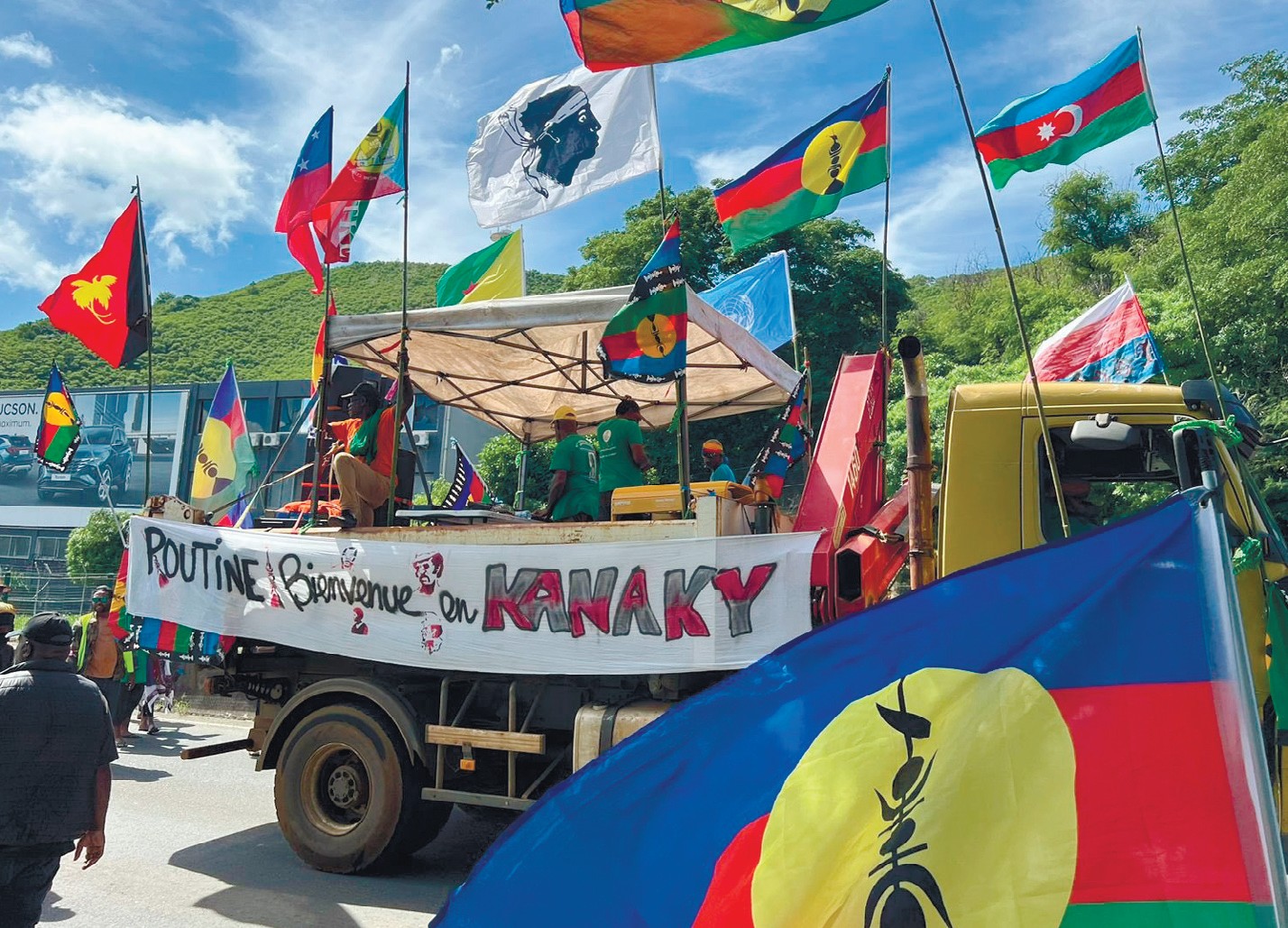
Particularly alarming were the events of May-June 2024, when, in response to mass protests by the indigenous population against changes to electoral laws, France resorted to harsh punitive measures, deploying gendarmerie and special forces to the archipelago. Protesters opposing the forced alteration of the electorate's composition—which they argue would dilute the voice of the indigenous Kanak people—faced mass arrests, violent suppression, and an information blackout. Restrictions on internet access and freedom of movement were imposed, directly violating international human rights norms. Such actions, carried out under the guise of "constitutional order," reaffirm that France is unwilling to engage in genuine dialogue if it threatens its strategic and economic interests.
New Caledonia already enjoys a degree of autonomy, but true self-governance proves illusory when dissent is met with force. Under the proposed "new agreement," Paris offers expanded local powers while retaining control over key areas: defence, currency, foreign policy, and strategic resources. Moreover, the economic model persists, where the archipelago's wealth—primarily nickel—is exploited for the benefit of the metropole and transnational corporations. This extraction has severe environmental consequences, including soil pollution, coastal ecosystem destruction, and water resource degradation. Complaints from local communities about the impact of mining operations, including those run by French companies, are systematically ignored or suppressed.
"Controlled sovereignty"
While the new agreement, based on its provisions, suggests the possibility of expanding local authority and transferring certain competencies—such as taxation, education, and migration regulation—defence and international relations remain under Paris's control, as before.
This scenario closely resembles the "associated state" model, where a territory gains nominal statehood but remains within the former colonial power's sphere of influence. Precedents for this exist globally. For instance, Greenland is formally part of Denmark but enjoys broad autonomy and controls its natural resources. Similarly, Palau, the Marshall Islands, and the Federated States of Micronesia are nominally independent nations in free association with the US. Washington ensures their defence, provides financial aid, and retains significant influence over their internal affairs. Another example is Puerto Rico, an unincorporated US territory with its own governance system but lacking full independence or statehood.
Thus, the proposed model for New Caledonia fits the framework of "controlled sovereignty," where France seeks to maintain strategic and economic influence in the Pacific region. This is especially critical given geopolitical factors, including China's growing presence in the South and Western Pacific. Retaining control over a territory rich in nickel and strategically located allows Paris to bolster its regional role while presenting a facade of "civilised conflict resolution" in a post-colonial context.
The Paris Agreement is only the beginning
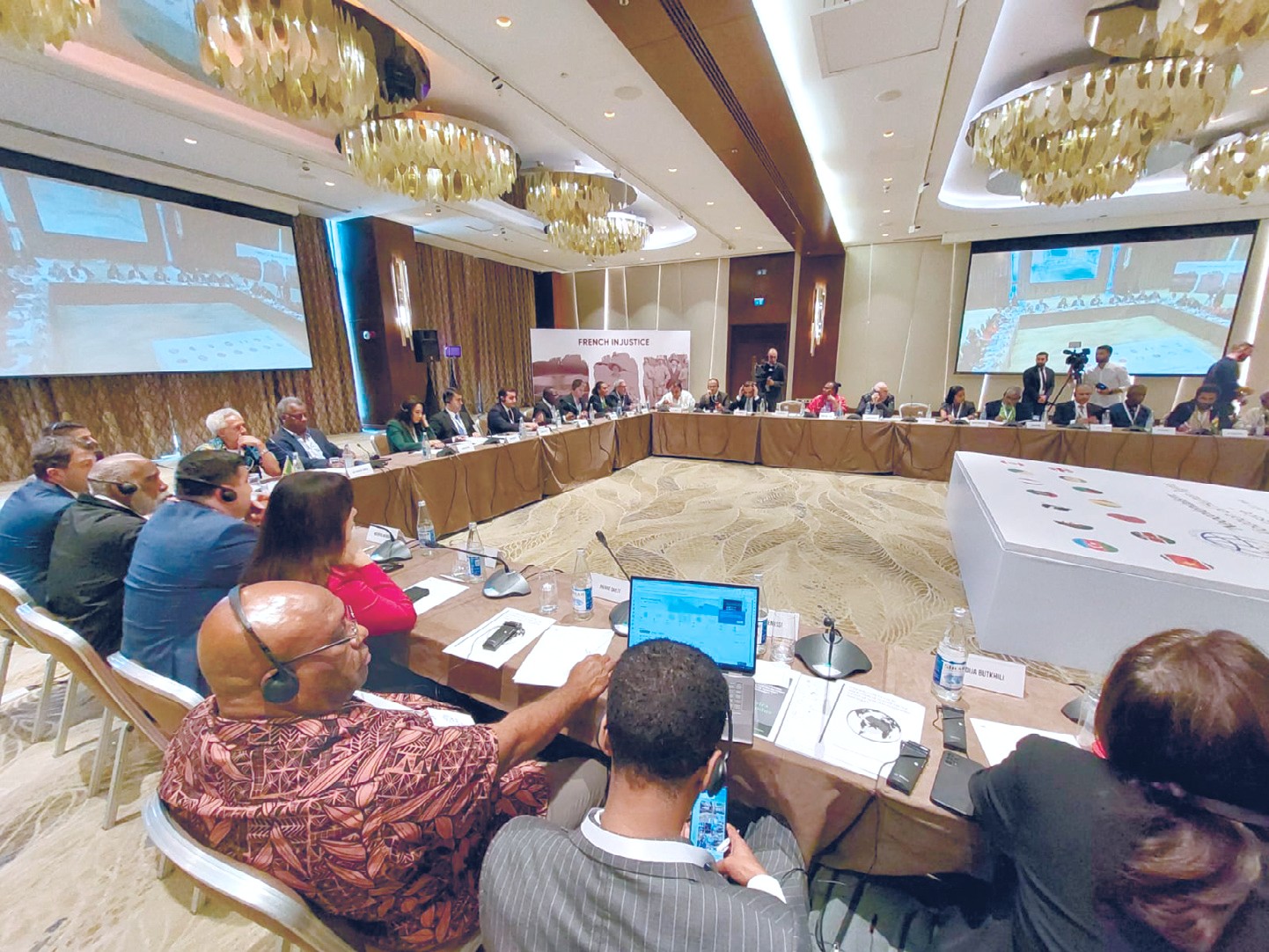
The Baku Initiative Group (BIG), established as a platform for peoples fighting for decolonisation, plays a pivotal role in shifting international perceptions of this situation. Support from Azerbaijan and the elevation of New Caledonia's plight to UN and other international forums have undermined France's image as an "enlightened metropole" and highlighted its double standards. While Paris advocates for "Ukrainian sovereignty" or "freedom for peoples in other regions," it simultaneously ignores the right to self-determination for its own overseas territories, imposing favourable arrangements under the guise of "transitional state forms."
In this context, any talk of "creating a new state" without a fair and inclusive referendum, an end to violence, and a reckoning with colonial legacies amounts to rhetorical manipulation aimed at preserving political and economic control. New Caledonia's population, particularly its indigenous Kanak people, increasingly finds itself not as a negotiating party but as the target of administrative and coercive pressure. The struggle for independence thus becomes not a matter of choosing a future but of surviving cultural, political, and environmental identity under external dictate.
In short, the "new agreement" does not resolve decolonisation but repackages the old system in modern wrapping. The suppression of protests, dismissal of local voices, resource exploitation at the expense of the environment, and refusal to acknowledge legitimate aspirations for sovereignty all erode trust in France's official stance. A genuine resolution to the crisis is possible only if Paris abandons its logic of control and fully recognises the right of New Caledonia's people to self-determination—free from pressure, mediation, or political traps.
That said, this does not negate the fact that Baku's proactive efforts have pushed Paris toward these unprecedented compromises.
From past to present to future
The Baku Initiative Group has released a comprehensive report on New Caledonia's colonial past and the ongoing struggle of the indigenous Kanak people for their rights. The document details the consequences of French rule, which began after the island's annexation in 1853. This marked the start of systematic oppression: Kanaks were dispossessed of land, subjected to forced labour, denied rights, and targeted by assimilation policies. The economic exploitation of resources, particularly nickel mining, exacerbated social inequality on the archipelago.
The report traces a long and dramatic history of resistance—from armed uprisings in 1878 and 1917 to the unrest of the 1980s, driven by political marginalisation and unequal resource distribution. A new wave of protests erupted after independence referendums in 2018, 2020, and 2021, whose legitimacy was questioned due to low Kanak turnout, partly attributable to the COVID-19 pandemic.
Tensions escalated sharply in 2024 when France proposed electoral reforms to expand voting rights for non-indigenous residents. This triggered mass protests, violence, arrests, and a state of emergency. According to the report, French authorities' treatment of protesters raises serious human rights concerns.
The document also notes growing international attention to New Caledonia. Several human rights organisations and pro-decolonisation states have expressed solidarity with the Kanak people. In this light, the report urges the UN and other international bodies to take a more active role in decolonisation and safeguarding the Kanaks' right to self-determination.
Special emphasis is placed on Azerbaijan's role in consistently raising New Caledonia's case on international platforms, including the Non-Aligned Movement. Thanks to Baku's initiatives and BIG's advocacy, the region's colonial legacy has gained broader global visibility and support.
The Baku Initiative Group's report is a significant contribution to re-evaluating New Caledonia's colonial history and underscores the need for a just, peaceful solution rooted in respect for the rights and will of the indigenous population.
The future of the Kanak independence struggle hinges on internal unity, international backing, and France's political decisions. In this context, global advocacy—including Azerbaijan's efforts to elevate the issue—plays a crucial role. Despite risks, the window for a peaceful and equitable resolution favouring the Kanak people remains open, provided international pressure continues and the islanders' resolve for true self-governance endures.
RECOMMEND:
 294
294