

INFLUENCE AND INTERESTS
The Zangezur Corridor: US diplomacy and Yerevan’s choice
Author: Namig H. ALIYEV
In 2024-2025, the United States has increased its involvement in the negotiation process between Armenia and Azerbaijan, positioning itself as a neutral guarantor. In July, Washington proposed the temporary administration of the Zangezur Corridor by American agencies. Many consider this a strategic move aimed at easing mutual distrust.
The strategy of The Zangezur Corridor
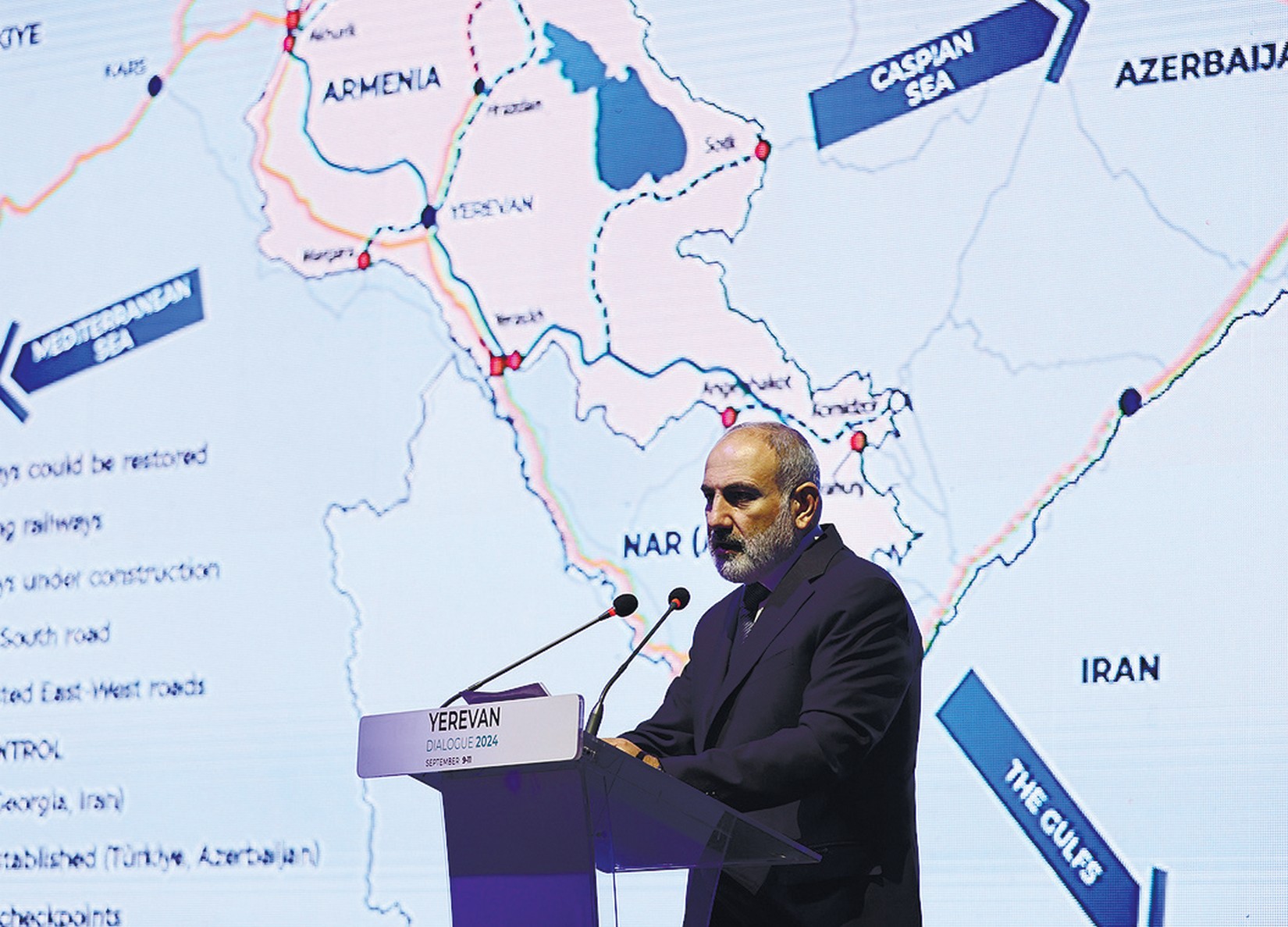
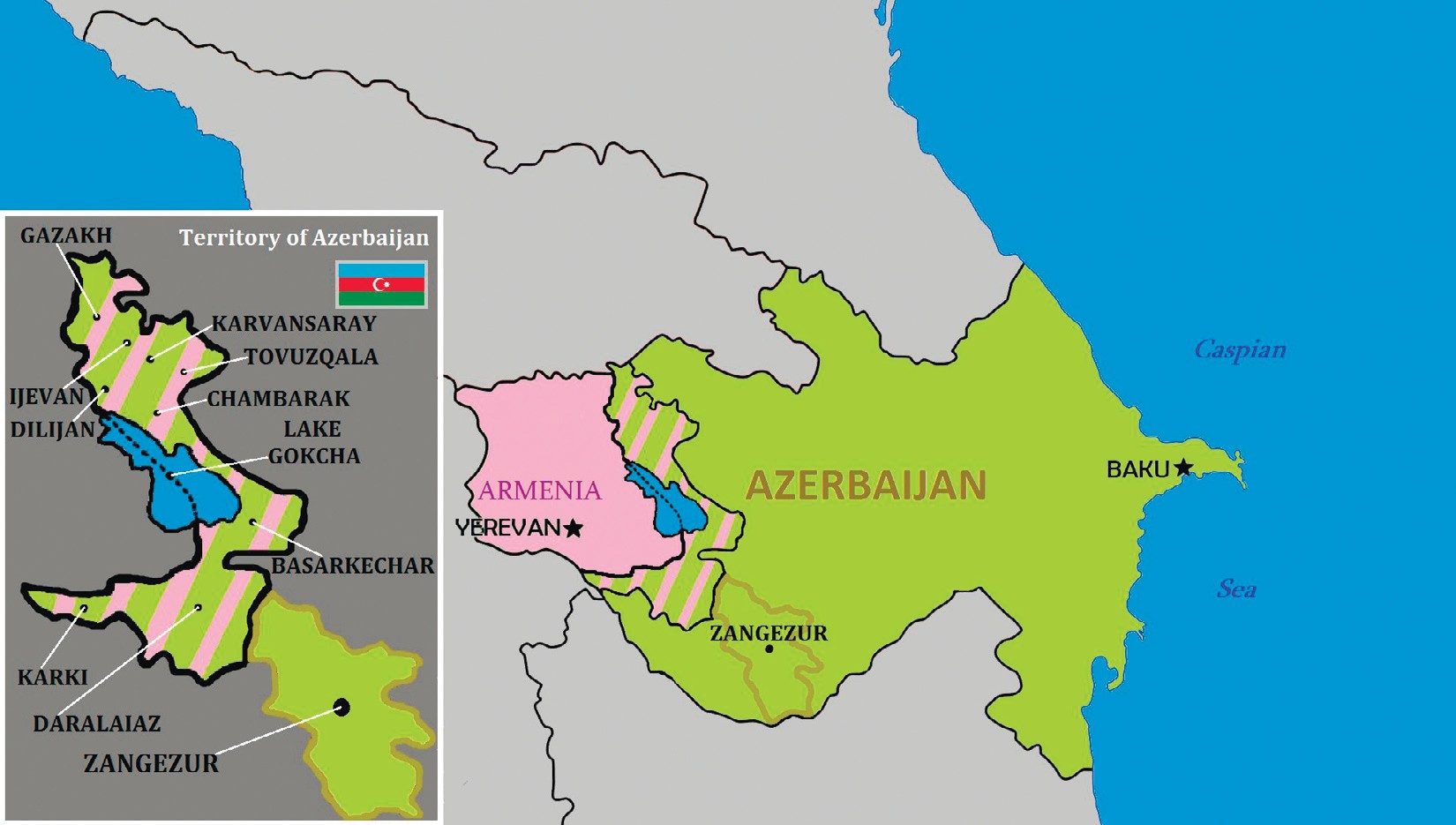
The Zangezur Corridor represents a transport route crossing the current territory of Armenia, connecting mainland Azerbaijan with the Nakhchivan Autonomous Republic without Armenian control. The initiative to open it, actively promoted by Azerbaijan and Türkiye as part of deep integration, is also an obligation for Armenia under the trilateral agreement signed on November 9-10, 2020.
Moreover, its implementation is linked to the development of the Middle Corridor—a route between China and Europe through the South Caucasus, forming part of the Trans-Caspian international transport route. This route highlights the growing geopolitical importance of the South Caucasus as a transit hub between Asia and Europe and is a crucial part of the Trans-Caspian logistics chain vital to Armenia’s economy. Unfortunately, the project faces resistance from Armenian revanchist forces under the pretext of protecting Yerevan’s sovereignty.
Answering questions from participants at the 3rd Shusha Global Media Forum, Azerbaijan’s President Ilham Aliyev touched for the first time on another significance of this corridor: "With the implementation of the Zangezur Corridor, we will effectively open another North-South corridor. Not only the one everyone talks about—from Russia through Azerbaijan to Iran and Rasht—but also through Eastern Zangezur and other parts of the Zangezur region to Iran, and further on to Türkiye."
Positions of the parties
The US views the Middle Corridor as an alternative to Chinese and Russian transit routes. Supporting the Zangezur Corridor as part of this chain is part of a broader strategy to reduce Europe’s dependence on Eurasian logistics passing through Russia. For this reason, the US has proposed that Armenia administer the corridor on a long-term basis (including a 100-year lease) to neutralise potential risks and ensure control. Washington promotes the idea of “neutral” control but embeds the route within strategic interests—to transform the Zangezur Corridor into a logistics network independent from Russia and Iran. The US role is to depoliticise the project rhetorically while geopoliticising it in practice.
The European Union supports expanding transport integration in the region, favouring open routes that comply with international law and respect sovereignty.
Russia positions itself as a supporter of regional transportation links but frames its stance by balancing interests with Baku, Tehran, and Ankara. Moscow is concerned about Azerbaijan strengthening ties with Türkiye, China, and the West. Russia was a guarantor of the November 9-10, 2020 agreement that explicitly mentioned unblocking all transport communications. For Moscow, this was an opportunity to create a managed corridor under FSB control, thereby enhancing logistical and political influence in the region. In the post-conflict context, control over the corridor under Russian auspices would mean stronger Moscow influence, although since signing the trilateral agreement, Russia has been inactive in corridor implementation.
The advancement of the Azerbaijani-Armenian process towards signing a peace treaty also worries Russia. At present, Moscow is losing control; the situation might worsen if the corridor opens without its institutional presence.
Iran perceives the Zangezur project as a serious threat to its strategic interests and believes that the US may use it as an additional lever to pressure Tehran. Iran claims that lack of access to Armenian communications increases regional vulnerability and considers any border changes a “red line.” Practically, however, it remains unclear how implementing this transport route would cut off Iran’s communications or cause border changes.
It is worth noting some softening in Iran’s position after President Pezeshkian’s visit to Baku and following the 12-day war.
China officially maintains neutrality, emphasising respect for Armenia’s sovereignty and not supporting territorial changes. Nevertheless, diplomatic growth—including the Armenian Foreign Minister’s visit to Beijing and appointment of a new ambassador in Yerevan—is seen by analysts as an instrument to accelerate a framework agreement with Baku and open the corridor. Analysts note that China is interested in swiftly integrating this route into its infrastructure plans.
Armenia today is becoming a supporter of regional integration but only on conditions of full protection of its territory. Yerevan opposes the corridor, believing it could undermine its territorial control and threaten relations with Iran. It insists on its own “Crossroads of Peace” initiative and attempts to avoid formal conditions that exclude control over transport infrastructure. Meanwhile, Azerbaijan considers this “Crossroads of Peace” format too limited and delayed. At the international GLOBSEC 2025 forum, Baku representatives noted that this concept does not match the scale of regional integration and effectively delays opening connections.
From time to time, Armenia has made additional proposals that only delay opening the corridor. For example, at the All-Armenian Forum, Prime Minister Nikol Pashinyan proposed opening a road connecting mainland Azerbaijan with its Nakhchivan exclave, stating that Armenia “wants and is ready” to provide passage to Azerbaijan into Nakhchivan but... under conditions similar to those Iran imposes. Moreover, Armenia does not exclude certain procedural simplifications and views this as part of a bilateral approach. The proposal that this road should operate under terms similar to those governing Azerbaijan’s route through Iran to Nakhchivan is unacceptable for Baku. Citizens and goods from Azerbaijan must transit without any checks—this is Baku’s condition and Yerevan’s obligation.
In January 2025, Prime Minister Nikol Pashinyan announced that Armenia had presented a detailed plan for opening the Yeraskh-Sadarak-Ordubad-Meghri-Zangilan railway line with subsequent construction on its own sections—after receiving a positive response from Azerbaijan. However, this proposal is unacceptable for Baku because Western Zangezur (Syunik) is not an exclave like Nakhchivan; transportation can take place through Armenian territory.
All proposed options indicate Armenia’s unwillingness and unreadiness to fulfil its international obligations.
The Zangezur Corridor is a road segment between Aghbend (Zangilan, Azerbaijan) and Ordubad (Nakhchivan Autonomous Republic, Azerbaijan). Unimpeded passage—an international obligation of Armenia—applies only to this section as it links Azerbaijan’s main territory with its exclave. The Zangezur Corridor does not cover the route from Ordubad to Arazdian (Yeraskh, present-day Armenia). The “principle of reciprocity,” often mentioned in Armenia, does not apply to the Zangezur Corridor but concerns the Ordubad-Arazdian section. The latter and other communications between Azerbaijan and Armenia can only be used on a reciprocal basis after opening the Zangezur Corridor.
Ilham Aliyev gave an accurate assessment of Armenia’s prospects: "Unfortunately, no work has been carried out on the Armenian side over the past five years; this issue is deliberately removed from the agenda. In such a case, Armenia’s chances of ever becoming a transit country approach zero. If they continue blocking this process, I believe they will find themselves not only in transport isolation—as they are now—but also partially in political isolation."
Some hope arose after Nikol Pashinyan met Ilham Aliyev in Abu Dhabi. Currently, Baku expects more constructive rhetoric and actions from Armenia.
Azerbaijan directly demands Armenia fulfil agreements on opening the corridor—ensuring land communication between mainland territory and Nakhchivan Autonomous Republic. This topic became central following the Garabagh conflict’s end and is considered foundational for South Caucasus transport integration within the Middle Corridor framework.
Backup plan
Alongside negotiations with Armenia, Baku is actively building logistics infrastructure within its territory, demonstrating readiness for autonomous route implementation. A significant portion of infrastructure (roads, tunnels, railway, bridge over the Araz River) has already been constructed, with work ongoing. Ilham Aliyev emphasised: "We are practically completing construction of the railway up to our border junction with Armenia and Iran; probably less than a year from now—perhaps even by next spring—the Azerbaijani section of this railway will be finished." Baku also does not rule out using alternative logistics routes through Iranian territory.
Azerbaijan’s position today is firm with a clear Plan B and a strong message: The Zangezur Corridor will be implemented—options are discussed but the main course remains unchanged.
Opportunities and risks
Operating the Zangezur transport corridor will lead to multiple increases in transit flows through Armenia, attract significant investments including infrastructure development, and raise its international standing. By initiating this project, Baku offers Armenia partnership instead of confrontation. Interest from China and Türkiye could accelerate infrastructure launch, expand influence, and enhance regional security. US involvement would bring reliability, professional administration of the corridor, and security assurances.
Certainly, risks do exist: threats from Iran, destabilisation of regional balance, opposition from Russia, Western distrust towards China, resistance from neighbouring states. However, these can be overcome with appropriate diplomatic efforts.
Thus, currently there is an intensification of diplomatic efforts by the US and other players to expedite signing a peace treaty and opening this transit route. The US goal is not merely unblocking passage but integrating the region into Western-oriented logistics routes alternative to Russian and Iranian ones. They promote “neutral” control rhetorically while embedding strategic Western interests into the route.
Moscow, trying to maintain external balance, proposed participation in logistics but lost initiative in opening this route following worsening relations with Armenia and Azerbaijan. The West has taken advantage by proposing guaranteed neutral management mechanisms for the corridor to minimise regional risks. The corridor is more than just a road; it is an instrument for control, influence, and future power distribution in the region.
Beijing officially maintains neutrality but economic interests make it an involved party capable of increasing pressure on Yerevan. Armenia, citing sovereignty preservation, offers alternative cooperation formats without relinquishing control over the corridor.
Today Armenia faces a historic opportunity. Continuing diversification of transport projects will strengthen its agency and leverage in regional affairs. By communicating its positions through multilateral platforms, Armenia’s government should develop cooperation with supporters of transport communication projects’ implementation.
Opening the Zangezur Corridor offers a chance for establishing stable and lasting peace in the South Caucasus—a significant leap forward in regional economic development. It is critical for all countries in the region—especially Armenia—to understand this before it is too late.
RECOMMEND:
 308
308

